Explorations

Issey Miyake: Design Is For Life

Reading Time: 3 minutes

Tribute to one of the last geniuses of fashion


Yesterday Miyake Studio released the news that the Japanese designer Issey Miyake has passed away.

Even though he chose fashion as the medium to express his creativity, calling him a fashion designer is quite limiting. Indeed, he was more than that: a survivor, inventor, and humanist who challenged dressmaking and the modern world. In just one word, he was an artist.

Born in 1938 in Hiroshima, his family was killed by the first atomic bomb when he was a child. But he didn’t talk about that. Instead, he preferred to look forward, focusing on what he could create. He spoke about it only in support of Barack Obama’s pledge for nuclear disarmament.
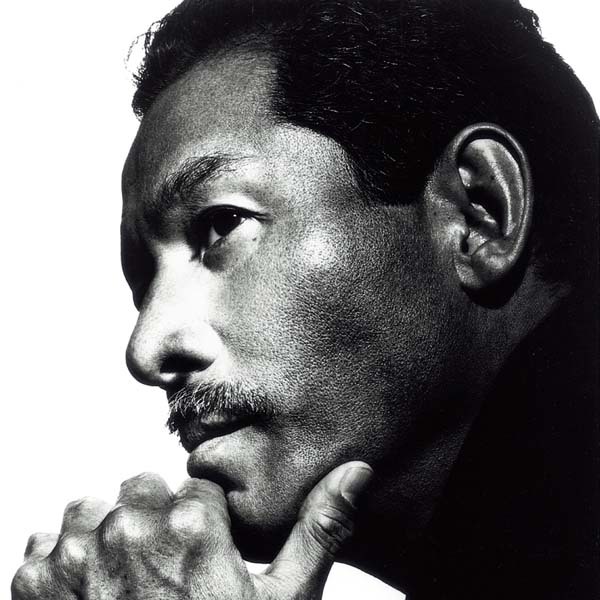

A trailblazer in Japanese design, he mixed easter and western elements, creating a new innovative style. His fluid modernity changed the vision of clothing. Furthermore, he launched the technologies that allowed him to make his innovative garments. He also pioneered his pleating technique.

“In the Eighties, Japanese fashion designers brought a new type of creativity; they brought something Europe didn’t have. There was a bit of a shock effect, but it probably helped the Europeans wake up to a new value.”

Issey Miyake

Issey Miyake: a revolutionary genius


His original idea is one piece of cloth: cutting garments from a single fabric, an exercise between material and form. He worked with the body in movement, fascinated by the space between the cloth and the body.

“I do not create a fashionable aesthetic. I create a style based on life.”

Issey Miyake
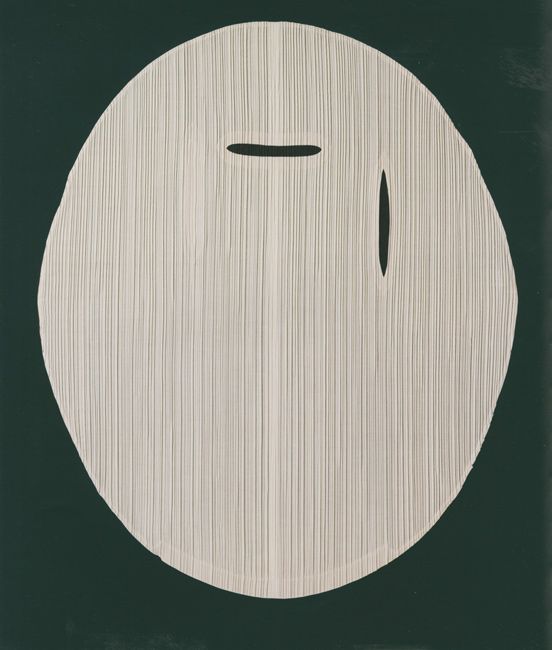
Issey Miyake


His style focused on functionality, utility, and comfort, creating a timeless aesthetic–a design for life.

The purpose – where I start – is the idea of use. It is not recycling, it’s reuse.

Issey Miyake

Miyake’s work was relentless research for the clothing of the future.

“I make clothing, and I don’t care about trendy things.”

Issey Miyake

There’s so much to say about his work. However, one thing contributed to making him an outstanding figure in the fashion universe: his humble mentoring. Under his banner, he helped launch and develop many brands, for instance, Plantation, Zucca and Tsumori Chisato, just to name a few we love. His sense of collaboration and togetherness was really unique.

A true revolutionary, one of the last geniuses of fashion.
Rest in peace.

Issey Miyake: Design Is For Life Read More »

Enslaving Workers: Has Anything Changed?

Reading Time: 2 minutes

Examining the reality of modern exploitation and its impact on labour


It seems clear that our economic system is based on enslaving workers. That’s how it thrives—by keeping labor cheap and maximizing profit at the expense of human dignity. While the system flourishes, workers are left behind, their rights undermined, and their well-being compromised. This cycle perpetuates inequality and exploitation, making true progress seem elusive.

Here we quote an excerpt of Li Edelkoort’s talk from the Voices stage–via Business of Fashion. Edelkoort is one of the most respected trend forecasters. This talk is from 2015, definitely not something new.  So, why it’s worth sharing again? Because nothing has changed over time!

Li Edelkoort on enslaving workers and cheap deals


Low prices are enslaving workers and destroying cultural value. This is what Li Edelkoort said:

“The manufacturing of clothes has gone through a rapid and sordid restructuring process, which has seen production leave the western world to profit from and exploit low-income countries,” said Edelkoort. “How can a product that needs to be sown, grown, harvested, combed, spun, knitted, cut and stitched, finished, printed, labelled, packaged and transported cost a couple of Euros?” she asked, comparing fashion’s supply chain to slavery.

“On the hunt for cheaper deals, volume companies, but also some luxury brands, have trusted the making of their wages to underpaid workers living in dire conditions,” she continued. “What’s more, these prices imply the clothes are to be thrown away, discarded like a condom before being loved and savoured, teaching young consumers that fashion has no value. We should make legislation to have minimum prices.”

Has anything changed so far? 


Now, the question is: Has anything really changed? The answer is no. That’s precisely why it’s important to revisit this issue.

No one planned to find solutions. Brands and governments will never do it! A spontaneous act of understanding is not part of their plans. But the pandemic has contributed to exacerbating the situation. Many people lost their job, and the working conditions are even worse now.

Seven years after Edelkoort’s assertion, we are still just talking. And talking about change when nothing ever changes is frustrating. We value words, but without action, real change will never happen.

So we signed the “Good clothes fair pay” petition, which demands a living wage for the people who make our clothes. They need 1 million EU citizen signatures. 

Let’s help them!

Enslaving Workers: Has Anything Changed? Read More »

The World You Want

Reading Time: 2 minutes

How will you choose it?


The world you want is the one you have already chosen.

Do you know how? Through your purchases. Through the things you buy: food, clothes, objects and furniture… It’s about how much you consume and the way you consume it.

This is how you vote: you do it with your wallet, shaping the world around you with every purchase. And you do it without even thinking, as it’s become the conditioned reflex of unaware humans, driven by convenience, marketing, and habits we’ve never questioned.

Indeed, you have already chosen the world you want. And your style shows it. In fact, fashion is just one piece of the big puzzle.

Your favourite world surrounds us: overconsumption, huge quantity over quality, and human rights violated. It’s a world where convenience often comes at the expense of ethics, and where the pursuit of more has overshadowed the value of less, leaving a trail of exploitation and environmental harm.

So enjoy it! It’s here. Enjoy your world!
Are you happy with it?

Unless you see things from a different viewpoint. Which is a possibility, indeed.
This means that you are generous enough to care about the impact of your actions. And to see that this thoughtless and out of control lifestyle is taking us to self-destruction.

Because we–humans–are responsible for climate change.
The recent heatwave and droughts are tangible responses to our reckless actions.

Are you sure you want to vote for this world?
Are you still ok with it?

Or do you want to change?

The World You Want Read More »

Meaning

Reading Time: < 1 minute

Discovering purpose in a world that seems to lack it


Having meaning in life, feeling it, and not losing it.
It’s something we need, the core of who we are, the anchor that keeps us grounded through life’s storms.

“He who has a why to live for can bear almost any how,” said the great Friedrich Nietzsche.

Later, Dr. Viktor Frankl wrote one of the most beautiful books ever written, Man’s Search for Meaning, focusing on this very concept, with Nietzsche’s quote as a guiding principle. If he made it through the unimaginable, so can we.

As we navigate these days of recovery from Covid,—struggling with weakness and brain fog—we circle back to meaning.

A hardship never seen before. The toughness of the moment can make it easy to lose sight ofit, of what truly matters.

Both Nietzsche and Dr. Frankl’s powerful words serve as reminders, not just for us, but for anyone who needs them.

They teach us that even in the darkest of times, meaning is something we can hold onto. It’s not always easy to find, but it’s always worth the search. And in finding it, we rediscover our strength to endure and move forward.

Meaning Read More »

Like a common flu? Not really!

Reading Time: < 1 minute

Far more than just a simple illness


You have heard this before: “Covid is like a common flu.” Well, not really. Most importantly, generalising and selfish thinking can be dangerous.

We are sisters, and we work together. And so it means we spend a lot of time in direct contact. The bad news is that about ten days ago, we tested positive for Covid, and we feel devastated.

Now that we’re on the mend, we still don’t have the energy to fully manage our usual routine, so this isn’t one of our typical posts. But we felt it was important to address those who have said—or still say—that Covid is just like a common flu.

No, it is not! It’s worse than that. It’s horrible.

If you’ve had mild symptoms and can only look at your own garden, it’s ok, do it and think selfishly. But do not assume that it works the same for everyone else.

By the way, we hope that protecting the weakest and a sense of social responsibility will prevail over individual protection. After all, true strength lies in how we support each other, especially in times of crisis

Thanks everyone for your supportive messages, we truly appreciate them.

Love,
Ro and Cri

Like a common flu? Not really! Read More »