sustainable fashion

From Quantity to Quality

Reading Time: 2 minutes

What will it take to spark the shift?


When will the paradigm shift from quantity to quality? Or, the question should be, what else do we need to see in order to make this change happen?

People don’t consider shifting towards a conscious lifestyle because they are too ingrained in their old habits. But perhaps, those who are in this position will be forced to readapt somehow quite soon.

Why?
Difficulties in finding raw materials and supply chain shortages are now a reality. Indeed, one of the side effects of the pandemic was the sharp rise in raw material prices. Consequently, final product prices are getting much higher. It is already happening in the construction field, energy, gas. And it’s impacting fashion, too.

Therefore, caring more about what and how we consume will be a necessity.
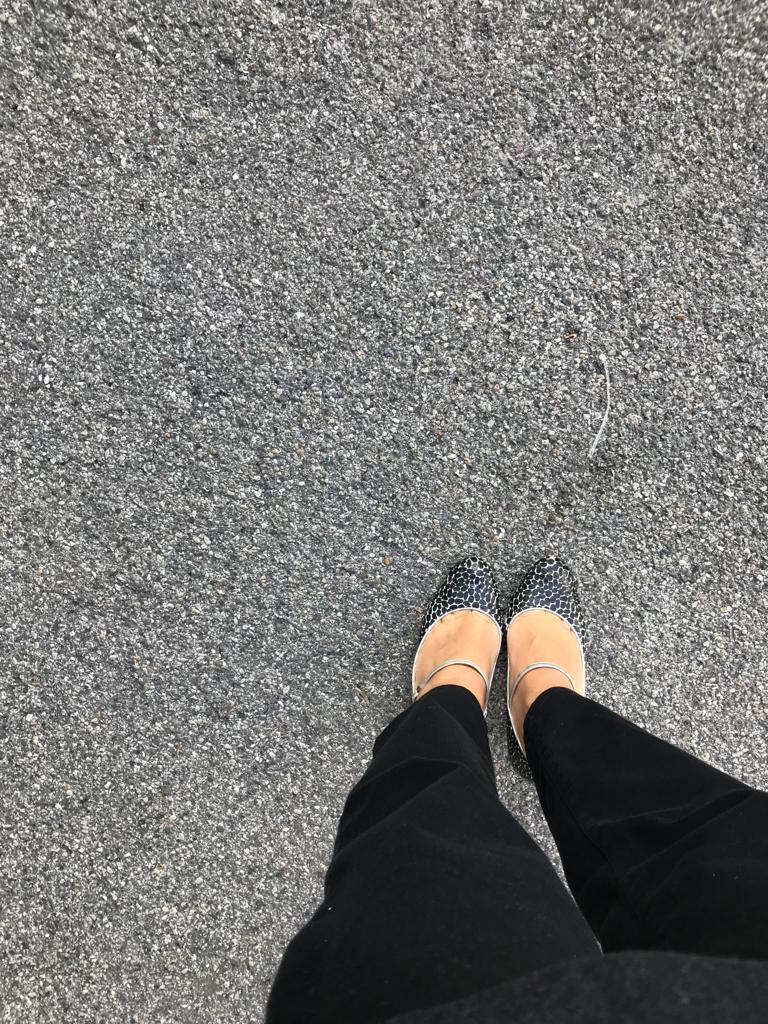
Pointing feet - inspiring from quantity to quality attitude


Low-impact lifestyle: quality, not quantity


What can we do?
Each of us has an impact on the environment. Even if corporate giants arm-in-arm with marketing have shaped the world for us, they can’t make it without our active participation. And the role we play is revealed precisely by how and what we consume.

Since we do not like to wait for change to happen, we choose with our minds what kind of world we want to live in, so we act. Also, we hold ourselves accountable for the choices we make.

Why buy less but better quality?
It is a long-term strategy. You will buy garments that last. Things you will wear for a lifetime, not items to discard after a couple of washings. Same for any other item we use in our everyday life.

This radical shift of perspective from quantity to quality is about educating ourselves to find pleasure in how things are made, not in the simple act of buying. Finally, this alternative lifestyle will reduce our impact on the planet.

So, make it a conscious choice now rather than a forced decision when it’s too late.

From Quantity to Quality Read More »

B-Corp and Fashion

Reading Time: 2 minutes

From overproduction to B-Corp: are brands missing the point of meaningful work?


Ove the past few days, it has emerged that Chloé became a B-Corp. Of course, people welcomed the news with applause. Maybe there were just a few perplexed comments on social media.

Now they are a Benefit Corporation: B-Corp. What does it mean?
Beyond their for-profit business, they want to maximise their positive impact on society and the environment.

What’s the point of becoming a B-Corp in fashion?
The Chloé’s collection shown in Paris was far away from the past magic. Indeed, all the luxury beauty outlined by the former designer, Natacha Ramsey-Levy, was gone.

The new guidance follows a more American way of working that embeds marketing at the brand’s core. We saw a collection peppered with the latest marketing trends – diversity, eco-friendly and ethical themes. And not that those values are wrong, indeed we share them entirely. But we question the fact that they sound like pure marketing.

Anyhow, it will be nice to witness how they’ll manage the actual overproduction model with an eventual lower production level. And see what happens with prices too.

The purpose of a fashion brand


What seems clear is that brands go from overproduction to the B-Corp losing sight of the real point of the work. What makes it a worthy effort.

The scope of an evolved fashion brand is to make beautiful collections, keeping in mind that the only way to obtain this goal is by respecting people involved in the production chains and the planet. Hence, paying proper wages and reducing pollution as much as possible.

Beautiful collections are the expression of good design and meaningful creative ideas. Therefore, the moment we make a respectful work representing a positive vision, all this beauty of thought must translate into outstanding products.

If the style is bland, meaning is lost. Even though the intentions are noble, assuming they are not only marketing tools, in the Chloé fashion show, there is no substance.

To be purpose-oriented is fine, but please don’t forget you are making fashion.
Keep beauty alive–don’t kill the dream.

B-Corp and Fashion Read More »

Awakening: Social and Ethical Consciousness

Reading Time: 2 minutes

Exploring the impact of modern issues on personal responsibility and collective action


Awakening means developing your consciousness – ethical and social – in order to become a better human.

Awakening is an intentional choice. Indeed, it is the act of opening our eyes to realise what happens inside and around us. Once we understand the reality, the damage we have caused to other people and the environment, awakening follows.

Therefore, we become aware that acting without considering the consequences – in other words, acting without a long-term ethical vision – is not a worthy choice.

Awakening requires our eyes to see, our brain to think and pay attention, freeing our conscience to emerge. For instance, we reach a higher level of consciousness by reading books, essays, or newsletters. Following thoughtful leaders. Interacting and sharing ideas in a community. Perhaps we could list other ways, but honestly, meditation is not our field of knowledge.

Ultimately, awakening is free.
So, you can pay someone to turn on the light for you, but then the process is yours, and no one can do it for you.

How does it all connect to fashion?
Believe us, it does. Fashion, as a reflection of our society, is part of a system based on exploitation. Part of the world is living at the expense of others and the planet.

The result of awakening is that we are no longer satisfied with this system. We cann’t take it as it is. So, we want to bring about change.

How do we do it?


We do it by offering you a thoughtful selection. By intentionally choosing fewer itemsonly what we really need. Unique pieces. By no longer conforming to fashion rules but instead being active agents of change. By infusing our own vision and values. More is not the answer. Rather, less but better with more ethical choices.

How do fashion brands do it?
Smaller production runs, higher quality, and shorter and adequately paid work chain. No sales, just real, balanced value. No modern slavery serving fast fashion.

How do you do it?
Consume less. Choose wisely.

Awakening: Social and Ethical Consciousness Read More »

Design Against Waste

Reading Time: 2 minutes

Innovative solutions for a sustainable future


Waste is a major issue in our culture–perhaps one of the biggest. It is undoubtedly a side effect of our lifestyle. Waste is the ignorant byproduct of our times, meaning the etymological non-understanding of what we leave behind.

In other words, it represents a blind and egoistic short-term vision. People simply don’t care. Their children will live in an open-air landfill, but that’s not their concern.

However, the problem is real, devastating, and we cannot ignore it anymore. There’s no way to sweep waste under the carpet or make it magically disappear.

Acknowledging the problem and the environmental cost it carries along, is the first step. But what is the solution?

Design is the answer.
An accurate design is at the core of solving the waste issue. Changing the way we conceive products is absolutely crucial. We need intentionally designed items in every single field and category–fashion, furniture, technology, and beyond.
Products made with eco, recycled materials taht can have multiple lives and eventually enter a circular pattern.
Items made to last. In other words, design against waste.

By the way, this was the standard in the past in terms of lifetime. Products were built to endure. Now, the life of a garment barely exceeds a couple of washes, and a mobile phone lasts less than a year.
Moreover, convenience culture played a significant role in exacerbating wasteful habits and proliferating a throwaway mentality. Buying a new item is cheaper than repairing it. So people throw things away and replace them—even if the new item lasts only a few months. And so, the never-ending cycle continues.

The point is that real designers make good designs. But fashion–like any other industry–is in the hands of people who are more attracted to marketing than design. So It’s unlikely that change will emerge from within the current system.

Unless a new generation of designers, aware of the issue and moved by it, steps forward to make a difference–to change for the better.
We remain optimistic!

Design Against Waste Read More »

Selection vs Quantity

Reading Time: 2 minutes

The power of thoughful choices


Carefully picking out the most suitable items is an interesting point: selection vs quantity. Talking about selection, especially when people are accustomed to a supermarket mentality, is not an easy task.

A while ago, a lady who used to come to our boutique asked to try on an item. When we said her size was sold-out, she replied:
“My size is sold out because you ordered only a few pieces.”

Also, she said it with an ironic grin on her lips, as she intended to belittle our work.

Accidentally and unbeknownst to her, she had hit the point: selecting a few pieces is not a demerit. On the contrary, we firmly believe it is a plus! It grants you uniqueness, which is far better than being the clone of many other people.

Selection vs quantity? We choose selection. In fact, we do this intentionally. To order a few pieces by choosing those of value, the special ones, is a deliberate act. We are at the opposite of the fast-fashion concept. Disposable goods have never been for us. Moreover, the idea of fashion as a supermarket makes us shudder.

A selection of meaningful garments #formodernhumans


Years ago, we were already on this path, and recent events have made this direction even clearer. Choosing an evolved style–and lifestyle–means we don’t need too many things, only the ones that truly make a difference.

We help you create your unique, distinctive individual style. We do it operating with respect for people and the planet. It’s a vision for a better world. It is not about quantity. Of course, it is not.

We cannot please everyone, and we do not appeal to a mass audience. But we can please people like us, a niche of like-minded individuals who share the same values.

It’s a selection of meaningful garments for modern humans.

Selection vs Quantity Read More »