sustainable fashion

The luxury dilemma: what does it mean “to do our work properly” in a broken system?

Reading Time: 5 minutes

FW26 Men’s Fashion Week: unpacking Miuccia Prada’s statement on sustainability


Men’s Fashion Week Fall/Winter 2026/27 has just wrapped up in Milan, bringing the luxury dilemma sharply into focus. Beyond the collections themselves, one statement in particular stood out — a widely shared comment by Miuccia Prada on sustainability.

In a season marked by uncertainty, many brands sought reassurance either in the past through nostalgia or in bold contemporary provocations, while reaffirming tailoring and colour as anchors of meaning. Following a runway show explicitly reflecting on the present moment, Miuccia Prada and co-designer Raf Simons spoke to the press. Sustainability inevitably entered the conversation.
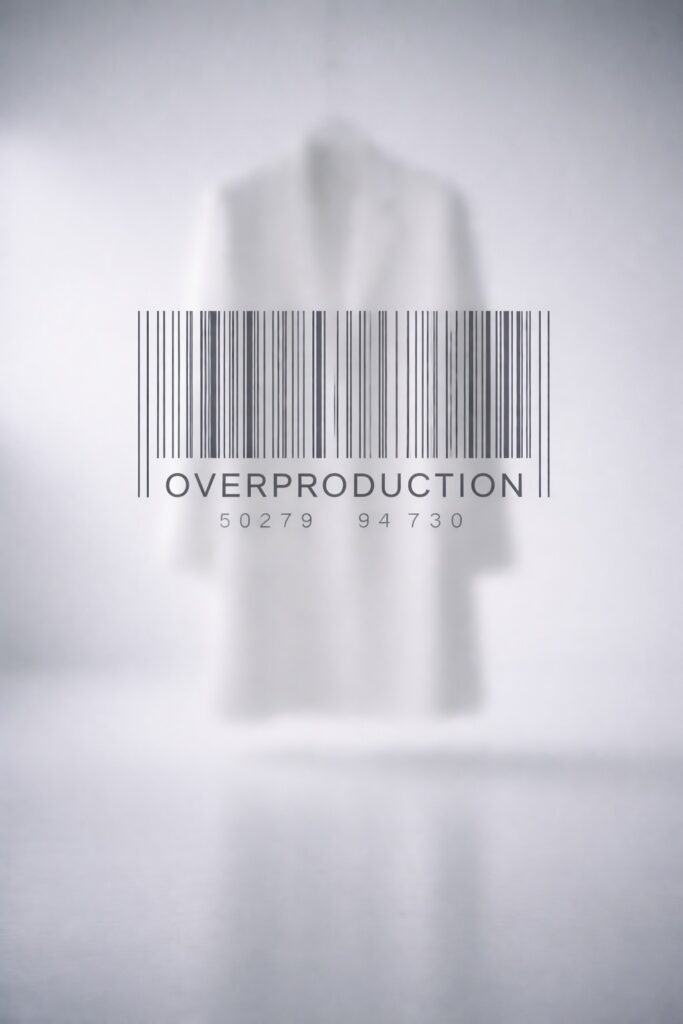
Abstract image of an unrecognisable garment blurred in the background, overlaid with a barcode reading “OVERPRODUCTION”, symbolising the luxury dilemma at the heart of the fashion system.

Luxury fashion and sustainability: pragmatism versus idealism


Miuccia Prada reiterated her long-standing commitment to doing her work conscientiously and striving for excellence. She stated:

“I’m trying to get on with my work and do it properly. If we truly wanted to be sustainable, we’d have to stop everything: no cars, no clothes, no consumption at all. We must be honest and do our work to the best of our ability, bringing creativity, quality, and awareness to it.”

It is a compelling, deliberately provocative statement — one that exposes the tension between idealism and pragmatism in sustainability discourse.

A titan of the luxury fashion industry and a figure known for her intellectual and often contradictory positions, Prada draws a stark dichotomy:

  1. The pure ideal: true, absolute sustainability would require a complete halt to modern industrial life — no cars, no new clothes, no consumption.
  2. The pragmatic reality: since such a scenario is implicitly deemed impossible or unacceptable, the alternative is not withdrawal but “doing our work properly”.

The underlying message is clear: perfection becomes the enemy of improvement. Prada rejects a paralysing purity test in favour of an ethic of incremental responsibility.

The luxury dilemma and its internal contradictions


Yet this statement also reveals a deeper contradiction.

1. A defence of the luxury system
At its core, the quote functions as a defence of high-end fashion’s right to exist. Prada suggests that even the creative and qualitative apex of the industry would fail a test of absolute sustainability. The implicit argument is: if fast fashion is condemned, then so must luxury be — the overproduction model is the same.  And if that happens, society risks losing creativity, craftsmanship, culture.

2. Quality and creativity as a smokescreen
For luxury brands, “quality” (durability, materials, craftsmanship) and “creativity” (cultural and artistic value) are repeatedly invoked as ethical justifications for continued mass production. But this framing sidesteps the central issue: the business model itself.

Whether it is a €50 polyester blouse or a €5.000 nylon bag, the luxury industry still depends on:

  • Seasonal cycles, driving perpetual “newness” and the obsolescence of desire
  • Marketing-driven consumption, creating symbolic rather than utilitarian needs
  • Vast, opaque supply chains, with environmental and social impacts regardless of material quality
  • Manufactured exclusivity and scarcity, fundamentally at odds with the anti-consumption logic Prada herself references

Within this structure, creativity and quality are not neutral values — they are often the very engines of consumption.

Blurred garment with a barcode reading “OVERCONSUMPTION”, symbolising overconsumption as a consequence of the luxury dilemma in fashion. AI-generated image.

3. Intellectual honesty vs corporate reality
There is undeniable honesty in Prada’s acknowledgement that true sustainability would mean “no clothes”. It openly names the conflict at the heart of fashion. Yet the conclusion — “do our work well” — feels like an intellectual sleight of hand.

The problem shifts from systemic change (overproduction, growth imperatives, marketing pressure) to individual ethics: my work, our work. In doing so, responsibility is displaced from the corporation and its structural drivers onto personal integrity.

By articulating the critic’s most radical argument — we should stop everything — Prada positions herself as the sober realist. The critique is acknowledged, absorbed, and then dismissed as unworkable. It is a sophisticated form of containment: recognising the radical in order to defend a softened status quo.

What the luxury dilemma leaves out

  • A false binary
    Prada presents a choice between total civilisational shutdown and business-as-usual with better intentions. This erases the vast middle ground: degrowth, sufficiency, circular systems, and radical business-model innovation.
  • Denial of agency
    As creative director of a billion-euro group, Prada possesses exceptional power to experiment with new models. Retreating to “just doing my work” understates this agency. The argument might be defensible from a junior designer — far less so from one of the most influential figures in fashion.

Final thoughts


One could read the collection itself — clothes that appear worn yet are brand new — as an implicit suggestion: use what you already have. This is a ritual we always cherish at the end of a Prada show, because there is always a message that transcends the clothes. But the more pressing question remains how to build genuinely sustainable models for the fashion business.

Terms like degrowth or smaller production volumes threaten the very structures that allow luxury brands to maintain their cathedrals — architectural, symbolic, and economic. And so they remain largely unspoken.

Miuccia Prada’s statement ultimately becomes a revealing manifesto of the luxury dilemma. It is intellectually lucid about the problem, yet philosophically conservative in its solution. It mobilises the language of ethics — honesty, awareness — to justify the preservation of a system that, by its own admission, cannot exist within true planetary limits.

Focusing on “doing the work at its best” inside a broken model, even with the best intentions of creativity and quality, amounts to a form of managed dissent: it critiques the ends, but fiercely defends the means.

The luxury dilemma: what does it mean “to do our work properly” in a broken system? Read More »
Extra-EU parcel tax approved in Europe to curb ultra-fast fashion, as Italy joins the move

Reading Time: 3 minutes

Can the levy really deter low-cost purchases — or does it serve other interests?


Imagine a new charge on every low-cost fashion parcel from abroad: this is the core of the newly approved Extra-EU parcel tax. The measure represents a European policy intervention designed to make disposable clothing bear more of its real cost. At the same time, it protects local markets from what is increasingly described as unfair competition.

According to the European Commission, in 2025 alone around 4.6 billion items were imported into the EU. Each was valued at less than €150 — the equivalent of approximately 12 million parcels per day. This figure has doubled in just two years. Imports stood at 2.3 billion items in 2023 and 1.4 billion in 2022.

Italy, too, is moving in this direction. In fact, the government plans to introduce a €2 tax on each parcel arriving from outside the EU.

But can such a modest levy really curb the tide of low-cost and ultra-fast fashion purchases? And what are the deeper motivations behind this policy shift?

Europe approves extra-EU parcel tax to curb ultra-fast fashion


A €3 tax on all parcels valued below €150 and shipped from third countries has now been approved in Brussels. The measure is set to come into force on 1 July 2026 and aims to address the growing impact of low-cost e-commerce platforms – not only in fashion, but particularly visible there – such as Shein, Temu, and AliExpress.

The tax will be applied per parcel, not per item. This means that three products shipped together in a single package will incur a total charge of €3, whereas three separate parcels would be taxed €9 in total. 

The structure clearly incentivises consolidated shipping rather than discouraging consumption itself.

Extra-EU parcel tax: Italy targets low-cost imports in bid against unfair competition


Italy is preparing to introduce its own levy on shipments from outside the European Union valued under €150 (approximately $176). At the same time, the government plans to double its financial transaction tax, as Rome seeks additional revenue to fund costly budget amendments, according to official documents.

With around 330 million low-value parcels arriving in Italy each year, and accounting for the likelihood that some sellers will attempt to circumvent the new charge, the government estimates annual revenues of €245 million from the measure.

Specifically, the low-value parcel levy – fixed at €2 per shipment – is projected to raise €122.5 million next year, followed by €245 million annually in both 2027 and 2028, according to parliamentary documents cited by Reuters.

In September, the government led by Prime Minister Giorgia Meloni also projected that the overall tax burden – defined as total taxes and social contributions relative to GDP – would rise to 42.8% this year, up from 42.5% in 2024. This places Italy among the most heavily taxed economies in the developed world.

Some considerations: what are the real reasons behind this?


The extra-EU parcel tax represents Europe’s most direct challenge yet to Chinese ultra-fast fashion as a business model. However, this legislative move does not appear to be driven primarily by environmental or sustainability concerns. Rather, it functions as a form of industrial protectionism, aimed at shielding European fast-fashion producers from external competition.

This raises an uncomfortable but necessary question: if fast fashion is widely acknowledged as destructive and unsustainable, on what grounds should its European version be protected?

Ultimately, we must also ask whether a €3 or €2 levy can genuinely deter the purchase of ultra-low-cost goods. If the tax fails to alter consumer behaviour, it becomes reasonable to conclude that its true purpose is simply to redirect significant sums into national or European coffers.

And these sums are far from negligible.

Taking the 2025 estimate of 12 million parcels per day and multiplying it by €3 gives a theoretical annual revenue. This total exceeds €13 billion.

A considerable income for governments, even if consumer behaviour remains unchanged.

Extra-EU parcel tax approved in Europe to curb ultra-fast fashion, as Italy joins the move Read More »

Greenwashing: The system is designed to fail. It’s time to see clearly

Reading Time: 3 minutes

Our guide to spotting greenwashing — born from witnessing the system’s hijacking — now available in Italian


How can people tell what is truly sustainable — or confidently say: this is greenwashing?

Let’s take one example we’ve just shared: African organisations are accusing a major UN circularity project of unreliable data and a tainted process.
This isn’t just a failure; it’s a hijacking.

But how can we distinguish between genuine initiatives and those that are not?
The core conflict is no longer just about data — it’s about who gets to define circularity and sustainability.

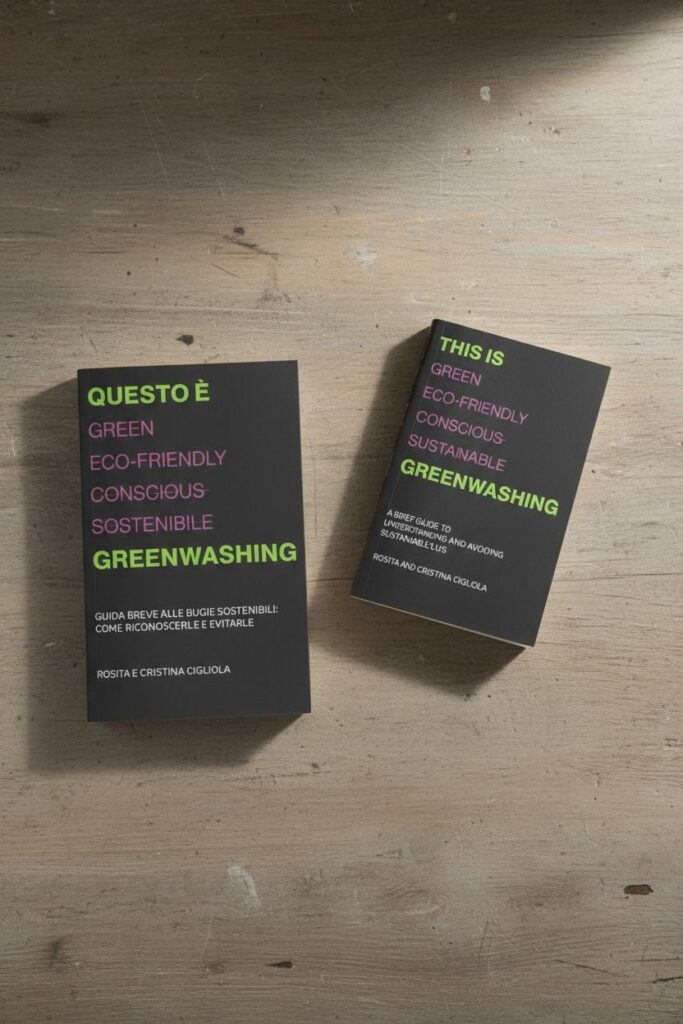
Buy This is Greenwashing and Questo è Greenwashing - photo of both book covers.
Questo è greenwashing – This is Greenwashing

Greenwashing: A system designed to fail


When fast-fashion entities help set the rules for a UN process meant to regulate them, the outcome is predictable: a system designed to fail.
In other words, a system that protects overproduction and waste under the guise of sustainability.

This is greenwashing at the highest level — the green fog at its thickest — designed to confuse us into compliance while the real work of change is undermined.

And this is precisely why we wrote This is Greenwashing.

This eBook goes beyond spotting a fake “eco-friendly” label.
It’s a guide to understanding the systemic lies that corrupts projects like the UNEP’s. It equips you with tools to see through the green fog created by the very systems meant to protect us.

We wrote it because when regulation fails — or is hijacked — awareness becomes our strongest line of defence.

In a world where the credibility of global environmental governance hangs in the balance, we must equip ourselves with the power to see clearly, demand better, and stop being manipulated.

This is Greenwashing – Now available in Italian


🌍 Now available in Italian: Your guide to seeing through the green fog
We are proud to launch This Is Greenwashing in Italian.

This guide will help you:
✔ Decode the jargon and spot lies at a glance
✔ Understand the tactics used not just by brands, but by entire systems to appear “green”
✔ Arm yourself with practical knowledge to make informed choices

In a system designed to fail, knowledge isn’t just power — it’s resistance.

📘 🇮🇹 Get your Italian eBook here: books2read.com/u/mYJ8lP
📘 🇬🇧 Get your English eBook here: https://books2read.com/u/bpgxOX

📣 Please help spread the word by leaving a review — it makes all the difference.

“This is greenwashing’s greatest crime: distracting us with false solutions as the planet burns.”

Spot the lies. Demand better.

P.S. Share this with anyone who questions the ‘sustainable’ façade. It’s time we clear the green fog, together.

 🌿 Now available as an eBook — the print version will follow.

Greenwashing: The system is designed to fail. It’s time to see clearly Read More »

Secondhand fashion and overconsumption: Is thrifting the new fast fashion?

Reading Time: 3 minutes

A study in Scientific Reports finds that secondhand markets can encourage the same wasteful behaviours they were meant to replace


In This is Greenwashing, we argued that secondhand fashion is an important tool — but only after a dramatic reduction in overall consumption. A new nationally representative study of 1,009 U.S. consumers supports that cautionary message.

Published in October 2025 in Scientific Reports (a Nature Portfolio journal), the paper — titled “Secondhand fashion consumers exhibit fast fashion behaviours despite sustainability narratives” — finds that secondhand purchases frequently supplement, rather than replace, new clothing purchases. In many cases, they are also associated with short garment life spans and rapid turnover.

Core finding & central paradox


The big takeaway: Secondhand buying does not reliably displace new buying. The study found that people who spent more on used clothing also tended to spend significantly more on new clothing. This means the most engaged secondhand shoppers are often also the biggest buyers in the primary market.

The paradox: The secondary market sometimes reinforces the same high-turnover, short-lifespan behaviours associated with fast fashion — creating a rebound rather than a reduction in environmental impact. Resale, promoted as a sustainability fix, can reproduce fast-fashion dynamics (high volumes, short retention) unless overall consumption declines.

Key evidence 

  1. Correlation: new and used spending move together
    The study found that people who buy a lot of used clothing are also the biggest buyers of new clothing. Instead of replacing new purchases, secondhand shopping often adds to them.
  2. High-volume, short-lifespan behaviours:
    A cluster analysis identified a majority group (around 59%) that frequently purchases and retains garments for shorter periods. Within this group, 37.9% reported disposing of items within a year and 14.2% within one month. The study also found that 40% of respondents owned clothing they had never worn. These patterns point to high turnover rather than extended use.
  3. Younger consumers drive the trend:
    Younger consumers (Gen Z and Millennials) are the most active in both resale and primary markets, increasing the risk that secondhand and new purchases co-occur rather than one replacing the other.
  4. Knowledge–action gap:
    Knowledge alone did not produce sustainable action. The authors report that higher sustainability knowledge did not reliably predict lower consumption or longer garment retention.

Psychological drivers the authors highlight


The study suggests two key behavioural theories explain this paradox:

  • The rebound effect: The money saved or the “green” feeling from buying secondhand can psychologically or economically justify buying more things, offsetting the environmental benefit.
  • Moral licensing: The act of making a “virtuous” choice (buying used) gives people a sense of moral “credit,” which they then use to permit themselves less sustainable behaviours (buying more, discarding faster).

Bottom line


This paper does not discredit the idea of thrifting — it reveals its limits. Secondhand is part of the sustainability toolkit, but it is not a silver bullet. Without cultural and structural changes that reduce total acquisition (buy less, value sufficiency, design for durability and repair), resale markets risk becoming another channel for fast-fashion-style overconsumption. If sustainability is the goal, the emphasis must be on owning and buying less — whether items are new or used.

Final thoughts


This report clearly highlights the connection between the secondhand fashion market and overconsumption, as it increasingly mirrors the behaviours of fast fashion.

The findings directly challenge the simplistic narrative that “thrifting is always sustainable.” That is only a partial truth. The problem is not just where we shop, but how much we consume. The secondhand market, in its current form, is not slowing down the fast-fashion system — it is becoming another channel for overconsumption.

True sustainability will require a cultural shift from constant acquisition to sufficiency — buying and owning less overall, whether new or used.

However, one point struck us. We find the knowledge–action gap profoundly discouraging. If knowledge alone is not enough to serve as a catalyst for change, what else is needed to spur us into action?

Secondhand fashion and overconsumption: Is thrifting the new fast fashion? Read More »

The (Un)Sustainable Fashion Awards 2025: Greenwash event at Milano Fashion Week

Reading Time: 4 minutes

A green carpet during Milano Fashion Week to celebrate fashion’s greatest paradox


On September 27, 2025, the Teatro Alla Scala hosted the CNMI Sustainable Fashion Awards, the official green carpet event for Milano Fashion Week SS26. Its mission: to celebrate the innovators and Italian fashion houses, ostensibly driving the industry toward a sustainable future.

The event, organised by the Camera Nazionale della Moda Italiana in collaboration with the UN Alliance for Sustainable Fashion, promised to honour those distinguished by their “vision, innovation, commitment to craftsmanship, circular economy, human rights, environmental justice, and biodiversity.”

A symbolic green carpet welcomed guests like Anna Wintour and Naomi Campbell, who wore outfits made from sustainable materials, presenting a unified front for a greener fashion industry.

The celebration: Nine green awards 


The ceremony proceeded to distribute nine awards, each targeting a key pillar of sustainability:

  • The SFA Craft and Artisanship Award: Tod’s Group
  • The SFA Circular Economy Award: Regenesi
  • The SFA Biodiversity and Water Award: Ermenegildo Zegna Group
  • The SFA Climate Action Award: Schneider Group
  • The SFA Diversity and Inclusion Award: Willy Chavarria
  • The SFA Groundbreaker Award: Aura Blockchain Consortium
  • The SFA Education of Excellence Award: Kiton
  • The SFA Human Capital and Social Impact Award: Saheli Woman
  • The Bicester Collection Award for Emerging Designers: The Sake Project

The pinnacle of the evening saw Anna Wintour present the New Legacy Award to Giorgio Armani. 

However, by all official accounts, it was a night of triumph—a consolidation of brands’ sustainable missions, widely covered in the press as a positive step forward. 

Yet, according to Ansa, “Prosecutors request judicial administration for Tod’s. The Milan Public Prosecutor’s Office has requested that high-end shoemaker Tod’s spa be put into judicial administration over alleged worker exploitation at factories run by Chinese people in its production chain, sources told ANSA on Wednesday, confirming a Reuters report.”

After all, it’s even ironic with all the brands put under investigation for labour exploitation. Tod’s is simply the last one added to the list. How does CNMI evaluate this particular aspect of “sustainability?”

Sustainable Fashion Awards: What do they even mean?


And so, for one night, all these people wore sustainable materials. The headlines celebrated a green vision. The brands were applauded.

But this is where we must pause and ask: What does any of this actually mean? Does anyone there have an idea of what “sustainable” means? 

Does a single award cancel out a brand’s vast linear production model? Does it justify the immense water and land use of a global supply chain? And does wearing one sustainable outfit on the red carpet make the entire attending house sustainable? Really, what are we talking about?

Sustainability: The uncomfortable truth


The uncomfortable truth is this: true sustainability in the fashion industry, as it currently operates, is a myth.

Celebrating “Sustainable Fashion” at a glitzy awards gala is the industry’s greatest paradox. These awards create the illusion of progress while the core system—built on overproduction, overconsumption, and globalised, opaque supply chains—remains fundamentally unchanged.

A few sustainable collections or material experiments are not enough to offset the environmental and social footprint of a multi-trillion dollar industry. 

In order to be truly sustainable, the fashion industry wouldn’t need awards; it would need to be redone from scratch. The very nature of these ceremonies exposes their inherent contradiction, a point perfectly illustrated by an excerpt including a telling anecdote from our book This is Greenwashing:

“While the name suggests recognition of progress towards circularity or sustainability, these awards rarely go to small, independent brands. Instead, they spotlight the same top fashion houses – the ones with the largest environmental footprints and marketing budgets.
At one edition of the Green Carpet Fashion Awards, designer Antonio Marras presented a dress crafted entirely from recycled fabric. Yet, because the fabrics weren’t sourced from certified sustainable labels, the jury asked him to remake the garment from scratch. The irony of this anecdote is striking—is it about promoting recycling, or ticking certification boxes? And really, is there anything more unsustainable than that?” 

Yet here we are, celebrating something that doesn’t even exist. This story encapsulates the entire paradox. It’s not about substance; it’s about spectacle. With the Sustainable Fashion Awards 25, we are not celebrating sustainability. We are celebrating its carefully branded illusion.


Want to learn how to spot the illusion?
Discover more in This is Greenwashing.

🌍 Buy the eBook (English Edition) on your favorite digital store: https://books2read.com/u/bpgxOX

The Italian Edition will be released in a few days!

The (Un)Sustainable Fashion Awards 2025: Greenwash event at Milano Fashion Week Read More »