suite123

Dear Sustainable Brands: Are You Consistent?

Reading Time: 2 minutes

Sustainable brands VS consistency


Dear sustainable brands, let’s make a point on consistency.

Consistency is fundamental for building trust, so it should be for sustainable brands. Also because they cover themselves with an ethical patina that makes them appear better than the others. But, on the contrary, it seems that these new ethical brands have a problem with it.

Their purpose is to make a change. But if so, it’s not clear why they still follow outdated systems. Or they try to reach success by partnering with channels that have nothing to do with sustainability.

The point on consistency

Sustainable brands must be consistent with their message.
Do you agree? So, the question is: do they want to make a change for real?
If that is their goal, why do they sell their low-impact ethically-made garments through retailers that collect almost every designer on planet earth?

Isn’t it a matter of consistency?
These retailers sell huge quantities of clothing and accessories. Therefore, their business isn’t sustainable. Even if they proudly show a sustainable section, as most of them do. Which makes you understand the power of marketing and the trick behind sustainability.

If consistency was a fundamental value for them, they would find other ways to sell their products. But they all dream of being sold by the same old big groups. And so, they want to change, but not really.

Sustainability is a promise no one can keep, but still, everyone wants to sell. Ethical marketing, if not supported by proper choices and actions, is just smoke in the eyes. In other words, it is greenwashing.

Dear sustainable brands, you cannot change the world by playing the old game. Forget the status quo if you want to change for real. If you are seriously committed, you need to craft a new strategy. You’ll change the world with new patterns, new rules, and a new language.

So, if you want to be trusted, change the system, not only your marketing!

Dear Sustainable Brands: Are You Consistent? Read More »

A Celebration of Friendship

Reading Time: 3 minutes

A holiday in Tuscany for a special occasion


We spent a weekend in Lucca, immersed in its charm and history, with a beautiful celebration of friendship that will stay with us forever. Frank, our dearest Norwegian friend, invited us to celebrate his birthday party, and it was a special one since he turned 70.

Specifically, we stayed some days at Villa Adriano in Borgo a Mozzano, Tuscany. That is one of the most welcoming villas we ever saw; surrounded by abundant green nature, a wonderful view and silence. The rooms, decorated with pieces picked from different places but harmoniously blended together, are an invitation to stay. Also, the pool with its gazebo and bar is so marvellous. That’s the perfect place to savour a slow lifestyle.

Villa Adriano – Tuscany

And so first, a pool birthday party on Friday encouraged connections with people from Europe to the Middle East. Of course, we wore our summer outfits: the open-back white cotton apron dress for Ro and the fuchsia v-neck one-piece swimsuit with a turquoise silk maxi skirt for Cri. So we enjoyed a lovely day chatting and dancing till evening.

A celebration of friendship
Palazzo Pfanner - Lucca
Palazzo Pfanner – Lucca

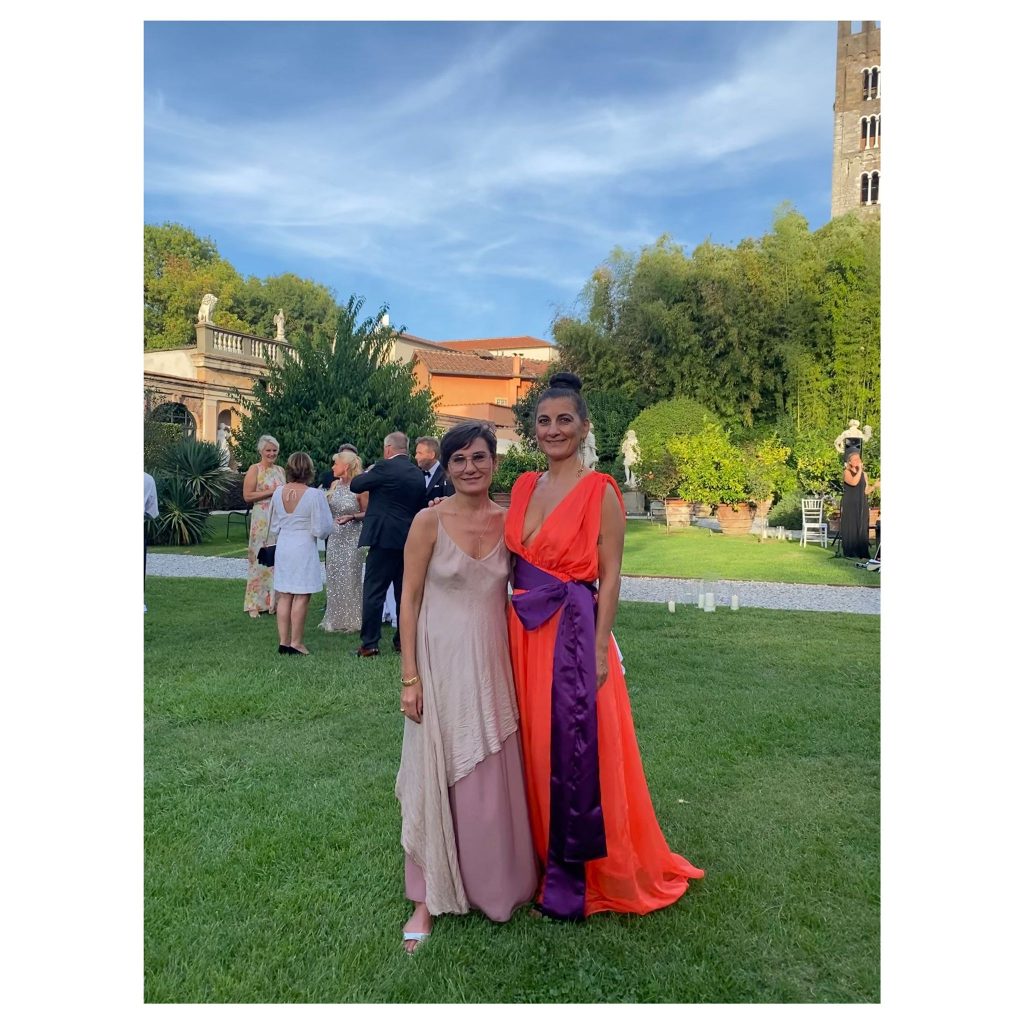
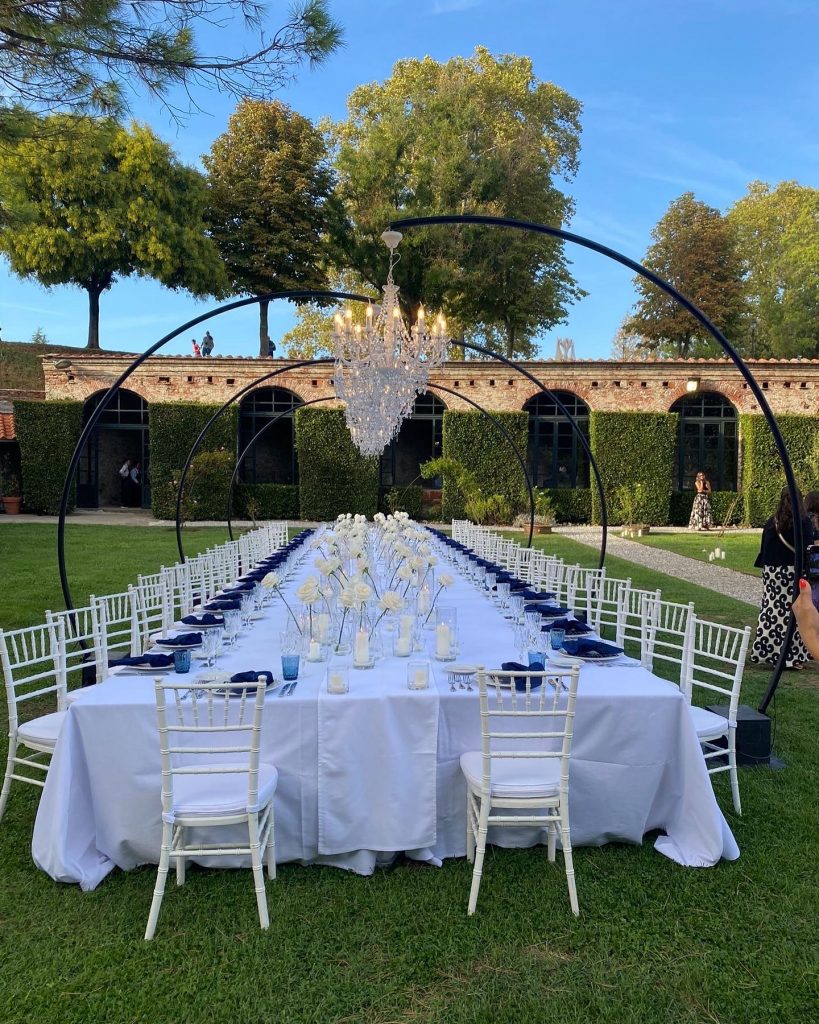
The official party was the following day, Saturday. The location – Palazzo Pfanner, along the ancient Walls of Lucca, which per se is stunning, was beautifully decorated for the occasion. A full-white setting for candles, roses, and a big table with suspended chandeliers. Cri opted for a coral red silk maxi gown, wide v-neck gathered top, plus a contrasting purple bow belt. An asymmetric nude pink double layered silk top paired with a lavender maxi skirt for Ro.

Palazzo Pfanner – Lucca

The atmosphere was elegant but not snobbish. However, more than a birthday party, it was a genuine celebration of friendship, togetherness and love.

A celebration of friendship
Palazzo Pfanner – Lucca

Celebrating friendship & values


In fact, inclusion, respect, and kindness are some of the core values that Frank promotes. These fundamental principles bridge different cultures, fostering an open and positive attitude toward others. And that is truly inspiring!

By the way, we share these values. More importantly, they serve as a strong foundation for driving change and making the world a better place.

Thank you, Frank!

A Celebration of Friendship Read More »

How Products Change

Reading Time: 2 minutes

Changing fashion to change our culture


Products change when consumers’ tastes change. In other words, products evolve as consumers’ tastes shift. However, given that consumption is all about cheap and disposable products, we are in big trouble.

The fashion industry appeared to be moving in a new direction, aiming to preserve the environment and improve people’s lives. But reality revealed even more troubling consumption habits, as in the case of ultra-fast fashion, which we discussed in our previous post.

The combination of overproduction and overconsumption is the economic pattern that dominates the fashion industry—a model mirrored across many other sectors. Therefore, this reveals a deeper cultural issue: the growing preference for disposable products, a habit that has also deeply influenced younger generations. In fact, accessible, cheap products give the illusion of richness.

Mass culture is the commercialisation of culture, where products products are created solely for profit. People are so immersed in this overwhelming abundance of options that it feels nearly impossible to escape. Or at least, that’s how it appears.

But climate change is the issue we need to face, and it’s urgent. And so, how do we change consumers’ tastes?

Change products: fashion and culture


Changing fashion means changing culture. Fashion creates products that reflect our culture, revealing society’s tastes. In this way, fashion tells the story of what we consume. In other words, altering what we consume leads to changes in fashion, and ultimately, in our culture.

The change begins by recognising the new needs and incorporating them into the design of meaningful products for people who care.

As a boutique and industry insiders, we contribute by curating only valuable garments with good design. And by offering a different perspective for people like us, those who do not recognise themselves in the mass trends.

Your choice, if you care, is evolving towards a conscious lifestyle aiming to change for the better. Or leave things the way they are, persisting with the blind exploitation of people and the planet.

In the end, you have two options: either you can play the game, or you can change it!

How Products Change Read More »

From Fast To Ultra-Fast: A Cultural Regression

Reading Time: 2 minutes

Is ultra-fast fashion what people learned from the pandemic?


From fast to ultra-fast fashion, we are witnessing a cultural regression in the fashion industry. And so, in our society. Something that makes you question the human ability to learn, especially in the face of such serious events we have lived in lately.

Forget the long-awaited thoughtful consumption habits! Started after the pandemic, this trend represents a sharp and clear setback.

To reduce its impact on the planet, the fashion industry was supposed to evolve, experimenting with new sustainable paths. The pandemic, which worked as a catalyst, highlighted this urgent matter. Therefore, a more balanced structure and timing, shorter production chains, and healthier consumption habits seemed a conscious evolution to pursue. A need to change for the better.

The ultra fast growth


Unfortunately, the industry shifted from fast fashion to ultra-fast fashion! And you know what? Consumers really loved it!
Astonishing–that is the biggest change trending everywhere.

Now with 5€, you can buy a dress. Certainly, this new production trend is more polluting than fast fashion. But does anyone care? Even if it is more polluting, ultra-fast fashion has become very very popular.

Ultra-fast fashion and resale


Apparently, at the same time, the resale of extremely poor-quality items is growing. But what is the point of reselling ultra-fast fashion garments? Reselling garments made with a zero concept of durability is just smoke and mirrors.

Indeed reselling garbage clothing that, if you are lucky, will survive the first wash simply hides a push towards overconsumption. The industry produces more and more cheap garments, and as a consequence, both young and not-so-young consumers continue to buy more and more pieces. And they can even resell those items, but the overconsumption trick behind it is clear.

All of this has nothing to do with sustainability. So, when they say Gen Z prioritises sustainability, what are they talking about? And what do they mean by sustainability?

The wrong answer


After the pandemic, the fashion industry shifted from fast to ultra-fast fashion, generating mountains of garbage clothing with a tragic impact on both people and the planet. However, the problems we are witnessing won’t be solved by producing more and consuming more! Yet, it seems that very few people truly care. Do you care?

From Fast To Ultra-Fast: A Cultural Regression Read More »

Where Is Fashion Heading?

Reading Time: 2 minutes

A lack of vision, provocations, and big logos


To understand where fashion is heading, we should ask if the industry can change and evolve from its current state of confusion.

Some say fashion is back. Perhaps, those who say that refer to the possibility of showing new collections physically. Or, to the opportunity of wearing more elaborate outfits for special occasions and parties, which eventually restarted after covid.

Between provocations and big logos


But, among provocations and logoed items, finding new concepts is very difficult. Indeed, the range spans from Balenciaga’s garbage bag to logos exposed everywhere. In other words, mass products–that’s all. And if you want valuable garments because you don’t recognise yourself in that imagery, you have to dig a lot to find rarities.

Since fashion is an industry like any other, it tends to favour big companies, meaning those who can invest money are the ones who trend.

where is fashion heading


Keeping an eye on international designers searching for niche garments, we do not see any real change. Brands struggle to adapt to the new post-pandemic reality, yet no new proposals are being released. Neither do they consider that if reality has changed, what they have done so far will not work anymore?

Fashion industry vs change


Nevertheless, the industry players insist on the old patterns. So, they all follow the same old rules, distribution scheme and dates–and the same production models. Also, the same discount policies! In short, whatever caused the fashion system’s implosion long before the pandemic.

A lack of vision is palpable, paired with the need to fit into a system even if that system doesn’t work. As a result, nothing new can emerge—neither in design, manufacturing nor sales strategies.

A lot of talks about sustainability, which you can translate into greenwashing. In the end, change stops at the conversations. Conversations about change, of course!

Change means dismantling, restarting, and experimenting. It takes courage and a lot of creativity. Most importantly, there’s no guarantee of success. So, where fashion is heading?

Where Is Fashion Heading? Read More »