fast fashion

French fast fashion law: does it actually address the problem?

Reading Time: 6 minutes

What are the real reasons behind the law: environmental protection or protectionism?


On June 29, the French Parliament passed the fast fashion law. It is a landmark bill designed to curb the rise of ultra-fast fashion, targeting major Asian e-commerce platforms such as Shein, Temu, and AliExpress. The legislation uses two criteria to classify ultra-fast fashion: the volume of clothing placed on the market and the relative cost of repairing garments. Each company’s score determines the penalties it faces.

Tabled two and a half years ago, the law introduces per-item fees that could reach up to €20 by 2030. However, the levy remains capped at 50% of a product’s pre-tax price. It also bans advertising for ultra-fast fashion brands, including promotions by social media influencers. Companies must display messages encouraging more moderate consumption. Part of the revenue will be directed towards textile collection and recycling infrastructure.

At first glance, this appears to be a significant step forward in Europe’s fight against the environmental impact of disposable clothing. The textile industry is responsible for nearly 10% of global greenhouse gas emissions. The rapid growth of platforms offering ultra-cheap garments has only intensified concerns over overproduction and waste.

But before celebrating, we should ask some uncomfortable questions. Especially when viewed alongside the EU-wide Extra-EU parcel tax approved just six months ago.
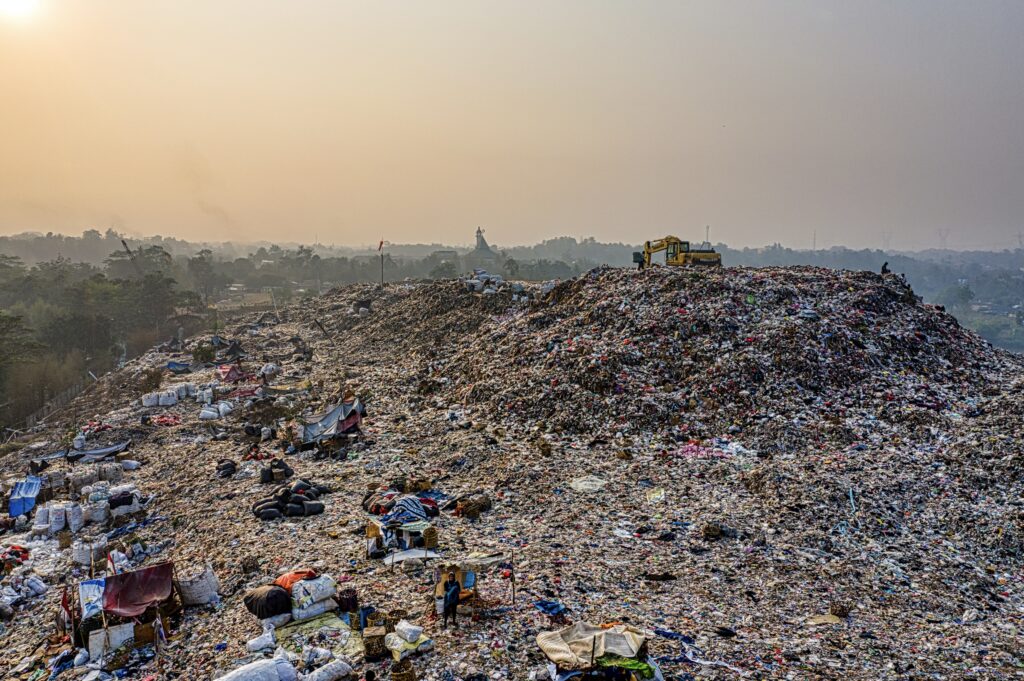

Huge landfill of textile waste questioning whether the French fast fashion law actually addresses the problem

The French fast fashion law: why are European brands exempt?


The most controversial aspect of the legislation is not what it includes, but what it leaves out.

As Green Party lawmaker Charles Fournier pointed out during the parliamentary debate, the original proposal was “considerably scaled back”. European fast fashion companies such as Zara, Kiabi and H&M are largely excluded from measures targeting ultra-fast-fashion platforms.

But is Zara’s business model fundamentally different from Shein’s? Both produce massive volumes of clothing, much of it low-quality and designed for short-term use. Both contribute to the same environmental crisis. Yet under this legislation, French and European fast-fashion giants face no penalties, no advertising bans, and no regulatory pressure.

If the environmental objective is to reduce the impact of disposable fashion, why should similar business models be treated so differently?

This is the same question we raised in December when the EU approved the Extra-EU parcel tax. If fast fashion is destructive and unsustainable, on what basis should its European version be exempt from comparable measures?

This isn’t environmental policy. It’s industrial protectionism dressed in green clothing.

A fragmented European approach


The French law also highlights a broader problem: Europe still lacks a coherent strategy.

In December 2025, the EU introduced a €3 charge on parcels valued below €150 entering the bloc from outside the EU.  Italy followed with its own €2 per-parcel levy, explicitly projecting €245 million in annual revenue. 
At the time, we noted a critical flaw: the tax applies per parcel, not per item. Three items shipped together incur the same €3 charge as a single item – which incentivises consolidation, not reduced consumption.

Now France has introduced a different system altogether: a per-item fee that specifically targets Asian platforms while leaving European competitors untouched.

The result is a patchwork of national and European measures rather than a coordinated policy addressing the environmental impact of fast fashion across the Single Market.

If Europe is serious about tackling overproduction and textile waste, shouldn’t the response be equally consistent?

The uncertainty surrounding the advertising ban


Among the law’s most significant provisions is the ban on advertising by ultra-fast fashion companies, including influencer promotions.

As explained above, the advertising ban only applies to companies classified as ultra-fast fashion under the law’s scoring system.

However, its future remains uncertain. The European Commission has questioned whether this measure is compatible with EU law. France argues that it is relying on principles similar to those used to regulate advertising for products such as alcohol and cigarettes, but if the Commission ultimately disagrees, the ban could become unenforceable.

And if the ban falls, what’s left? A per-item fee that – even at its maximum €20 by 2030 – remains capped at 50% of the product’s pre-tax price. For a €10 item, that means a maximum fee of €5. Hardly prohibitive.

This raises a troubling possibility: was the law designed to look tough while containing a built-in escape clause? 

The French government can claim victory on environmental grounds, but if the key measures are struck down or prove unenforceable, the actual impact will be minimal.

The revenue question remains unanswered


When we analysed the EU parcel tax in December, we asked whether measures presented as environmental policy might also serve another purpose: generating public revenue. 12 million parcels per day at €3 each would generate over €13 billion annually – a staggering sum that would flow into government coffers.

The French law attempts a more virtuous framing – fees will go “towards collection and recycling infrastructure.” But without transparency on how much will actually be collected, whether it will genuinely fund recycling capacity, or if the infrastructure can even handle the volume, scepticism remains warranted.

Will the fees collected from Shein purchases be used to build actual recycling facilities? Or will they disappear into general budgets while the mountains of textile waste continue to grow?

What genuine reform would look like

If Europe were truly serious about addressing fast fashion’s environmental impact, we would see measures that apply equally to all players – regardless of their country of origin. 

Genuine reform might include:

  • Minimum sustainability standards for all clothing sold in the EU
  • True cost pricing that accounts for environmental externalities
  • Product durability requirements and mandatory repair rights
  • An outright ban on destroying unsold inventory
  • Supply chain transparency to address environmental and forced labour concerns


Instead, we’re getting a fragmented, inconsistent approach that protects domestic incumbents while appearing to take action.

Final thoughts


The French fast fashion law is not without merit. It signals that European policymakers increasingly recognise the environmental challenges posed by disposable fashion and represents one of the most ambitious attempts so far to regulate the sector.

But let’s not mistake it for what it isn’t. 

This is political theatre – a gesture that appears tough on Asian platforms while carefully exempting European brands whose business models are not fundamentally different.

The question we posed in December remains unanswered: if fast fashion is destructive — as we all agree it is — why are we protecting our own version of it?

Until European policymakers confront this contradiction honestly – and apply the same environmental standards to Zara, Kiabi, and H&M that they apply to Shein and Temu – the French fast fashion law will remain what it appears to be: tariffs dressed as sustainability, with the environment serving as a convenient pretext for industrial protection rather than a genuine environmental objective.

The environmental challenges created by fast fashion are global. Any lasting solution will ultimately need to be equally consistent.

French fast fashion law: does it actually address the problem? Read More »

Extra-EU parcel tax approved in Europe to curb ultra-fast fashion, as Italy joins the move

Reading Time: 3 minutes

Can the levy really deter low-cost purchases — or does it serve other interests?


Imagine a new charge on every low-cost fashion parcel from abroad: this is the core of the newly approved Extra-EU parcel tax. The measure represents a European policy intervention designed to make disposable clothing bear more of its real cost. At the same time, it protects local markets from what is increasingly described as unfair competition.

According to the European Commission, in 2025 alone around 4.6 billion items were imported into the EU. Each was valued at less than €150 — the equivalent of approximately 12 million parcels per day. This figure has doubled in just two years. Imports stood at 2.3 billion items in 2023 and 1.4 billion in 2022.

Italy, too, is moving in this direction. In fact, the government plans to introduce a €2 tax on each parcel arriving from outside the EU.

But can such a modest levy really curb the tide of low-cost and ultra-fast fashion purchases? And what are the deeper motivations behind this policy shift?

Europe approves extra-EU parcel tax to curb ultra-fast fashion


A €3 tax on all parcels valued below €150 and shipped from third countries has now been approved in Brussels. The measure is set to come into force on 1 July 2026 and aims to address the growing impact of low-cost e-commerce platforms – not only in fashion, but particularly visible there – such as Shein, Temu, and AliExpress.

The tax will be applied per parcel, not per item. This means that three products shipped together in a single package will incur a total charge of €3, whereas three separate parcels would be taxed €9 in total. 

The structure clearly incentivises consolidated shipping rather than discouraging consumption itself.

Extra-EU parcel tax: Italy targets low-cost imports in bid against unfair competition


Italy is preparing to introduce its own levy on shipments from outside the European Union valued under €150 (approximately $176). At the same time, the government plans to double its financial transaction tax, as Rome seeks additional revenue to fund costly budget amendments, according to official documents.

With around 330 million low-value parcels arriving in Italy each year, and accounting for the likelihood that some sellers will attempt to circumvent the new charge, the government estimates annual revenues of €245 million from the measure.

Specifically, the low-value parcel levy – fixed at €2 per shipment – is projected to raise €122.5 million next year, followed by €245 million annually in both 2027 and 2028, according to parliamentary documents cited by Reuters.

In September, the government led by Prime Minister Giorgia Meloni also projected that the overall tax burden – defined as total taxes and social contributions relative to GDP – would rise to 42.8% this year, up from 42.5% in 2024. This places Italy among the most heavily taxed economies in the developed world.

Some considerations: what are the real reasons behind this?


The extra-EU parcel tax represents Europe’s most direct challenge yet to Chinese ultra-fast fashion as a business model. However, this legislative move does not appear to be driven primarily by environmental or sustainability concerns. Rather, it functions as a form of industrial protectionism, aimed at shielding European fast-fashion producers from external competition.

This raises an uncomfortable but necessary question: if fast fashion is widely acknowledged as destructive and unsustainable, on what grounds should its European version be protected?

Ultimately, we must also ask whether a €3 or €2 levy can genuinely deter the purchase of ultra-low-cost goods. If the tax fails to alter consumer behaviour, it becomes reasonable to conclude that its true purpose is simply to redirect significant sums into national or European coffers.

And these sums are far from negligible.

Taking the 2025 estimate of 12 million parcels per day and multiplying it by €3 gives a theoretical annual revenue. This total exceeds €13 billion.

A considerable income for governments, even if consumer behaviour remains unchanged.

Extra-EU parcel tax approved in Europe to curb ultra-fast fashion, as Italy joins the move Read More »

French Senate passes law to curb ultra-fast fashion 

Reading Time: 2 minutes

Targeting exploitative practices—or protectionism against China?


On Tuesday, 10 June, the French Senate approved a law to regulate ultra-fast fashion, with provisions that could ban advertising by Chinese e-commerce giants like Shein and Temu. The move amplifies France’s push to rein in the textile industry’s environmental toll—but raises questions about whom the law truly serves.

Last year, France’s National Assembly (the lower house) passed a bill to mitigate the textile sector’s ecological damage. Now, the Senate has voted nearly unanimously for a modified version, drawing a sharp line between fast fashion and ultra-fast fashion. The latter—dominated by Shein’s 7,200 daily new designs and Temu’s $5 dresses—faces stricter rules, while European brands like Zara and Kiabi escape the heaviest burdens.

The environmental stakes are undeniable. Ultra-fast fashion’s rock-bottom prices come at a cost: 35 garments are discarded every second in France, and the average person buys 48 items a year, according to the state agency Ademe. The law imposes penalties of up to €10 per item (or 50% of the pre-tax price) by 2030 for non-compliance with sustainability criteria.

But the political subtext is harder to ignore. French retailers like Jennyfer (liquidated in April) and NafNaf (in receivership since May) have long blamed Chinese competitors for their decline. By tailoring restrictions to platforms like Shein, the Senate risks framing this as a trade war—not a principled stand against exploitation.

Before implementation, the law must clear procedural hurdles: EU notification and reconciliation between parliamentary versions. Yet its asymmetry is already glaring. The bill attacks the symptom (ultra-fast fashion’s waste) while sidestepping the disease (an industry-wide race to the bottom on labour and ecology).

Final thoughts


The fast and ultra-fast fashion market is undeniably expanding—but so too are its consequences. These aren’t just environmental disasters; they’re social ones, built on exploited labour and disposable consumption. If the solution exempts European players clinging to the same model, is this really about ethics—or just economic self-interest?

The unanimous French Senate vote may suggest consensus, but it doesn’t resolve the contradiction. A truly ethical stance would challenge the exploitative model itself—whether the label reads “Made in China” or “Made in Europe.”

So, let’s return to the central question: Is this law a stand against fast fashion’s abuses—or merely a stand against China? The answer, much like the industry it targets, may not be as sustainable as it seems.

French Senate passes law to curb ultra-fast fashion  Read More »

Microplastics on Human Health – Part 3: Impact in Fashion

Reading Time: 5 minutes

Microplastics and fashion – Challenges & solutions


This post, the third and final instalment of a three-part series, delves into the impact of microplastics in the fashion industry, exploring both the challenges and potential solutions. It builds on insights from the November 2024 scientific outreach event, Microplastics and Human Health, where experts highlighted the pervasive presence of microplastics and their escalating threat to human health. Cultural Project by Natasha Calandrino Van Kleef; Scientific Direction by Claudio Fenizia. Promoted by the University of Milan and the Municipality of Milan.

You can read the first and second instalments [here] and [here]. Additionally, you can watch the panel discussions [here] and [here].

Now let’s step into our field, fashion.

The impact of microplastics in fashion


Dalia Benefatto from Devalia presented a compelling case on “The Impact of Microplastics in Fashion: Challenges and Solutions.” She advocated for a scientific approach to the circular economy.

The story of synthetic materials began in 1873 when New Yorker John Wesley Hyatt patented celluloid, the first artificial polymer, which revolutionised industries like motion pictures. Without plastic, our world would look vastly different. However, once plastics enter the ocean, they undergo fragmentation, breaking down into increasingly smaller particles that are impossible to recover. These particles eventually become microplastics. Specifically, it is a process that all textile and clothing materials made of synthetic fibres are subjected to.

Today, 85% of textiles and clothing are made from synthetic fibres, with polyester being the most widely used due to its low cost. While fast fashion is often singled out as the primary culprit, the entire fashion industry bears significant responsibility for global microplastic pollution. In fact, polyester is used transversally. 

Polyester, washing clothes, and microplastic shedding


Fast fashion is particularly problematic due to its unsustainable business model, which continuously floods the market with new garments made from synthetic materials. These fabrics shed microplastics in the form of fibres, known as fibrils, which are less than 5mm in size and represent a significant contributor to the global crisis of microplastic pollution.

Every year, over half a million tonnes of fibrils are released into the oceans, primarily during domestic washing. The amount of fibrils released depends on the fabric composition; the higher the synthetic content, the greater the release. A single wash load can disperse hundreds of millions of fibrils into waterways, adding to those released during garment production.

For example, jeans—arguably the most ubiquitous garment—undergo aggressive treatments such as sanding, brushing, and washing with pumice stones. These processes exacerbate the release of fibrils and toxic substances, further intensifying the environmental impact.

Circular economy and behavioural change


To address this crisis, a systemic shift towards a circular economy is urgently needed. It is essential to start new behavioral habits, to prolong the life of materials. This would replace the current disposable model of “extract, produce, and discard” with one that prioritises sharing, repairing, recycling, lending, reusing, reconditioning and renting. However, this transition must be grounded in science.

Scientific knowledge, data, and analysis are essential to creating a virtuous cycle. Starting a common knowledge will also help fight greenwashing—a practice that undermines genuine sustainability efforts. Benefatto emphasises the importance of responsibility over mere sustainability, advocating for measurable actions rather than vague claims.

For instance, a 2018 study revealed that a single wash of synthetic garments can release between 700,000 and 1.5 million plastic fibrils. Scientific bodies have also compared two types of polyester fabrics: one made from continuous filament fibres (with fibres up to 1,000 metres long) and another made from shorter fibres (around 10cm long). The former sheds six times fewer fibrils than the latter, highlighting the importance of structural composition in reducing microplastic pollution.

Practical steps: washing machine filters, fabric choices, and reducing fast fashion’s impact


Consumers can take practical steps to mitigate the impact of microplastics. For example:

  • Washing machine filters: These can capture up to 90% of fibrils, preventing them from entering waterways.
  • Special washing bags: Designed to contain synthetic garments, these bags reduce fibril release during washing.
  • Fabric choices: Opting for natural or cellulose fibres, such as cotton, wool, or lyocell, can significantly reduce microplastic shedding.

Innovative materials like PLA (polylactic acid) fibre, derived from renewable resources such as corn starch or sugarcane, offer biodegradable alternatives. Similarly, biochar, a by-product of biomass, can be used to produce filter fabrics with natural antimicrobial properties.

In the design phase, prioritising durability, recyclability, and compostability is crucial. A cultural shift towards valuing quality over quantity is essential to limit fibril pollution. Ultimately, the market adapts to consumer demand, giving us the power to drive change.

The impact of microplastics in fashion – Final thoughts


Dalia Benefatto’s insights on the impact of microplastics on fashion resonated deeply, shedding light on both the harmful effects of fast fashion and the potential for positive change. Her emphasis on creating a shared scientific knowledge base to combat greenwashing was particularly inspiring.

However, the lack of an overall perspective that connects the dots across various sectors remains a challenge. For instance, Carlo Covini from Lenzing highlighted the confusion surrounding sustainable fabrics. While facing many options, consumers often struggle to identify the best choices. Imagine if clothing were limited to cotton and wool—global resources would quickly deplete. In fact, true sustainability lies in diversifying fabrics and materials, ensuring a balance between innovation and environmental responsibility. It’s not just one fabric.

In conclusion, the fight against microplastic pollution requires collective action, from scientific research to consumer behaviour. By making informed choices and advocating for systemic change, we can reduce the fashion industry’s impact on our planet and our health.

We hope you enjoyed our three-part series—comment below!

Microplastics on Human Health – Part 3: Impact in Fashion Read More »

Native American Heritage Month: The Appropriation and Impact on Indigenous Fashion

Reading Time: 3 minutes

Fashion colonialism and the ongoing struggle for cultural recognition and economic equity


Each year in the United States, the month of November marks the Native American Heritage Month. A day that honors the Indigenous members of the nation. Also, it provides a platform for their culture and traditions, as well as spotlighting social issues their community currently faces. 

Thanksgiving origins: a false history


The month coincides with the holiday of Thanksgiving, a widely celebrated holiday. It commemorates a joint feast held with the newly arrived English Pilgrims and native Wampanoag tribe, who had helped them with their harvest in 1620. The story paints a picture of friendship and peacefulness. The good-hearted Pilgrims paying gratitude to their Native neighbors. And the two parties getting along and allowing the English settlement to flourish. In homage to this, on the last Thursday of every November, millions of Americans sit down with their families and make a traditional Thanksgiving feast. So they practice gratitude and thankfulness.

Thanksgiving and Native American Heritage: representation vs reality


However, the real story paints a much darker picture. For many Native Americans, the holiday is a painful reminder of the lives, cultures, land, traditions lost to settler invasion. And genocide, imposed by settlers and colonizers, occurring for hundreds of years. The day itself is known as the National Day of Mourning for Native Americans, who instead of celebrating use it as a day of remembrance for what their ancestors have suffered through. As well as continuing to acknowledge the suffering that still endures because of colonialism hundreds of years ago. 

Fashion colonialism and its impact on Native American Heritage

Nowadays, the Native American population experiences a type of colonialism not unlike the kind they faced 200 years ago.  Colonialism, as defined by Merriam-Webster, is the “domination of a people or area by a foreign state or nation: the practice of extending and maintaining a nation’s political and economic control over another people or area”. Even though colonialism seems a practice that ended largely in the last millennium, it persists in different forms. Much like the experiences of the Native American population, colonialism hasn’t gone away or fundamentally changed.

Nowadays, a prevalent form of colonialism takes place within the fashion industry. In 2022, Ralph Lauren, an American luxury brand apologized after the wife of Mexico’s then-president Beatriz Gutierrez accused them of culturally appropriating indigenous designs. The item, a cardigan patterned with colorful Indigenous motifs, was being sold online for hundreds of dollars, according to Reuters. Other companies, such as Zara, Urban Outfitters and Asos have been accused of similarly profiting off of Native American cultural designs. Meanwhile, the proceeds collected by the indigenous themselves pale in comparison. An Australia’s Productivity Commission report shows that while $250 million of Indigenous art was sold in 2019-2020, only around one in three items sold were made by an Indigenous artist or business. 

Fashion colonialism not only takes away from the ability to earn their rightful place economically in the fashion world. But also, continues the cycle of removing and commodifying their own culture and heritage. The fashion industry must confront its role in continuing actions of colonialism. In that, they must make ethical collaborations, fair compensation and recognition of Indigenous artists as part of an industry-wide practice. 

Decolonizing Thanksgiving


As the demand for fast fashion grows, consumers who buy inexpensive products from major corporations participate in a form of global colonialism: fashion colonialism. While not as overt as the actions of Pilgrims who took over land and resources from Native Americans centuries ago, its impact is just as profound. Ultimately, the fashion industry must come to terms with the fact that it plays a key part in stripping away identity. And it obstructs Indigenous communities around the world from gaining control of how their culture is perceived and expressed in a post-imperial era. 


✍️ Post written by Rachel Jacob, a scholar from Chicago / USA, studying Business Management at Cattolica University in Milan. Currently interning with suite123.

Native American Heritage Month: The Appropriation and Impact on Indigenous Fashion Read More »