What are the real reasons behind the law: environmental protection or protectionism?
On June 29, the French Parliament passed the fast fashion law. It is a landmark bill designed to curb the rise of ultra-fast fashion, targeting major Asian e-commerce platforms such as Shein, Temu, and AliExpress. The legislation uses two criteria to classify ultra-fast fashion: the volume of clothing placed on the market and the relative cost of repairing garments. Each company’s score determines the penalties it faces.
Tabled two and a half years ago, the law introduces per-item fees that could reach up to €20 by 2030. However, the levy remains capped at 50% of a product’s pre-tax price. It also bans advertising for ultra-fast fashion brands, including promotions by social media influencers. Companies must display messages encouraging more moderate consumption. Part of the revenue will be directed towards textile collection and recycling infrastructure.
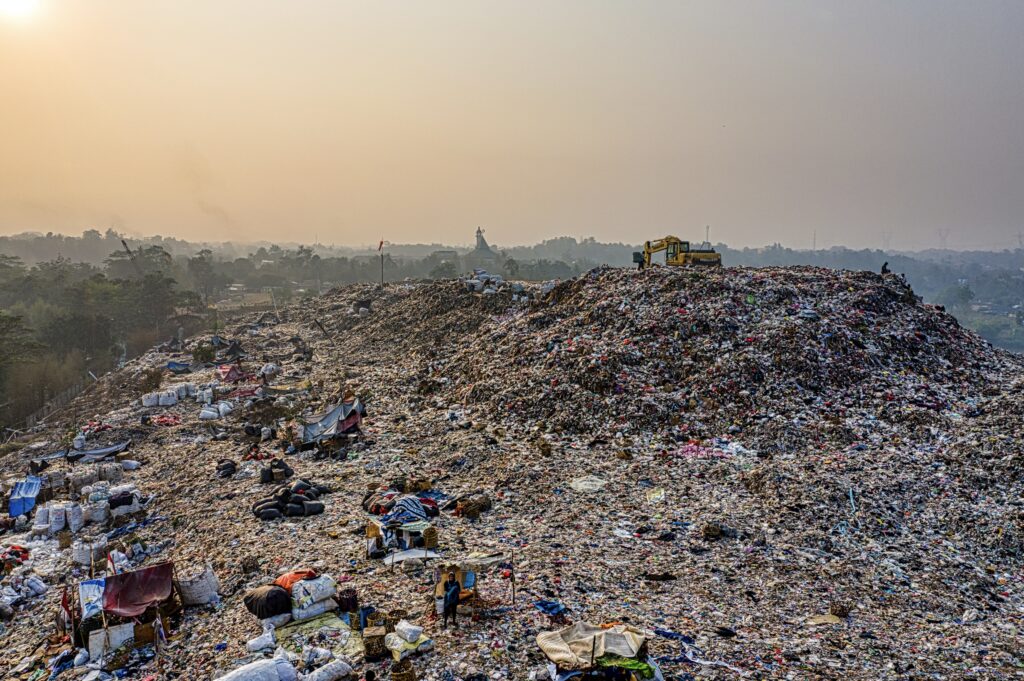
At first glance, this appears to be a significant step forward in Europe’s fight against the environmental impact of disposable clothing. The textile industry is responsible for nearly 10% of global greenhouse gas emissions. The rapid growth of platforms offering ultra-cheap garments has only intensified concerns over overproduction and waste.
But before celebrating, we should ask some uncomfortable questions. Especially when viewed alongside the EU-wide Extra-EU parcel tax approved just six months ago.
The French fast fashion law: why are European brands exempt?
The most controversial aspect of the legislation is not what it includes, but what it leaves out.
As Green Party lawmaker Charles Fournier pointed out during the parliamentary debate, the original proposal was “considerably scaled back”. European fast fashion companies such as Zara, Kiabi and H&M are largely excluded from measures targeting ultra-fast-fashion platforms.
But is Zara’s business model fundamentally different from Shein’s? Both produce massive volumes of clothing, much of it low-quality and designed for short-term use. Both contribute to the same environmental crisis. Yet under this legislation, French and European fast-fashion giants face no penalties, no advertising bans, and no regulatory pressure.
If the environmental objective is to reduce the impact of disposable fashion, why should similar business models be treated so differently?
This is the same question we raised in December when the EU approved the Extra-EU parcel tax. If fast fashion is destructive and unsustainable, on what basis should its European version be exempt from comparable measures?
This isn’t environmental policy. It’s industrial protectionism dressed in green clothing.
A fragmented European approach
The French law also highlights a broader problem: Europe still lacks a coherent strategy.
In December 2025, the EU introduced a €3 charge on parcels valued below €150 entering the bloc from outside the EU. Italy followed with its own €2 per-parcel levy, explicitly projecting €245 million in annual revenue.
At the time, we noted a critical flaw: the tax applies per parcel, not per item. Three items shipped together incur the same €3 charge as a single item – which incentivises consolidation, not reduced consumption.
Now France has introduced a different system altogether: a per-item fee that specifically targets Asian platforms while leaving European competitors untouched.
The result is a patchwork of national and European measures rather than a coordinated policy addressing the environmental impact of fast fashion across the Single Market.
If Europe is serious about tackling overproduction and textile waste, shouldn’t the response be equally consistent?
The uncertainty surrounding the advertising ban
Among the law’s most significant provisions is the ban on advertising by ultra-fast fashion companies, including influencer promotions.
As explained above, the advertising ban only applies to companies classified as ultra-fast fashion under the law’s scoring system.
However, its future remains uncertain. The European Commission has questioned whether this measure is compatible with EU law. France argues that it is relying on principles similar to those used to regulate advertising for products such as alcohol and cigarettes, but if the Commission ultimately disagrees, the ban could become unenforceable.
And if the ban falls, what’s left? A per-item fee that – even at its maximum €20 by 2030 – remains capped at 50% of the product’s pre-tax price. For a €10 item, that means a maximum fee of €5. Hardly prohibitive.
This raises a troubling possibility: was the law designed to look tough while containing a built-in escape clause?
The French government can claim victory on environmental grounds, but if the key measures are struck down or prove unenforceable, the actual impact will be minimal.
The revenue question remains unanswered
When we analysed the EU parcel tax in December, we asked whether measures presented as environmental policy might also serve another purpose: generating public revenue. 12 million parcels per day at €3 each would generate over €13 billion annually – a staggering sum that would flow into government coffers.
The French law attempts a more virtuous framing – fees will go “towards collection and recycling infrastructure.” But without transparency on how much will actually be collected, whether it will genuinely fund recycling capacity, or if the infrastructure can even handle the volume, scepticism remains warranted.
Will the fees collected from Shein purchases be used to build actual recycling facilities? Or will they disappear into general budgets while the mountains of textile waste continue to grow?
What genuine reform would look like
If Europe were truly serious about addressing fast fashion’s environmental impact, we would see measures that apply equally to all players – regardless of their country of origin.
Genuine reform might include:
- Minimum sustainability standards for all clothing sold in the EU
- True cost pricing that accounts for environmental externalities
- Product durability requirements and mandatory repair rights
- An outright ban on destroying unsold inventory
- Supply chain transparency to address environmental and forced labour concerns
Instead, we’re getting a fragmented, inconsistent approach that protects domestic incumbents while appearing to take action.
Final thoughts
The French fast fashion law is not without merit. It signals that European policymakers increasingly recognise the environmental challenges posed by disposable fashion and represents one of the most ambitious attempts so far to regulate the sector.
But let’s not mistake it for what it isn’t.
This is political theatre – a gesture that appears tough on Asian platforms while carefully exempting European brands whose business models are not fundamentally different.
The question we posed in December remains unanswered: if fast fashion is destructive — as we all agree it is — why are we protecting our own version of it?
Until European policymakers confront this contradiction honestly – and apply the same environmental standards to Zara, Kiabi, and H&M that they apply to Shein and Temu – the French fast fashion law will remain what it appears to be: tariffs dressed as sustainability, with the environment serving as a convenient pretext for industrial protection rather than a genuine environmental objective.
The environmental challenges created by fast fashion are global. Any lasting solution will ultimately need to be equally consistent.