sustainability

No Black Friday Manifesto

Reading Time: 2 minutes

Towards a healthier lifestyle


No Black Friday Manifesto #formodernhumans
We stand against the ‘shop and toss’ habit, impulsive buying, and overconsumption.
A way of life that harms both people and the planet to the point of no return.
Indeed, these are layers of a toxic profit-oriented society that wants to create fake needs for unsatisfied individuals.
Undoubtedly, this system could not thrive without using tricks to sell the massive overproduction at the heart of its reckless structure.

On the contrary, we choose to educate ourselves on thoughtful consumption and a healthier lifestyle.

Quality andless but better’ represent the guiding values. In fact, modern humans are conscious consumers.

We respect people, and we understand the worth of their work.
We appreciate the products we select.
We value quality, and we value our customers.

In other words, we believe in valuing what truly matters, not succumbing to mindless consumerism. Don’t buy pointless shit. Say no to Black Friday!
No Black Friday Manifesto


And once you are aware of how things are, let’s spread this consciousness together.

Once you become aware of how things truly are, it’s time to take action. Let’s spread this awareness together, creating a ripple effect that can inspire change and encourage others to make more mindful choices.

Please, share the No Black Friday Manifesto and help amplify the message! Together, we can challenge the culture of overconsumption and promote a more mindful, respectful way of living.

No Black Friday Manifesto Read More »
Stop and Think

Reading Time: 2 minutes

Standing firm against the consumerist frenzy: a call for conscious choices


Stop your devices and think! We will not take part in the Black Friday madness. We said it in 2020, and we repeat it now; in 2021.

We are not aligned with the hyper-consumerist vision promoted by this marketing trick.

First, Black Friday fosters the ‘shop & toss’ consumption habit we are trying to challenge. It is a hard fight, but we persist.
How many times have we heard friends say: “This dress is cheap, I’ll wear it once and throw it away!” Just imagine the exponential growth of the effect of this short-sighted behaviour during the Black week. Scary! And what’s more horrible is that those kind of people are not open to reconsidering the way they consume. They barely see it.
Manipulated by advertising, people buy things they don’t even need. And those products, clothing included, end up quickly in the garbage. Surely, as we do, you still have in your head the images of the landfill in the Chile desert, a nightmare getting bigger and bigger. But perhaps people will only stop once garbage knocks directly on their doors.

Stop: who benefits from Black Friday?


Black Friday is just another opportunity to support corporations. They are the only ones who can afford the cost of it. If they applied reasonable mark-ups, there wouldn’t be the need for people to wait for special offers in order to purchase a product.
For independent retailers, those excessive offers aren’t viable unless they use the same corporations’ tricks.

Impulsive buying – overconsumption and rapid discarding. Never-ending needs for unsatisfied people. Black Friday is convenient for corporations, not for people.

Instead, we encourage intentional buying as a conscious lifestyle alternative. Buy things when you need them – or when you find something meaningful. Having fewer things but better quality is a choice that brings value to our life.

During Black Friday, stop your devices and think!

Stop and Think Read More »

The Recycled Felt Tote

Reading Time: 2 minutes

Italian PET-recycled felt, Japanese design


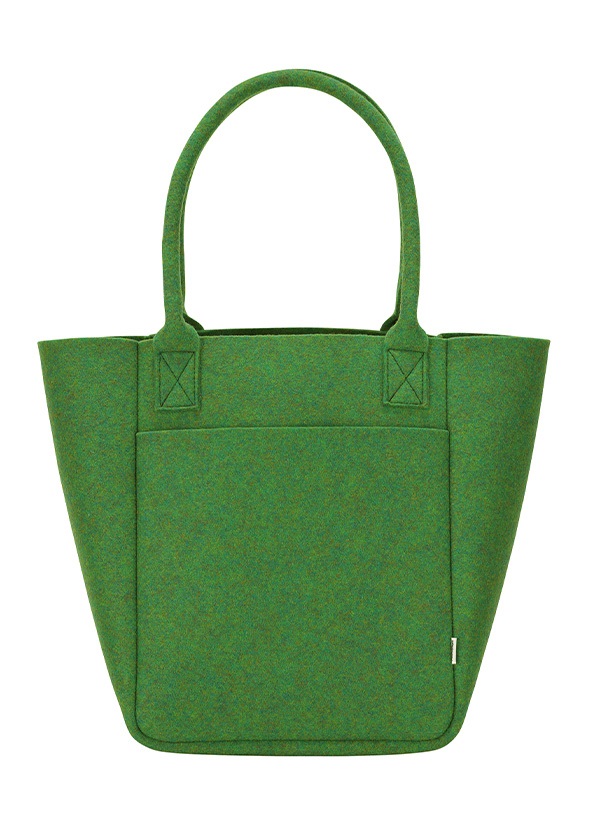
Just arrived! The recycled felt tote is the perfect carry-all bag for your fall/winter season. Indeed, its features embody what we expect now from evolved designers.

Made in Japan by Plantation1982, this stylish accessory is crafted from recycled PET bottles.

Although made with oil, natural gas and raw materials, PET is 100% recyclable. Ok, the starting point is oil, and it would be better to find other materials. But at least, the flip side is reasonable.

To be clear, we must reduce the enormous amount of waste we produce daily. To this end, it is crucial to stop using disposable goods, plastic most of all. And limiting the number of plastic bottles we use by refilling our water bottles is one of the actions we can take immediately.

Discover The Recycled Felt Tote

The Recycled Felt Tote by Plantation1982
The Recycled Felt Tote – Plantation1982

Anyhow, planning multiple solutions make the strategies viable. If we think about the tons of plastic bottles we use all over the world daily, the idea of giving them a new life sounds interesting. Whether it means going back to their original shape or finding new forms, that’s a valuable chance.

Since waste does not disappear, recycling materials is a meaningful way to reduce our impact on the planet.

Further notes about the material:
It’s a thick felt. Specifically, an Italian felted fabric made from recycled plastic bottles. Sturdy but flexible and eco-friendly. The warm touch texture is comfortable for the winter season.

About the design:
Simple but functional. Open top. One front external pocket and one inside. Two top handles, you can carry it by hand or over your shoulder. It is a convenient bag because it is large enough for everyday use. Moreover, it is very lightweight.

The size: H31 W24 D20
Big enough to carry an A4 size file.

The colour:
A shiny green. Inspired by nature, it will brighten up your fall/ winter outfits.

This bag has high-quality finishing materials that are durable, supple and environmentally friendly.
Cool design #formodernhumans

The Recycled Felt Tote Read More »

The Island In The Desert

Reading Time: 2 minutes

Have you ever wondered where our textile waste ends up?


Talking about the cost of fast fashion and the madness of disposable items can be upsetting and frustrating. No one wants to listen.

We could define it as a hidden cost, assuming people do not see it directly. Except that there’s nothing hidden anymore. And so, we call it the true cost because it happens before our eyes. Although, people refuse to see it intentionally.

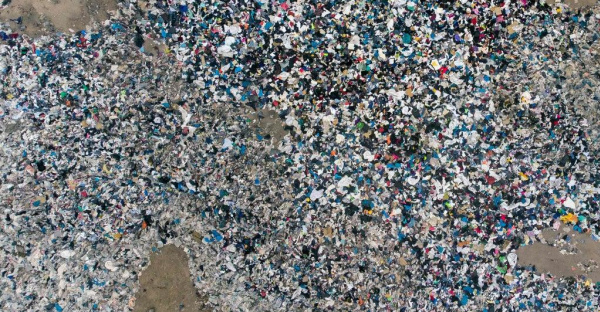
To illustrate the abnormity, perhaps a visual image helps awaken the conscience more than words.

Atacama desert in Chile - fast fashion leftovers
Atacama desert in Chile – fast fashion leftovers

Here, in front of your eyes, is the Atacama desert in Chile, the driest desert in the world. And that is an island of discarded clothing, including Christmas sweaters and ski boots, piling up in the desert. Horribly revealing the cost of fast fashion.

Chile is a hub for secondhand and unsold clothing coming from all over the world. USA, Europe and Asia. Approximately 59,000 tons of garments arrive there every year. Clothing merchants buy part of it, but the majority, about 39,000 tons, end up in rubbish dumps in the desert.

That happens because those garments contain chemicals and are not biodegradable, therefore not accepted in the municipal landfill.

The cost of fast fashion


We wonder what’s going to happen over time. Do you still feel ok with fast fashion and disposable goods?

On Monday, we posted about the need to shift our consumption habits. After reading this, the sense of urgency becomes imperative. It doesn’t need any further explanation.

Educating ourselves towards thoughtful consumption habits is fundamental. If brands don’t produce items made to last, we don’t buy from them!
Stop overconsumption. Stop purchasing disposable items. That is how we bring our contribution.

We know that expecting a change from brands is an illusion, yet it’s just a way to exclude ourselves from the game. If we pretend we do not play an active role, we hide our responsibilities.

On the contrary, we have to educate ourselves in order to become conscious and make intentional choices.

Break the loop. Take action now!

The Island In The Desert Read More »