Fashion & lifestyle

Belief and Bias – Teatro Litta

Reading Time: 2 minutes

Confirmation: challenging your beliefs through a show


Confirmation is the title of a brilliant play we saw last week at Teatro Litta, that challenges belief and bias. We received the invitation from a friend we made through our boutique, and it seemed like something different.

The sentence on the invitation was so intriguing:

“If we only try to confirm the things we think we know, then there is a whole sphere of possibility that we will never allow ourselves to know.”

The play was written by Chris Thorpe in collaboration with Rachel Chavkin and translated into Italian by Jacopo Gassman. Directed by Claudio Autelli and played by Woody Neri.

In shaping an intersection between solo and conference show, Thorpe set off an exploration to understand how we build our beliefs.

The text develops around a series of research on confirmation bias. In short, we tend to form our ideas, mental schemes, and relationships starting from prejudice – the confirmation bias.

A show that challenges your beliefs


Undertaking a dialogue with the public, the performer prompts us to find a link on a short sequence of numbers. That is to explain how easily we tend to find confirmation of something we already know. Then, the investigation evolves in a conversation with a far-right extremist aiming to find common ground.

“We could have similar tastes. For different reasons, we could both prefer the same local bar rather than supporting capitalism and big chains.”

The performer piques opposing political sides, and on this point, it’s obvious that a thoughtful interaction among the parts is crucial. But, when he enters into the dialogue with an extremist who is a racist, white-suprematist and holocaust denier, we have to admit that the interaction gets complicated.

The conversation is both real and imaginary, and it pushes those who have liberal ideas to the limits keeping the audience on the hook. Indeed, more than an hour and a half passed like a bolt, mind-blowing. We couldn’t believe it was already over.

See the show, read the book.

This challenge to our beliefs and biases is a good exercise for our contemporary time.

Belief and Bias – Teatro Litta Read More »

Modern Slavery: The Hypocrites

Reading Time: 2 minutes

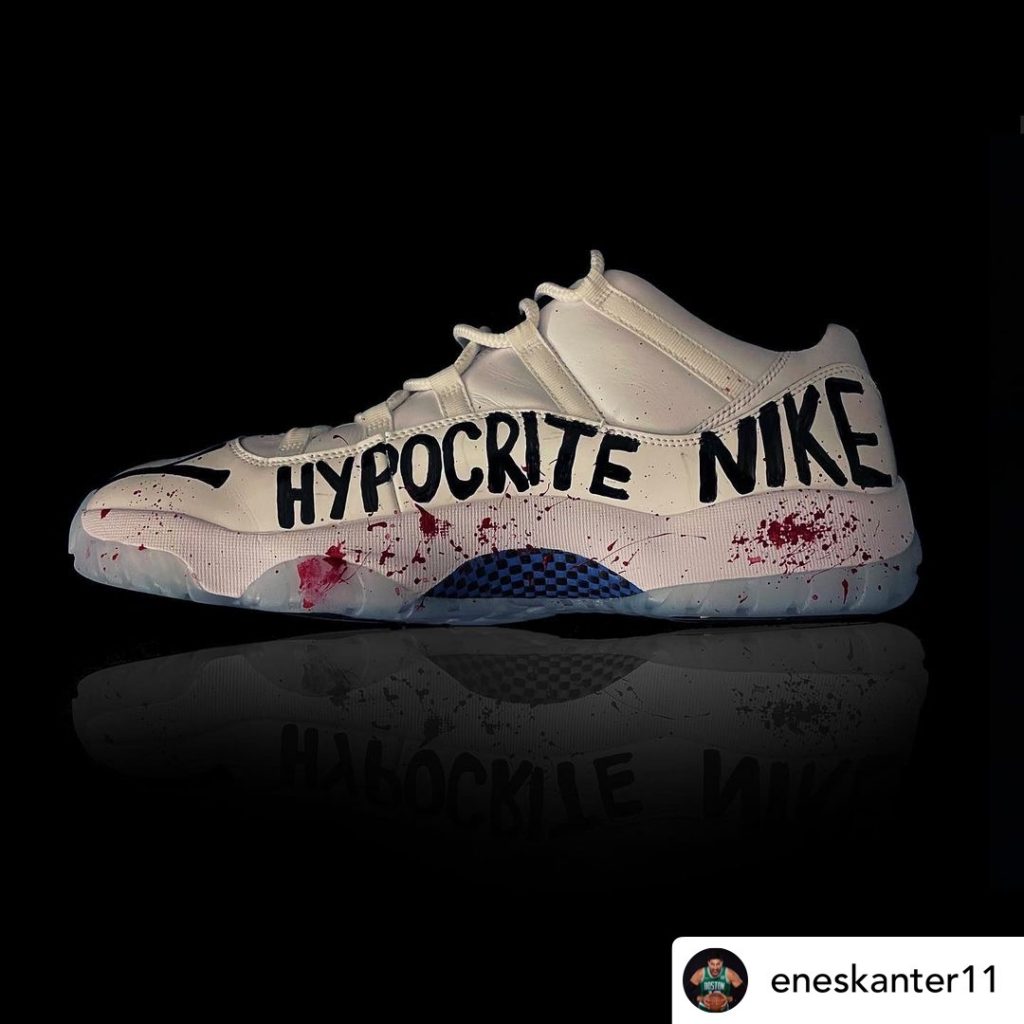
Enes Kanter exposes Nike’s hypocrisy on forced labour and Uyghur Minority


Modern slavery is a topic we frequently discuss because it is horrific and unacceptable. What concerns us even more is the hypocrisy surrounding it.

Brands are the new gods. Sell people a famous name, and in return, you’ll get silence and blindness.

However, as members of an evolved society, we cannot turn our heads to the other side pretending nothing happens.

The system of exploitation, built on forced labor and minority oppression, is directly linked to superbrands. Not only fashion brands, to make it clear. Indeed, every field finds benefit and – profit – in this rotten practice. In fact, there’s no better way to maximise profit.

Though we are just a drop in the ocean, we believe it’s crucial to voice our thoughts and help raise awareness about this issue.
While popular magazines have highlighted it, many people simply don’t engage with written content. People don’t like reading. Or they don’t care enough about things that do not affect them personally. Which, by the way, is a scary attitude.

So, how can we make the message resonate with a large audience?

modern slavery - via Enes Kanter
Modern Slavery – via Enes Kanter


Here comes Enes Kanter, an NBA player. We admit we know nothing about the sport he plays. Zero. But that’s not the point. In fact, we admire him for his bravery in showing up consistently in support of human rights. For many that tend to hide, there are a few who talk out loud.

And so, it was with immense pleasure that we saw his recent posts about the Uyghur minority, forced labour camps and brands hypocrisy, asking Nike’s accountability.

We need more brave humans like Enes Kanter to speak the truth to reach the masses. Just like we need more people that open their eyes and feel touched. Fundamentally, we must find a way to put an end to labour exploitation.

Hypocrite Nike - via Enes Kanter
via Enes Kanter


In conclusion, if as humans, all we have done is invent new forms of slavery to satisfy our fake needs, then we have failed.

Modern Slavery: The Hypocrites Read More »

Beauty, Business & Role Models

Reading Time: 2 minutes

What we aspire to and who profits from It


It is interesting to analyse beauty, business and how they forge modern mainstream role models – so they say.

Business and beauty standards are intertwined. Indeed, it takes deep reflection in order to have a better understanding of this connection and the role models it produces.

Recently ‘The Wall Street Journal Magazine’ praised Kim Kardashian as a beauty and business role model. Maybe indirectly as a beauty icon, but that was the message they sent. Though it caught our attention, it wasn’t without a certain bitterness.

Sure, it’s good to read different perspectives. But is it for real? Not a joke?

Modern role models or business?


Well, we assume that paid advertising might be the motivation behind those compliments. Otherwise, we do not see any other reason for choosing a figure like that as a role model, a powerful example of a businesswoman.

We don’t want to talk about why or how she became famous. That universe is not part of our vision, and we prefer to direct our energy towards something more interesting. However, what we find disturbing is that she, and the whole family, have lost any trace of human identity because of plastic surgery abuse.

We wonder, is that a role model we should admire? Should we want to be like them?

But let’s imagine the younger generations, what we are telling them. ‘Hey, if you want to be accepted, have a good career, and become popular that’s the way to do it!’

Most importantly, it is depressing that magazines cannot find any better role models for women.

It’s not clear whether we lack healthy role models or if we are intentionally pushing that particular one forward.

No, we don’t believe positive role models are lacking. Many in the media simply choose not to see them. The connection between beauty, business, and role models is clear: it’s certainly more convenient to stick with the plastic doll.

Beauty, Business & Role Models Read More »

Art, Affect and Persuasiveness

Reading Time: 2 minutes

Art as a tool for emotional and persuasive impact


Art is one of the greatest sources of inspiration of all time.

Sunday morning, we went to the Castello Sforzesco to see ‘The body and Soul, from Donatello to Michelangelo’ – an exhibition dedicated to Italian Renaissance sculpture.

It was a beautiful sunny day. We wore our face masks, showed our green pass, and went in to explore.

art exhibition at Castello Sforzesco  'The body and the soul, from Donatello to Michelangelo'


At that time (1453 – 1520), communication was in the hands of the church and nobles, those who had power and money. From this viewpoint, there’s not much difference compared to those who deploy massive communication nowadays.

One of the sections was called ‘Sacred art: affect and persuasiveness.’ The board reads: ‘Affect and persuasiveness became the two key words in religious sculpture: following the work by Donatello around 1450, emotion and the motions of the soul took centre stage in artistic practices, in the desire to deeply, even violently, affect viewers.’

In other words, those who had money commissioned artists to represent catholic figures to influence the masses. Undoubtedly art was magnificent, and viewers could feel the pathos.

Modern methods of persuasion


Translating this communication process to modern times, we see that the logic of influencing people is still crucial. ‘Affect and persuasiveness’ are used not to make the masses believe in God but to sell them everything. Brands and products are the new gods.

Over the centuries, the masses have transitioned from believers of faith to consumers of goods. However, artists still had to work hard to make something breathtaking to influence people. Indeed to reach that level of beauty, their artistic work demanded an enormous effort.

Today, the two keywords remain the same: affect and persuasiveness. What has changed is who the masses consider influencers, how they present their work, and how they interact with their audience — all by-products of what we call progress

In the past, art moved us, inspiring deep emotional engagement, while today, empty superficiality impresses people’s attention.

Perhaps something went wrong.

Art, Affect and Persuasiveness Read More »

From Quantity to Quality

Reading Time: 2 minutes

What will it take to spark the shift?


When will the paradigm shift from quantity to quality? Or, the question should be, what else do we need to see in order to make this change happen?

People don’t consider shifting towards a conscious lifestyle because they are too ingrained in their old habits. But perhaps, those who are in this position will be forced to readapt somehow quite soon.

Why?
Difficulties in finding raw materials and supply chain shortages are now a reality. Indeed, one of the side effects of the pandemic was the sharp rise in raw material prices. Consequently, final product prices are getting much higher. It is already happening in the construction field, energy, gas. And it’s impacting fashion, too.

Therefore, caring more about what and how we consume will be a necessity.

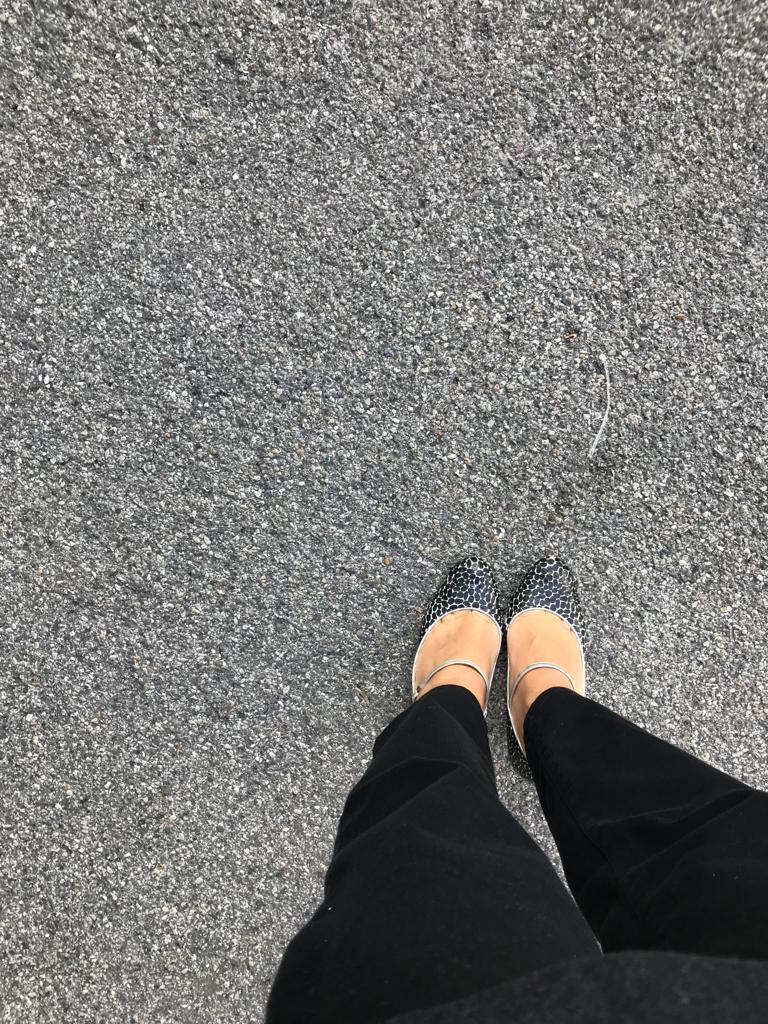
Pointing feet - inspiring from quantity to quality attitude


Low-impact lifestyle: quality, not quantity


What can we do?
Each of us has an impact on the environment. Even if corporate giants arm-in-arm with marketing have shaped the world for us, they can’t make it without our active participation. And the role we play is revealed precisely by how and what we consume.

Since we do not like to wait for change to happen, we choose with our minds what kind of world we want to live in, so we act. Also, we hold ourselves accountable for the choices we make.

Why buy less but better quality?
It is a long-term strategy. You will buy garments that last. Things you will wear for a lifetime, not items to discard after a couple of washings. Same for any other item we use in our everyday life.

This radical shift of perspective from quantity to quality is about educating ourselves to find pleasure in how things are made, not in the simple act of buying. Finally, this alternative lifestyle will reduce our impact on the planet.

So, make it a conscious choice now rather than a forced decision when it’s too late.

From Quantity to Quality Read More »