Fashion & lifestyle

Stop and Think

Reading Time: 2 minutes

Standing firm against the consumerist frenzy: a call for conscious choices


Stop your devices and think! We will not take part in the Black Friday madness. We said it in 2020, and we repeat it now; in 2021.

We are not aligned with the hyper-consumerist vision promoted by this marketing trick.

First, Black Friday fosters the ‘shop & toss’ consumption habit we are trying to challenge. It is a hard fight, but we persist.
How many times have we heard friends say: “This dress is cheap, I’ll wear it once and throw it away!” Just imagine the exponential growth of the effect of this short-sighted behaviour during the Black week. Scary! And what’s more horrible is that those kind of people are not open to reconsidering the way they consume. They barely see it.
Manipulated by advertising, people buy things they don’t even need. And those products, clothing included, end up quickly in the garbage. Surely, as we do, you still have in your head the images of the landfill in the Chile desert, a nightmare getting bigger and bigger. But perhaps people will only stop once garbage knocks directly on their doors.

Stop: who benefits from Black Friday?


Black Friday is just another opportunity to support corporations. They are the only ones who can afford the cost of it. If they applied reasonable mark-ups, there wouldn’t be the need for people to wait for special offers in order to purchase a product.
For independent retailers, those excessive offers aren’t viable unless they use the same corporations’ tricks.

Impulsive buying – overconsumption and rapid discarding. Never-ending needs for unsatisfied people. Black Friday is convenient for corporations, not for people.

Instead, we encourage intentional buying as a conscious lifestyle alternative. Buy things when you need them – or when you find something meaningful. Having fewer things but better quality is a choice that brings value to our life.

During Black Friday, stop your devices and think!
Stop and Think Read More »

The Price of Quality

Reading Time: 2 minutes

The true value behind timeless craftsmanship and thoughtful pricing


The price of quality is an indicator that has fundamentally lost its sense. Quality is an asset that every brand wants to sell, but no one really understands its true meaning. There is a conflict between the marketed or perceived quality and its effective worth.

At the Uffizi in Florence, during a preview of Confindustria’s Future for Fashion, Maria Grazia Chiuri, Dior designer, said:

“Democratic luxury does not exist.”

“In Italy, we have to get the idea of democratic fashion out of our heads. If a garment is well made, why does it have to be democratic? Quality at a low price does not exist. If the price is low, it is because behind it, there is someone who has not been paid well.”

We agree with this statement – democratic luxury is nonsense. In fact, a product made respecting specific quality standards comes with a price. But what luxury brands call quality is questionable, and it’s not what it was in the past.

Quality & luxury brands


Undoubtedly, much of the confusion stems from various factors. Over time, the average quality of high-end products has significantly decreased. Driven by greed, luxury conglomerates shifted production to lower-cost sites, abandoning exclusivity in favor of the mass market. Quality has become inversely proportional to corporate greed.
In order to be able to have a attractive wholesale price while keeping profit safe, the quality of materials and craftsmanship are the first to be compromised.

In the second place, economic and cultural changes have induced consumers to believe that a cheap price tag corresponds to quality items and well-paid labourers. While the need for affordable clothes is understandable, it is obvious that low prices don’t correspond to quality materials and fair living wages.

Luxury brands contributed to devaluing the fashion system with poor productions, obsessive mass distributions and a wild discounting policy. Yet, they still want to be part of an Olympus disconnected from the masses.

Olympus is not democratic. So, to be credible again, luxury brands have to reverse the route, reducing the large quantities they produce. And stop heavy discounting.

This is a logical necessity for the return of true luxury.
Will it happen for real?

The Price of Quality Read More »

The Recycled Felt Tote

Reading Time: 2 minutes

Italian PET-recycled felt, Japanese design


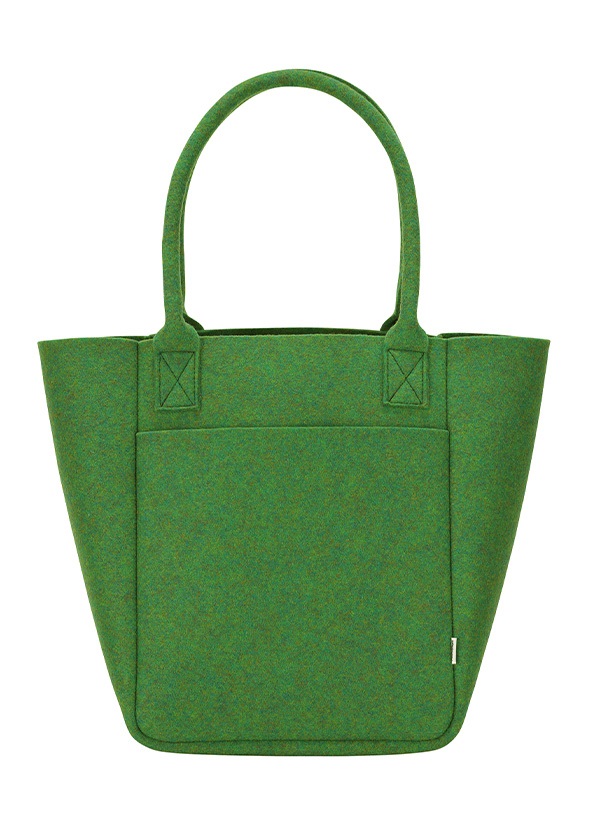
Just arrived! The recycled felt tote is the perfect carry-all bag for your fall/winter season. Indeed, its features embody what we expect now from evolved designers.

Made in Japan by Plantation1982, this stylish accessory is crafted from recycled PET bottles.

Although made with oil, natural gas and raw materials, PET is 100% recyclable. Ok, the starting point is oil, and it would be better to find other materials. But at least, the flip side is reasonable.

To be clear, we must reduce the enormous amount of waste we produce daily. To this end, it is crucial to stop using disposable goods, plastic most of all. And limiting the number of plastic bottles we use by refilling our water bottles is one of the actions we can take immediately.

Discover The Recycled Felt Tote

The Recycled Felt Tote by Plantation1982
The Recycled Felt Tote – Plantation1982

Anyhow, planning multiple solutions make the strategies viable. If we think about the tons of plastic bottles we use all over the world daily, the idea of giving them a new life sounds interesting. Whether it means going back to their original shape or finding new forms, that’s a valuable chance.

Since waste does not disappear, recycling materials is a meaningful way to reduce our impact on the planet.

Further notes about the material:
It’s a thick felt. Specifically, an Italian felted fabric made from recycled plastic bottles. Sturdy but flexible and eco-friendly. The warm touch texture is comfortable for the winter season.

About the design:
Simple but functional. Open top. One front external pocket and one inside. Two top handles, you can carry it by hand or over your shoulder. It is a convenient bag because it is large enough for everyday use. Moreover, it is very lightweight.

The size: H31 W24 D20
Big enough to carry an A4 size file.

The colour:
A shiny green. Inspired by nature, it will brighten up your fall/ winter outfits.

This bag has high-quality finishing materials that are durable, supple and environmentally friendly.
Cool design #formodernhumans

The Recycled Felt Tote Read More »

Smells Like Marketing

Reading Time: 2 minutes

When marketing overshadows creativity: the homogenisation of fashion


Fashion smells like marketing. Not creativity – marketing.
It’s embedded into the product, making everything look the same. Brands drowning in a cloying, flat language.

It would be interesting to understand why designers do everything except what they are supposed to do: create beautiful clothes. There must be a reason for it.

After the fashion weeks, the Gucci Love Parade in Hollywood was yet another weird event, representing the many futile proclamations navigating the sea of marketing.

Some designers (Stella McCarthney) want to ban leather; if not that they’ve always used synthetic materials to make their accessories – which is even worse. Some others (Chloé) became a B-Corp but lost the beauty of their collections. Others tell us to buy vintage instead of new clothes. Maybe those proposals have to do with a sustainable lifestyle, blindly giving the benefit of the doubt. But, leave good design aside.

Designers forget the purpose of their role. Instead of doing their job – creating beautiful clothes – they suggest alternative lifestyle strategies.

Marketing and the purpose of a fashion brand


If you are a designer, you should have a vision and express it through your creativity. That is an opportunity to trace new pathways, inspiring others. But the issue is that clothes have no point anymore. The design is not the focus of a collection, the chit-chat that surrounds them is.

Well, designers, the viable idea is to make much smaller collections. Reduce – a lot – the number of pieces and create a timeless aesthetic.

But please, put your creativity to work and make curated creations that reflect your visions. We appreciate your lifestyle suggestions, but creativity is what we expect from you. All the other proposals have to come along with it. Otherwise, it seems like you have no ideas except marketing claims.

Wittgenstein said that “ethics and aesthetics are one.”

In the latest fashion proposals, apart from the questionable aesthetics, the so-called ethics smells like marketing. Nothing more than empty claims.

You can hire marketing gurus, but new ideas and creative designs are hard to find!

Smells Like Marketing Read More »