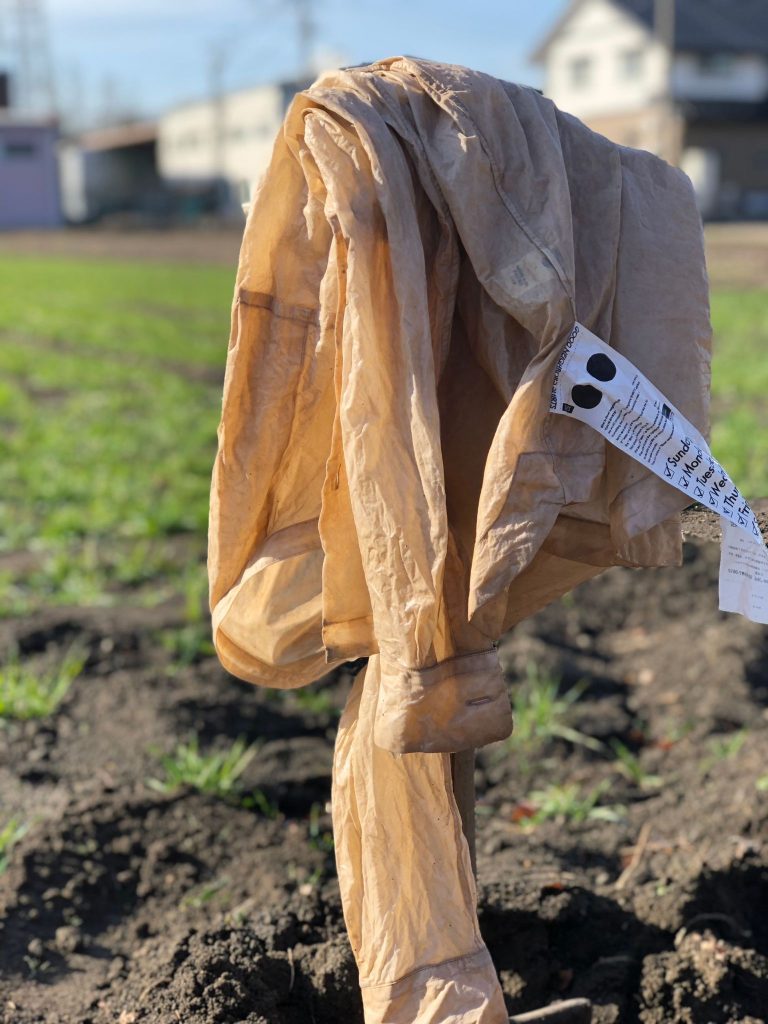
Fashion & lifestyle

The Clay Dye Jackson Shirt

Reading Time: 2 minutes

Seasonless and genderless fashion #formodernhumans


Today, we introduce The Clay Dye Jackson Shirt by GoodNeighbors Shirts, a brand from Japan.

Its workwear style is fresh and contemporary. Indeed, when workwear meets Japanese minimalist design, it reaches its best. Also, the clay dye technique, a natural dyeing process attuned to nature and gentle on the skin, stands out. Learn more about Clay Dye here.

Garment values: timeless, seasonless, genderless, comfortable, easy-care.

Discover The Clay Dye Jackson Shirt


About the design
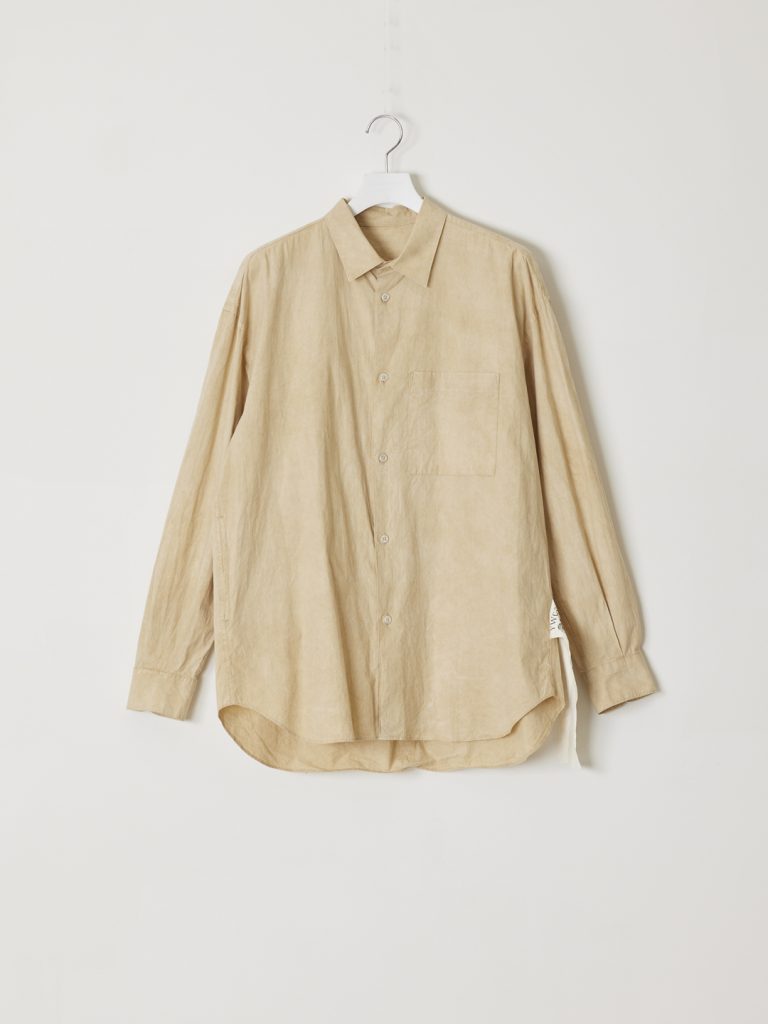
Jackson is a regular collar shirt with a wide silhouette and one pocket at the front. The shoulders are comfortable, and the trapeze line slightly widens towards the hem. Also, the shirt is made with delicate stitch work using 90 and 20 stitches.
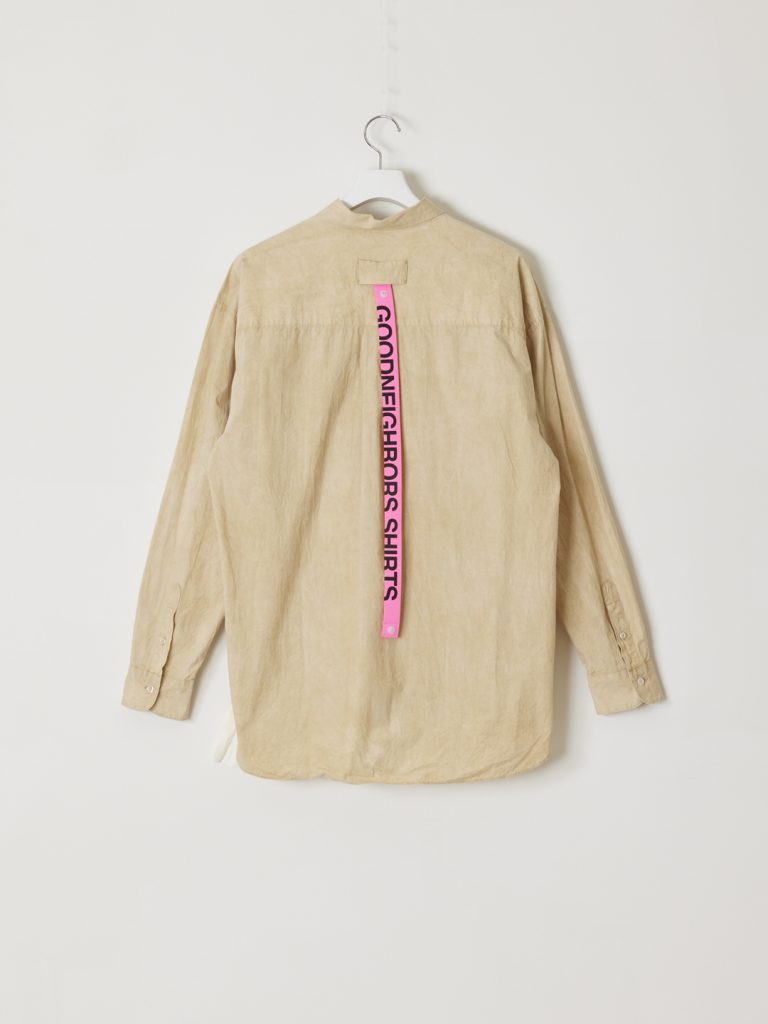
Clay Dye treatment provides a certain unevenness and beautiful colours. There’s a pocketable and portable band on the back that can be attached and detached with snap buttons. 
Takase shell button front closure. These shell buttons are the byproduct of the food manufacturing process, which otherwise would be wasted. Therefore, they are considered sustainable.
The Clay Dye Jackson Shirt


About the material
100% cotton. The firm, highly textured fabric is a comfortable, wide fabric that resembles hotel sheets. 

About the colour
Clay white: a beige tone with a detachable pink band on the back. Specifically, clay dye is a unique natural dyeing with an earthy mood. And the effect is not flat but gradient.

Laundry
Easy care. Wash by hand.

Styling tips
The Clay Dye Jackson Shirt is a seasonless garment. So wear it throughout the year. Try it underneath a blazer or a sweater for your office outfits. Also, you can create cool workwear looks with denim or corduroy pants. 
The Clay Dye Jackson Shirt


How to purchase our unique selection:
Drop us an email or WhatsApp for orders or any further information. Also, you can book your private shopping experience – physical or via video call. 

International Shipping available!
We are based in Milano but ship our niche fashion selection #formodernhumans everywhere.

Exclusive Fashion
In order to provide unicity and a sustainable approach, our selection offers a limited number of pieces.

Get yours directly from here!

The Clay Dye Jackson Shirt Read More »

PFAS: An Invisible Enemy

Reading Time: 3 minutes

Environment, pollution and fashion


There’s a scary, invisible enemy: PFAS chemicals. Found in everything from your favourite outdoor jacket to the drinking water you consume, these chemicals pose a serious threat to both the environment and human health.

To better understand this threat, we attended a Greenpeace meeting at Arci Bellezza with Fashion Revolution, Mamme NO PFAS, CNR, IRSA, and Consorzio Italiano Detox.

We were familiar with the topic thanks to “Dark Waters” – a remarkable movie with Mark Ruffalo. Indeed, contamination is known worldwide: read more on Le Monde.

What are PFAS chemicals?


What are PFAS chemicals?
PFAS (poly and perfluoroalkyl compounds) are a large group of synthetic molecules (over 10 thousand) produced only by human activities. Also called forever chemicals, meaning once released into the environment, we’ll never get rid of them!

What are the health risks?
They are dangerous for health and associated with numerous pathologies, even serious ones, including some forms of cancer. Several European states asked to ban them.

Where are PFAS used for?
Industries have used PFAS since the 1950s to produce numerous commercial products: fabric waterproofers, carpets, leathers, insecticides, firefighting foams, paints, food container lining, non-stick pans, floor wax, detergents and beauty products.

Fashion industry and PFAS
From outdoor garments to water-repellent materials, raincoats, jeans, and undies. The fashion industry uses these chemicals throughout the manufacturing cycle.

The contamination in Lombardy


Greenpeace detected PFAS in the waters of many Lombardy municipalities, including Milan. Carried out on a sample of data – by an independent accredited laboratory – the analyses highlighted the presence of PFAS in 11 drinking water samples out of the 31 collected. In four cases, the PFAS concentration is higher than the limit of the European Directive 2020/2184. In seven cases, the results show variable total PFAS concentrations.

Among the speakers Greenpeace has invited, Michela’s words, a member of “Mamme NO PFAS” – was really powerful! A mother from the Veneto region, the most impacted area, found out her daughter’s blood contained a high quantity of these chemicals. So, she joined other mothers to make their voices heard by politicians, inspiring others to do so.

PFAS: An invisible enemy – How can we protect ourselves?


Being informed on contaminated areas, filter the tap water. However, some articles say to limit the use of products containing chemicals. Which sounds like “take your poison, but take it responsibly!”
But, given that PFAS are an invisible enemy, can we really protect ourselves from them?

We believe addressing single fields, such as fashion, agriculture or others, is relatively effective because there is a major cause we need to address. And this major cause is our economic system, capitalism, which sucks life out of the planet as well as out of humans.

Furthermore, how can we humans consider ourselves intelligent when we pour pollutants into the water, poisoning our own environment?

Donate to Greenpeace to support their investigations!

PFAS: An Invisible Enemy Read More »

Fashion and Books

Reading Time: 3 minutes

Can fashion be a vehicle of culture?


Last week, we attended an event at Nonostante Marras, Antonio Marras‘ store. It was an intimate gathering that connected the worlds of fashion and books.

Fashion: a set for books


With its eclectic mix of fashion, art, and interior design, the shop perfectly reflects the designer’s personality. Indeed, the internal courtyard, filled with plants, provided a serene and welcoming atmosphere. A lovely place for the book launch of “Ostaggio” (Hostage) by Maria Francesca Chiappe.

Lately, fashion doesn’t seem the place for cultural gatherings. Imagine books! According to the ISTAT (National Institute of Statistics), in 2022, 39.3% of the population aged six and over read at least one book a year.
However, we appreciate people who challenge massified trends by offering alternative views for those who still love reading.

The journalist, Giorgio Porrà, conducted a friendly interview with the writer, Maria Francesca Chiappe, who shared her experiences as a reporter in Sardinia and her inspiration for her latest crime novel. Over her career as a reporter, she witnessed so much blood that she doesn’t want to dig into that in her books. So, no blood, her genre is a pure crime.

Fashion and books


What is the book about?


The book is set in Cagliari, Sardinia, during Covid-19. A woman disappears from her home in Poetto. Her car is in the courtyard, car doors open, keys in the ignition, while her five-year-old daughter desperately cries in the yard.
There’s no English translation for now, but you can practise your Italian!

The writer explained the title “Hostage” reflects the many layers of meaning behind the word. And the challenge of distinguishing between good and evil, somehow tracing a line that perfectly separates them.

During the Q&A, someone asked her: “Who do you write for? Do you have someone in mind?” The author replied: “When I write, I do it for myself. I enter into my world, and it’s my moment of pleasure.”
As to say, writing is not just a matter of marketing! Which we loved!

The event ended with a delicious buffet of Sardinian food and an opportunity to connect with like-minded individuals. We adored meeting Maria Francesca Chiappe and the Marras family! But also Guido, a passionate independent bookseller and owner of “Libreria Popolare.”

Books in a fashion context showcase the importance of preserving a diverse perspective in a homologated society. Indeed, fashion needs to be a vehicle for culture.

Fashion and Books Read More »

Clay Dye: Fashion & Nature

Reading Time: 3 minutes

YWGS: “Green is good medicine”


Clay Dye is a natural dyeing technique launched by YWGS: GoodNeighbors Shirts in collaboration with Yard Works, both from Japan. A new label with a nature-inspired philosophy behind it. Close to the soil, and one with the soil.

In search of a reconnection to nature and overcoming a dualistic viewpoint that sees us separate from it, we found this project perfectly on point. Indeed, humans are nature, and this project celebrates it.

About Japanese style


We are Japanese design lovers! In particular, we appreciate the idea of quintessential simpleness, careful attention to every single detail, the atemporal design and sense of comfort. Also, we value that delicate expression that doesn’t need to scream to be seen. Of course, we know we are not alone, as there are many other estimators of the Japanese style. So, it’s for you that we selected some valuable garments from Japan. (Contact us to know more).

clay dye


YWGS: a new nature-inspired brand


YWGS is the project we introduce today: a collaboration label, GoodNeighbors Shirts with Yard Works.

Kei Amano, a plant expert based in Fuefuki City, Yamanashi Prefecture. Yard Works is his landscape and architecture studio.
Akira Aoki, passionate about music and art, is a fashion designer based in Tokyo. GoodNeighbors Shirt is his brand, a 7-day shirt project. In other words, its style concept is about shirts you can wear comfortably every day.

Therefore, the project joins a plant professional and a shirt professional. A borderless thought, functionality and urbanity from the garden to the city. Specifically, it is a new workwear line that unites gardening and urban style with a comfortable, timeless and genderless aesthetic #formodernhumans

YWGS conveys the concept of “GREEN IS GOOD MEDICINE.” And the nature imprint gets revealed in the clay dye technique.

Clay Dye

Clay Dye: What is it?


Clay Dye is a special dyeing technique: garments are immersed in clay by using high-quality clay from the parents’ farmer home – in Gunma prefecture for 400 years. Akira Aoki majored in dyeing and weaving design at art University. Also, the designer himself dyes shirts by hand.

This tactile experience makes nice shirts with just the right amount of unevenness and beautiful colours. Ultimately, caring for nature and being nature is one thing.

WhatsApp us directly from here to know more!

Clay Dye: Fashion & Nature Read More »

More On Modern Feminism

Reading Time: 2 minutes

Is it true liberation and women’s empowerment?


Modern feminism mainly corresponds to exposing almost naked women’s bodies. From red carpets and fashion shows to music events, that seems to be the most visible trace of female affirmation.

As a demonstration of emancipation, women want to express themselves as they like. And, of course, that makes sense. Hence, dressing, or we better say, undressing, is part of this liberation. But look at music and movie stars, influencers, TV entertainment, and professionals. Followed by all the women who flooded social media with parts of their bodies as the only thing they can convey. Unfortunately, women’s image is more stereotyped than ever. So, we were happy to read about Chinese women who are challenging “beauty-duty” and traditional standards.

When it comes to dressing or undressing, the women’s so-called gained freedom strangely unveils traits that win the favour of men. Doesn’t any light bulb switch on in your head? Don’t we even question why our supposed freedom corresponds to men’s preferences?

Perhaps there is something we’re missing. But let’s take as a fundamental detail the liberty of showing our body as a reflection of our power. Take red carpets, for instance. Or any other event, since there’s no difference in terms of outfits, which are mainly inelegant. Women show up almost naked, as it seems that’s the only way to reveal all their femininity. But have you ever seen men show up naked on red carpets?

Indeed, this is the crux of the matter: Have you ever seen men show up semi-naked to promote their masculinity?

Are we talking about liberation and women’s empowerment, or is there something else behind it? As women, is our worth expressed only by nudity? Or by cages and standards – hair, make-up, plastic faces and bodies – we must fit in in order to satisfy societal expectations? If so, it doesn’t sound really new. In fact, it’s the same old story, which tells more about patriarchy than fashion or modern feminism.

But the reality is so well manipulated that they made us believe it’s about women’s power and modern feminism.

More On Modern Feminism Read More »