Explorations

Accessible All Ages

Reading Time: 2 minutes

Age and fashion: challenging an erroneous belief


Age and fashion: it’s time to challenge outdated beliefs and embrace a world where style knows no age limits. In fact, the representation of different ages in fashion finally had its recognition. You don’t have to hide anymore, in case you ever thought about doing so. Or, perhaps you were waiting for permission to wear waht you love.

But did we really need permission? And, dear brands, do you believe young people can truly afford your expensive clothes?

Take a look at this picture (zoom the bandana print).
We picked this dress from the Spring/ Summer 2015 MM6 – Maison Martin Margiela collection. Not new if we consider the date of its release. But still relevant in terms of the idea the brand promoted, which was fashion-forward.
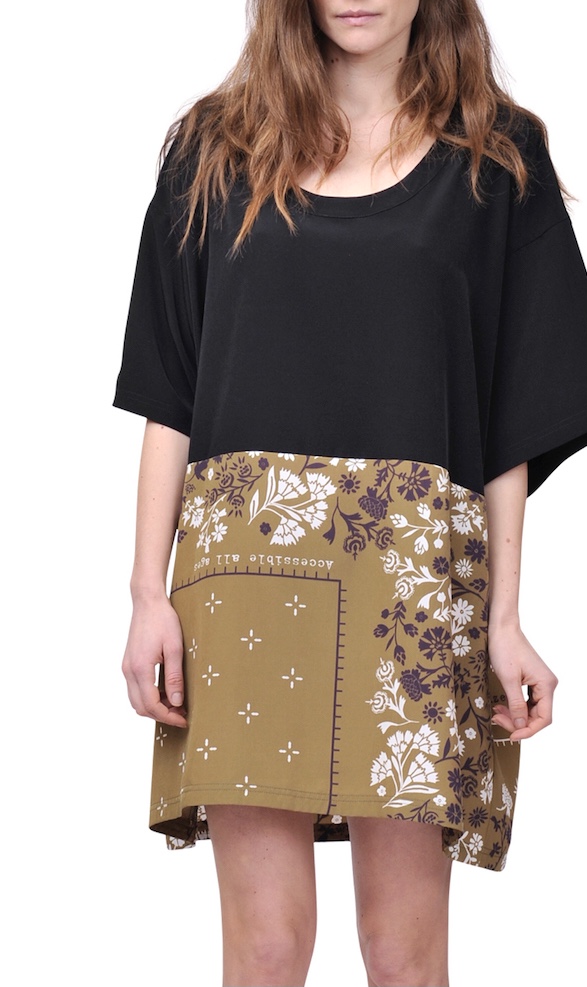
Age and fashion
MM6 – Maison Martin Margiela Spring/ Summer 2015

Fashion accessible to all ages


The transversal cut of the collection was clear. We ordered it because we loved the concept and felt aligned with it. Also, we personally have that dress in our closet and still wear it. You may be familiar with the notion of timeless fashion, such a discovery. Yes, we’ve always believed that good design was forever.

Around 2022 the concept of fashion without borders such as age, gender, body shape started to be recognised and amplified by fashion brands. But in 2015, it was about being a trailblazer, innovative and creative, by proposing a countercultural message. Now, from pret-a-porter to haute couture, those words and images have flooded fashion communication. So it sounds like something you have to say just to conform.

It’s fascinating to analyze the many labels we place on the boxes we think we belong to—age, gender, body shape, race, and more. The need to fit in, to belong to a specific category, is ever-present.

Yet, when brands highlight labels so often that they all send the same message, authenticity is lost. Eventually it is clear that these labels are a just marketing trend.

Rules are different now. Back then, we had designers, and fashion was meaningful. Now marketers pull the strings. And, in a spasmodic search for identity, we need slogans to frame the emptiness.

Accessible All Ages Read More »

The Curve Of Understanding

Reading Time: 2 minutes

How long does it take to open our eyes?


The case of plastic illustrates the tension between convenience and value, tracing our curve of understanding.
Plastic was invented in 1920. Around 1960 humans started using disposable plastic profusely. One of the greatest inventions ever. You could use cutlery, plates and cups and throw them away! Likewise, we could use plastic bags and toss them. Well, that’s what disposable means. It just got out of hand, or we didn’t realise that there’s a certain number of people inhabiting planet earth, and we aren’t so good with multiplication.

‘Buy – consume – toss’
The perfect innovation for everyday life, and no one considered any side effects. For about 50 years, at least. Till one day, we realised the oceans are full of disposable plastic. And that by 2050, there will be more plastic than fish in the oceans!

So, it took about 60 years to notice that single-use plastic was polluting oceans. Finally, the EU banned plastic in 2021, but the damage is done. Sixty years to open our eyes. And even now that is known, people do not worry much about that.

Learning the lesson
Will it take us that long for technology too? Since we are kindly invited to change a device every year. Or for furniture? Which, of course, is cheap but made to self-destruct within the shortest time possible. Or for clothing, because ‘the industry of cheap’ is flourishing! People want more. ‘And who cares if I wear it for less than a season? I’ll throw it away!’

How can a different approach resonate in a world made of beautiful facades or people who don’t care?

Perhaps, it will resonate with a tiny niche of active thinkers who want to make the change. Because they care, they can make a difference.

#formodernhumans

The Curve Of Understanding Read More »

The Freedom To Buy

Reading Time: 2 minutes

Is that real freedom?


Although we can’t cite the lawyer’s name who mentioned the ‘freedom to buy’ on a TV program, her insight remains with us. In fact, she touched on a point that influences every layer of our lives.


“If we don’t become active thinkers, the only freedom left to us is the freedom to buy — the freedom to consume.”

Take time to reflect
For our society, we hold value as consumers. That is the logic behind her statement: we are consumers, and we believe consuming is a freedom we’ve gained. As consumers, we are targeted by credit card companies, hospitals, hotels, retailers, and beyond—plus, web companies and social media.

This mechanism has been highlighted by the pandemic too. ‘Please, get well and go back to consuming.’ Otherwise, the world stops, because modern life revolves 90% around consumption.

Consumption, per se, is not wrong. What is wrong is the blind direction it has taken, the voracious appetite for devouring everything. That ignorant way consume each product or service without any evaluation. Just because it’s advertised, because the brand is popular. Because it’s new—out with the old and in with the next.  We hastily discard what we have to chase after the latest novelty, whatever it may be.

Overconsumption and the freedom to buy

We overconsume blindly, to the point of harming our planet. Which means that we, humans, aren’t really smart.
Brands, we believe we use them, but the opposite is true. They use us. Our freedom is limited to our consumption–the freedom to buy.

Active thinkers and thoughtful consumption
Active thinkers consider the long haul, so they consider their actions within a long-term vision. It’s fundamental to become conscious about what we consume and how. Unless we want to discover the consequences of our actions once the damage is a reality.

Now, more than ever, we need active thinkers—people who pause and think before consuming. Yes, think. That’s the greatest freedom we have.

The Freedom To Buy Read More »

Paris Couture Week

Reading Time: 2 minutes

Sadness takes it all


Boring was the fil rouge of the Paris Couture Week, to the point of taking a nap. With very few exceptions.

The negative sentiment prevailed. Paris for couture has always meant creativity at its peak. Maybe clothes you wouldn’t wear every day – or not even once in a lifetime. But couture was the dream, the beauty of creativity skillfully made.
This time, brands told a flat story of bland uniformity. In order to sell in a difficult moment, they’d rather lose idiosyncrasy. What made them special. The reason we recognise them.

Infused with the fear of losing share, or determined to transform themselves into economic giants, they trampled on their own heritage.

Highlights from the Paris Couture Week


The tedious
Dior: perhaps wearable, but now it looks like many others. In fact, we still see Red Valentino in there more than Dior’s heritage.

Chanel: the DNA seemed watered down.

Gaultier: we understand the collaborations, but where’s the Gaultier spirit?

A partial exception
Schiapparelli: designs weren’t all his ideas, but, at least, the collection was impactful.

The exception
Valentino: this is Couture. Italian creativity. Suzy Menkes wrote that Piccioli had a strong statement to make: women are not all the same. Yes, definitely. But even more, whatever the body shape he represented, women were dressed with elegance. And now that elegance is not in fashion anymore, that stood out most.

However, the idea of showing diverse body shapes in couture is interesting. Yet you may wonder if all those women who bought couture so far had the same silhouette of the models. Of course not! But they bought it anyway. You don’t buy couture if you feel represented, you buy it if you can afford it.

Because that’s what couture is: made to measure – made to order for very few lucky ones.

In the end, we understand this is not a good time for creativity, and lowering the bar is a way to reach the masses. But transforming brands into a blob deprived of any identity makes no sense.

Paris Couture Week Read More »

Quality and Attention

Reading Time: 2 minutes

The tie is closer than you think


Quality demands attention. Have you ever paused to consider that?

Quality is the set of all the attributes that identify a product – or even a person.

Attention comes from Latin, attentio-onis. Which means: turn your soul towards something. In other words, looking at, listening to, thinking about something with deep interest, with care. With your soul.
The depth of this etymological meaning doesn’t seem suitable for the time we live in, not for the masses who continue to overconsume. In fact, what’s popular now doesn’t require any attention. And no attention or low level of it means no understanding of quality. As a matter of fact, this represents the ground where the ‘shop & toss’ culture thrives.

Attention is an intentional choice


You can’t stop at a quick glance because you know that rapid, superficial evaluation is not enough to notice all the details. Forget trying to perceive the quality of something by scrolling your social media. Unless you are well trained, of course. Or, you possess an elevated dose of good taste as a natural talent – which is not that frequent.

Quality and attention are two fundamental values. One implies the other, and vice versa. Without attention, you cannot understand quality.

It takes time to develop your attention


But it’s worth doing it to appreciate what surrounds us. So train yourself to pause for a few minutes of silence every day. Observe more, listen, allow yourself to focus on details and think.

Marketing is full of smoke and mirrors. Don’t stop at a logo placed on the outer surface to catch your eye and trick you. Or prices that wouldn’t justify a sustainable production chain. Instead, train the eye to go deeper than that. So you will deepen the value of choosing with intention.

If attention is an intentional choice, a slower pace will help you savour more. Not only your purchases but your life.

Quality and Attention Read More »