Between greenwashing and collapse: listening to what the signals really say
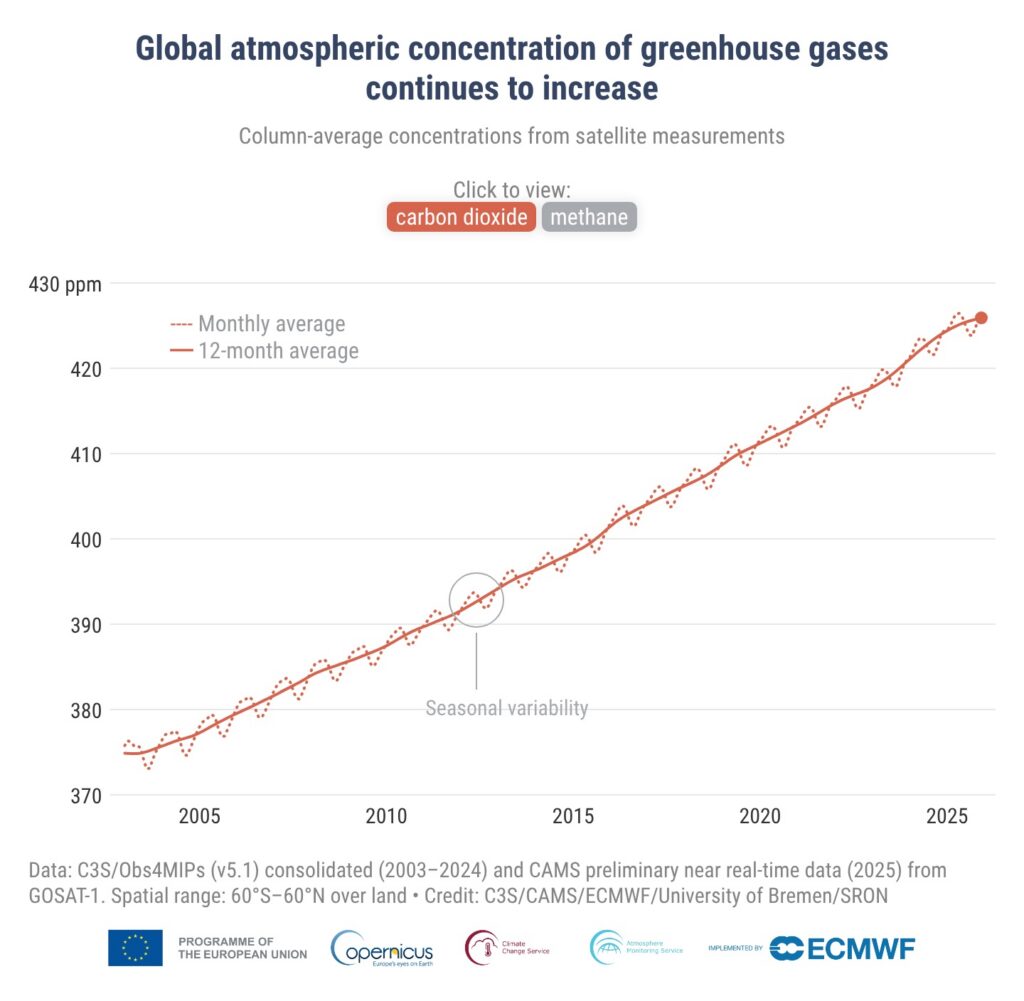
Happy Earth Day 2026? That’s the question we need to ask ourselves.
The UN Environment Programme titled its 22 April newsletter: “Happy Earth Day! Listening to the planet’s signals.” Are we still at this point? Still marking Earth Day this way? Celebrating?
The very next lines of the same newsletter list the signals: rising temperatures, biodiversity loss, pollution, extreme heat. It’s hard to find happiness — or cause for celebration — in that list.
So, happy for what? What are we actually celebrating? The fact that the planet is still here? Or our own inaction?
The net zero scam
Kevin Anderson, a climate scientist, offers a blunt answer: our leaders have chosen to fail on climate change for thirty years. Every single metric is pointing in the wrong direction. Even countries like China, which are doing relatively well in terms of reductions, are still far from where they should be.
“If the problem gets harder every single year,” Anderson says, “I don’t call that progress. Progress is only when you deliver what you have to.” In his view, the widely touted goal of net zero by 2050 is a scam — because until we eliminate fossil fuels and significantly cut agricultural emissions, temperatures will just keep rising. And the climate will just keep changing.
50% chance of AMOC collapse
Meanwhile, inThe Guardian, George Monbiot warns that a catastrophic event is already upon us — yet we’re barely hearing about it. He points to the Atlantic Meridional Overturning Circulation (AMOC), the ocean current that delivers heat from the tropics to the North Atlantic. The first study suggesting AMOC could have an “on” and “off” state was published in 1961. For decades, a human-induced collapse was considered a “low-probability, high-impact” event — devastating, but unlikely. That has changed. Recent research now describes it as a “high-probability, high-impact” threat. Last week, Professor Stefan Rahmstorf, a leading expert on the subject, put the chances of a shutdown at over 50%, with the tipping point potentially arriving “in the middle of this century.”
If AMOC collapses, northern Europe could see a massive drop in winter temperatures, and the Amazon’s water cycles could be so disrupted that the rainforest itself might tip into cascading collapse.
Final thoughts
From a 50% chance of AMOC collapse to net zero called a scam — the gap between celebration and reality has never been wider.
Yet there we were, on Earth Day 2026, reading cheerful newsletter subject lines while scientists warned that we’re drifting toward a climate tipping point with better-than-even odds.
Second part — Notes from the Scientific and informative day promoted by the Microplastics on Human Health Committee with the municipality of Milan
After Monday’s post on research and scenarios, we turn to a more urgent question: are there realistic solutions to micro and nanoplastics?
This is the second part of the second annual outreach conference on micro- and nanoplastics, organised by the Microplastics on Human Health Committee in collaboration with the Municipality of Milan. (You can read part. 1 here).
Exploring ideas and solutions to micro and nanoplastics.
The recovery of micro- and nanoplastics in biomethane production
Alessandro Daneu, Environmental Engineer
He focused on organic wastewater treatment through anaerobic digestion for biogas and biomethane production. This is not only an excellent example of circular economy but also — with appropriate process modifications — a potential solution to reduce the dispersion of micro- and nanoplastics while simultaneously using them to increase biomethane production. These solutions are currently being tested and patented, further confirmed by collaboration with Tongji University in Shanghai.
The starting problem is simple: We are immersed in plastic. Ultimately, it has to go somewhere.
Today, we recover large, visible plastic at collection centres. In some European countries, every plastic number has its own container. When plastic is mixed, separation systems exist — but recovery is very difficult. The only plastic easily recoverable is PET (bottles).
Italy is at the forefront of PET recovery, recovering more than 50% — higher than the European requirement.
Plastics that aren’t recovered end up in waste-to-energy plants. Since they’re a petroleum derivative, combustion is the most appropriate use.
The real problem is micro- and nanoplastics — about which we know little. Plastics from organic waste most easily enter the water cycle. The challenge is separating plastics without shredding them, as was once done.
Biomethane as an opportunity for Europe:
It represents the valorisation of waste. These are molecules that, if recovered, do not enter the environment. The nitrogen contained in organic proteins is transformed into ammonia, which can create environmental problems. Here, ammonia recovery is also possible. From an energy perspective, biomethane replaces natural methane — reducing foreign dependence, creating a domestic product, and providing clean fuel recovered from recycling.
Today, many freight trucks are methane-powered, and a large portion run on biomethane.
Energy is recovered and sold. Fertilisers can be made. Ammonia can be recovered as bioammonia. By-products that can be reused.
FMSW (municipal organic waste). Initial separation is important because all sorts of things end up in the organic waste. The recycling process does not consume external water.
Debunking some myths:
• Separating macroplastics does not eliminate microplastics and nanoplastics — they still end up in our waters. • The only way to intercept them is in purifiers, wastewater, and water treatment processes. • Biodegradable or compostable plastic does not solve the problem. We get microplastics and nanoplastics anyway. • The downstream purifier does not solve the problem on its own unless appropriate treatment policies are implemented. • Anaerobic digestion does not solve the entire problem — in fact, it could create one due to ammonia.
What can we do: solutions to micro and nanoplastics
PHAs and microplastics: sustainable solutions for agriculture and design
Eligio Martini, Chemical Engineer and Maip group president
The accumulation of microplastics in agricultural soils is an emerging problem threatening soil fertility, crop health, and food security. Conventional plastics used in agriculture — mulch films, greenhouse films, irrigation materials — fragment and persist in the environment for a long time.
Enter PHAs (polyhydroxyalkanoates): bioplastics of microbial origin, completely biodegradable in soil. A promising alternative.
The confusion around “bioplastics” The term isn’t accurate. “Bioplastics” means everything:
Some are of natural origin (not from oil).
Some are biodegradable in specific conditions.
But not all bioplastics are biodegradable.
Some bioplastics come from oil and are biodegradable.
Real bioplastics are both natural in origin and biodegradable.
What is PHA?
A natural polymer. Exists in nature. Biodegradable. Forms through fermentation — a natural process. Transformation of a polymer into biomass, water, and carbon dioxide.
PHA is a family of polymers. Fermenters are used to produce it, but the process is natural. Polyester is a large family of materials that can be more or less harmful. Polyester is the chemical characteristic of the material. The chemical structure makes it a polyester, but there are different kinds of polyesters.
Why PHA matters: Unlike PLA (which is not biodegradable everywhere and lasts like traditional plastic), PHA is biodegradable under all conditions—controlled or not by man.
Truly biodegradable materials:
Pure cellulose (paper, not wood)
Rice starch
PHA
PHA is the only natural material that can be processed like plastic but is not plastic. It releases no microplastics. Nothing toxic for the environment.
A striking statistic: All the plastic islands we see in the seas? Only 2% of the plastic present in the water. PHA would help solve the rest.
Applications are vast: Pens, cosmetics, packaging, bioremediation of the seas, agriculture — where plastic gets discarded and never collected.
So why aren’t we using PHA everywhere? It’s called “the sleeping giant” — quite unknown, perhaps to emphasise its potential but limited use. It is more expensive than plastic, so it’s used for high-value items.
The challenge: passing the concept that even if it costs more, the long-term positive effects are worth it.
Note: The MAIP Group (European) is one of the few producers of PHA.
The microplastic-free lamp and fashion from organic farming and certified forests
Natasha Calandrino Van Kleef and Carlo Covini — Sustainable design experts, NKV and Lenzing
Natasha presented the design of a design object — the “Sibilla” lamp prototype — entirely made with a process that produces no microplastics throughout the entire product cycle.
Together with Carlo Covini (Lenzing manager), she also illustrated a virtuous example of completely natural clothing, including all its components and therefore certifiable: “Garments from Organic Farming and Certified Forests.”
Key distinction: biodegradable vs. compostable
Biodegradable: a natural process (light, water, air)
Compostable: an industrial process
This distinction forms the backdrop to the new NKV Fashion & Lenzing project — the result of years of research into microplastic pollution in fashion.
What they discussed: Garments made from 100% hemp or 100% organic cotton, both GOTS (Global Organic Textile Standard) certified. Sewn with innovative TENCEL™ Lyocell sewing thread from certified forests.
The bigger picture: Cellulosic fibres make up only 6% of the market. Meanwhile, synthetic fibre production is increasing.
Biochar and innovative solutions
Dalia Benefatto — Sustainable economy expert
She explained the nature of biochar: a vegetable carbon obtained from the pyrolysis of agricultural waste and organic residues.
Why biochar is promising: The production process has particularly attractive environmental characteristics — it co-produces renewable energy and is carbon-negative.
But most importantly, biochar is a prime tool for removing micro- and nanoplastics from the environment.
Milestones achieved and future potential Among the advantages of biochar: its use as a carbon-negative pigment for dyeing — an eco-friendly and functional alternative.
The analysis addresses pressing challenges, exploring its potential effectiveness in mitigating PFAS. An experimental study is proposed on cotton-polyester blend fabrics, with the aim of transforming them into new by-products while eliminating the release of microplastics.
Key concept: Return economy
Waste as a resource
Waste valorisation
And: biochar removes CO₂ from the atmosphere.
Innovation and process in hospitals
Elena Bottinelli — Director, Villa Erbosa – San Donato group
She emphasised that those working in the healthcare sector cannot ignore the One Health approach — the interconnection between human health, animal health, and environmental health.
The key question: How are hospitals implementing initiatives to reduce their environmental impact?
The scale of the problem: 25% of hospital waste is plastic.
The challenge: Reducing plastic consumption while maintaining cost-effectiveness and sterility — guaranteed by the use of disposable products.
The proposal: Process innovations that combine plastic reduction with organisational efficiency, resulting in positive impacts on overall sustainability. Evidence from best practices.
Solutions to micro and nanoplastics — Final thoughts
So yes, solutions to micro and nanoplastics exist. The question is whether we — citizens, institutions, industries — are willing to adopt them before the system reaches its limits.
Time is not on our side.
From biomethane recovery to PHA, from biochar to circular processes, the ideas are there. But they remain fragmented — often expensive, often limited in scale, often carried forward by the same actors.
And this is where a familiar discomfort returns.
When we hear about certifications, “certified forests”, biodegradable materials, something doesn’t fully settle. Not because these solutions are false. But because we have learned how easily they can be absorbed into narratives that promise change without transforming the system.
Greenwashing wasn’t named here either. But again, it lingered.
In sectors like fashion, the gap is still evident. Beyond pilot projects and virtuous examples, the structural issues remain: overproduction, waste, and a system that continues to generate the problem faster than it can solve it.
So the question is no longer whether solutions exist. It is whether we are ready to recognise the difference between solutions and stories — and who benefits when we confuse the two.
Scientific and informative day promoted by the Microplastics on Human Health Committee with the municipality of Milan
This is the second annual outreach conference on micro- and nanoplastics, organised by the Microplastics on Human Health Committee in collaboration with the Municipality of Milan.
Last year’s conference opened the conversation — covered in a three-part series: Part 1, Part 2, and Part 3.
Why this event? Because scientific knowledge is often poorly communicated. Misinformation is widespread.
This topic spans multiple domains: • effects on human health • the biological world • the industrial world • disposal and reuse of plastic • the fashion world
The goal is simple but essential: to share accurate information with the public and with institutions. You can watch the event here.
The weight of things: a brief history of anthropogenic mass
Telmo Pievani – professor of philosophy of biological sciences, University of Padua.
He opens the panel.
What is plastic? He starts with a quote:
“The material that nature forgot to invent.”
On one hand, it’s a sign of human inventiveness — the creation of a democratic material. On the other hand, it also has a dark side: if nature didn’t invent it, it means there are no bacteria capable of destroying it.
How long have we been inventing materials that nature forgot to invent? We have become physiologically dependent on technology. Just think of something as basic as cooking. We changed the world through technology, and we have become dependent on it. Now, we must learn to interact with nature in a virtuous way.
The problem is time. Let’s consider the human impact on the environment: from the 1950s onwards, there has been a great acceleration. In the last three generations, the human impact on the planet has gone out of control.
The weight of human artefacts used in our lives has exceeded the combined weight of all the plants, organisms, and microorganisms on Earth. (Ron Milo, study published in Nature, December 2020).
If we continue like this, by 2050, there will be more plastic than fish in the sea.
We must learn to make peace with nature. Nature-based solutions — as explored by Frances Arnold. She has found enzymes capable of reducing pollutants.
So, back to where we started: this, too, was not invented by nature, but it is a solution. Harnold exploited evolution to produce an enzyme that nature hadn’t invented. Researchers are now looking for bacteria capable of degrading plastic.
The attractiveness of plastic and its environmental implications, with particular reference to water
Nicoletta Ancona – Curator of the Aquarium and Civic Hydrological Station of Milan.
Plastics — what are they? Polymers — very long chains. Many different substances that we group together under a single name.
They have responded to human needs in every circumstance, as they are very cheap materials. The main problem issingle-use plastic — it degrades very slowly. Therefore, its use must be severely limited.
Plastic production is rapidly increasing. But where does all this plastic end up? Only a tiny portion is recovered. The rest is dispersed everywhere, through the water cycle. Concentrations of plastic are found everywhere. Microplastics are the most damaging. Micro- and nanoplastics are much less visible but make up a significant portion of our diet. It starts with filter feeders — oysters, shellfish, whales — so they enter the food chain. There are also substances that bind to plastic and amplify its harmful effects.
So, there is an ethical and health issue. It is important to inform, raise awareness, and educate. Let’s start from the bottom — from our daily lives — to limiting plastics.
A striking note: It’s sad to hear that in a facility like the Aquarium, they still use plastic cups for coffee. Due to existing agreements, bla bla bla… When we say the system is designed to fail, are we really wrong?
The hidden threats of plastics on human health
Prof. Claudio Fenizia – Professor of Immunology, University of Milan
Threats of plastic to human health. Highlighting the critical issues.
How plastics enter the body: Plastics enter through inhalation, food, food and beverage containers, food storage containers, and transdermal application. Plastics have been found in blood, testes, placenta, and amniotic fluid. What is the effect? • In atherosclerotic plaques, a higher concentration of plastic corresponds to greater inflammation. • Plastic has been found in tumour tissue. • A higher amount of plastic in the brain corresponds to a higher proportion of individuals with disorders such as senile dementia.
But – and this is key – Until the causal mechanism is identified, the effect cannot be demonstrated. Or rather: it must be defined whether plastic is the cause or the effect of inflammation or disease.
Environment, water and health
Prof. Caterina La Porta – Professor of Pathology, University of Milan
The environment we live in determines our health. A single vision of health emerges — One health.
Water is one of the most important vectors of exposure. We drink. We bathe. We wash our clothes. Everything in the environment reaches us.
Heavy metals, pesticides, and organic compounds accumulate in the environment. This isn’t just an environmental problem — it’s becoming a health issue.
Regarding the impact of micro- and nanoplastics, we need to determine whether there is correlation or causality. Whether there is a single effect or bioaccumulation.
The microbiota — the complex network of bacteria, fungi, and viruses present in our intestines — is key. Studies are being conducted to understand what happens with microplastics, which function as a concentration of toxic substances.
Climate change multiplies the risk. For example, drought increases concentration.
Education means making it clear that there is a problem. And making the right choice together.
What kind of future do we want?
Are PFAS and plastics really eternal pollutants?
Prof. Edoardo Puglisi – Professor of Agricultural Microbiology, Catholic University of the Sacred Heart, Cremona
The question — which may seem philosophical, but it’s a scientific one — concerns whether we can solve the problems posed by these invaders.
First, a distinction: pollutant vs. contaminant. When we talk about pollution, we use the words pollutant and contaminant in the same way, as synonyms. Technically, they are two different things.
• Contaminant: a natural or man-made substance that reaches a certain threshold. • Pollutant: when that substance reaches levels high enough to cause adverse effects.
Another related issue is natural vs. synthetic substances. There’s a tendency to think that natural substances are less toxic, but this isn’t always true. We must have a scientific approach that allows us to understand how and to what extent substances can be dangerous.
Some natural substances are much more toxic than chemical ones. In science, it’s best not to have multiple words that mean the same thing.
Another key distinction: danger vs. risk
• Danger: a substance that is toxic and can be dangerous to humans and the environment. • Risk: depends on exposure. Risk combines danger and exposure. How much we are exposed to these substances. Risk assessment involves addressing these two elements.
A tiger can be dangerous, but the risk depends on the exposure. The same goes for pollutants.
As a microbiologist, the answer he tries to give as to whether PFAS are truly contaminants starts from the observation of microorganisms. These are the oldest organisms on Earth. They are a constant with an enormous capacity to adapt, even to new invaders.
New substances are called xenobiotics — substances that have never existed on Earth. Like PFAS, like plastics. Organisms were unaware of them, but they learned to interact with them.
Microorganisms are, therefore, allies in remediation. If we are dealing with an organic pollutant, microorganisms can learn to degrade and consume it. There is a coevolution between microorganisms and the xenobiotics existing in the environment. New metabolic pathways are developing that can lead to degradation.
What are PFAS?
PFAS are a highly heterogeneous family of chemical molecules containing a covalent bond between carbon and fluorine. They are called “eternal pollutants” because they are difficult to degrade.
PFAS and microplastics move through the environment and enter humans. Plastics tend to become micro- and nanoplastics. The smaller they are, the more they tend to accumulate.
Plastifera, the communities of bacteria and microscopic fungi that have learned to colonise plastics. The degradation of plastics is still very limited. But fungi are beginning to degrade plastics.
Remediation is possible PFAS can be remediated. The costs are high, but the costs associated with pollution are even higher. There are enzymes that have learned to colonise PFAS.
Case study: Veneto In Veneto, there has been a significant accumulation of PFAS in water and the environment. A study is underway to identify degradation genes.
His conclusion: He is confident that solutions can be found to degrade PFAS.
Micro and nanoplastics — closing notes
If by 2050 we’ll have more plastic than fish in the sea, these bacteria need to hurry up.
From Pievani’s “material that nature forgot to invent” to Puglisi’s microbes slowly learning to eat it, one thing is clear: nature is trying to catch up. But time is not on our side.
We left the panel with more questions than answers— Not just about causality and bioaccumulation, but about who to trust. Greenwashing wasn’t mentioned by name, but it hung in the air like the plastic cups of the Aquarium.
—
Coming Wednesday: Micro and nanoplastics: what can we actually do? From daily choices to institutional action.
Every time we sit down to talk about clothes, we look at the news — people being bombed, displaced, losing their lives—and think: does any of this really matter?
This is where we’re coming from. That feeling of futility, of powerlessness — wondering how fashion can matter when set against a backdrop of human suffering.
We mistrust easy answers. The world feels too fractured, too painful, to allow for certainty.
Is it irresponsible to talk about fashion right now?
Clothes document the human condition.
What people wear when everything falls apart is a story — one that speaks of dignity, resistance, and survival. Still, we recognise that we speak from a place of privilege. We can choose what to wear. For many, that choice no longer exists.
Throughout history, clothing has never been only about choice. It has been a form of resistance, a way to preserve identity, a silent protest. In moments of displacement, a garment can become the last piece of home a person carries.
Think of the garments of the displaced. What does a refugee wear? Clothes become tools: extra layers against the cold, hidden pockets for money, protection from the elements. What remains on the body is reduced, essential. And still, within that, there are gestures of agency.
A woman in Gaza evacuates wearing her neighbour’s borrowed sandals—her own destroyed in the chaos. She didn’t choose them; they were simply what was available. Weeks later, in a tent, she washes her only remaining dress by hand and hangs it to dry on a wire. This act is not about fashion. It is about dignity. In caring for that dress, she affirms, I am still here.
We still dress. In cities under siege or after natural disasters, people wash a shirt, mend a seam, fix a shoe. Not out of vanity, but to hold on to something human.
If clothing can be a tool of dignity, it can also be part of systems that strip it away. Not only in war zones, but in the everyday violence of how fashion is made. The way we produce and consume fashion is not neutral. It is tied to labour, to resources, to lives. Choosing differently, when we can, is one small way of refusing that indifference.
So is it irresponsible to discuss fashion right now?
It could be. We’re not sure. And maybe that uncertainty is the only honest place to start. What we do know now is that it becomes meaningful if we use it as a door to talk about crimes against humanity and the planet—including who is bombing and what we can do. That includes naming power directly.
We’ve opened that door.
Writing, or doing our job in fashion, does not mean turning away from suffering. It means staying with the discomfort. And recognising that even in the darkest moments, people hold on to small, fragile expressions of self.
Without excess, we hold space for horror and for beauty. Not because we have an answer, but because letting go of either would mean losing what makes us who we are. Perfectly aware that for many, that horror doesn’t stop. So we use our platform to amplify these voices, to speak against Netanyahu’s government and the Trump regime devastating humanity.
As historian Timothy Snyder wrote on his Substack, Thinking About:
“If we do not say something ourselves about this horror, we allow ourselves to be changed.”
We don’t speak for the woman in Gaza. We cannot know what her dress means to her. What we can do is listen — and, where we can, act. And say clearly whose side we are on, because we do not want to normalise this.
“H&M says sustainability is good for business. Can it get shoppers to care?”
The accompanying feature—a sit-down with H&M Group Chief Executive Daniel Ervér and Chief Sustainability Officer Leyla Ertur—explores why the fast fashion giant is “sticking to its long-set sustainability plans” and working on “connecting with customers.”
This piece of news is depressing. Not surprising, perhaps. But depressing.
H&M’s business model is built on overproduction, rapid deliveries, and overconsumption. These are not conditions that can be retrofitted with sustainability plans. Yet there — in the pages of one of fashion’s most respected industry publications — the premise is presented as earnest: Can a fast fashion giant make sustainability matter to shoppers?
Then comes this quote:
“The reality is, it’s hard. To help customers change their behaviour, we have to create real value for them. Otherwise, why should they change?”
Let’s sit with that for a moment.
Shifting the responsibility: the normalisation of greenwashing
In a single statement, H&M absolves itself of responsibility and shifts the burden onto consumers. Not a word about the structural realities of overproduction. Not a question about whether a business model built on volume can ever align with sustainability. Instead: If customers don’t change, that’s on them.
This is the manoeuvre we’ve seen before. Exploit people and the planet through a system engineered to encourage overconsumption, then frame the lack of consumer “will” as the obstacle to progress.
Which raises a more uncomfortable question: Why is The Business of Fashion—a publication that positions itself as the authoritative voice of the industry—willing to take part in this game?
We have our suspicions. Whether or not this was sponsored content, the real question is: what does it say about the state of fashion media when a fast fashion giant’s sustainability messaging is platformed without scrutiny?
Ultimately, the question remains: can a fast fashion brand ever be truly sustainable?
As we explored in our previous post, the answer here is the same. This is greenwashing. Not because H&M lacks sustainability initiatives, but because sustainability cannot be grafted onto a business model fundamentally at odds with it.
Promoting oneself as sustainable while maintaining that model is not progress—it’s a manipulation of eco-discourse. With the approval of the press.
A final reflection
So here we are, facing the normalisation of greenwashing. Sustainability quietly fades from the scene. Greenwashing becomes acceptable. Safe. Sound. Normal. And perhaps not just acceptable, but the dominant language through which fashion now speaks about responsibility.
P.S.: We wrote an eBook to help you cut through the noise. If you want to understand whether a brand is genuinely sustainable or simply dressing itself in green, it’s here: