fashion industry

Consumption Habits & Sustainability: Are We Missing The Point?

Reading Time: 2 minutes

Between consumerism and lifestyle choices


The conversation about having responsible consumption habits seems to get wider attention. Of course, not the central role it should have, becoming the heart of every serious discussion. But, at least, there is a growing interest in this matter.

The impact of consumerism  


More people acknowledge that our actions have an impact on the planet. Specifically, our mindless consumerist culture is causing irreversible climate and ecological breakdown. And irreversibility is a fact we cannot ignore.

However, what leaves us quite perplexed is the idea of splitting consumption habits into multiple areas. In fact, we see sustainable fashion, sustainable tourism, organic food, and so on. On the one hand, segmenting helps to tackle the issue field by field. But on the other hand, it brings along a certain inconsistency.

Sustainable consumption habits: are we missing the point?


First, communication tells us that green-labelled products consumption will solve the issue. Second, you can consume sustainable products in your favourite segment and get away with it. For instance, you can purchase sustainable fashion garments but care less about wasting food. There’s no logic in that!

Shifting our behaviour towards healthier consumption habits is a lifestyle choice. So, it regards every product we purchase and any experience.

Therefore, we can promote sustainable fashion, tourism, furniture, and food. Automobiles and technology. But to make our behaviour effective, sustainability must embrace all our individual choices. We need to develop a conscious behaviour towards life. 

The line that separates sustainability and greenwashing is very subtle. Our lifestyle doesn’t become sustainable because we buy more green products. We can make products with eco-friendly materials, but still, we will impact the environment. 

We can only reduce our impact on the planet by consuming less—much less. It’s a matter of lifestyle. Adopting a sustainable approach means stopping what we’ve been doing.

And so, are you ready to change your consumption habits?

Consumption Habits & Sustainability: Are We Missing The Point? Read More »
News From The Fashion Industry

Reading Time: 2 minutes

What’s going on in fashion?


Reading the latest news from the fashion industry feels like an earthquake is happening. And what a week it’s been!

A brief fashion news recap


Alessandro Michele is exiting Gucci. Honestly, we aren’t sad about it. The maison and its new designer, whoever will be, will face a tough challenge to clean up the circus he made. And bring back the heritage and historical relevance of the brand.

Balenciaga: another brand that has intentionally killed its heritage to undertake a nonsensical path. Moreover, the brand released one of the most disturbing advertising campaigns to launch their plush bags. Children holding bondage teddy bear bags somehow connected to paedophilia is a disgusting message. Not only sexualising kids is horrendous. But it is a clear sign of a lack of ideas. By the way, we could live without plush bags these days!

Raf Simons is shutting his namesake brand, maybe to focus on Prada. Even though he is a great designer, there is something we miss. Since he started his co-designing collaboration with Prada, the Balenciagitis phenomenon has affected his vision. Indeed, exaggerated jackets reminded Balenciaga so much that they seemed borrowed from their fashion show! As a result, Prada stopped being copied and started copying instead.

Where is fashion heading?


So, where is fashion heading? A reflection on this topic is necessary. Can the fashion industry evolve from its current state of confusion?

The pandemic was a game changer, but big groups ignored it. Indeed, they thought they could keep going with their business model: overproduction and making a lot of money. But it seems that provocations and logoed items aren’t enough to survive.

This is fashion in the hands of finance: a blob of mass products. Items covered with logos, taken to the extreme and pretty ignorant. Also, designers lost their crucial role, and marketing experts took their place.

However, we cannot ignore the meaning of the latest news from the fashion industry: reality has dramatically changed, and a new path is needed. Therefore, if brands don’t bring about new ideas, marketing experts will sell their logoed items on another planet!

News From The Fashion Industry Read More »

Fashion Brands and Russian Oil

Reading Time: 2 minutes

How fashion is funding the Russian conflict


Have you ever thought there’s a link between fashion brands and Russian oil? Yes, your mass-produced clothing might be indirectly fueling the war in Ukraine.

Changing markets Foundation released the report: “Dressed to Kill: Fashion brands’ hidden links to Russian oil in a time of war.”
This investigation uncovered hidden supply chains connecting fashion brands and Russian oil. So, purchasing some specific polyester clothing might be a way to fuel the war in Ukraine.

Fashion & Russian oil – the connection


Major Indian and Chinese polyester producers source oil from Russia to make synthetic fibre. Then, they sell yarn and fabrics to garment manufacturers, who, in turn, produce clothes for well-known fashion brands.

Even though many countries have imposed sanctions on Russia, they continue selling clothes made with Russian oil. So, in the end, these same countries are financially supporting Russia’s economy during the invasion of Ukraine. Also, the research highlights links with Saudi Arabia and fracked gas from the US.

We invite you to watch this video:


Fossil fashion thrives on overproduction and an infinite growth system, a clear expression of capitalism. But, as we can see with our eyes, exponential growth is not sustainable for our planet. Indeed, it pushes people toward overconsumption of cheap garments, fostering that buy-use-toss behaviour typical of our society. A toxic consumption habit which, in turn, led to a spiralling waste crisis.
The result is a massive exploitation of people and the planet, with an immense climate cost.

Are your clothes made with Russian oil?


Cheap fashion brands are attractive, but someone else pays the cost: exploited people and our burning planet. And you may also end up supporting Russia’s war.

So, be mindful and choose quality items made to last. One quality garment is better than two bags full of fast-fashion garbage!

Fashion Brands and Russian Oil Read More »

Generation Z & Sustainability

Reading Time: 3 minutes

Exploring what young consumers truly know about sustainability


The topic of sustainability has a warped meaning and understanding amongst most consumers today, Generation Z included.

Gen Z is said to be the upcoming generation for a positive environmental shift in our society. This generation has been at the forefront of the sustainability movement. Pushing companies and brands to conduct sustainable practices in an effort to save the planet we are destroying.

What sustainability means to Generation Z

But does this young generation truly know what sustainability means?
Unfortunately, this “green movement” has become misunderstood as greenwashing. With the lack of research and education on environmentalism, brands have been able to blatantly lie to their consumers. By engaging in greenwashing tactics, they conveyed an image of sustainability and ethicality that simply does not exist to them.

It is now the responsibility of the younger generations to wake up, and do their research. And hold these brands accountable for their greenwashing schemes and harmful environmental practices.

The research on Gen Z

I spent some time interviewing college students currently studying abroad in Milano to understand their point of view. What sustainability means to them. And how they practice it in their daily lives. From these conversations I concluded a distorted idea of greenwashing and an unhealthy practice of overconsumption.
All this is due to a lack of transparency between brands and consumers. When discussing the students knowledge of sustainability or familiarity with the term ‘greenwashing’, I received a variety of answers. Many had never heard of greenwashing or how it affected the choices they make daily.

The truth on Gen Z & sustainability

Students told me that sustainability meant being cautious and putting the environment first. Also, an item or lifestyle alleged to be sustainable, can be trusted with no further questioning. Such contradictory answers surprised me. How can one be cautious yet trust that the word ‘sustainable’ is 100% true?

Students attest to practising sustainability by donating clothes, vintage or thrift shopping, and creating capsule wardrobes. But, when asked what brands they typically shop from, the most common response I received was some of the brands guilty of the greatest greenwashing techniques. The brands these students shop from attest to caring for the earth and market themselves as “conscious” or “committed” to sustainability. Yet still participate in mass overproduction.

Although students brought up capsule wardrobes quite often, overconsumption still seems to have a huge hold on this generation due to the hyper-fast fashion movement. Students claimed to go shopping regularly, at least once a month.

An advice I can give to this generation who yearns for a more sustainable lifestyle is to question everything you see. Don’t support brands that shout about sustainability to sharpen their image for the purpose of gaining social acceptance. But a brand that does good because they care. The word ‘sustainable’ is not regulated and, ultimately, does not need to hold any truth. So, when you see that buzzword word on a tag, don’t forget to fact-check that claim.

Generation Z seems to have an interest, and desire for a more sustainable earth. But, unfortunately, lacks the inclination to question the brands they shop from. Hiding behind the term “ignorance is bliss” is not a viable excuse for a dying planet screaming for change.


✍️ A piece written by Leyla Jackson – apparel merchandising student from Washington State University. Currently studying at Università Cattolica Del Sacro Cuore in Milan and interning for suite123. Passionate about working towards a more sustainable future for not only the fashion industry, but our planet.

Generation Z & Sustainability Read More »

Why Good Design First?

Reading Time: 2 minutes

Designers’ responsibility to provide the answer for a sustainable future


Good design is everything because that is the starting point for any serious discussion about fashion. And even more when the analysis touches on sustainability.

Indeed, whenever we meet students and interns who want to know more about fashion and sustainability, first, we show them brands that focus on exceptional design. Then we can talk about the rest. And not because we aren’t involved in sustainability!

Good design first


So, why design first? Because it’s the core element where you find answers as it reflects a creative vision which gives sense to a product. Designers who have something to say translate their ideas into their products by creating beautiful pieces that are meaningful and timeless. They carefully select materials, choose to recycle fabrics or use particular hand-dyed processes and artisanal workings. They value their employees because an ethical approach is part of their philosophy.
So their garments are rich. Indeed, you can see there’s a lot of substance in them.

Why good design
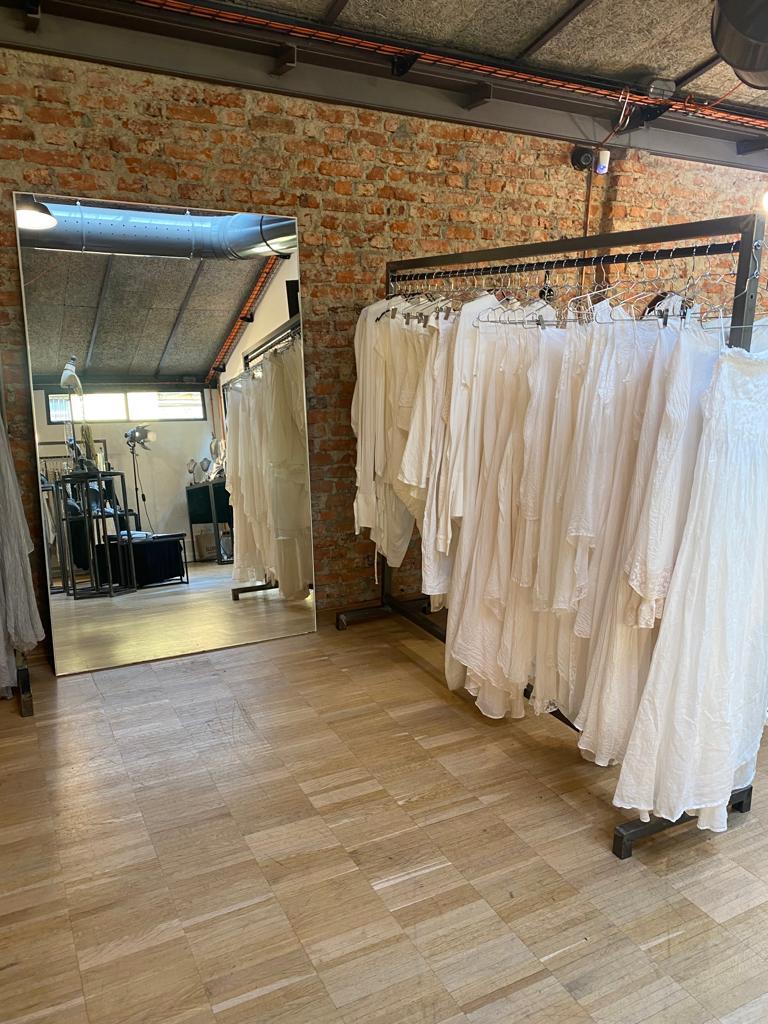
From Marc Le Bihan showroom in Milano


If brands lack design, there’s no point in developing entire collections. Therefore, sustainability matters are solved quickly: we don’t need them.

When designers have nothing to say, you will see archives looted, stolen ideas and tons of marketing labels and catchphrases. Sometimes you may even see nice garments but without a soul. Perhaps these products are easier to sell, but they have no value. So, from a sustainable viewpoint, no reason to exist.

Indeed good design is the core principle, the reason to exist, and the deep meaning of a fashion brand. Furthermore, in a phase of transition and profound change like the time we are living, designers have the moral responsibility to make meaningful products. And so, quality made to last, no overproduction, no push to overconsume, and decent wages.

The task of designers is to trace new pathways while respecting people and the planet. Sustainability is embedded in their patterns, and their designs must provide answers for an evolved lifestyle #formodernhumans

Why Good Design First? Read More »