fashion education

The Challenge of Selling Sustainability To the Youth

Reading Time: 3 minutes

Identity or Identical: discovering your own style


Throughout many generations, there has always been the chapter of one’s young adult life when the opportunity of freedom and finding themselves is made available.
A topic within the discovery of oneself is figuring out your preferred style of clothing. Although this topic has always been apparent, it has flourished more than ever in recent years since more styles from the past have resurfaced and more alternative designs are being discovered.

Today’s youth are born into a society where they have effortless access to every clothing style imaginable. Indeed, they are given more flexibility upon various purchases because of discounted stores, and thanks to fast fashion, shelves are constantly reloaded with new trends.
They rely on mass production and endless options in order to discover the type of person they want to be in society. They use fashion as a method of showing the world who they are. And how they want to be portrayed.

Youth and sustainability: mixed messages


A strong message of environmentalism, as well as activism for unjust labour and mass waste in the fashion industry, have been shoved in the faces of many young adults. They are the future. So they should be informed because inevitably, they will have to be the ones to fix it.
But how are young people supposed to comprehend the immense troubles of mass production when that is the tool used for constructing their individuality?

Ethical production, made-to-order business strategies, and high-end thrifting apps seem to be one solution to mass waste. But how are the youth expected to contribute to the solution when they are supporting the problem in order to find themselves?

Sustainably identical or identity through corruption


Will sustainability among the youth insinuate an ideal of cloning or constricting youth creativity? There have been many new sustainable brands on the rise recently. So access to creativity and options is not the problem. The problem is general access due to price.

A brand is not truly sustainable unless the price is high. Profits go towards ethically paying for all processes of production, distribution, and finding high-quality environmentally friendly materials. Which are expensive. So does that place a cement barrier between the youth and sustainable living?

How do we expect the new generation to contribute to the solution? When rationally, they are one of the biggest components of the problem.

We inform them, we educate them, and we make them aware. Rather than remaining the problem, they can be one of the biggest solutions.
Since Generation Z and Millenials are what makes up one of the biggest factors in overconsumption, waste, and over-production. Convincing them to halt their current mindset would tear down the entire system.

You can’t continue the unhealthy cycle if there is no one left to buy into the lies.


✍️ A piece written by Gavriel Ewart. An American girl studying fashion and communication at Cattolica university in Milan and interning for suite123

The Challenge of Selling Sustainability To the Youth Read More »
Paris Fashion Week 22

Reading Time: 3 minutes

Fashion as a means of protest: how the industry can channel rebellion


Paris Fashion Week 22 has concluded, and even there, the heartbeats felt in the past weren’t beating that much. The atmosphere felt cooler, more restrained. Designing a collection during the pandemic for brands that have to grind a lot of money wasn’t the ideal ground. Furthermore, staging shows during a time of war wiped out fashion relevance.

For sure, the war in Ukraine made us wonder what’s the sense in what we do.

Fall/Winter 22 pret-a-porter


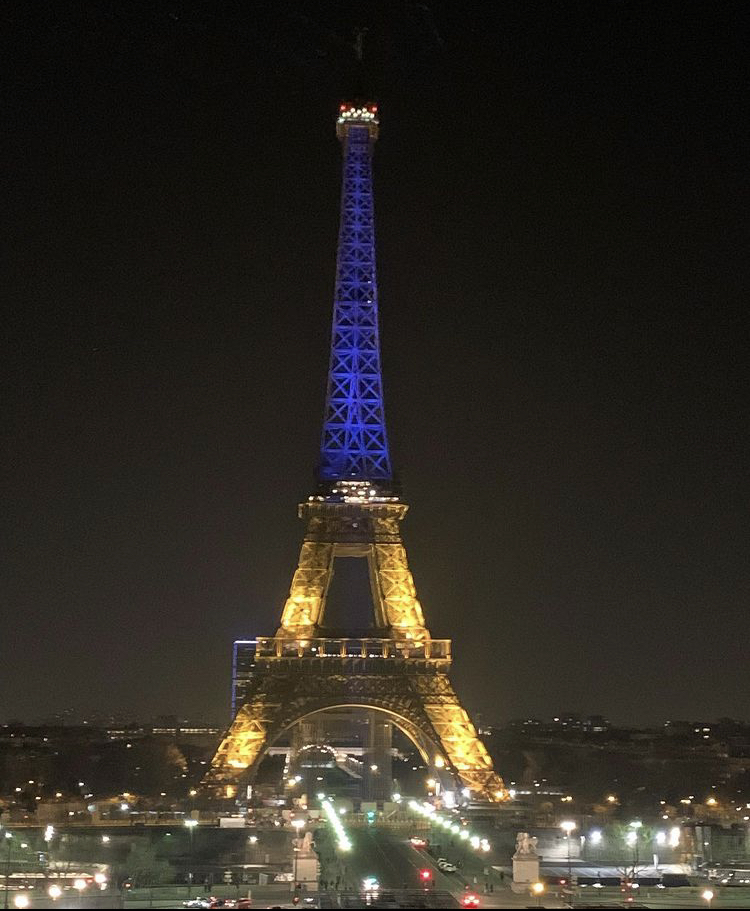
The purpose was to use every single voice, runway, or platform to protest. Even though we have to keep up with our work, we cannot stay silent in front of Ukraine’s tragedy. And so, we really appreciated all the designers who took a stand and raised their voices in support of Ukraine.

As in Milano, the ’90s were leading in Paris too: the white tank top, the slip dress, transparencies, crop-tops were everywhere. Also, Balenciagitis infected all designers in Paris too. In short, it was all about big shoulders.

Paris Fashion Week 22: some random tiny notes


Dior: a futuristic approach mixed with the past generated a far-fetched confusion.

Saint Laurant: this time is yes! Anthony Vaccarello made a very elegant collection respecting the maison’s heritage. The final tuxedos outfits were gorgeous!

Dries Van Noten: the video presentation looked like a commercial to launch his cosmetic line. Time to monetize!

Balmain: Olivier Rousteing is a good designer, but the show was too futuristic. Armours can protect you from haters but will never give you the elegance of a blazer.

Chloé: you can cook without salt, but the food has no taste. We saw some of the classics remixed with well-known marketing trends. However, the collection was insipid, and the beauty created by Natacha Ramsey-Levi vanished.

Uma Wang: a modern and beautiful collection shown through an impactful video.

Issey Miyake: one of the best digital presentations, “sow it and let it grow”, was the message. Indeed, the video was the story of growth and re-birth, which showed the cycle of nature through clothing.

Yohji Yamamoto: can you renovate while being faithful to your style? Only a master like him can do it, and his work is like poetry for fashion. The way he tailored denim was unique.

Image of Paris - tour Eiffel in support of Ukraine during Paris fashion Week 22


Boyarovskaya: impactful and chilling video. The Belarusian and Ukrainian duo sends a heartbreaking message.

Ann Demeulemeester: still white sneakers, for real? And weren’t all models wearing the same outfit again this season?

Balenciaga: Gvasalia’s background voice was chilling. His obsession for the East-European refugee outfits was clear so far, but his misshapen imagery never felt so real and angsty.

Valentino: PP Piccioli’s words, before the show, were everything: “we see you, we feel you”. A whole collection in PP Pink and some black. The message was strong, but the choice limited the beauty we used to see at Valentino shows. And the pre-show seemed like a commercial for Spiderman.

Vuitton: Ghesquière too got Balenciagitis! But we loved the tie outfits.

Chanel: a very wearable and balanced tweed story. No headshots.

Miu Miu: from preppy to biker style, call them winter outfits if you live in California! Panties peaking through the waistline recalled the first Dolce&Gabbana. Ok for the coats, jackets and column dresses. The rest, too mini, too cropped.

Paris Fashion Week 22: final thoughts


Unfortunately, the return of the runways signalled the re-awakening of the collateral circus. However, let’s debunk a myth:
Who said video presentations aren’t a valuable means to introduce a collection? Don’t say it again, please.

And above all, one point emerged: activism through fashion is a thoughtful way to bring back a sense of purpose in our work.

#STANDWITHUKRAINE

Paris Fashion Week 22 Read More »

Fashion Week Frontier

Reading Time: 2 minutes

Which medium will survive?


General Fashion Week Playbook

Over several decades, the fashion industry has evolved in so many ways. The female silhouette has transformed from lung crushing corsets and 19th-century victorian buns to genderless streetstyle and avant-garde designs.

Brands have progressed in their method of garment innovation. Yet since the first catwalk show by Lady Duff Gordon in 1901, runway innovations have only advanced in the context of event design. Designers and brands had decided to keep the mediums of runway shows and video promotions completely separate.

Runway shows are so 2019

If we normalize sustainability, why is the mass waste of a fashion show not considered as a drastic factor taking part in unnecessary waste?

After seeing most daily activities turn to the remote medium, why is a runway show one of the only things left behind for deep discussion and debate?
Just because something from the past was so universally enjoyed, doesn’t mean it’s required to remain the same and be the exception to a painfully corrupted system.

The new Fashion Week medium

Fashion premiered through short films

As a matter of fact, we are in a society where creative innovation is crucial. And not only for progressing as a population but for general survival. Aside from the world of technology, the fashion industry hosts some of the most innovative and open-minded thinkers of our lifetime. There is no satisfaction in sedimentary and placid thinking. Consistent change is expected and embraced. So why have we suddenly decided to halt our experiments here? At a time when it is most vital for the progression of an industry.

We are now entering a new industry era of fashion trailers. Short films, produced to showcase a designer’s newest collection in a way that emphasizes the brand image and what future they’d like the consumer to expect.

Of course, many are hesitant about this idea. This era will be the test that determines who are the true lovers of design and creativity. And who participate just to gain social media followers and views.


✍️ A piece written by Gavriel Ewart. An American girl studying fashion and communication at Cattolica university in Milan and interning for suite123

Fashion Week Frontier Read More »

Mass Production or “Mess” Production?

Reading Time: 2 minutes

Quality vs quantity: exploring the impact of mass production on fashion and society


Mass production is an ongoing global phenomenon. Fast-Fashion, is no doubt, all about mass-production as you think.

Yet, even in the luxury world, high brands nowadays are attempting to produce more than ever to reach a broader range of consumers. Why? Because this is how they maximize profit. Speed and cost are everything they now prioritize. Indeed it’s a matter of speed and greed.

Charles Frederic Worth, an English fashion designer in the early 20th century, is today known as the father of Haute Couture.
His dresses required some fifteen yards of fabric and could take three to four hundred hours to embroider. For one client, the dress even needed a team of thirty seamstresses working full time because everything was entirely made by hand.

Yes, the handmade takes time, but do we still find or do the luxury brands still even care about such craftsman values?

Where are the values which we used to appreciate in the past?

Mass or “mess” production?


Luxury brands are now mass-producing their products to market mass consumers. Targeting a larger audience means bigger profits, they believe. However, their mass production has undervalued the noble past of fashion and diminished the true aesthetic.

They care only about profit, no longer the values.
It is such a “mess production” – in fact.

Resizing and reducing, not maximising


By having in mind the idea of Couture as a meaningful business model, brands should produce less and target a smaller audience. Therefore, selecting the right individuals who are capable of appreciating these values.

A rigid selection is what the brands need to do. They need to select whom to create rather than create for everyone.

“Less” is such a big keyword for luxury brands today, but there is something that should be “more”.
Time. More time for quality.
Because quality takes a lot of effort, patience and creativity. And so more time is a must.
Yet, that is the only way the true values of fashion can be revived.


✍️ A piece written by Kotono Sakai, a Japanese girl studying history and fashion at Cattolica University in Milan and interning for suite123

Mass Production or “Mess” Production? Read More »

Luxury For The Rich

Reading Time: 2 minutes

True luxury or just ordinary?


When the concept of luxury was first presented to the public, it was reserved for the most wealthy. The brands were producing only the highest-quality items, making it an exclusive opportunity to purchase. One that only the lavish could afford.

Jump forward to the 21st century. Luxury has been made available to the high-class and middle-class. But even the low-class are finding ways to purchase. Even if that means sacrificing things they actually need. In this new generation, fitting into a high-status category is more important than saving for your future. The image is everything.

So if every person walking beside you on the street has access to a luxury brand, how are the highest economic class supposed to maintain their importance, aside from driving beside you in their Mercedes Benz.

Peeking through the illusion


There is a strong polarity that still remains between the high-class and all the others. Time. The middle and lower class might be able to afford a few nice purses, perfume, and some makeup. But those material items are only constructing a window for which they can peek through to see an inch of what the highest-class get to experience. Finally escaping from the fear of bringing your work to a halt. Many business owners within the elite would still bewell off even after taking a break from work for a while to spend time with family.
The middle class and below aren’t granted that privilege. They can buy the material items, but they can’t buy time.

True luxury: financial freedom and time


One of the only factors that persists in differentiating the rich from the rest, is the financial freedom to do and go wherever they’d like whenever they’d like. That’s an economic and social ability that can’t be bought on Rodeo Drive.
So I hope you’re enjoying the scent of your Chanel Number 5, but remember that until you alter your perspective you’ll still be on the outside.


✍️ A piece written by an American student studying fashion in Milan and interning for suite123, Gavriel Ewart.

Luxury For The Rich Read More »