fashion education

Chronicles From The Middle Ages

Reading Time: 2 minutes

Women against women


Sometimes, women can have a tremendously negative impact on women’s emancipation. This is evident in the words of Elisabetta Franchi, which felt like like chronicles from the Middle-Ages.

This is what Elisabetta Franchi said in an interview with “Il Foglio”:

“When you put a woman in an important position, you cannot afford not to see her coming for two years because that position is uncovered. An entrepreneur invests time, energy, and money and if a woman cannot show up it’s a problem, so I too, as an entrepreneur, am responsible for my company, have often focused on men.”

“An entrepreneur cannot afford not to see a woman show up for two years, that’s why I often bet on men.”

“I only hire over forty women who already have children.”

Daily life in Middle Ages


This is not men’s opposition to women’s emancipation. This is women against women. When it comes to our vision of fashion, Elisabetta Franchi has never been under our radar. Style speaks, and her fashion perfectly represents her worldview, which is explained above–in her own words. A tacky style for women who dress to impress men. That’s what society and tradition want, so let’s give it to them. And so, we witness the same old patriarchal rhetoric depicted through clothing. A regressive portrayal of women, where career opportunities are nonexistent, but their value lies in attracting men.

It’s something we would never offer to our women. But what we find sad is that most women like that style.

A while ago, we promised to write an exploration of fashion and patriarchy. Indeed, the only fashion that men can appreciate is the one that pleases them. Consequently, that is the most popular style among women, and therefore, that is the best-selling fashion.

Now pair Franchi’s retrograde words with the recent news that three girls couldn’t enter a bar on the beach near Ostia because their clothes weren’t sexy enough. What do we see, then? A disturbing snapshot of a society where women have no opportunities and no evolution.

And we just needed a woman to remind us about it! From the Chronicles of the Middle-Ages, that’s it!

Chronicles From The Middle Ages Read More »
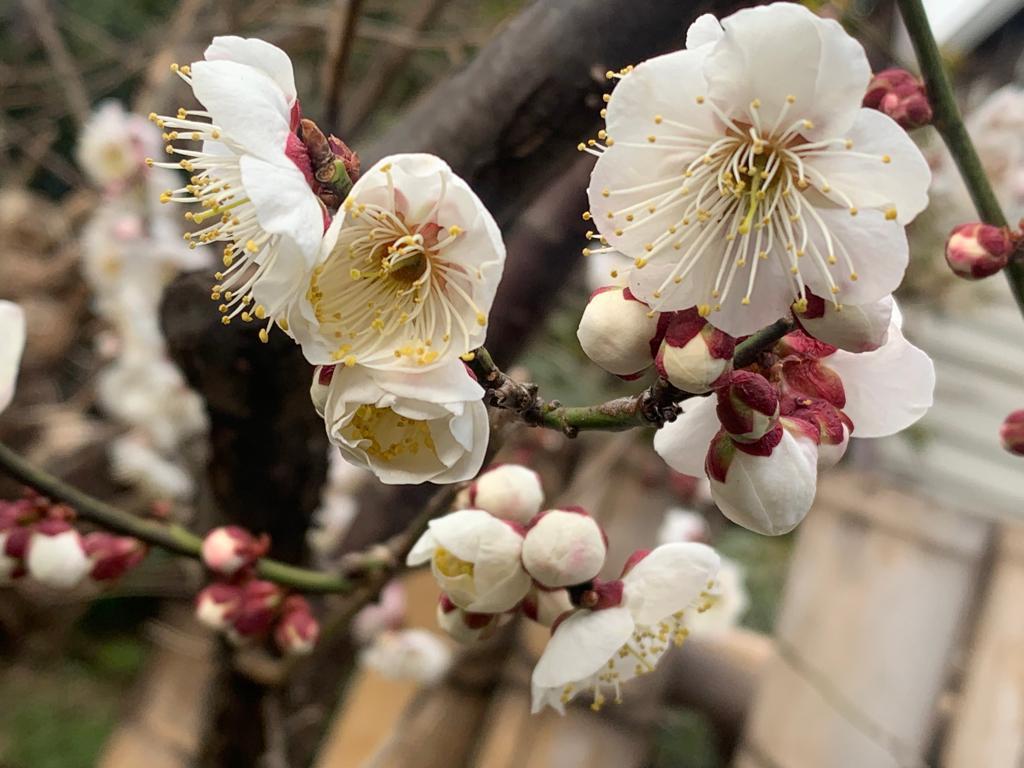
The Beauty of Asymmetry, Rooted in Japanese Aesthetic

Reading Time: 2 minutes

Understanding Japanese culture


Here comes spring! After long gloomy weather, spring is finally here with us in Milano.
With some cherry blossoms, Milanese are having small aperitivo at the parks. I do love it.

In Japan, cherry blossoms are a national symbolic flower of the spring. We enjoy A LOT of cherry blossom viewing, called “hanami”, gathering together with family, friends, and colleagues under the trees. And we believe the best time for hanami is when the petals are fallen.

We also drink, but not as much fancy as the ones in Milano.

Japanese aesthetic


Japanese aesthetic: wabi-sabi

Wabi-Sabi is a traditional Japanese aesthetic worldview centred on the acceptance of imperfect, impermanent, and incomplete. It is usually found in nature.

Japanese people find the most beauty out of the fallen cherry blossoms, not the fully-blooming flowers. Why? Because the sakura’s fleeting and its fragile nature perfectly fits our Wabi-Sabi beauty.

The cherry blossoms last only a few weeks. If it rains and breezes, they only live for a couple of days. A very short life, but this imperfection is what is significant in our aesthetic culture.

Asymmetry


Rei Kawakubo, the founder of Comme des Garçons, often expresses her Wabi-Sabi aesthetic through her sense of design.
Many of her creative garments are unfinished and asymmetrical, which is the opposite of western standard beauty. She finds emptiness in her fashion and appreciates “absent” rather than “present”.

Today, we can find many pieces of asymmetrical garments. Asymmetry is not just cool, but it is somehow deep in itself. The style is undefined and neutral. It gives freedom of expression to anyone who wears it.

If you haven’t checked the oversized denim blouson by ZUCCa, please, take a look. We are always inviting you to enjoy asymmetric beauty as we appreciate it.

Because it is very unique.


✍️ A piece written by Kotono Sakai – a Japanese girl studying history and fashion at Cattolica university in Milan and interning for suite123

The Beauty of Asymmetry, Rooted in Japanese Aesthetic Read More »

The Upscale Drive

Reading Time: 2 minutes

Revising the (over)production model


Ending the diffusion lines is one of the strategies recently adopted by fashion maisons. Why this change of direction? And is it the start of a new business model?

What is a diffusion line?

The diffusion lines, also named second lines, are ready-to-wear collections whose name is similar or somehow recalls the designer’s name. The inspiration and design of these clothing and accessory lines come from the maison archive. But they get simplified in terms of patterns, working, and materials to offer the spirit of the brand at a lower price. More affordable, or relatively so. However, much lower compared to the main lines.

Main lines dominate the high-end market segment, which means they are expensive. However, if brands remained solely in this high-end segment, they would miss out on the majority of the market.

So, driven by greed and speed, brands launched diffusion lines as an opportunity to expand the business and maximise profits. Specifically, diffusion lines were conceived and produced for the mass market.

Apart from some trailblazers like Armani, whose Emporio line was born in 1980, many diffusion lines started spreading in the 90s and mushroomed during 2000. For decades brands focused on evergrowing, ever-expanding, overproducing, and heavy discounting policies. So they triggered a vicious cycle that led to an oversaturated market deprived of value.
Now, things are changing. Some fashion maisons are stepping back, embarking on a new—or not so new—path.

The new strategy: quitting diffusion lines


Recently, Valentino announced the discontinuation of its Red Valentino line starting in 2024—a diffusion line launched in 2003—to shift its focus more toward couture. Likewise, Chloè is to phase out its See by Chloé line over the next three years, addressed as a – “natural and necessary evolution for the long term.”

So, in the short term, brands have maximised profit through secondary lines. But, in the long run, this strategy has compromised the market and their own image.

Now the market is almost dead, and this forced them to change their path.
If fashion maisons want to stay relevant in an oversaturated market, they need to do some cleaning. Ending the diffusion lines will allow brands a more focused business model.

Though we do not expect they will stop overproducing, we are curious to see what they will do next!

The Upscale Drive Read More »

The New Categorising

Reading Time: 2 minutes

A human need, or an empty extremisation?


The new trend of categorising—or the need to assign labels that define where specific groups should fit—is growing rapidly. Terms like genderless, sustainable, recycled, upcycled, and inclusive are some of the most popular labels in fashion today. Yet, while we see these pretty, or not really so, boxes clearly labelled, they often feel too artificial, fake.

Categorising: a marketing byproduct


Why are brands so obsessed with labelling their work? And, in parallel, why do people need these labels? To identify themselves? or to be represented?

Jean-Paul Gaultier created the majority of the fashion topics that are trending now. Yet, during the ’80s and ’90s, there were no labels to claim in the fashion world. It was, instead, a celebration of freedom—both from the designer’s perspective and for those who wore his creations.
Fast forward to 2022, and the obsession with labelling has exploded. Genderless and sustainable are among the most popular, with nearly every brand now claiming to be genderless. Similarly, terms like recycled and upcycled have surged to the forefront. Clearly, it’s a trend.

Coming from a family of seamstresses, disassembling a pair of trousers to make a skirt or transforming a shirt into a blouse was part of our daily routine—essentially, the essence of upcycling and recycling. Moreover, in our boutique, we always offered men’s items to women and women’s items to men, but we never felt the need to categorise them. This, in many ways, embodies the true spirit of genderless fashion, inclusion, and diversity.

Even though about five years ago, we started focusing more on genderless or recycled as valuable concepts, now brands overuse them. Indeed these leabel became so mainstream that they are abused or intentionally misleading, as in the case of sustainability.

We are not happy to be classified. So we wonder, what happened recently? What does the new categorising mean?

We believe that the less meaning we find in brands and their products, the more they rely on labels to make their offerings easier to market.

The supply far exceeds the number of people in the world who can actually purchase these products—the demand. To reach the masses, brands have lowered the bar. And the more they lower the bar, the less value they offer. This is where the need for aggressive marketing and labelling comes into play.

In conclusion, labelling is an attempt to legitimise and promote an otherwise hollow system. Rather than focusing on what truly matters—the substance—they rely on labels to create a facade of value.

The New Categorising Read More »