buy less buy better

Summer Style: Buy Less, Buy Better

Reading Time: 2 minutes

Fashion and lifestyle #formodernhumans


Summer style for mainstream fashion communication means purchasing many cheap clothing: dresses, t-shirts, swimsuits. Lowest price possible. “Because, you know, it’s cheap! So I can throw it away quickly.” Of course, these people blindly contribute to generating tons of waste, but they don’t seem to care.

However, from the perspective of “buy less, buy better” – which is our viewpoint – summer style is about wearing the same clothes, just styled differently. You don’t have to buy more. In fact, you need the right pieces only.

That is the point of choosing meaningful garments. It’s a matter of value. Take quality, not quantity. Clothes that last for decades and are never out of place. Indeed, they represent an understated elegance with a contemporary sense of style. Just change the shoes and accessories, and you adapt them to your current occasion.
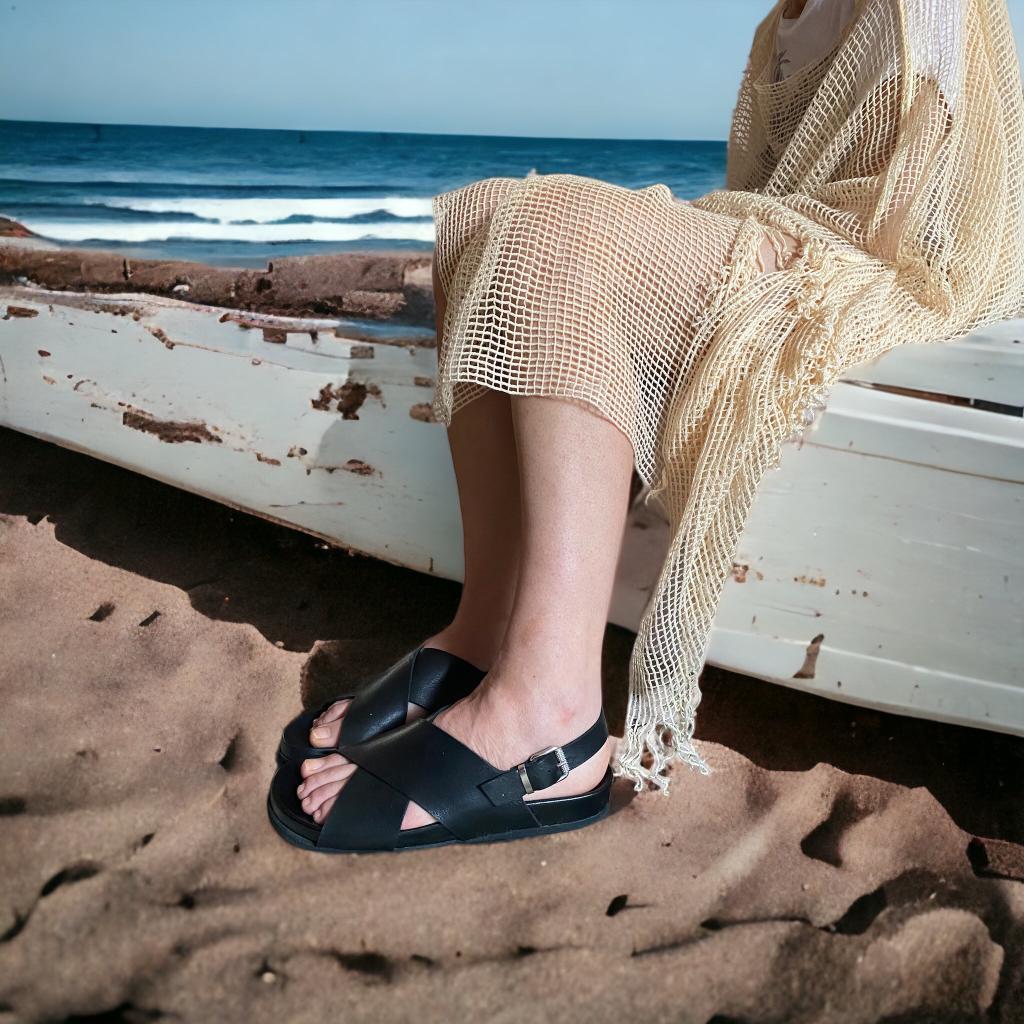
summer style
Summer style: The Mesh Poncho by Meagratia + The Cross Strap Sandals by Antenora

A selection of meaningful garments for your summer style

For instance, take The Mesh Poncho by Meagratia. In town, you can wear it over a t-shirt or a dress. But at the beach, you can wear it over a swimsuit during the day or a pair of shorts or a maxi skirt for the evening. The material is soft cotton that feels good on your skin and falls beautifully on your body. Moreover, it’s a piece that offers multiple style options.

For your summer style, we would love to show you our niche selection of meaningful garments handpicked from international independent designers who have something to say in the fashion panorama. Uniqueness, far away from mass production.

Drop us an email or WhatsApp and we’ll help you choose the best pieces for you.

International Shipping available!


We are based in Milano but ship our niche fashion selection #formodernhumans everywhere. In order to provide unicity and a sustainable approach, our selection offers a limited number of pieces.

Treat yourself today! ❤️

Summer Style: Buy Less, Buy Better Read More »

Customer Criticism: Listening, Learning, and Evolving

Reading Time: 2 minutes

Niche fashion selection and clients’ expectations


As a fashion boutique, throughout our almost 18 years of independent activity, we have remained open to feedback and customer criticism. Although we do our work conscientiously, there is always room for improvement.

Since we started this new path trying to bring forward our vision of fashion within the means of our planet, limiting as much as possible our impact, we went straight to the essential. Which means cleaning up a lot and reducing our selection to worthy garments only. In fact, we don’t need more. We need less, much less, but better quality.

So, it became even more important to listen to different viewpoints–feedbacks and constructive criticism are always welcome.

Customer criticism on a limited selection


But sometimes, criticism revolves around the number of items selected. For instance: “Don’t always show that bag, otherwise people may think you have only a few items.” – commented a client on an Instagram post. Of course, it means she expected to see a broader selection.

“That’s right” – we replied. It was an intentional choice. In fact, we aren’t a fashion supermarket. We love hunting niche fashion pieces which are not for all. Most importantly, we think the fashion industry needs to change, and so does the way people consume clothing and not only that. It’s a matter of lifestyle and consumption habits in general. Our planet is melting, and we cannot afford fake marketing claims. We need immediate action.

Niche fashion #formodernhumans


A niche fashion selection might not be for you. But how can we stop promoting overconsumption if we still select endless choices of clothing and accessories? It would be impossible. Though niche fashion is not for everyone, more is not the answer. However, that comment made us understand that not everyone is open to change. As they do not see any problem. And do not even understand good design. So our selection might not be for them.

How do we respond to customer criticism about our precise selection and a limited number of items?

Rather than tons of garbage fashion or tasteless sustainable products, we need real fashion items: good design and high quality. Made by creative individuals who know what they are doing, not by marketers. That’s it.

Being extremely selective, buying what really makes sense only. In limited quantity. That is what we do. This is our immediate action to drive change.

Customer Criticism: Listening, Learning, and Evolving Read More »

How Do We Dress For This Unstable Weather?

Reading Time: 2 minutes

Mastering the art of layering style


How do we dress for this unstable weather? It’s a question we hear frequently. Indeed, this is the season of extremely inconstant meteorological conditions. Sunshine today, rain tomorrow, or even worse, the weather changes over the day. So, you get dressed in the morning and go to work, but you don’t know what to expect when you close the office or finish your shift. Heading back home can be a real surprise!

By the way, the weather seems unpredictable all over Europe and perhaps not only on this side of the planet. You know, that thing called climate change…

Unstable weather & how to dress


The best way to dress for variable weather is layering. Indeed, for a long time now, we have been promoting this style because it allows you to wear your seasonless garment throughout the year. And so, when you purchase your clothes, you can focus on meaningful pieces only, knowing you’ll wear them for a long time.

The art of layering style


Layering means creating multiple layers of clothes, tone one tone or contrasting colours. This mix and match give good protection from the cold. But, at the same time, it allows removing one or more garments depending on the weather. However, many people find this combination of fabrics of different weights difficult. In fact, the risk is to build up so many layers that they look like a sausage.

How to dress for this unstable weather?


Layering for the spring-summer season is easier because it’s about putting together lightweight clothes. So you will not risk building out too much. Start wearing a t-shirt underneath a shirt. Also, add up an oversized sweatshirt or a blazer and complete the outfit with a scarf. Then, depending on the temperature during the day, you can take off some layers which you’ll fold up and put in a shopping bag.

Of course, do not forget to put a foldable raincoat and a pair of sneakers in your bag.

If you may have any doubts, drop us an email or WhatsApp. We’d love to help you!

How Do We Dress For This Unstable Weather? Read More »

Tailoring vs Mass Products

Reading Time: 2 minutes

Valuing quality over novelties


Tailoring has nothing to do with mass products. Indeed, they are two worlds apart. Why is it important to make this point clear? Because what and how we buy, is connected to the change we want to make. In fact, it’s about promoting a cultural shift far from the novelty-obsessed fashion industry. To this end, changing the perspective of what we consider new is crucial.

Mass products: ready to wear and trendy items


With the term mass products, we identify the “production of large quantities of a standardised article by an automated mechanical process.” Specifically, in the fashion industry, we call it pret-a-porter or ready to wear. In other words, mass-produced clothing with an average price range. Both top brands and the “average market” garments are mass-produced.

You can call these garments new because they come from a new collection, a current season, or a new delivery. But that doesn’t imply specific quality standards. Nor anything significant in the context of climate change.

Ready to wear is trendy based, cheaper to manufacture and convenient for the consumer. But this business model has reached a tipping point. In fact, the impact it has on the planet is devastating and undeniable. Mass-produced clothing is the result of capitalism, an economic system based on the exploitation of people and the planet’s resources. Since this system believes in endless growth, it fosters overconsumption in the shape of trendy items pushing people towards novelty obsession.

Tailoring: quality over quantity


On another level, we find tailoring. Which means pieces manufactured by artisans, made by skilled hands. Therefore, clothing from ateliers or small realities. They would provide good quality in limited quantities reducing fashion waste.

While mass products change continuously, offering new items that last a breath of wind, tailored garments focus on quality and artisanal workings. In fact, their designs don’t change that much over time. You don’t buy them because they’re trendy, but because you’ll wear them for a lifetime.

Most importantly, tailoring brings an added value, mass products, instead, represent the perpetration of a destructive system.

What if what we call “new” is actually wrong?

Tailoring vs Mass Products Read More »

Quiet Luxury: Brands With No Logo

Reading Time: 2 minutes

Tired of logomania?


Fashion style shifts towards quiet luxury, or brands showing no logo. Indeed, the world is flooded with exposed brand names, overwhelming communication, and excessive oversupply of clothing. It’s simply too much. And people end up seeing logos everywhere, to the point of making them feel sick. Perhaps this saturation is finally prompting some to change their perspective.

Logomania vs quiet luxury


The logomania represents the triumph of capitalism in the fashion system, which fostered a consumerist and shallow taste. Logos are easy to market because they are recognised easily, and people identify with them. Although these items still have a big market in the fashion industry, some people are getting tired. Indeed, logo-emblazoned pieces provide (fake) status symbols rather than true style. This has sparked a growing desire for understated luxury—one that moves away from the need to show off.

Quality over quantity


Since the pandemic shifted our perspective of the world, climate change has become a priority. Consequently, our approach to fashion evolved too. We are not involved in trends anymore, but this understated style resonates with us. In fact, it’s nothing new! It’s the vision of fashion we have promoted for years.
This conscious approach implies a dramatic reduction of consumption, refusing standardised clothing and mass production. However, to us, it’s not a way to sell more. On the contrary, it’s a radical choice that goes to the essential. It’s about quality over quantity, choosing good design, timeless pieces you’ll wear for a lifetime. In a few words it means: buy less, buy better.

Quiet luxury: style, not logos


Quiet luxury is a minimal chic style, but it doesn’t refer to basic garments only. Developed around the concept of less is more, this evolved luxury is about wardrobe staples with a strong sense of design. In other words, accurate silhouettes, quality fabrics, and exquisite tailoring, assembled to depict a sense of elegant ease.

Ultimately, quiet luxury is minimalistic, modern and timeless. Though one must have a trained eye to recognise these garments, logoless items are for people who have nothing to prove. However, the sense of effortless elegance reveals an incomparable style.

Quiet Luxury: Brands With No Logo Read More »