sustainability

The marketing dilemma: The wants vs needs paradox

Reading Time: 4 minutes

Give people what they want — or understand what the planet needs? And then, make a change?


The marketing dilemma—wants vs needs—is a true paradox.
Marketing experts preach one golden rule: Give people what they want. Specifically, empathise so deeply with your audience that you anticipate their desires.

Fast fashion obeys, flooding the market with cheap, disposable clothes. Luxury brands, ironically, follow the same model. Other industries—from cosmetics to tech—are no different.

But this “wants-first” mantra has a dark side: overproduction, waste, and greenwashed illusions.

If marketing is about empathy, why does it fuel a system that harms people and the planet? Or is empathy just the new frontier of brainwashing?

Above all, in our daily business, should we cater to wants—or to what makes sense in the face of climate collapse and societal breakdown?

The marketing trap: Why “give them what they want” fails fashion


The industry runs on a simple formula: identify desire, amplify it, profit. But what if the desire itself is engineered?

  • The illusion of choice:
    Consumers feel empowered because they can afford endless products. Shop more = happiness. But are they truly choosing, or just playing a rigged game? The truth? A system built on exploitation and injustice offers sweeteners—cheap prices, fleeting trends—to mask its harm. 
  • Advertising’s fantasy:
    Fast fashion sells “luxury for all,” while luxury brands mimic fast fashion’s speed. Both rely on the same lie: You need this—and you deserve it. They sell fantasies of luxury, exclusivity, and sustainability while churning out exploitative, planet-killing products.
  • The dopamine loop:
    Social media, flash sales, and FOMO turn shopping into an addiction. Dopamine-driven consumption keeps people buying. The algorithm wins; the planet loses.

The marketing dilemma: Profit vs. reinvention


Here’s the crux: profit or reinvention?
Brands that pivot to sustainability cater to a niche. But these brands face a brutal truth: Ethics don’t scale like exploitation.

In fact, the penalty of being niche is clear. Sustainability requires degrowth. It means smaller margins, slower growth, and putting off mass-market shoppers. Even “conscious” consumers often revert to cheap fixes.

So, what to do? Raise prices? Reduce stock? Risk becoming “irrelevant” in a world trained to expect endless newness.

In our experience, shifting from a broad selection of international brands to a narrowed-down niche curation of meaningful garments has hurt profits. Few understand the value of “no fluff” curation. Most still chase low prices—regardless of human or planetary cost.

But who’s to blame? Brands for manipulating desire? Consumers for complying? Or marketing for refusing to challenge the status quo? Or pretending so?

Can marketing break the cycle?


The same tools that created this mess could fix it—if used differently.

‱ First, reframing the “Want”: What if marketing created demand for durability, not disposability? 
‱ Second, honesty as a strategy: Limited productions, slowness, and imperfection are virtues.

But will this work for the mainstream? It’s worth a try. We’re trying. Yet we fear the system itself—exploitative and rigid—will suffocate those who don’t conform.

Final thoughts: The mirror crack’d


In the face of climate change, the marketing dilemma—wants vs needs—reveals itself as a true paradox. The paradox of preserving an economic system that comes at the planet’s expense. A system that persists despite generating appalling inequalities and societal breakdown. 

Yet we’ve come to understand that what people want—cheap prices, overconsumption—directly contradicts what the planet needs.

So we face a choice: Do we continue giving people what they want, further overloading the planet? Or do we persist in narrowing our garment curation, knowing we’ll only reach a handful of free thinkers?

Fashion is a mirror of society. Right now, it reflects our addiction to consumption, our short attention spans, and our disconnect from the consequences of our choices. But mirrors can crack—and so can this system. 

The rise of second-hand, repair culture, slow fashion, and limited curations proves some are awakening.

We must ask: Who’s willing to look beyond their own reflection?

The essential question isn’t “What do you want?”—it’s “What are you willing to stop wanting?”


Three big questions: What do YOU want?

  • Would you pay more for ethical fashion? Do you care about sustainability, or is price still king? Be honest.
  • If you say you care about the planet but still buy 10 cheap tops a month—what’s stopping you from changing?
  • Should marketing change wants, not just cater to them?

đŸ–€ Reply below (you need to register first)

The marketing dilemma: The wants vs needs paradox Read More »
Only 6% of plastic production goes to clothing—so why is fashion a top polluter?

Reading Time: 2 minutes

Unpacking what the UNDP’s plastic breakdown really means for the fashion industry


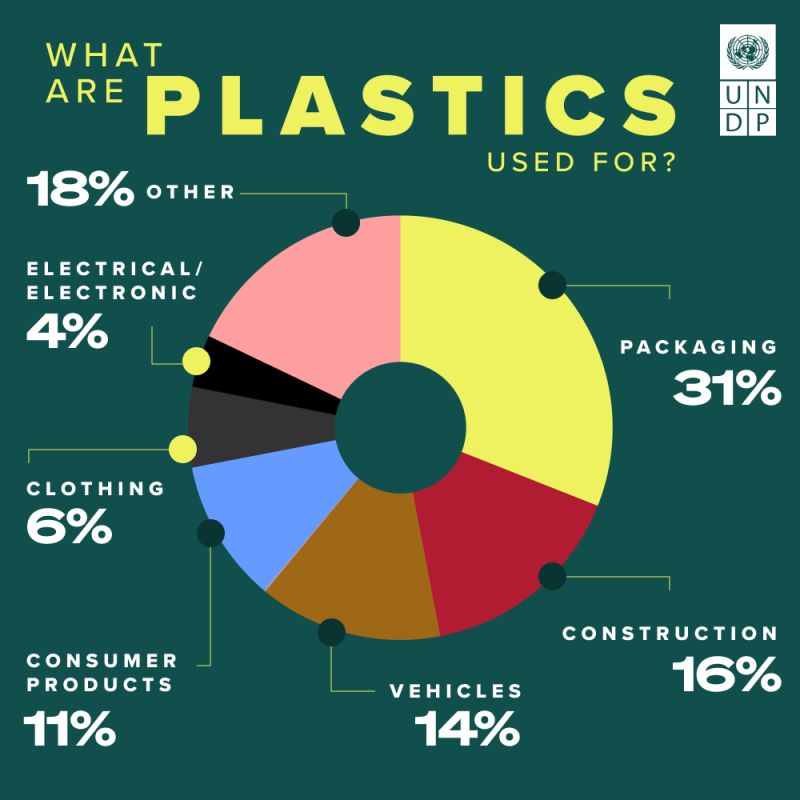
The UNDP released a breakdown on plastic production: What are plastics used for? It reveals unexpected items hiding plastic in plain sight (UNDP). Just 6% of plastic production goes into clothing, dwarfed by packaging (31%), construction (16%), vehicles (14%), consumer products (11%), and other (18%).

So, if fashion contributes so little to plastic production, why is it often called the second most polluting industry in the world?

United Nations Development Programme (UNDP) data visualization showing global plastic production allocation: Largest share is packaging (31%), followed by construction (16%), vehicles (14%), consumer products (11%), clothing (6%), electronics (4%), and other sectors (18%).
Data sourced from the United Nations Development Programme (UNDP)

The plastic production statistic: just one part of the story


The key lies in understanding that the UNDP’s data tracks plastic feedstock only, not the fashion industry’s total environmental footprint. While plastic is a concern—especially with synthetic fabrics like polyester—the industry’s pollution runs much deeper.

In other words, the UNDP’s data is accurate but incomplete. In fact, fashion’s pollution extends beyond plastic. Here’s what the 6% figure doesn’t capture:

  1. Water pollution
    • Toxic dyes and chemical runoff from textile factories account for 20% of global industrial water pollution (World Bank).
    • Synthetic fabrics shed microplastics, making up 35% of ocean microplastic pollution (IUCN).
  2. Carbon emissions
    • The fashion industry is responsible for 4–10% of global CO₂ emissions—more than aviation and shipping combined (UNEP).
    • Fast fashion’s rapid production cycles and global supply chains multiply its climate impact.
  3. Waste crisis
    • One garbage truck of textiles is landfilled or burned every second (Ellen MacArthur Foundation).
    • Less than 1% of clothing is recycled into new garments, creating a massive waste stream.
  4. Resource exploitation
    • Cotton farming guzzles 2,700 litres of water per t-shirt (WWF) and relies heavily on pesticides.
    • The industry’s linear “take-make-waste” model is inherently unsustainable.

Is fashion really the second worst polluter?


The ranking is debated. While oil and gas reliably top the list, fashion’s position varies by study:

  • Some rank it #2 due to its aggregate harm (water, emissions, waste).
  • Others place it lower, alongside agriculture or livestock.

The takeaway? Even if not definitively second, fashion’s environmental damage is undeniable—and the 6% plastic stat barely scratches the surface.

What the UNDP’s data tells us


The 6% figure isn’t wrong—it’s just one metric in a far larger crisis. It’s one piece of the puzzle. Fashion’s true impact comes from its entire lifecycle—from pesticide-laced cotton fields to landfill-clogging waste. Reducing its harm will require systemic change, not just swapping polyester for alternatives.

What can we do? Support circular fashion, buy less, wear more, demand transparency.

(For more on how brands spin their sustainability claims, check out our ebook: This Is Greenwashing.)

Only 6% of plastic production goes to clothing—so why is fashion a top polluter? Read More »

Summer Holiday Style: Why you don’t need a new wardrobe

Reading Time: 3 minutes

The case for timeless fashion—no sustainability tag needed


When it comes to summer holiday style, do we really need a new wardrobe?

Every summer, the same cycle repeats: people buy cheap, disposable clothing—flimsy dresses, bargain swimsuits, fast-fashion cover-ups—worn for a single holiday before being discarded. The reasoning? â€œIt was so cheap, it doesn’t matter if I toss it.”

But it does matter.

This mindset fuels overconsumption, waste, and environmental harm—yet many ignore it. At its core, summer holiday style shouldn’t be about buying more just for the occasion. It should be about buying meaningful pieces you can wear almost everywhere, just styled differently.

Summer holiday style: A woman with a blond bob haircut and sunglasses poses confidently in a beige clay-dyed short pants set by GoodneighborsShirts, layered with a celadon right-slit tee by Ujoh, paired with matching celadon loafers. The background features a square with a gray floor, yellow-beige houses, and trees.

The problem with ‘holiday-only’ fashion

Mainstream fashion encourages buying low-quality, trend-driven pieces that lose their appeal (or fall apart) after one trip. Kaftans, flimsy cover-ups, and synthetic beachwear dominate summer sales. But these items rarely last beyond a season. Worse, they contribute to the growing mountain of textile waste choking our planet.

What if summer style wasn’t about buying more, but smarter? Taking the right clothes only?

The alternative: Meaningful garments that last


True style isn’t about quantity. It’s about curation, quality, and longevity. A well-made cotton shirt, a tailored swimsuit, a lightweight silk dress in a timeless cut—these pieces don’t just work for one holiday. They transition seamlessly from city life to beach escapes, year after year.

The secret? Thoughtful design and versatility.

  • Choose good design, pieces made to last: quality speaks before you do. Most importantly, Good design encompasses sustainability without even mentioning it.
  • Natural fabrics don’t just breathe better; they evolve beautifully, unlike disposable synthetics.
  • Change the styling, swap accessories—suddenly it’s a whole new look.

This approach isn’t just sustainable—it’s effortlessly elegant.

Fashion’s hidden cost: A planet on fire


The question â€œWhat do you wear on holiday?” seems harmless. But it reveals deeper truths about our values—and our impact. The fashion industry is a major polluter, and disposable summer trends only make it worse.

We can’t afford to ignore it anymore.

Overconsumption and “garbage fashion” belong to the past. With climate crises escalating, we must shift to fewer, better pieces—garments that endure beyond a single season.

The bottom line: Buy less, buy better, wear more


You don’t need a new wardrobe for summer. You need a mindset shift.
Invest in quality over quantity.
Reject fast fashion’s throwaway culture.
Embrace versatile, timeless pieces that work everywhere.

The future of style isn’t in endless shopping sprees—it’s in meaningful choices.

So, what do we wear on holiday? The same timeless pieces we wear in town—just styled differently. Because true style isn’t disposable—it’s forever.

What about you? Do you buy clothes just for summer holidays, or do you choose pieces that last?

Summer Holiday Style: Why you don’t need a new wardrobe Read More »

Fashion and sweatshops: “Labour Exploitation? A limited phenomenon,” claims Capasa (CNMI)

Reading Time: 3 minutes

Luxury fashion: Workers endure modern slavery as prices spiral out of control


The link between fashion and sweatshops becomes increasingly entangled. According to Capasa (CNMI), labour exploitation in the industry is an “isolated phenomenon.” But is this truly the case? Or has fashion been wholly absorbed by finance, dominated by hedge funds and pure capitalism? The question strikes at the heart of today’s debate about fashion’s ties to the global economic system.

Recently, Italy’s Antitrust fined Armani €3.5 million for “unfair commercial practices,” accusing the brand of misleading consumers by using social responsibility as a marketing tool. The group responded with “dismay and astonishment,” vowing to appeal.

From greenwashing to social washing, the playbook is familiar. But what’s the point of penalising a single luxury brand when the issue is systemic?

Fashion and sweatshops: Isolated incidents or structural crisis?


Publications like Business of Fashion often frame labour exploitation as an “Italian problem.” Yet when Dior—a French brand owned by LVMH—faces similar scandals, it becomes clear the decisions driving exploitation aren’t made by the artisans sewing handbags in Italy. Corporate boardrooms dictate them.

While independent brands and fashion countercultures might seem like authentic alternatives, the industry as a whole remains deeply entrenched in global capitalism, ruled by conglomerates (LVMH, Kering, Richemont) and private equity.

Fashion in the grip of finance


Is fashion truly free, or just another capitalist tool? We celebrate it as a creative expression, but how much autonomy does it really have? These forces are shaping how we experience the industry today:

  1. Luxury giants & shareholder rule – Publicly traded empires like LVMH (Louis Vuitton, Dior, Fendi) prioritise profit margins, scalability, and acquisitions. Fashion is no longer about creativity—it’s a financial asset.
  2. The privatisation of taste – Trends are engineered: pre-fall collections, “resort” lines, and limited-edition drops exist solely to fuel hype and endless consumption. Even “underground” movements (streetwear, sustainability) are swiftly co-opted.
  3. Extractivist fast fashion – Shein, Zara, and H&M epitomise hyper-capitalism: exploitative labour, planned obsolescence, and algorithms (not designers) dictating trends.

Is change possible?


Resistance exists—but is it enough?

  • Slow fashion: Timeless, ethical designs that reject disposability.
  • Vintage & second-hand: A quiet rebellion against overproduction.
  • Independent brands: Fleeting oases before acquisition or collapse.

Yet, as long as fashion remains a multi-billion-dollar machine, these remain mere drops in the ocean. Finance still dictates the rules—and profit will always outweigh ethics in boardrooms.

Final thoughts: No more illusions


Let’s be blunt: Fashion and sweatshops are deeply connected. The system of deliberately opaque, low-cost subcontracting isn’t an “isolated phenomenon” (apologies, Mr. Capasa)—it’s the beating heart of modern capitalism. Extraction. Exploitation. The relentless pursuit of cheaper labour.

This isn’t just about fashion. It’s about what we value:

  • Should clothes be financial instruments or cultural artefacts?
  • Can creativity survive when quarterly reports matter more than craft?

The uncomfortable truth? There’s no ethical fashion under capitalism—only degrees of complicity.

So this leaves us facing the radical question:
Can we imagine post-capitalist fashion? Or is it doomed to serve profit forever?

What do you think? Is there room for radical change—or is this just idealism?

Fashion and sweatshops: “Labour Exploitation? A limited phenomenon,” claims Capasa (CNMI) Read More »

Earth Overshoot Day: the day humanity exhausts Earth’s annual natural resources 

Reading Time: 4 minutes

Can we change course? Can humans live in balance with nature?


July 24th marks Earth Overshoot Day—the date when humanity’s demand for ecological resources exceeds what Earth can regenerate in a year. From this point on, we’re drawing down nature’s capital—robbing future generations to maintain the present.

This symbolic threshold arrives earlier each year, highlighting our deepening ecological debt. In the 1970s, Overshoot Day fell in December. Today, it comes in late July. Wealthier nations overshoot at alarming rates: the U.S. consumes resources as if it had five Earths; Italy’s ecological footprint is 2.9 times what its ecosystems can replenish.

The path back: five levers for change


According to the  Global Footprint Network, solutions exist to move the date—and they hinge on systemic changes, not small tweaks. The organisation promotes five key strategies, encapsulated in the campaign #MoveTheDate:

  1. Energy transition: Replacing fossil fuels with renewables could shift Overshoot Day by 93 days.
  2. Circular economies: Reducing waste and redesigning production systems to close material loops. 
  3. Food system overhaul: Cutting global meat consumption by 50% could push the date back 17 days. 
  4. Green cities: Rethinking mobility, housing, and infrastructure to reduce urban footprints.
  5. Policy shifts: Implementing binding treaties to protect forests, oceans, and carbon sinks. 

The good news? If we manage to push back Overshoot Day by just five days per year, we could return to living within Earth’s means by 2050.

Rupert Read on reversing ecological overshoot


But is it still possible?
Rupert Read, environmental philosopher and former spokesperson for Extinction Rebellion, is sceptical of techno-optimistic solutions. He aligns with the “deep adaptation” movement, which argues that ecological collapse is now likely—and that instead of relying solely on mitigation, we must prepare for radical societal transformation.

From Read’s perspective:

  • “Too little, too late” – Even drastic emissions cuts may not suffice, as we may have already triggered tipping points like permafrost thaw and Amazon dieback.
  • Growth paradox – Infinite economic growth is incompatible with planetary boundaries.
  • False hope risk – Frameworks like #MoveTheDate may underestimate the slow pace of actual system change, especially given the inertia of CO₂ in the atmosphere.

In short, Read contends that overshoot isn’t just a policy failure—it’s the symptom of a deeper crisis: a civilisation fundamentally at odds with ecology.

Read’s alternative: Transformative adaptation


Read’s vision focuses on resilience, degrowth, and radical localisation. He argues that rather than saving an unsustainable system, we need to build a new one—one grounded in ecological humility.

Key pillars of this approach include:

  • Degrowth – Shifting from GDP obsession to prioritising human well-being and scaling back consumption to within planetary limits.
  • Co-liberation – Challenging the exploitative logics of capitalism and colonialism that view nature as disposable.
  • Radical localism – Empowering communities to grow food, restore ecosystems, and reclaim agency—starting now, without waiting for governments to act.

In an essay co-authored with Caroline Lucas, Read urges a ground-up approach to adaptation:

“Begin, in other words, not with an abstraction but with direct experience, and with quality of life. Climate action can become popular when people understand its benefits in the terms of their own communities, and their own lives. For the climate movement, this means shifting adaptation and resilience-building from the margins to the centre of our strategic message. This is about more local, nature-friendly food-growing that people can have a stake in: for instance, through planting fruiting tree and bush varieties that are able to cope with higher summer temperatures.”

They call for climate popularism—a politics that is local, collaborative, and hopeful:

“Despite stereotypes about voters who can only be won over by a politics of fury, research shows that an ‘exhausted majority’ is tiring of endless aggression and division. They seek something they can positively believe in, a programme that is local, collaborative and respectful. A depolarising wave of action that mobilises communities’ instinctive protective instincts could really be
 popular. And that is climate popularism.”

The verdict: Possible, but not probable


Technically, reversing ecological overshoot is still possible—if humanity moves at wartime speed. But politically, Read believes it is improbable without unprecedented global mobilisation and a reimagining of what progress means.

Earth Overshoot Day: The bottom line


Earth Overshoot Day is a warning. Yes, we could move the date back five days a year and restore ecological balance by 2050. But Read’s work reminds us: this will take more than innovation. It demands a cultural, political, and moral reckoning.

The choice before us is not simply between green tech and collapse. It’s between:

  • Clinging to a broken system, or
  • Building one that recognises humanity as part of, not separate from, the natural world.

In the end, the future belongs to those who stop pretending.


🌍 Want to explore how marketing manipulates ecological narratives?
Read This is Greenwashing — a practical guide to recognising the gap between sustainability claims and reality, written for modern humans seeking clarity and action.

Grab your copy from your favourite digital store through this link: https://books2read.com/u/bpgxOX

Spot the lies. Demand better.

Earth Overshoot Day: the day humanity exhausts Earth’s annual natural resources  Read More »