sustainability

Clay dye processing: the colour of the earth

Reading Time: 3 minutes

A story of slow fashion from Japan: mud-dyeing born from the vision of Akira Aoki, founder of GoodNeighbors Shirts


Clay dye is the colour of the earth itself. This mud-dyeing process began as the vision of designer Akira Aoki, who founded a thoughtful slow-fashion brand. One that brings together fabric treatment and modern design.

We are all born from the same earth. Precisely this connection inspired the designer to capture the natural hues of the soil in a cotton shirt. Through repeated experimentation with local clay—each season lending its own character—the brand has created shirts with a uniquely natural colour and texture.
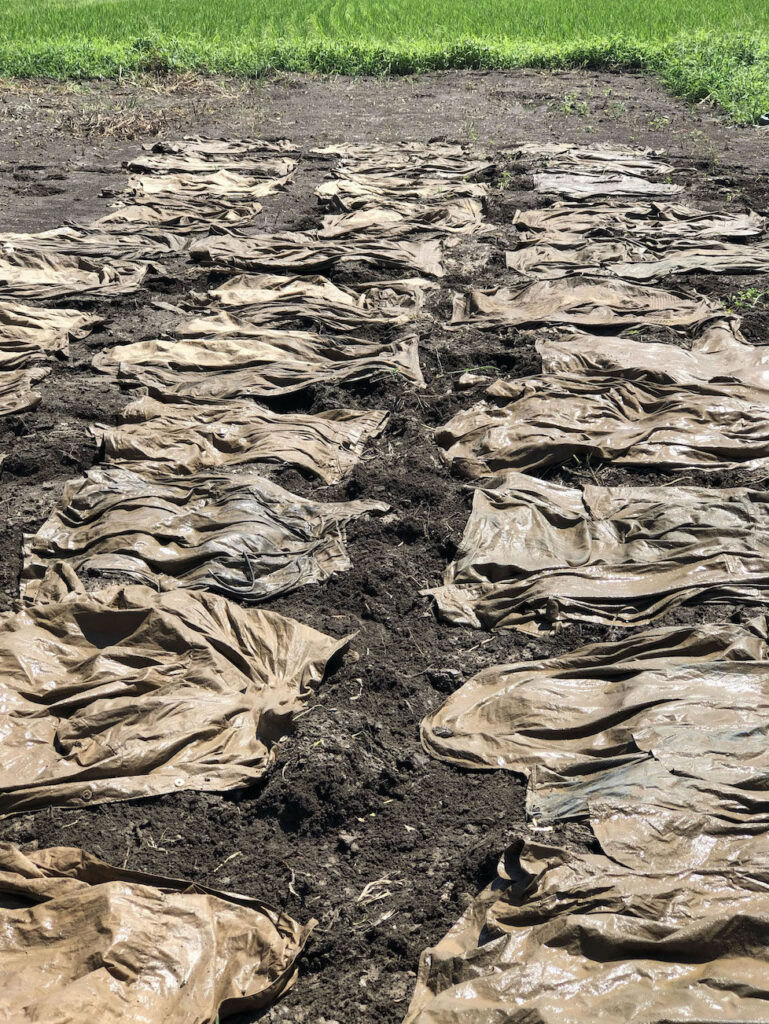
A series of GoodNeighbors Shirts laid on clay soil during the traditional Japanese mud-dyeing process, with green grass in the background.
Clay dye processing by GoodNeighbors Shirts, Japan

Clay dye: a Japanese story of earth, craft, and style


Fujioka City in Gunma Prefecture, northern Kantō, is where Akira Aoki was born and raised. Surrounded by mountains and rivers, the area is blessed with high-quality clay and pure water. For centuries, it has been a major producer of earthenware, including Haji ware, Sue ware, haniwa figurines, and roof tiles.
Fujioka roof tiles, in particular, trace their origins to the founding of Ueno Kokubunji Temple—a tradition spanning more than 1,200 years.

The region’s distinctive red clay comes from the Kantō loam layer, formed by volcanic ash from Mount Akagi and Mount Haruna. Rich in iron-bearing clay minerals, its fine particles retain moisture well and offer high permeability.

Aoki’s family moved to Fujioka during the Edo period and has farmed the land for over 400 years.
Drawing on the nutrient-rich red soil and natural groundwater from these fields, Akira—who studied dyeing and weaving at Tama Art University—hand-dyes each piece himself to create his mud-dyed products.

The special quality of mud-dyeing lies in the thick, clay-like paste mixed with groundwater. Its high iron content allows clay minerals to penetrate deep into the fibres. This process swells the yarn, smooths its edges, and enhances the fabric’s softness and texture.

The finished garment carries the beautiful, uneven colouration of the clay itself—as though gently coated in earth.

These mud-dyed products are coloured using only soil and water. No chemicals. Consequently, after dyeing, the clay returns to the earth, and the water nourishes the soil once more.

Through this deeply rooted craftsmanship, the brand aims to foster new values that connect the environment, people, and society to the future.

GoodNeighbors Shirts: shirts that breathe in Tokyo


The name GoodNeighbors means “good buddy, good neighbour.” The brand values shirts that are comfortable to wear every day, and that can be shared easily and without pretence. Its original designs draw inspiration from diverse music and art cultures, each carrying a subtle, distinctive character.

Made in Tokyo, the shirts are carefully cut with a modern silhouette; skilled artisans in the city’s older districts then complete the craft.  They are made to last, blending delicate tailoring with an effortless, relaxed feel—like a breath of fresh Tokyo air.

Final thoughts


Even in a market dominated by top brands and fast fashion, we remain committed to seeking out small, thoughtful gems. Ultimately, independent brands are where you will find considered design and more sustainable practices.

Clay dye processing avoids chemicals, and both the soil and the water return to nature after the dyeing process.

In a fashion system still ruled by speed and scale, mud-dyeing stands as a quiet act of resistance. In essence, Aoki’s work reminds us that colour can come from the earth, not chemicals; that craftsmanship can restore our connection to place; and that truly sustainable fashion begins with respect. For materials, for makers, and for the land itself.

Clay dye processing: the colour of the earth Read More »
Pambianco Fashion Summit: thirty years of fashion, from designers to large groups. What future for Made in Italy?

Reading Time: 4 minutes

When sustainability becomes a buzzword and growth remains the real goal


We have just followed the 30th Pambianco Fashion Summit. Once again, sustainability was the magic word everyone loved to repeat. But immediately afterwards came the true priority: growth. Always growth.

In this panel, ultra-fast fashion from China plays the villain, while Northern European fast fashion receives applause. After all, H&M is on stage to explain circularity.

And so the question returns, louder after every panel:
What haven’t these CEOs, presidents, managers, founders and the rest understood about the meaning of sustainability?
Because the more they say it, the more the word sounds like a joke.

Consumers want authenticity—so why is fashion still pretending?


Erika Andreetta (PwC Italy) highlights what already seems obvious:

  • People want reliable, transparent, consistent brands. In short, authenticity.
  • They seek alignment with cultural values.
  • Second-hand is growing three times faster than traditional fashion.
  • Outlet shopping is growing five times faster.
  • Value matters: products aligned with personal values, at the right price.
  • Brands still produce too much—and don’t sell their overproduction.
  • Multi-brand stores have become the places where people actually look for something new.

As for European fashion, the disillusionment is generational:

  • Young people don’t see originality.
  • Baby boomers have other priorities.
  • Gen Xers find prices unjustifiable.

Fashion listens, but selectively.

Pambianco Fashion Summit: Sburlati, “a system under attack”


According to Sburlati (Confindustria Moda), the fashion ecosystem is under pressure on three fronts:

  1. From the East: exports down 3%, imports up 5%, fueled by China (+18%).
    Postal packages under €150 pay no customs duties or VAT—an obvious distortion.
  2. From the West: a weak dollar, double tariffs in the US, and a push for local brands.
  3. From within: a fragile Italian market.

Sburlati came to a dramatic conclusion:

“We are on the brink of collapse and risk ending up like the automotive industry.”

Capasa (CNMI): the luxury narrative is shifting


A negative narrative surrounds luxury — one that started in China.
Proposed solutions include:

  • An anti–fast fashion law with tariffs across the board.
  • A French-style approach: taxes on packages and a ban on misleading advertising.
  • Support for new businesses at a time when more are closing than opening.

Capasa adds a point on young consumers: “Young people are all environmentalists. We must explain to them that fast fashion is not. We need to explain the value of quality and creativity.”

And then… H&M entered the room


This is where the contradictions become glaring.

The industry complains — rightly — about Chinese ultra-fast fashion. However, it then invites H&M, a symbol of Western fast fashion, to discuss circularity and therefore “sustainability.”

So yes, we ask again:
What exactly have these leaders failed to understand about sustainability?
Can a brand built on overproduction ever be sustainable?
Because every time fast fashion is framed as “sustainable,” we’re entering the realm of greenwashing.

E-commerce


Another point raised: a shift in digital strategy is necessary.

  • Over 60% of brands are not ready.
  • Yet today, 80% of sales involve a digital touchpoint.

Clothing & sustainability

  • The idea of more durable, timeless garments is gaining traction — pieces suitable for multiple seasons and less overconsumption.
  • 54% of products are sold on sale. The second month of sales is the strongest — meaning consumers wait for the sales of the sales.
  • Millennials (28–44 years old) spend more — around 36 items per year.
  • Clothing is losing value; personal care and beauty are more engaging.
  • Women continue to consume a lot, but above all, they remain tied to fast fashion.
  • Gen Z is starting to think about quality, longer-lasting pieces, and niche products.
  • Young people are the demographic most sensitive to sustainability — but garments should not cost more than their traditional counterparts.
  • Gen Z wants clarity: What is a sustainable garment?
    A simple question the industry will probably never answer. But we do — you’ll find the answer in This Is Greenwashing here.

Final thoughts


In conclusion, the 30th Pambianco Fashion Summit analysed fashion, from designers to large groups, and attempted to explore what the future holds for Made in Italy.

If sustainability continues to coexist with an obsession for infinite growth, with overproduction, with contradictory narratives, the word will lose all meaning.

Until the industry stops applauding whoever says “circularity” the loudest and starts reducing — truly reducing — its impact, these summits will remain conversations about sustainability without actual sustainability.

Pambianco Fashion Summit: thirty years of fashion, from designers to large groups. What future for Made in Italy? Read More »

COP30 in Belém: climate promises vs fossil fuel politics

Reading Time: 4 minutes

With 1,600 lobbyists in attendance—outnumbering most nations—the summit’s goals of finance and justice face a critical test


As the second week of the COP30 climate summit begins in Belém, Brazil—in the heart of the Amazon—the stakes are becoming sharper and harder to ignore. The world faces a profound contradiction: the need for urgent, radical action to address record-breaking temperatures collides with the overwhelming presence of the very industry driving the crisis. The initial discussions have set the stage, but the most difficult negotiations now begin.

Against this backdrop of unprecedented lobbyist attendance, delegates are confronting an immense and politically charged agenda. In short, six critical issues will determine if COP30 delivers real change or just repeats empty promises.

The six defining issues of COP30


1. Preventing runaway warming: the 1.5°C lifeline.
The data are stark: current national pledges put the world on track for a catastrophic 2.3–2.5°C of warming. In fact, overshooting the 1.5°C target is now almost certain. The task in Belém is to pressure major emitters into steeper, faster emissions cuts, aiming to make the overshoot as small and as brief as possible. Yet this effort is inevitably complicated by the presence of 1,600 fossil fuel lobbyists. Indeed, their influence risks diluting ambition behind closed doors.

2. Funding climate adaptation: paying for survival.
Developing nations are demanding solutions to the enormous financial gap facing communities already suffering climate-fuelled storms, droughts, and rising seas. COP30 is the deadline for agreeing on a new global finance goal for adaptation. But success means ensuring vulnerable countries can build real resilience. An urgent necessity that sits uneasily alongside the fact that fossil fuel lobbyists outnumber every country delegation except Brazil’s.

3. Unlocking trillion-dollar finance: from pledges to projects.
The central challenge remains converting grand climate finance commitments into actual, accessible flows. A proposed roadmap aims to mobilise $1.3 trillion each year by 2035 for developing countries. Negotiators will now focus on reforming global financial systems, so public funds can leverage private investment. But these over “real money” happen alongside the significant influence of petrostates. Azerbaijan, the UAE, and Egypt—all fossil fuel major producers—hosted the last three summits.

For a deeper look at this dynamic, read our previous analysis: Is it time to give up on the COPs?

4. Scaling creative solutions: beacons of hope.
Despite the political tension, COP30 is also a launchpad for concrete initiatives. Highlights include the Beat the Heat programme for sustainable cooling, the Food Waste Breakthrough to cut methane emissions, and the Tropical Forest Forever Facility, designed to pay countries for preserving forests. These examples offer a glimpse of what coordinated climate action could achieve, if matched by political will.

5. Ensuring a just transition: the Belém action mechanism.
The shift to a green economy must be equitable. In fact major expected outcome is the Belém Action Mechanism for Just Transition, a framework intended to support workers and communities dependent on high-carbon industries through job creation, training, and structural support. This commitment to justice is essential in a process where powerful economic actors dominate.

6. Reigniting the Paris spirit in a “decade of delivery.”
Nearly a decade after the hope of the 2015 Paris Agreement, COP30 aims to recapture that momentum and mark the start of a true “decade of delivery”. The goal is to finally translate lofty pledges into action. Yet that ambition is being tested by the sheer scale of industry involvement, with recent investigations intensifying long-standing concerns about the summit’s integrity.

Final thoughts: a summit at a crossroads


In conclusion, the message from Belém is clear, yet profoundly conflicted. As the second week opens, the technical challenges of emissions cuts, finance, and adaptation are firmly on the table.

However, the real battle for this summit’s outcome will be fought not over the official agenda, but over the unspoken power dynamics in the negotiating rooms. With one in every 25 participants representing the fossil fuel industry—and those delegates outnumbering the combined representation of the ten most climate-vulnerable nations—the question is no longer merely what will be decided, but who is truly deciding it.

Ultimately, the world is watching to see whether COP30 can overcome this contradiction and accelerate genuine action, or whether the so-called “decade of delivery” will once again be co-opted by the forces of delay.

COP30 in Belém: climate promises vs fossil fuel politics Read More »

Greenwashing: The system is designed to fail. It’s time to see clearly

Reading Time: 3 minutes

Our guide to spotting greenwashing — born from witnessing the system’s hijacking — now available in Italian


How can people tell what is truly sustainable — or confidently say: this is greenwashing?

Let’s take one example we’ve just shared: African organisations are accusing a major UN circularity project of unreliable data and a tainted process.
This isn’t just a failure; it’s a hijacking.

But how can we distinguish between genuine initiatives and those that are not?
The core conflict is no longer just about data — it’s about who gets to define circularity and sustainability.

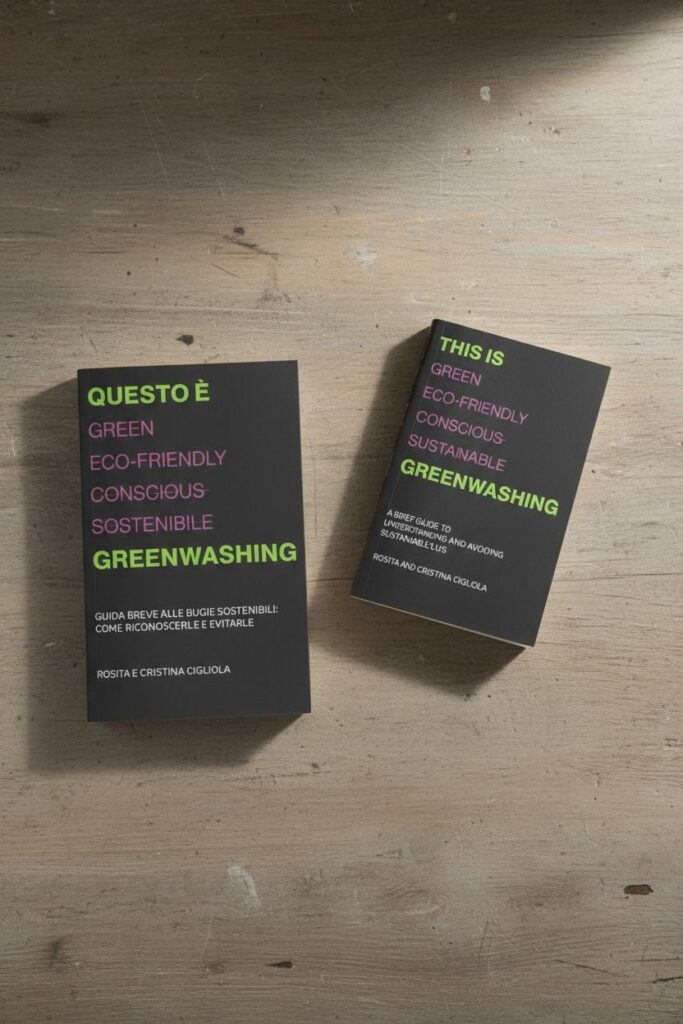
Side-by-side comparison of  'This is Greenwashing' English book cover and 'Questo è Greenwashing' Italian edition book cover, showing the two versions of the guide to spotting false environmental claims.
Questo è greenwashing – This is Greenwashing

Greenwashing: A system designed to fail


When fast-fashion entities help set the rules for a UN process meant to regulate them, the outcome is predictable: a system designed to fail.
In other words, a system that protects overproduction and waste under the guise of sustainability.

This is greenwashing at the highest level — the green fog at its thickest — designed to confuse us into compliance while the real work of change is undermined.

And this is precisely why we wrote This is Greenwashing.

This eBook goes beyond spotting a fake “eco-friendly” label.
It’s a guide to understanding the systemic lies that corrupts projects like the UNEP’s. It equips you with tools to see through the green fog created by the very systems meant to protect us.

We wrote it because when regulation fails — or is hijacked — awareness becomes our strongest line of defence.

In a world where the credibility of global environmental governance hangs in the balance, we must equip ourselves with the power to see clearly, demand better, and stop being manipulated.

This is Greenwashing – Now available in Italian


🌍 Now available in Italian: Your guide to seeing through the green fog
We are proud to launch This Is Greenwashing in Italian.

This guide will help you:
✔ Decode the jargon and spot lies at a glance
✔ Understand the tactics used not just by brands, but by entire systems to appear “green”
✔ Arm yourself with practical knowledge to make informed choices

In a system designed to fail, knowledge isn’t just power — it’s resistance.

📘 🇮🇹 Get your Italian eBook here: books2read.com/u/mYJ8lP
📘 🇬🇧 Get your English eBook here: https://books2read.com/u/bpgxOX

📣 Please help spread the word by leaving a review — it makes all the difference.

“This is greenwashing’s greatest crime: distracting us with false solutions as the planet burns.”

Spot the lies. Demand better.

P.S. Share this with anyone who questions the ‘sustainable’ façade. It’s time we clear the green fog, together.

 🌿 Now available as an eBook — the print version will follow.

Greenwashing: The system is designed to fail. It’s time to see clearly Read More »

African organisations accuse UNEP’s Textile Circularity Project of unreliable data and a tainted process

Reading Time: 3 minutes

African coaltion warns that proposed global guidelines, built on flawed foundations, threaten millions of livelihoods and the future of textile reuse


A coalition of African organisations, supported by experts from Europe, Asia, and America, has sent a formal letter to the UN Environment Programme (UNEP). The letter raises concerns about the reliability of the data underpinning UNEP’s projects for global textile circularity and protests against the credibility granted to entities described as “beholden” to fast fashion giants.

The open letter directly challenges UNEP’s Circularity and Trade of Used Textiles project. This project aims to create global guidelines distinguishing reusable second-hand clothing from waste. The signatories, representing the livelihoods of millions in the sorting, repair, and resale trades, argue that the entire effort is compromised from its foundation. (Fashion Magazine).

African organisations: the letter of accusation


Their core accusations are threefold:

  1. Unreliable data:
    The project relies on unverified figures, such as the frequently cited claim that 95% of textile waste is reusable. A figure that contradicts established industry knowledge and lacks transparent collection methods.
  2. A tainted process: 
    The coalition describes the consultations as rushed and exclusionary, sidelining the very experts who understand the complex realities of the trade.
  3. Corporate influence: 
    In Ghana, an NGO funded by the ultra-fast fashion industry led the research. The very entities whose overproduction is the root of the waste crisis — creating an unacceptable conflict of interest.

“What we have observed does not match the objectivity expected from a UN programme,” said Jeffren Boakye Abrokwah, President of the Ghanaian Used Clothing Dealers Association. “In Ghana, UNEP’s research partner is an NGO that already runs a waste campaign. It is funded by the fast fashion industry. This compromises the neutrality of the data.”

However, this sentiment found an international echo. Alan Wheeler, Director General of the UK’s Textile Recycling Association, stated, “UNEP’s willingness to adopt unverified conclusions contradicts its stated commitment to impartiality and undermines public trust.”

But this dispute erupts as the second-hand clothing market faces unprecedented strain. New, low-quality garments flood African markets. While in Europe, collectors are on strike and countries like Sweden are authorising the destruction of unsold clothing. Against this backdrop, the call for credible and impartial solutions has never been more urgent.

Final thoughts


In conclusion, the core conflict is no longer just about data or methodology. It is about who gets to define circularity. The African organisations’ letter exposes a disturbing reality. In essence, the industry itself may shape a UN process meant to regulate the fashion industry’s waste.

So this is not merely a failure of process; it is a hijacking of the solution. Letting fast-fashion entities set the rules, the UNEP project legitimises greenwashing and undermines the circular economy it aims to protect. In other words, the system is not simply being poorly designed. It is being designed to fail, preserving a linear model of overproduction and waste under the guise of sustainability.

The credibility of global environmental governance now hangs in the balance.

African organisations accuse UNEP’s Textile Circularity Project of unreliable data and a tainted process Read More »