Fashion & lifestyle

Inequalities Exhibition at Triennale highlights the link between waste colonialism and fashion

Reading Time: 3 minutes

How the impact of fashion reshapes cities and landscapes. From wastefulness to research


This past Sunday, we explored the Inequalities exhibition at Triennale Milano. The 24th International Exhibition tackles one of today’s most pressing issues: the dramatic rise of global inequality. Moving beyond observation, it questions the disparities that shape our existence—economic, ethnic, geographic, and gender-based. And this through powerful installations and events. The project aims to map these complex dynamics and spotlight political ideas for a future where difference becomes a strength, recomposed into vibrant new communities.

As articulated by President Stefano Boeri, the exhibition delves into how “immense wealth is now concentrated in the hands of a few. And how, for millions around the world, being born into poverty has become an irreversible fate.” It  also reveals how inequality, “whether inherited at birth, encountered along the way, or shaped by our own actions—impacts life expectancy and health for each of us.” Clearly, it encompasses its most extreme manifestations, from ghettos to wars.

The exhibition frames this complex subject through two distinct lenses: the geopolitics and the biopolitics of inequality.

Inequalities at Triennale Milano: Out of fashion - an installation built from denim waste from the Hedzranawoe market in Lomé, Togo.
Togo: Out of fashion

Inequalities & waste crisis: Your wardrobe is a colonizer


On the ground floor, the focus turns to the geopolitical scale, particularly the world of cities. This section examines the contemporary definitions of “wealth” and “poverty” and the significant roles they play in shaping urban environments. Among the international participants, Togo contributed a striking installation: Out of Fashion, the Waste Lab. Its central, provocative thesis: Your wardrobe is a colonizer. It links the fashion industry’s waste directly to the dynamics of modern-day waste colonialism.

Each year, the fashion industry generates 92 million tons of textile waste. Much of which is exported from the Global North to the Global South. In Africa, this “waste colonialism” exacerbates environmental degradation and social injustice, profoundly impacting landscapes and cities. 

The installation Out of Fashion explores the injustices and environmental problems caused by this specific form of waste colonialism.

Using Togo as a case study, the work examines how this fashion excess is reshaping urban environments, focusing on the Hedzranawoe market in Lomé. As a hub for discarded clothing in West Africa, the market has become a microcosm of the informal economies and innovative design practices generated by the global waste crisis. Here, clothing is sold, altered, or transformed into new objects—such as sunscreens made from denim scraps. Thse practices demonstrate a resilient culture of reuse and adaptation.

Culminating in a display built from the very waste it critiques—textile waste from the market—Out of Fashion reframes the narrative. It doesn’t stop at exposing injustice but embodies the principles of regenerative design it advocates. By showcasing the creativity born from necessity in Lomé, it lights a path forward, proving that the shift from wasteful consumption to exploratory creation is not only possible but already underway.

Final thoughts


With Inequalities, the Triennale doesn’t claim to exhaust the subject but acts as a catalyst for thought and potential solutions. The installation Out of Fashion encapsulates this dual mission. Crafted from the waste it denounces, it exposes a deeply unequal system while revealing the creativity that emerges in response. It reminds us that the inequalities we inherit or encounter can also be transformed—into advantages, into gifts, into added value for our future communities.

Inequalities Exhibition at Triennale highlights the link between waste colonialism and fashion Read More »

Global Sumud Flotilla: A mission to break the siege of Gaza

Reading Time: 3 minutes

Grassroots activists taking to the sea in a nonviolent act of defiance


In a moment marked more by grim news than hope, support for the Global Sumud Flotilla from leading international voices such as Dr. Gabor Maté and Professor Alessandro Barbero arrives not as mere endorsement, but as a vital affirmation of our shared humanity. It is a solidarity that strengthens the resolve to challenge the siege of Gaza, fueling a determined hope that this grassroots mission can help pave a way towards justice.

Global Sumud Flotilla

Global Sumud Flotilla: What is it, and what’s the goal?


This is a grassroots movement that brings people together for global solidarity actions to support Gaza and end the siege. It was previously called the Global March to Gaza.
“We are a coalition of everyday people: organizers, humanitarians, doctors, artists, clergy, lawyers, and seafarers who believe in human dignity and the power of nonviolent action.”

People from the Maghreb Sumud Flotilla, the Freedom Flotilla Coalition, the Global Movement to Gaza, and the Sumud Nusantara have come together with one goal: to break the illegal siege on Gaza by sea, open a humanitarian corridor, and help end the suffering of the Palestinian people.

The genocide in Gaza


Some people deny the crisis or claim that life in Gaza is fine and there is no food problem. In fact, Israelis are even paying influencers to portray a reality of normal life in Gaza. But the facts are clear. For the first time, two of Israel’s leading human rights groups, B’Tselem and Physicians for Human Rights, have called it what it is: genocide.

Israel is deliberately starving Palestinians and using famine as a weapon of mass destruction.

The Food and Agriculture Organization of the United Nations (FAO), UNICEF, the United Nations World Food Programme (WFP) and the World Health Organization (WHO) have collectively and consistently highlighted the extreme urgency for an immediate and full-scale humanitarian response given the escalating hunger-related deaths, rapidly worsening levels of acute malnutrition and plummeting levels of food consumption, with hundreds of thousands of people going days without anything to eat. (via WHO).

The agencies stressed that famine must be stopped at all costs. 

Furthermore, an intensified military offensive in Gaza City or any escalation in the conflict would have even more devastating effects on civilians, especially where famine is already present. Many people, including sick and malnourished children, older adults, and people with disabilities, may not be able to leave.

What can you do?


As Albert Einstein warned,

“The world will not be destroyed by those who do evil, but by those who watch them without doing anything.”

During the Nazi era, information was suppressed and inaccessible in a way that is almost unimaginable today. Now, we are without excuse. We cannot claim we did not know.

This is why the Global Sumud Flotilla exists.

On August 31st from Spain, and September 4th from Tunisia, a coalition of the conscience will make history. Dozens of boats—large and small—will set sail, converging on Gaza in the largest coordinated civilian flotilla ever assembled. It is a direct, nonviolent challenge to the siege, a mission of visible solidarity.

They are sailing to break the blockade. Here’s how you can help them succeed

#FromEveryRiverToEverySea

Global Sumud Flotilla: A mission to break the siege of Gaza Read More »

Summer Holiday Style: Why you don’t need a new wardrobe

Reading Time: 3 minutes

The case for timeless fashion—no sustainability tag needed


When it comes to summer holiday style, do we really need a new wardrobe?

Every summer, the same cycle repeats: people buy cheap, disposable clothing—flimsy dresses, bargain swimsuits, fast-fashion cover-ups—worn for a single holiday before being discarded. The reasoning? “It was so cheap, it doesn’t matter if I toss it.”

But it does matter.

This mindset fuels overconsumption, waste, and environmental harm—yet many ignore it. At its core, summer holiday style shouldn’t be about buying more just for the occasion. It should be about buying meaningful pieces you can wear almost everywhere, just styled differently.

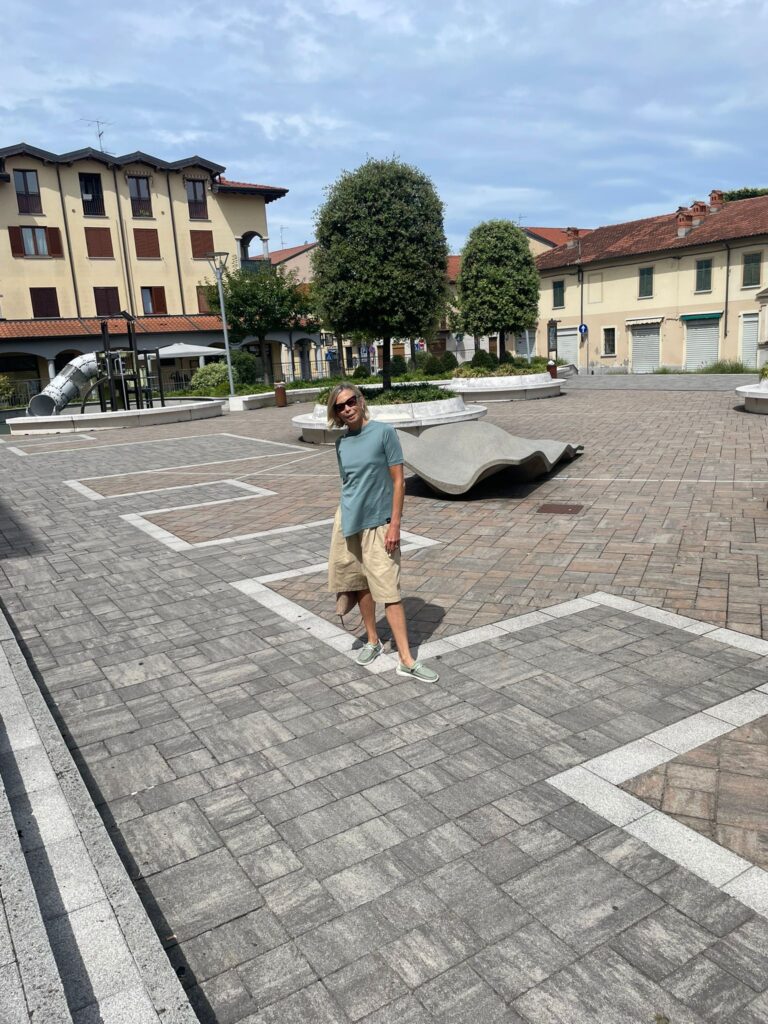
Summer holiday style: A woman with a blond bob haircut and sunglasses poses confidently in a beige clay-dyed short pants set by GoodneighborsShirts, layered with a celadon right-slit tee by Ujoh, paired with matching celadon loafers. The background features a square with a gray floor, yellow-beige houses, and trees.

The problem with ‘holiday-only’ fashion

Mainstream fashion encourages buying low-quality, trend-driven pieces that lose their appeal (or fall apart) after one trip. Kaftans, flimsy cover-ups, and synthetic beachwear dominate summer sales. But these items rarely last beyond a season. Worse, they contribute to the growing mountain of textile waste choking our planet.

What if summer style wasn’t about buying more, but smarter? Taking the right clothes only?

The alternative: Meaningful garments that last


True style isn’t about quantity. It’s about curation, quality, and longevity. A well-made cotton shirt, a tailored swimsuit, a lightweight silk dress in a timeless cut—these pieces don’t just work for one holiday. They transition seamlessly from city life to beach escapes, year after year.

The secret? Thoughtful design and versatility.

  • Choose good design, pieces made to last: quality speaks before you do. Most importantly, Good design encompasses sustainability without even mentioning it.
  • Natural fabrics don’t just breathe better; they evolve beautifully, unlike disposable synthetics.
  • Change the styling, swap accessories—suddenly it’s a whole new look.

This approach isn’t just sustainable—it’s effortlessly elegant.

Fashion’s hidden cost: A planet on fire


The question “What do you wear on holiday?” seems harmless. But it reveals deeper truths about our values—and our impact. The fashion industry is a major polluter, and disposable summer trends only make it worse.

We can’t afford to ignore it anymore.

Overconsumption and “garbage fashion” belong to the past. With climate crises escalating, we must shift to fewer, better pieces—garments that endure beyond a single season.

The bottom line: Buy less, buy better, wear more


You don’t need a new wardrobe for summer. You need a mindset shift.
Invest in quality over quantity.
Reject fast fashion’s throwaway culture.
Embrace versatile, timeless pieces that work everywhere.

The future of style isn’t in endless shopping sprees—it’s in meaningful choices.

So, what do we wear on holiday? The same timeless pieces we wear in town—just styled differently. Because true style isn’t disposable—it’s forever.

What about you? Do you buy clothes just for summer holidays, or do you choose pieces that last?

Summer Holiday Style: Why you don’t need a new wardrobe Read More »

Clothes for the right people: For those who dress differently

Reading Time: 2 minutes

Niche fashion—where values, vision, and uncompromising taste intersect


Clothes for the right people. Clothes for those who understand them—for the discerning few who don’t need a supermarket crammed with garments but appreciate a curated selection: only what makes sense.

But let’s be honest: we’ll never get rich. Not because we lack talent, vision, or hard work, but because we care about where our pieces end up—whose hands they land in.

An acquaintance told us, “You’re not niche; you’re extremely niche.”
He was right.

Who is it for, really?


We don’t curate for everyone. We curate for those who feel the intention in each piece—who notice the cut, the fabric, the care in construction. For people who see clothes not as disposable trends but as lasting companions. Garments crafted for modern humans, defined by values.

We stand against mass production and instant gratification. We stand against the culture of excess and the obsession with more. No dopamine culture here—just slow fashion and meaningful garments. 
What we offer isn’t merely something to wear; it’s something to connect with.

Clothes for the right people means guiding each piece toward the hands that will cherish it. People who value quality over quantity. People who choose slowly and dress consciously. Because sustainability is a lifestyle: a deliberate way of living.

That may mean slower growth, fewer sales, no overnight success—and we’re fine with that. Our goal isn’t to clothe everyone; it’s to connect with those who truly see.

🖤 If that’s you, welcome. You’re exactly who we’re here for.

💌 Join our newsletter – no noise, just meaning.
The subscription box is at the bottom on mobile, or on the left on desktop.

Clothes for the right people: For those who dress differently Read More »

B Corp and ultra-fast fashion: A contradiction of our time?

Reading Time: 2 minutes

What does it really mean when a disposable fashion brand earns a sustainability seal?


What happens when B Corp meets ultra-fast fashion?
When BusinessWire announces, “Princess Polly Becomes a Certified B Corporation™”, and BOF frames it as “the US-Australian Shein competitor earning socially responsible recognition,” we’re forced to ask: Is this progress — or just polished greenwashing?

BOF’s headline says it all: “Can an Ultra-Fast Fashion Brand Be ‘Sustainable’?”
Spoiler: it’s a rhetorical question. At least, we hope so.

What is a B Corp?
“A B Corp certification signifies that a company meets certain standards of social and environmental responsibility, but it doesn’t address all aspects of operations and practices.” —This is Greenwashing

B Corp certification and ultra-fast fashion: A Stamp of approval or a smokescreen?


Princess Polly’s Co-CEO, Eirin Bryett, celebrates the certification as proof of their “commitment to purpose-driven practices.”
But let’s be real: can a brand built on overproduction, hyper-consumption, and disposable trends genuinely “embed sustainability into every part of its business”?

After finishing This Is Greenwashing, we almost shelved it, thinking the market was saturated with truth-tellers. Turns out, the greenwashing playbook is still going strong.

The B Corp blind spot: Overproduction


In our book, This is Greenwashing, we called out B Corp’s limitations:

“B Corp certification evaluates various aspects of a company’s operations, including its environmental impact. However, overproduction may not be explicitly addressed, emphasising instead the use of sustainable materials, ethical labour practices, and other criteria.”

Fast fashion’s entire model relies on planned obsolescence — yet B Corp rewards brands for ticking boxes (recycled packaging! carbon offsets!) while sidestepping the root problem: overproduction. And ultra-fast fashion takes it to an even more extreme level.

B Corp and ultra-fast fashion – Final thoughts


We don’t doubt Princess Polly’s intentions. But good intentions don’t change business models.
When a brand profits from overproduction, it isn’t sustainable.
When a brand profits from convincing shoppers to buy more, faster — then slaps on a sustainability badge — it’s not progress. It’s PR.

So, what happens when B Corp meets ultra-fast fashion?
Simple: it’s greenwashing in a purpose-washed package.
Worse yet, the very notion that ultra-fast fashion could be labelled ‘sustainable’ is absurd.

In short, this is greenwashing.


P.S. Tired of being misled?
Read This is Greenwashing — awareness is power.

📘Get your e-book here, from your favourite digital store:  https://books2read.com/u/bpgxOX

Spot the lies. Demand better.

B Corp and ultra-fast fashion: A contradiction of our time? Read More »