Explorations

Fashion Retail – A broken model: From growth to collapse

Reading Time: 3 minutes

A global crisis exposes an industry unwilling to adapt. But can it survive its own excess?


From Italian boutique Luisa Via Roma seeking court protection to Canadian e-tailer Ssense filing for bankruptcy, a pattern is emerging: the traditional model of fashion retail is broken. Indeed, the same fundamental flaws connect retailers across the globe, both physical and digital. But is this just the effect of an economic crisis, or is it a business model that has now reached its end?

Fashion retail: What went wrong?


Consider Luisa Via Roma. Once a pioneer in multi-brand e-commerce, it recently expanded with a New York store and a Milan headquarters. Now, the Florence-based company is seeking protection from creditors under Italian insolvency law. What went wrong? Management cited the luxury slowdown, US tariffs, and rising transport costs, alongside strategic missteps—notably, the subsequent closure of that very Milan headquarters.

They are far from alone. In fact, they join a grim roster of recent casualties that illustrates a broken model:

  • Matches Fashion: The luxury e-commerce platform ceased all operations on 30 June 2024. Its owner, Frasers Group, which had acquired it only in late 2023, placed it into administration by March due to unsustainable losses. Its collapse left designer brands and customers in limbo, starkly illustrating the perils of online luxury retail.
  • Farfetch: The luxury marketplace was rescued from imminent bankruptcy by a last-minute acquisition from Seoul-based Coupang, which provided $500m in emergency funding. The company is cutting costs, closing unprofitable units, and selling assets to stabilise its finances and return to profitability after facing significant financial difficulties. 
  • Net-a-Porter: The industry giant was sold by parent company Richemont to rival Mytheresa. Current information focuses on Mytheresa’s strategic plans and goals rather than the post-acquisition performance of Net-a-Porter. So, there are no current performance reports, and the success of the integration remains to be seen. 
  • Ssense: The Canadian retailer announced plans to file for bankruptcy protection, citing pressures from new US tariffs and the elimination of the de minimis exemption. But its downfall was years in the making. The company was squeezed by tighter liquidity and poor returns on pandemic-era investments. Most critically, its data-obsessed, always-on-sale model lost its novelty and its edge with a fickle audience.

Fashion retail: How overproduction and  discount culture led to crisis


Their commercial strategy has become a vicious cycle: an endless selection of garments—including, ironically, sustainable lines—coupled with frequent, heavy discounting. Trapped by declining sales, they double down on the very practices undermining them: ordering excessive stock and relying on constant promotions, which only accelerates their race to the bottom. 

Is this strategy successful? No. Do we see anything different? Neither.

In short, fashion retailers are part of an industry unwilling to change. We explored the topic here.

Final thoughts


Undeniably, these are challenging years for fashion retail. The industry’s foundations are crumbling, revealing a deep systemic issue. Yet the response in-store and online remains the same: shops packed with huge selections and perpetual markdowns.

And so, this begs the question: can seeking mere financial lifelines—from investors or the courts—without enacting genuine structural change, ever lead to lasting success? 

How long can the industry continue to promote mass-produced garments from brands that are increasingly devoid of meaning?

Fashion Retail – A broken model: From growth to collapse Read More »

Plastic pollution: Global plastic treaty talks collapse after 11 Days

Reading Time: 4 minutes

Nations fail to agree on production caps and chemical controls, delaying a critical solution to the plastic crisis


The world’s first legally binding treaty on plastic pollution has been delayed after 11 days of intense negotiations concluded without an agreement. In fact, delegates from 184 countries, meeting in Geneva until August 15, 2025, failed to bridge their differences on core measures, including a global cap on new plastic production and binding rules for toxic chemicals. While talks are scheduled to resume, the plastic crisis is left without a coordinated global solution for the foreseeable future.

Plastic pollution: Key points of disagreement 


The most divisive issues that led to the deadlock were:

  • Plastic production caps: A major rift emerged between nations pushing for legally binding limits on plastic production and those opposing it.
  • Toxic chemicals: Talks stalled over whether to impose global, legally binding controls on the hazardous chemicals used in plastic manufacturing.
  • Financing: There was no consensus on how to fund the implementation of the treaty, particularly to support developing nations.
Plastic pollution in a natural costal area. Photo credit: Antoine GIRET
Photo credit: Antoine GIRET

Frustration and blame


The failure to reach an agreement sparked strong reactions from delegates. French ecology minister Agnès Pannier-Runacher told the closing session she was “enraged because despite genuine efforts by many, and real progress in discussions, no tangible results have been obtained.”

She underscored the urgency, stating, “Every year, millions of tonnes of plastic end up in nature, breaking down into invisible particles that enter our food, water and air. The scientific and medical evidence is clear: plastic kills. It poisons our oceans, soils and ultimately our bodies.”

In an apparent reference to oil-producing nations, Colombia’s delegate, Haendel Rodriguez, stated that a deal had been “blocked by a small number of states who simply did not want an agreement.” This aligns with reports that countries like Saudi Arabia insisted the talks focus solely on recycling and waste management, rather than addressing the root causes: cutting plastic production and regulating its toxic ingredients.

This opposition was anticipated. Diplomats and climate advocates had previously warned that efforts led by the European Union and small island states to cap virgin plastic production—a product of the fossil fuel industry—faced strong resistance from petrochemical-producing nations and the U.S.
(Source: Reuters & The Guardian)

Plastic pollution: What’s next?


The talks were adjourned, not ended, with the expectation of resuming at a future date. However, the collapse raises a critical question: is a meaningful agreement even possible amid global instability and competing economic interests?

The UN Environment Programme (UNEP) will continue to explore avenues for future discussions, potentially including a report on the talks at the UN Environment Assembly in Kenya this December. For now, delegates are left with widespread disappointment that a breakthrough on this significant environmental issue remains out of reach.

Why this matters


These negotiations were hailed as among the most consequential environmental talks since the Paris Climate Accord. Experts have continuously emphasised the urgent need for a treaty, highlighting the profound dangers of plastic pollution to human and planetary health. (Read more here).

Plastic pollution & the inevitable link to fashion


Do we need to know if there’s any correlation with fashion? Of course, there is.

Polyester is plastic. Derived from petroleum, this cheap synthetic fiber is the most profusely used material by fast fashion brands. The same toxic chemicals and production processes debated in Geneva are inherent to the creation of countless garments that flood the market each season. The failure of the treaty directly impacts the fashion industry‘s accountability for its environmental footprint.

A call to action: What can we do now?


Without a binding multilateral agreement, the responsibility shifts. While we continue to push our leaders for a global solution, we cannot wait. And so, we must:

  • Support brands committed to change: Choose companies that are transparent about their supply chains and use recycled, circular, and natural materials.
  • Demand legislation: Advocate for strong national and local laws that ban single-use plastics and hold producers responsible for their waste.
  • Change our habits: Embrace the principles of “reduce, reuse, and recycle” in our wardrobes. Buy less, choose well, and extend the life of our clothing.

The collapse of the talks is a setback, but it cannot be an excuse for inaction. The power to demand change has never been more critical.

Plastic pollution: Global plastic treaty talks collapse after 11 Days Read More »

Global Sumud Flotilla: A mission to break the siege of Gaza

Reading Time: 3 minutes

Grassroots activists taking to the sea in a nonviolent act of defiance


In a moment marked more by grim news than hope, support for the Global Sumud Flotilla from leading international voices such as Dr. Gabor Maté and Professor Alessandro Barbero arrives not as mere endorsement, but as a vital affirmation of our shared humanity. It is a solidarity that strengthens the resolve to challenge the siege of Gaza, fueling a determined hope that this grassroots mission can help pave a way towards justice.

Global Sumud Flotilla

Global Sumud Flotilla: What is it, and what’s the goal?


This is a grassroots movement that brings people together for global solidarity actions to support Gaza and end the siege. It was previously called the Global March to Gaza.
“We are a coalition of everyday people: organizers, humanitarians, doctors, artists, clergy, lawyers, and seafarers who believe in human dignity and the power of nonviolent action.”

People from the Maghreb Sumud Flotilla, the Freedom Flotilla Coalition, the Global Movement to Gaza, and the Sumud Nusantara have come together with one goal: to break the illegal siege on Gaza by sea, open a humanitarian corridor, and help end the suffering of the Palestinian people.

The genocide in Gaza


Some people deny the crisis or claim that life in Gaza is fine and there is no food problem. In fact, Israelis are even paying influencers to portray a reality of normal life in Gaza. But the facts are clear. For the first time, two of Israel’s leading human rights groups, B’Tselem and Physicians for Human Rights, have called it what it is: genocide.

Israel is deliberately starving Palestinians and using famine as a weapon of mass destruction.

The Food and Agriculture Organization of the United Nations (FAO), UNICEF, the United Nations World Food Programme (WFP) and the World Health Organization (WHO) have collectively and consistently highlighted the extreme urgency for an immediate and full-scale humanitarian response given the escalating hunger-related deaths, rapidly worsening levels of acute malnutrition and plummeting levels of food consumption, with hundreds of thousands of people going days without anything to eat. (via WHO).

The agencies stressed that famine must be stopped at all costs. 

Furthermore, an intensified military offensive in Gaza City or any escalation in the conflict would have even more devastating effects on civilians, especially where famine is already present. Many people, including sick and malnourished children, older adults, and people with disabilities, may not be able to leave.

What can you do?


As Albert Einstein warned,

“The world will not be destroyed by those who do evil, but by those who watch them without doing anything.”

During the Nazi era, information was suppressed and inaccessible in a way that is almost unimaginable today. Now, we are without excuse. We cannot claim we did not know.

This is why the Global Sumud Flotilla exists.

On August 31st from Spain, and September 4th from Tunisia, a coalition of the conscience will make history. Dozens of boats—large and small—will set sail, converging on Gaza in the largest coordinated civilian flotilla ever assembled. It is a direct, nonviolent challenge to the siege, a mission of visible solidarity.

They are sailing to break the blockade. Here’s how you can help them succeed

#FromEveryRiverToEverySea

Global Sumud Flotilla: A mission to break the siege of Gaza Read More »

The marketing dilemma: The wants vs needs paradox

Reading Time: 4 minutes

Give people what they want — or understand what the planet needs? And then, make a change?


The marketing dilemma—wants vs needs—is a true paradox.
Marketing experts preach one golden rule: Give people what they want. Specifically, empathise so deeply with your audience that you anticipate their desires.

Fast fashion obeys, flooding the market with cheap, disposable clothes. Luxury brands, ironically, follow the same model. Other industries—from cosmetics to tech—are no different.

But this “wants-first” mantra has a dark side: overproduction, waste, and greenwashed illusions.

If marketing is about empathy, why does it fuel a system that harms people and the planet? Or is empathy just the new frontier of brainwashing?

Above all, in our daily business, should we cater to wants—or to what makes sense in the face of climate collapse and societal breakdown?

The marketing trap: Why “give them what they want” fails fashion


The industry runs on a simple formula: identify desire, amplify it, profit. But what if the desire itself is engineered?

  • The illusion of choice:
    Consumers feel empowered because they can afford endless products. Shop more = happiness. But are they truly choosing, or just playing a rigged game? The truth? A system built on exploitation and injustice offers sweeteners—cheap prices, fleeting trends—to mask its harm. 
  • Advertising’s fantasy:
    Fast fashion sells “luxury for all,” while luxury brands mimic fast fashion’s speed. Both rely on the same lie: You need this—and you deserve it. They sell fantasies of luxury, exclusivity, and sustainability while churning out exploitative, planet-killing products.
  • The dopamine loop:
    Social media, flash sales, and FOMO turn shopping into an addiction. Dopamine-driven consumption keeps people buying. The algorithm wins; the planet loses.

The marketing dilemma: Profit vs. reinvention


Here’s the crux: profit or reinvention?
Brands that pivot to sustainability cater to a niche. But these brands face a brutal truth: Ethics don’t scale like exploitation.

In fact, the penalty of being niche is clear. Sustainability requires degrowth. It means smaller margins, slower growth, and putting off mass-market shoppers. Even “conscious” consumers often revert to cheap fixes.

So, what to do? Raise prices? Reduce stock? Risk becoming “irrelevant” in a world trained to expect endless newness.

In our experience, shifting from a broad selection of international brands to a narrowed-down niche curation of meaningful garments has hurt profits. Few understand the value of “no fluff” curation. Most still chase low prices—regardless of human or planetary cost.

But who’s to blame? Brands for manipulating desire? Consumers for complying? Or marketing for refusing to challenge the status quo? Or pretending so?

Can marketing break the cycle?


The same tools that created this mess could fix it—if used differently.

• First, reframing the “Want”: What if marketing created demand for durability, not disposability? 
• Second, honesty as a strategy: Limited productions, slowness, and imperfection are virtues.

But will this work for the mainstream? It’s worth a try. We’re trying. Yet we fear the system itself—exploitative and rigid—will suffocate those who don’t conform.

Final thoughts: The mirror crack’d


In the face of climate change, the marketing dilemma—wants vs needs—reveals itself as a true paradox. The paradox of preserving an economic system that comes at the planet’s expense. A system that persists despite generating appalling inequalities and societal breakdown. 

Yet we’ve come to understand that what people want—cheap prices, overconsumption—directly contradicts what the planet needs.

So we face a choice: Do we continue giving people what they want, further overloading the planet? Or do we persist in narrowing our garment curation, knowing we’ll only reach a handful of free thinkers?

Fashion is a mirror of society. Right now, it reflects our addiction to consumption, our short attention spans, and our disconnect from the consequences of our choices. But mirrors can crack—and so can this system. 

The rise of second-hand, repair culture, slow fashion, and limited curations proves some are awakening.

We must ask: Who’s willing to look beyond their own reflection?

The essential question isn’t “What do you want?”—it’s “What are you willing to stop wanting?”


Three big questions: What do YOU want?

  • Would you pay more for ethical fashion? Do you care about sustainability, or is price still king? Be honest.
  • If you say you care about the planet but still buy 10 cheap tops a month—what’s stopping you from changing?
  • Should marketing change wants, not just cater to them?

🖤 Reply below (you need to register first)

The marketing dilemma: The wants vs needs paradox Read More »

Only 6% of plastic production goes to clothing—so why is fashion a top polluter?

Reading Time: 2 minutes

Unpacking what the UNDP’s plastic breakdown really means for the fashion industry


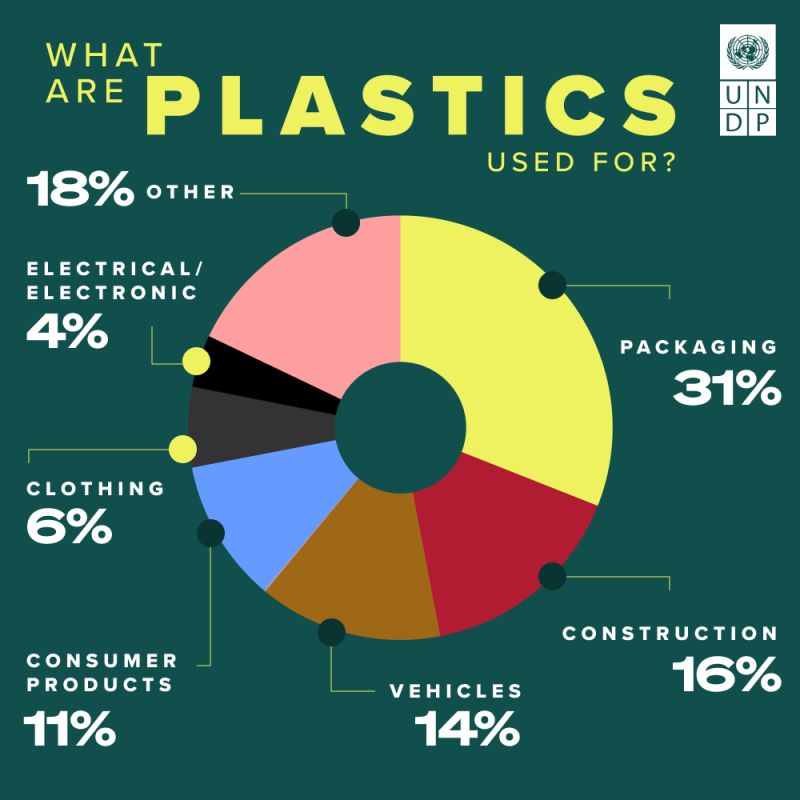
The UNDP released a breakdown on plastic production: What are plastics used for? It reveals unexpected items hiding plastic in plain sight (UNDP). Just 6% of plastic production goes into clothing, dwarfed by packaging (31%), construction (16%), vehicles (14%), consumer products (11%), and other (18%).

So, if fashion contributes so little to plastic production, why is it often called the second most polluting industry in the world?

United Nations Development Programme (UNDP) data visualization showing global plastic production allocation: Largest share is packaging (31%), followed by construction (16%), vehicles (14%), consumer products (11%), clothing (6%), electronics (4%), and other sectors (18%).
Data sourced from the United Nations Development Programme (UNDP)

The plastic production statistic: just one part of the story


The key lies in understanding that the UNDP’s data tracks plastic feedstock only, not the fashion industry’s total environmental footprint. While plastic is a concern—especially with synthetic fabrics like polyester—the industry’s pollution runs much deeper.

In other words, the UNDP’s data is accurate but incomplete. In fact, fashion’s pollution extends beyond plastic. Here’s what the 6% figure doesn’t capture:

  1. Water pollution
    • Toxic dyes and chemical runoff from textile factories account for 20% of global industrial water pollution (World Bank).
    • Synthetic fabrics shed microplastics, making up 35% of ocean microplastic pollution (IUCN).
  2. Carbon emissions
    • The fashion industry is responsible for 4–10% of global CO₂ emissions—more than aviation and shipping combined (UNEP).
    • Fast fashion’s rapid production cycles and global supply chains multiply its climate impact.
  3. Waste crisis
    • One garbage truck of textiles is landfilled or burned every second (Ellen MacArthur Foundation).
    • Less than 1% of clothing is recycled into new garments, creating a massive waste stream.
  4. Resource exploitation
    • Cotton farming guzzles 2,700 litres of water per t-shirt (WWF) and relies heavily on pesticides.
    • The industry’s linear “take-make-waste” model is inherently unsustainable.

Is fashion really the second worst polluter?


The ranking is debated. While oil and gas reliably top the list, fashion’s position varies by study:

  • Some rank it #2 due to its aggregate harm (water, emissions, waste).
  • Others place it lower, alongside agriculture or livestock.

The takeaway? Even if not definitively second, fashion’s environmental damage is undeniable—and the 6% plastic stat barely scratches the surface.

What the UNDP’s data tells us


The 6% figure isn’t wrong—it’s just one metric in a far larger crisis. It’s one piece of the puzzle. Fashion’s true impact comes from its entire lifecycle—from pesticide-laced cotton fields to landfill-clogging waste. Reducing its harm will require systemic change, not just swapping polyester for alternatives.

What can we do? Support circular fashion, buy less, wear more, demand transparency.

(For more on how brands spin their sustainability claims, check out our ebook: This Is Greenwashing.)

Only 6% of plastic production goes to clothing—so why is fashion a top polluter? Read More »