fashion industry

The marketing dilemma: The wants vs needs paradox

Reading Time: 4 minutes

Give people what they want — or understand what the planet needs? And then, make a change?


The marketing dilemma—wants vs needs—is a true paradox.
Marketing experts preach one golden rule: Give people what they want. Specifically, empathise so deeply with your audience that you anticipate their desires.

Fast fashion obeys, flooding the market with cheap, disposable clothes. Luxury brands, ironically, follow the same model. Other industries—from cosmetics to tech—are no different.

But this “wants-first” mantra has a dark side: overproduction, waste, and greenwashed illusions.

If marketing is about empathy, why does it fuel a system that harms people and the planet? Or is empathy just the new frontier of brainwashing?

Above all, in our daily business, should we cater to wants—or to what makes sense in the face of climate collapse and societal breakdown?

The marketing trap: Why “give them what they want” fails fashion


The industry runs on a simple formula: identify desire, amplify it, profit. But what if the desire itself is engineered?

  • The illusion of choice:
    Consumers feel empowered because they can afford endless products. Shop more = happiness. But are they truly choosing, or just playing a rigged game? The truth? A system built on exploitation and injustice offers sweeteners—cheap prices, fleeting trends—to mask its harm. 
  • Advertising’s fantasy:
    Fast fashion sells “luxury for all,” while luxury brands mimic fast fashion’s speed. Both rely on the same lie: You need this—and you deserve it. They sell fantasies of luxury, exclusivity, and sustainability while churning out exploitative, planet-killing products.
  • The dopamine loop:
    Social media, flash sales, and FOMO turn shopping into an addiction. Dopamine-driven consumption keeps people buying. The algorithm wins; the planet loses.

The marketing dilemma: Profit vs. reinvention


Here’s the crux: profit or reinvention?
Brands that pivot to sustainability cater to a niche. But these brands face a brutal truth: Ethics don’t scale like exploitation.

In fact, the penalty of being niche is clear. Sustainability requires degrowth. It means smaller margins, slower growth, and putting off mass-market shoppers. Even “conscious” consumers often revert to cheap fixes.

So, what to do? Raise prices? Reduce stock? Risk becoming “irrelevant” in a world trained to expect endless newness.

In our experience, shifting from a broad selection of international brands to a narrowed-down niche curation of meaningful garments has hurt profits. Few understand the value of “no fluff” curation. Most still chase low prices—regardless of human or planetary cost.

But who’s to blame? Brands for manipulating desire? Consumers for complying? Or marketing for refusing to challenge the status quo? Or pretending so?

Can marketing break the cycle?


The same tools that created this mess could fix it—if used differently.

• First, reframing the “Want”: What if marketing created demand for durability, not disposability? 
• Second, honesty as a strategy: Limited productions, slowness, and imperfection are virtues.

But will this work for the mainstream? It’s worth a try. We’re trying. Yet we fear the system itself—exploitative and rigid—will suffocate those who don’t conform.

Final thoughts: The mirror crack’d


In the face of climate change, the marketing dilemma—wants vs needs—reveals itself as a true paradox. The paradox of preserving an economic system that comes at the planet’s expense. A system that persists despite generating appalling inequalities and societal breakdown. 

Yet we’ve come to understand that what people want—cheap prices, overconsumption—directly contradicts what the planet needs.

So we face a choice: Do we continue giving people what they want, further overloading the planet? Or do we persist in narrowing our garment curation, knowing we’ll only reach a handful of free thinkers?

Fashion is a mirror of society. Right now, it reflects our addiction to consumption, our short attention spans, and our disconnect from the consequences of our choices. But mirrors can crack—and so can this system. 

The rise of second-hand, repair culture, slow fashion, and limited curations proves some are awakening.

We must ask: Who’s willing to look beyond their own reflection?

The essential question isn’t “What do you want?”—it’s “What are you willing to stop wanting?”


Three big questions: What do YOU want?

  • Would you pay more for ethical fashion? Do you care about sustainability, or is price still king? Be honest.
  • If you say you care about the planet but still buy 10 cheap tops a month—what’s stopping you from changing?
  • Should marketing change wants, not just cater to them?

🖤 Reply below (you need to register first)

The marketing dilemma: The wants vs needs paradox Read More »
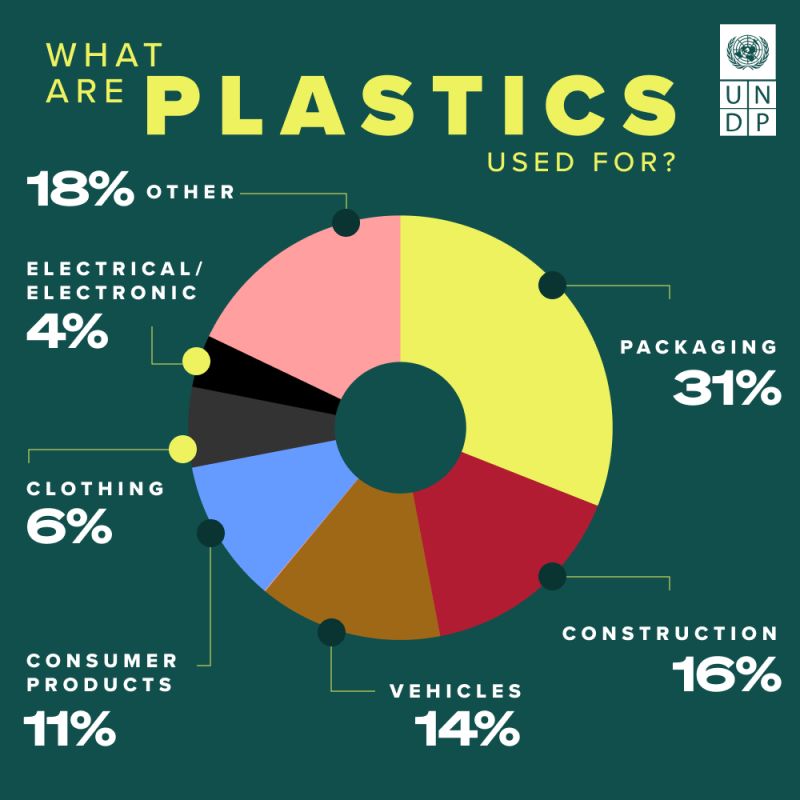
Only 6% of plastic production goes to clothing—so why is fashion a top polluter?

Reading Time: 2 minutes

Unpacking what the UNDP’s plastic breakdown really means for the fashion industry


The UNDP released a breakdown on plastic production: What are plastics used for? It reveals unexpected items hiding plastic in plain sight (UNDP). Just 6% of plastic production goes into clothing, dwarfed by packaging (31%), construction (16%), vehicles (14%), consumer products (11%), and other (18%).

So, if fashion contributes so little to plastic production, why is it often called the second most polluting industry in the world?

United Nations Development Programme (UNDP) data visualization showing global plastic production allocation: Largest share is packaging (31%), followed by construction (16%), vehicles (14%), consumer products (11%), clothing (6%), electronics (4%), and other sectors (18%).
Data sourced from the United Nations Development Programme (UNDP)

The plastic production statistic: just one part of the story


The key lies in understanding that the UNDP’s data tracks plastic feedstock only, not the fashion industry’s total environmental footprint. While plastic is a concern—especially with synthetic fabrics like polyester—the industry’s pollution runs much deeper.

In other words, the UNDP’s data is accurate but incomplete. In fact, fashion’s pollution extends beyond plastic. Here’s what the 6% figure doesn’t capture:

  1. Water pollution
    • Toxic dyes and chemical runoff from textile factories account for 20% of global industrial water pollution (World Bank).
    • Synthetic fabrics shed microplastics, making up 35% of ocean microplastic pollution (IUCN).
  2. Carbon emissions
    • The fashion industry is responsible for 4–10% of global CO₂ emissions—more than aviation and shipping combined (UNEP).
    • Fast fashion’s rapid production cycles and global supply chains multiply its climate impact.
  3. Waste crisis
    • One garbage truck of textiles is landfilled or burned every second (Ellen MacArthur Foundation).
    • Less than 1% of clothing is recycled into new garments, creating a massive waste stream.
  4. Resource exploitation
    • Cotton farming guzzles 2,700 litres of water per t-shirt (WWF) and relies heavily on pesticides.
    • The industry’s linear “take-make-waste” model is inherently unsustainable.

Is fashion really the second worst polluter?


The ranking is debated. While oil and gas reliably top the list, fashion’s position varies by study:

  • Some rank it #2 due to its aggregate harm (water, emissions, waste).
  • Others place it lower, alongside agriculture or livestock.

The takeaway? Even if not definitively second, fashion’s environmental damage is undeniable—and the 6% plastic stat barely scratches the surface.

What the UNDP’s data tells us


The 6% figure isn’t wrong—it’s just one metric in a far larger crisis. It’s one piece of the puzzle. Fashion’s true impact comes from its entire lifecycle—from pesticide-laced cotton fields to landfill-clogging waste. Reducing its harm will require systemic change, not just swapping polyester for alternatives.

What can we do? Support circular fashion, buy less, wear more, demand transparency.

(For more on how brands spin their sustainability claims, check out our ebook: This Is Greenwashing.)

Only 6% of plastic production goes to clothing—so why is fashion a top polluter? Read More »

B Corp and ultra-fast fashion: A contradiction of our time?

Reading Time: 2 minutes

What does it really mean when a disposable fashion brand earns a sustainability seal?


What happens when B Corp meets ultra-fast fashion?
When BusinessWire announces, “Princess Polly Becomes a Certified B Corporation™”, and BOF frames it as “the US-Australian Shein competitor earning socially responsible recognition,” we’re forced to ask: Is this progress — or just polished greenwashing?

BOF’s headline says it all: “Can an Ultra-Fast Fashion Brand Be ‘Sustainable’?”
Spoiler: it’s a rhetorical question. At least, we hope so.

What is a B Corp?
“A B Corp certification signifies that a company meets certain standards of social and environmental responsibility, but it doesn’t address all aspects of operations and practices.” —This is Greenwashing

B Corp certification and ultra-fast fashion: A Stamp of approval or a smokescreen?


Princess Polly’s Co-CEO, Eirin Bryett, celebrates the certification as proof of their “commitment to purpose-driven practices.”
But let’s be real: can a brand built on overproduction, hyper-consumption, and disposable trends genuinely “embed sustainability into every part of its business”?

After finishing This Is Greenwashing, we almost shelved it, thinking the market was saturated with truth-tellers. Turns out, the greenwashing playbook is still going strong.

The B Corp blind spot: Overproduction


In our book, This is Greenwashing, we called out B Corp’s limitations:

“B Corp certification evaluates various aspects of a company’s operations, including its environmental impact. However, overproduction may not be explicitly addressed, emphasising instead the use of sustainable materials, ethical labour practices, and other criteria.”

Fast fashion’s entire model relies on planned obsolescence — yet B Corp rewards brands for ticking boxes (recycled packaging! carbon offsets!) while sidestepping the root problem: overproduction. And ultra-fast fashion takes it to an even more extreme level.

B Corp and ultra-fast fashion – Final thoughts


We don’t doubt Princess Polly’s intentions. But good intentions don’t change business models.
When a brand profits from overproduction, it isn’t sustainable.
When a brand profits from convincing shoppers to buy more, faster — then slaps on a sustainability badge — it’s not progress. It’s PR.

So, what happens when B Corp meets ultra-fast fashion?
Simple: it’s greenwashing in a purpose-washed package.
Worse yet, the very notion that ultra-fast fashion could be labelled ‘sustainable’ is absurd.

In short, this is greenwashing.


P.S. Tired of being misled?
Read This is Greenwashing — awareness is power.

📘Get your e-book here, from your favourite digital store:  https://books2read.com/u/bpgxOX

Spot the lies. Demand better.

B Corp and ultra-fast fashion: A contradiction of our time? Read More »

This is Greenwashing: Seeing clearly in a world of green fog

Reading Time: 2 minutes

A guide to protecting yourself from false sustainability claims: Spot the lies, demand better


In a world of green fog, we’re surrounded by claims like “eco-friendly,” “carbon neutral,” and “sustainable.”
Sound familiar?

These buzzwords are everywhere, but how many of them are actually true?

Have you ever felt uneasy after buying a product labelled sustainable or eco? You’re not alone.
If you’ve ever felt misled by so-called green marketing, so have we. 
After years of watching brands twist language to appear greener than they are, we decided to write something clear, honest, and useful.

Seeing clearly in a world of green fog: Book cover of This is Greenwashing by Rosita and Cristina Cigliola. The design features bold, minimalist typography with green, pink, and white tones on a black background, highlighting themes of sustainability and deception. 'This is' appears in green; the words 'green', 'eco-friendly', 'conscious', and 'sustainable' are in pink but crossed out; and 'greenwashing' is in green. The subtitle and authors’ names are in white, standing out against the dark base.
This is Greenwashing: our e-book is out now!

Why this book exists


This Is Greenwashing isn’t a textbook.
It’s a guide born from frustration — and from a deep desire to empower.

“The most environmentally sustainable product is the one that never gets made.”

We’re Rosita and Cristina Cigliola, sisters with nearly 30 years in the fashion industry. We’ve seen greenwashing up close — how it misleads consumers and delays real change.

In recent years, especially after the pandemic, we’ve watched companies slap vague eco-labels on products while businesses carried on as usual. Greenwashing keeps consumers confused, compliant, and complicit in a broken system.

This e-book reveals the tactics behind the buzzwords. It helps you recognise what’s real and what’s not. You’ll learn how to decode vague claims, ask the right questions, and stop being manipulated by marketing.
Because when regulation fails, awareness becomes our strongest line of defence.

The bottom line: In a world of green fog, awareness is power


We wrote This Is Greenwashing to:

✔ Expose the tricks brands use to manipulate you
✔ Decode the jargon so you can spot lies at a glance
✔ Give you practical tools to make informed choices—no PhD required

In a world of green fog, knowledge is crucial. Awareness is power.
The more you know, the harder it is for companies to fool you.
And right now—with regulators stepping back and failing to protect us—we need that power more than ever.

📘 Get your e-book here — at your favourite digital store:  https://books2read.com/u/bpgxOX

📣 And if it helps, please leave a review — it truly means a lot.

“This is greenwashing’s greatest crime: distracting us with false solutions as the planet burns.”

Spot the lies. Demand better.

P.S. Share this with someone who’s ever asked: “But is this actually sustainable?”  🌍

🇮🇹 Versione italiana in arrivo — stay tuned!

This is Greenwashing: Seeing clearly in a world of green fog Read More »

Next in line: Loro Piana investigated for labour exploitation

Reading Time: 3 minutes

The count begins again — yet another high-end brand faces allegations, exposing systemic abuses in fashion’s supply chain


Next in line: Loro Piana.
The luxury label has become the latest name under scrutiny. So, the count begins again. Another crack in the polished image of luxury fashion.

The Milan Court has placed Loro Piana S.p.A., part of the LVMH group and chaired by Antoine, the son of French tycoon Bernard Arnault, under judicial administration for one year. The company is accused of indirectly subcontracting production to Chinese-owned firms allegedly involved in labour exploitation.

This makes it the fifth luxury brand caught in the web of investigations into labour rights violations within Italy’s high-end supply chain — following Giorgio Armani Operations, Alviero Martini S.p.A., Manufactures Dior, and Valentino. So far, charges against the first three were dropped before conclusion, but the abuses were real.

As Corriere reports, “Loro Piana S.p.A. failed to verify the actual operational capacity of the contractors and subcontractors it relied on, and neglected to carry out meaningful inspections or audits over the years to assess the true state of its supply chain and working conditions.”

This development clashes with the recent signing of a “protocol of understanding,” involving the country’s most representative trade unions and employers’ associations, aimed at ensuring compliance with the law within the high-end fashion supply chain. Yet their actions tell a different story.

Loro Piana: The investigations reveal systemic issues in luxury fashion


According to prosecutors, Loro Piana outsourced the production of garments — including jackets — to third-party companies where labour exploitation allegedly occurred. The Milan court has placed the brand under one year of judicial supervision, which may be lifted early if the company takes adequate steps to comply with labour laws.

As reported by Corriere della Sera, the investigation revealed that Loro Piana entrusted manufacturing to Evergreen Fashion Group S.r.l., a company that lacked its own production facilities. Evergreen subcontracted the work to Sor-Man S.n.c. in Nova Milanese. Without sufficient production capacity, Sor-Man outsourced once again — this time to Chinese-managed factories Clover Moda S.r.l. (in Baranzate) and Dai Meiying (in Senago).

These facilities reportedly employed undocumented Asian workers off the books, under inhumane and unsafe conditions. Workers were housed in illegal dormitories and forced to endure gruelling shifts — including nights and public holidays — as evidenced by spikes in electricity usage. They were paid far below the legal minimum wage, operated hazardous machinery without proper training, and lacked both health monitoring and basic workplace protections.

According to the investigation, Loro Piana’s production model was structured to cut costs and maximise profits. 
Indeed, that’s how capitalism works, isn’t it?

Final thoughts


In case we needed further proof: this isn’t just about Loro Piana. It never was. What we’re seeing is a pattern.
Subcontracting is not an accident — it’s a symptom of a supply chain built on deliberate denial.
The real issue isn’t one brand. It’s the system itself.
A system fuelled by capitalist logic: extraction, exploitation, and carefully maintained opacity.

For further context, revisit this post:
👉 Valentino Under Investigation: Subcontracting as a Supply Chain System

The count has begun again.
Next in line: Loro Piana.
And after the roll call is complete — after one name, then another — will anyone finally admit the truth?
This isn’t about a few bad apples.
It’s about a rotten tree.

Next in line: Loro Piana investigated for labour exploitation Read More »