sustainability

Climate Disaster: The Closing Window

Reading Time: 2 minutes

A slap from the UN Environment Program report


Talking about fashion in the face of a climate disaster needs a radical attitude. Also, if we consider fashion a reflection of our society, we cannot start any discussion without setting priorities.

Climate change is the priority, and we need to understand what happens in order to make the right choices. Even when it’s about what we wear.

Climate disaster: the UN Environment Program


A few days ago, the UN Environment Program released a report which finds that “the international community is falling far short of the Paris goals, with no credible pathway to 1.5°C in place. Only an urgent system-wide transformation can avoid climate disaster.”

Are you surprised? Sadly, we are not. Sustainable is a trendy label. Indeed, we hear countless panels about sustainability because it is a popular topic. But they open their mouths just to put out words and make content for social media. No action that brings a positive impact ever follows. Therefore, they are pointless.

Furthermore, on November 6 in Sharm-El-Sheik – Egypt will be held the UN annual Conference of the Parties, COP27. There is no better opportunity to jump on a private jet and be part of a corporate event. And, this time, members participating can also enjoy a sunny place! It will be just another waste of money and resources.

What can we learn from this?


Climate change is an opportunity to drive business, and sustainability is the capitalistic response to the issue. Most sustainable brands represent a survival strategy set in place by capitalism. Indeed, corporations have flooded the market with green/organic/eco-friendly/low-impact/vegan/recycled/sustainable products. Nice buzzwords! Which, in essence, are empty claims. Misleading messages whose true face is greenwashing.

Our economic system cannot respond adequately to climate change because it is itself the cause. Buzzwords are just fluff! In fact, the negative impact of climate change grows every year.

The climate disaster calls for rapid transformation of societies and their economic system. And this transformation needs every nation and every community. All of us! Now!

Climate Disaster: The Closing Window Read More »
Life In Plastic?

Reading Time: 2 minutes

Why recycling plastic is a dead-end street


In the search for a sustainable lifestyle, great discussions revolve around recycling plastic to limit waste. Even though we pay attention to separate our waste at home, unfortunately, that is not a solution. So a new report on plastic pollution says.

The plastic report by Greenpeace


A new report released by Greenpeace USA ( source of this post) states that “plastic recycling is a dead-end street. Year after year, plastic recycling declines even as plastic waste increases.”

The good news is that paper, cardboard and metals are effectively recycled. But the bad news is that most plastic is not recyclable. According to this report, U.S. households generated 51 million tons of plastic waste in 2021, but only 2.4 million tons were recycled. Furthermore, once the U.S. exported plastic to China, they counted it as recycled, even though much of it was burned or dumped.

Plastic recycling: why doesn’t it work?


1- plastic waste is extremely difficult to collect
2- impossible to sort for recycling
3- it is environmentally harmful to reprocess
4- it’s often made of and contaminated by toxic materials (therefore unusable for food)
5- too expensive to recycle

In the end, the study points out that a circular economy based on recycling plastic is pure fiction.

“Corporations like Coca-Cola, PepsiCo, Nestlé, and Unilever have worked with industry front groups to promote plastic recycling as the solution to plastic waste for decades. But the data is clear: practically speaking, most plastic is just not recyclable. The real solution is to switch to systems of reuse and refill.”

Greenpeace

Of course, refilling and reusing make sense. We refill and reuse plastic containers as much as possible. But plastic is everywhere! And there’s too much of it. Every single item we buy comes with a plastic container and plastic wrap: food, beauty products, cleaning products, and tech stuff… Everything! In fact, the world is submerged by plastic. And researchers found plastic in human blood, too! Therefore, recycling is not sufficient to solve the plastic waste issue. It’s clear!

The solution? Governments should put an end to plastic production.

Life In Plastic? Read More »

Why Good Design First?

Reading Time: 2 minutes

Designers’ responsibility to provide the answer for a sustainable future


Good design is everything because that is the starting point for any serious discussion about fashion. And even more when the analysis touches on sustainability.

Indeed, whenever we meet students and interns who want to know more about fashion and sustainability, first, we show them brands that focus on exceptional design. Then we can talk about the rest. And not because we aren’t involved in sustainability!

Good design first


So, why design first? Because it’s the core element where you find answers as it reflects a creative vision which gives sense to a product. Designers who have something to say translate their ideas into their products by creating beautiful pieces that are meaningful and timeless. They carefully select materials, choose to recycle fabrics or use particular hand-dyed processes and artisanal workings. They value their employees because an ethical approach is part of their philosophy.
So their garments are rich. Indeed, you can see there’s a lot of substance in them.

Why good design
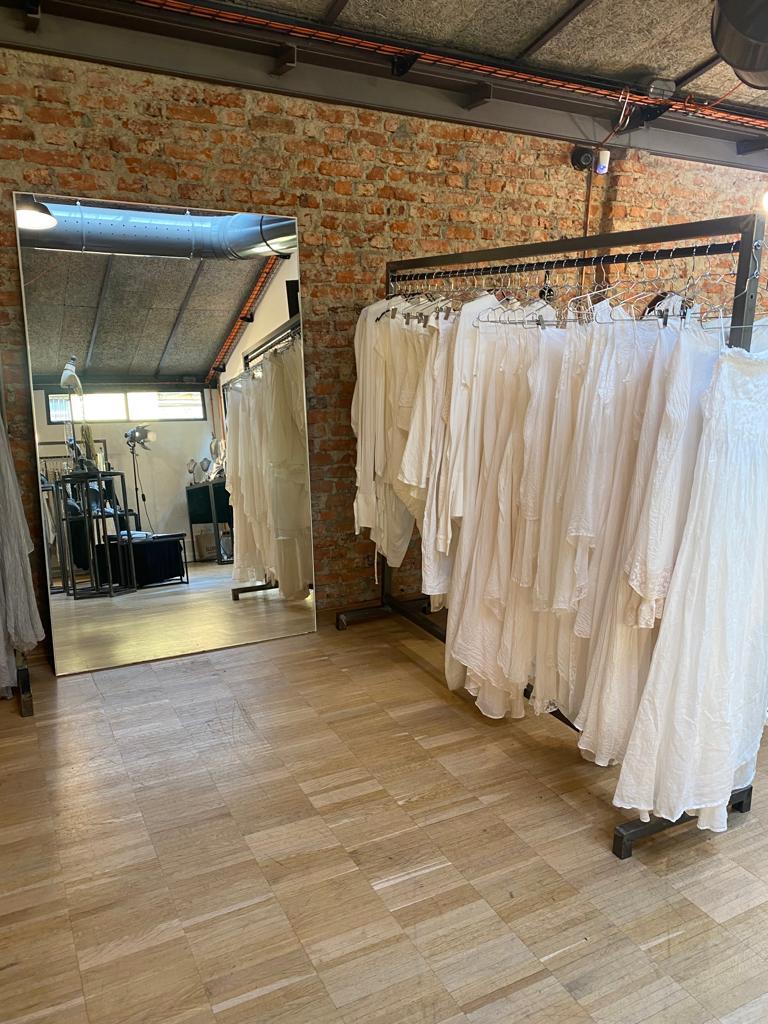
From Marc Le Bihan showroom in Milano


If brands lack design, there’s no point in developing entire collections. Therefore, sustainability matters are solved quickly: we don’t need them.

When designers have nothing to say, you will see archives looted, stolen ideas and tons of marketing labels and catchphrases. Sometimes you may even see nice garments but without a soul. Perhaps these products are easier to sell, but they have no value. So, from a sustainable viewpoint, no reason to exist.

Indeed good design is the core principle, the reason to exist, and the deep meaning of a fashion brand. Furthermore, in a phase of transition and profound change like the time we are living, designers have the moral responsibility to make meaningful products. And so, quality made to last, no overproduction, no push to overconsume, and decent wages.

The task of designers is to trace new pathways while respecting people and the planet. Sustainability is embedded in their patterns, and their designs must provide answers for an evolved lifestyle #formodernhumans

Why Good Design First? Read More »

How To Change the Fashion Industry

Reading Time: 2 minutes

A few constructive ideas and basic principles for meaningful change


We discussed climate change as a direct effect of humans’ actions and the fact that the fashion industry plays a role in this. Also, that it’s impossible to avoid the impact of humans on the planet.

However, a vision of possibility opens up new opportunities. This is why we strive to find solutions and be a part of them. If we cannot avoid our impact, the challenge is implementing ways to limit it. How can the fashion system reduce its impact on the planet?

Ideas to change the fashion industry


Forget big numbers or large-scale productions
The impact that big numbers have on the environment is much higher. Therefore, they aren’t sustainable. Never!
Brands that sell clothing or other products made with sustainable materials but produce huge quantities aren’t sustainable.


Small-scale companies
Small manufacturers, brands, and designers are the future. Handcrafted smaller productions made with sustainable materials would create healthier production chains. Also, designers would make products for different market segments, from affordable to luxury. Small is beautiful, and it gives a long-term solution.

How to change fashion retail


Small-scale retailers offering a more focused and balanced selection can be part of the solution by ordering the number of goods they need and reordering during the season if they need more. Indeed, a made-to-order basis would be the best way to dismantle the overproduction system–a pattern that asks retailers for unrealistic budgets and causes huge unsold stock.

Less quantity, more quality


Less quantity ordered by retailers means higher quality–less but better. Also selling goods during the season. So no heavy discounts and no sales, but a well-balanced system that provides value, not exploitation.

In the end, small businesses can better adapt to change and have a more controlled production chain. In fact, we need to consider these points if we want to shift towards a sustainable industry.

Perhaps top brands will never accept a small-scale system because they wouldn’t maximise profit. Indeed, it makes capital accumulation more difficult. So it will be interesting to see how they will promote sustainability without addressing these crucial factors.

How To Change the Fashion Industry Read More »

Less is More

Reading Time: 2 minutes

What the fashion industry refuses to see


Less is more, is not about deprivation but value, a more attentive choice. A concept that, together with buy less, buy better – brings about a new awakened attitude focused on meaning. And so, an evolved lifestyle that privileges quality rather than quantity.

For people like us, who lived the pandemic as an eye-opening event and an opportunity to change because we had the chance to realise what we did to the planet, going back is not a possibility.

A lost opportunity


People attracted to the spotlights, influencers and celebrities did not have a crumb of this thought during this fashion month.
But we did, you and us. Indeed we are disappointed by the latest fashion shows and the massive number of outfits made for the new Spring/Summer 23 season. And we are disappointed because the industry missed the opportunity to mark a real change.

Less is more is a shift that the fashion industry cannot face up for a matter of mere interest. Fashion is in the hands of finance, and finance is all about money. Since we try to find better ways to inhabit the planet, therefore, how we live and consume, we question what we see. So we challenge the fashion system.

A less passive fruition of fashion


There are people bored by endless online catalogues or stores packed with items. It’s a niche driven by a less passive fruition of fashion and product consumption in general.

If you are part of this niche, driven by a more active engagement with fashion and product consumption, you refuse endless overconsumption as a lifestyle pattern. And you shift towards caring behaviour, so you want a thoughtful selection, fewer pieces made to last.

Less is more: evolved fashion #formodernhumans


Less is more creates space for new possibilities, a new approach that touches on our ethical, economic, and social views placing people and the planet first. It’s a different way of living, a higher purpose. Something that we share and can drive change. Which, in the end, is something bigger than ourselves.

The fashion industry cannot grasp this opportunity, but we can.

Less is More Read More »