suite123

Luxury Brands & Young Audience

Reading Time: 3 minutes

A new perspective on luxury brands selling to the wrong audience


It is understandable for a business to market their products and services to a specific audience. Rationally, a business has a niche, and they sell to those who will respond to that niche.

It is an entirely different story if a luxury business is promoting to an audience who is undeniably not in the chapter of their lives where the concept of ‘luxury’ is available to them.

Is their strategy from an angle of manipulation?


As many know, during the late adolescent years when the frontal lobe of the brain has not finished developing, the youth are still heavily prone to absorbing information that’s restricted to them. The frontal lobe of the brain is responsible for planning, organizing, initiating, self-awareness, and intensive decision making. 

As a result, all external stimuli easily influence adolescents. Because of this, many businesses, the luxury fashion industry being one of the most convincing, use their advertising, locations, storefront displays, and interior design to lure the young. 

They eventually purchase an overpriced item that fools them into believing they are a part of the glamor status in society. When in reality, they are living with their parents and trying to pass their statistics exams. 

Is their strategy from a logical perspective?


According to Eurostat Statistics Explained, young citizens living in the metropolitan cities of Western Europe get paid an average of 332-2257 euros per month. Considering the fact that a younger employee would typically get paid on the minimum scale, they barely make ends meet. Therefore, it would be irrational to assume that they have a surplus of funds to spend on luxury pieces every month since they are still concerned with food, transportation, and possible rent charges. 

These results provide one clear conclusion, one that is frankly not too surprising. Luxury labels don’t care how the youth purchase their products, as long as they make profits.

Why luxury brands target the young audience

The true reason . . . . 
Profit. Profit with the dismissal of its grand effect on those who have little power to reverse the actions they didn’t know any better but to make. Many know that the youth are one of the most easily influenced generations. Yet all categories of business make a habit of exploiting them from all angles. 

“You don’t have the money to buy this purse? Well here is a high interest rate credit card with no instruction on how to prioritize paying. Do you want an education? Here is a $50,000 Unsubsidized loan that will take over half your life to pay back. Wait, you want a loan to start a business and become successful independently? No we can’t do that for you, you’ll need a hefty credit score to receive that privilege”. 

As said, it’s understandable to sell your products to those attracted to that niche and who can afford it. But the new reality presents that the niche of these companies is predominantly to sell to those who are required to max out their high interest credit cards in order to purchase.
Sadly, this singular purchase is what makes them feel included and accepted into this glamorous facade that people call reality. So don’t allow yourself to sink into the sand of manipulative brands. Don’t let yourself be blinded by the sparkly logos. Shade your eyes with your hands, not your overpriced sunglasses. 


✍️ A piece written by an American student studying fashion in Milan and interning for suite123, Gavriel Ewart.

Luxury Brands & Young Audience Read More »
Call It Common Sense

Reading Time: 2 minutes

What if sustainability is simply sound reasoning?


Common sense is the non-trendy term for sustainability. In other words, what people call sustainability, we call it common sense.

It is interesting to analyse the notion of sustainability and when it came out, what kind of change it brought up, or what new necessity has awakened. The concept of sustainability was born around the end of the ’80s when some individuals realised that intense exploitation endangered our planet and future generations’ lives.

A step back to the past


If we dig deep into our traditions, we discover that what we call sustainability now was for our grandparents just their way of living. It was their intentional choice, determined by necessity and contingency. But also by being aware of the value of goods, an understanding that each object or garment had specific properties and purpose. Manufacturing offered durable products therefore, almost nothing was wasted. Moreover, for them, objects had a second life. There was a shared sense of respect, and life didn’t revolve only around consumption.

That’s the education our parents received, yet no slogan framed that simple way of life.

Then came the time when, fascinated by the consumerist mindset, our parents gave up on their education. Harmufl habits replaced a thoughtful lifestyle. A new ego-centred vision in which we believe we can dispose of nature or people the same as we do with the things we buy. Everything is at our feet–consume and throw away.

We have lived as if nature’s resources were infinite, let’s be honest about it. A very few people questioned it in the past, not the CEOs of corporations for sure.

Sustainability or common sense?


Eventually, we realised that resources are finite, and the world in thirty years will be unlivable. So here comes the term sustainability, sold as the discovery of a new meaningful lifestyle (the one we forgot about).

Well, there’s nothing new. What you call sustainability is just common sense.

Call It Common Sense Read More »

Accessible All Ages

Reading Time: 2 minutes

Age and fashion: challenging an erroneous belief


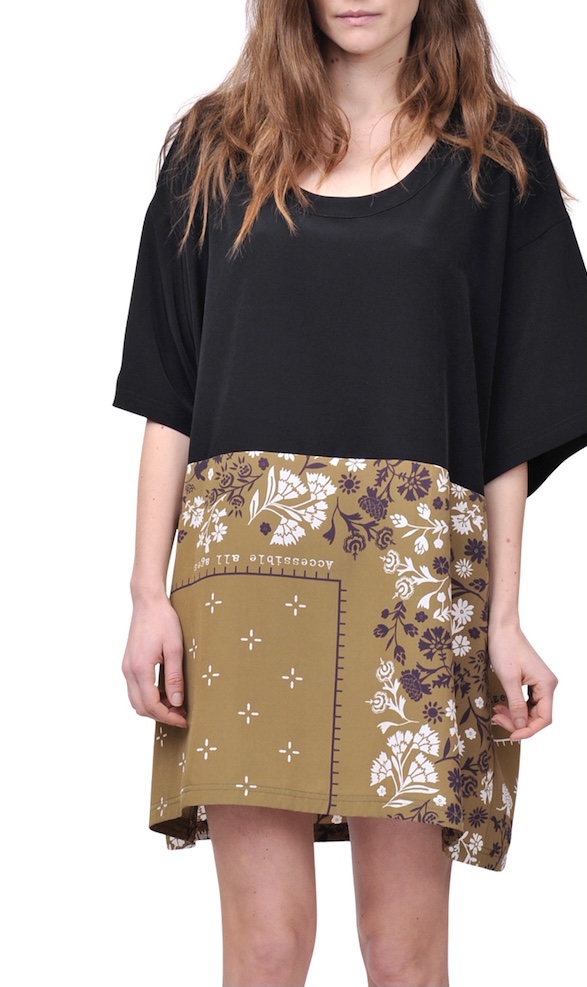
Age and fashion: it’s time to challenge outdated beliefs and embrace a world where style knows no age limits. In fact, the representation of different ages in fashion finally had its recognition. You don’t have to hide anymore, in case you ever thought about doing so. Or, perhaps you were waiting for permission to wear waht you love.

But did we really need permission? And, dear brands, do you believe young people can truly afford your expensive clothes?

Take a look at this picture (zoom the bandana print).
We picked this dress from the Spring/ Summer 2015 MM6 – Maison Martin Margiela collection. Not new if we consider the date of its release. But still relevant in terms of the idea the brand promoted, which was fashion-forward.

Age and fashion
MM6 – Maison Martin Margiela Spring/ Summer 2015

Fashion accessible to all ages


The transversal cut of the collection was clear. We ordered it because we loved the concept and felt aligned with it. Also, we personally have that dress in our closet and still wear it. You may be familiar with the notion of timeless fashion, such a discovery. Yes, we’ve always believed that good design was forever.

Around 2022 the concept of fashion without borders such as age, gender, body shape started to be recognised and amplified by fashion brands. But in 2015, it was about being a trailblazer, innovative and creative, by proposing a countercultural message. Now, from pret-a-porter to haute couture, those words and images have flooded fashion communication. So it sounds like something you have to say just to conform.

It’s fascinating to analyze the many labels we place on the boxes we think we belong to—age, gender, body shape, race, and more. The need to fit in, to belong to a specific category, is ever-present.

Yet, when brands highlight labels so often that they all send the same message, authenticity is lost. Eventually it is clear that these labels are a just marketing trend.

Rules are different now. Back then, we had designers, and fashion was meaningful. Now marketers pull the strings. And, in a spasmodic search for identity, we need slogans to frame the emptiness.

Accessible All Ages Read More »

The Curve Of Understanding

Reading Time: 2 minutes

How long does it take to open our eyes?


The case of plastic illustrates the tension between convenience and value, tracing our curve of understanding.
Plastic was invented in 1920. Around 1960 humans started using disposable plastic profusely. One of the greatest inventions ever. You could use cutlery, plates and cups and throw them away! Likewise, we could use plastic bags and toss them. Well, that’s what disposable means. It just got out of hand, or we didn’t realise that there’s a certain number of people inhabiting planet earth, and we aren’t so good with multiplication.

‘Buy – consume – toss’
The perfect innovation for everyday life, and no one considered any side effects. For about 50 years, at least. Till one day, we realised the oceans are full of disposable plastic. And that by 2050, there will be more plastic than fish in the oceans!

So, it took about 60 years to notice that single-use plastic was polluting oceans. Finally, the EU banned plastic in 2021, but the damage is done. Sixty years to open our eyes. And even now that is known, people do not worry much about that.

Learning the lesson
Will it take us that long for technology too? Since we are kindly invited to change a device every year. Or for furniture? Which, of course, is cheap but made to self-destruct within the shortest time possible. Or for clothing, because ‘the industry of cheap’ is flourishing! People want more. ‘And who cares if I wear it for less than a season? I’ll throw it away!’

How can a different approach resonate in a world made of beautiful facades or people who don’t care?

Perhaps, it will resonate with a tiny niche of active thinkers who want to make the change. Because they care, they can make a difference.

#formodernhumans

The Curve Of Understanding Read More »

The Freedom To Buy

Reading Time: 2 minutes

Is that real freedom?


Although we can’t cite the lawyer’s name who mentioned the ‘freedom to buy’ on a TV program, her insight remains with us. In fact, she touched on a point that influences every layer of our lives.


“If we don’t become active thinkers, the only freedom left to us is the freedom to buy — the freedom to consume.”

Take time to reflect
For our society, we hold value as consumers. That is the logic behind her statement: we are consumers, and we believe consuming is a freedom we’ve gained. As consumers, we are targeted by credit card companies, hospitals, hotels, retailers, and beyond—plus, web companies and social media.

This mechanism has been highlighted by the pandemic too. ‘Please, get well and go back to consuming.’ Otherwise, the world stops, because modern life revolves 90% around consumption.

Consumption, per se, is not wrong. What is wrong is the blind direction it has taken, the voracious appetite for devouring everything. That ignorant way consume each product or service without any evaluation. Just because it’s advertised, because the brand is popular. Because it’s new—out with the old and in with the next.  We hastily discard what we have to chase after the latest novelty, whatever it may be.

Overconsumption and the freedom to buy

We overconsume blindly, to the point of harming our planet. Which means that we, humans, aren’t really smart.
Brands, we believe we use them, but the opposite is true. They use us. Our freedom is limited to our consumption–the freedom to buy.

Active thinkers and thoughtful consumption
Active thinkers consider the long haul, so they consider their actions within a long-term vision. It’s fundamental to become conscious about what we consume and how. Unless we want to discover the consequences of our actions once the damage is a reality.

Now, more than ever, we need active thinkers—people who pause and think before consuming. Yes, think. That’s the greatest freedom we have.

The Freedom To Buy Read More »