milano shopping

Summer Holiday Style: Why you don’t need a new wardrobe

Reading Time: 3 minutes

The case for timeless fashion—no sustainability tag needed


When it comes to summer holiday style, do we really need a new wardrobe?

Every summer, the same cycle repeats: people buy cheap, disposable clothing—flimsy dresses, bargain swimsuits, fast-fashion cover-ups—worn for a single holiday before being discarded. The reasoning? “It was so cheap, it doesn’t matter if I toss it.”

But it does matter.

This mindset fuels overconsumption, waste, and environmental harm—yet many ignore it. At its core, summer holiday style shouldn’t be about buying more just for the occasion. It should be about buying meaningful pieces you can wear almost everywhere, just styled differently.
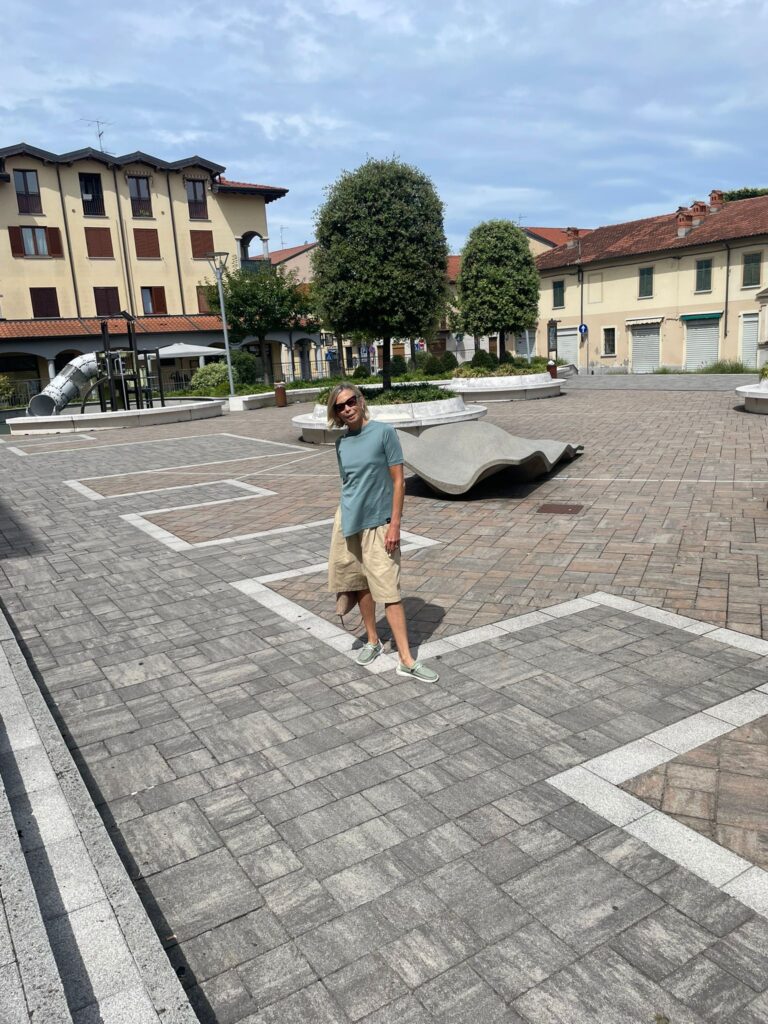
Summer holiday style: A woman with a blond bob haircut and sunglasses poses confidently in a beige clay-dyed short pants set by GoodneighborsShirts, layered with a celadon right-slit tee by Ujoh, paired with matching celadon loafers. The background features a square with a gray floor, yellow-beige houses, and trees.

The problem with ‘holiday-only’ fashion

Mainstream fashion encourages buying low-quality, trend-driven pieces that lose their appeal (or fall apart) after one trip. Kaftans, flimsy cover-ups, and synthetic beachwear dominate summer sales. But these items rarely last beyond a season. Worse, they contribute to the growing mountain of textile waste choking our planet.

What if summer style wasn’t about buying more, but smarter? Taking the right clothes only?

The alternative: Meaningful garments that last


True style isn’t about quantity. It’s about curation, quality, and longevity. A well-made cotton shirt, a tailored swimsuit, a lightweight silk dress in a timeless cut—these pieces don’t just work for one holiday. They transition seamlessly from city life to beach escapes, year after year.

The secret? Thoughtful design and versatility.

  • Choose good design, pieces made to last: quality speaks before you do. Most importantly, Good design encompasses sustainability without even mentioning it.
  • Natural fabrics don’t just breathe better; they evolve beautifully, unlike disposable synthetics.
  • Change the styling, swap accessories—suddenly it’s a whole new look.

This approach isn’t just sustainable—it’s effortlessly elegant.

Fashion’s hidden cost: A planet on fire


The question “What do you wear on holiday?” seems harmless. But it reveals deeper truths about our values—and our impact. The fashion industry is a major polluter, and disposable summer trends only make it worse.

We can’t afford to ignore it anymore.

Overconsumption and “garbage fashion” belong to the past. With climate crises escalating, we must shift to fewer, better pieces—garments that endure beyond a single season.

The bottom line: Buy less, buy better, wear more


You don’t need a new wardrobe for summer. You need a mindset shift.
Invest in quality over quantity.
Reject fast fashion’s throwaway culture.
Embrace versatile, timeless pieces that work everywhere.

The future of style isn’t in endless shopping sprees—it’s in meaningful choices.

So, what do we wear on holiday? The same timeless pieces we wear in town—just styled differently. Because true style isn’t disposable—it’s forever.

What about you? Do you buy clothes just for summer holidays, or do you choose pieces that last?

Summer Holiday Style: Why you don’t need a new wardrobe Read More »

The Double-Layered Silk Top by Marc Le Bihan

Reading Time: 3 minutes

A whisper of effortless refinement that transcends seasons—for the collectors of meaning


The Double-Layered Silk Top isn’t merely worn; it inhabits the body like a second skin. Marc Le Bihan’s design philosophy—where couture meets the ease of a lived-in favourite—culminates in this piece. Imagine the quiet intensity of an Agnes Martin painting: minimalism that reveals its depth only upon closer inspection.

Olive—not the predictable khaki of utility, but the complex green-gold of ancient olive wood, polished by time. A colour that refuses to be categorised.

A woman leans against a sun-washed stucco wall in an unnamed Mediterranean village. She wears the Double Silk Top, its crinkled texture rippling like water under twilight. The round neckline frames collarbones; the V-back hints at undone elegance. The asymmetric hem dances with her movement. Not flounce, but fluid arithmetic. Paired with nothing but ivory linen trousers and salt-bleached sandals, she embodies the art of less as more. 

The silence around her feels deliberate.

A brunette woman of color stands on a street, wearing the double silk top by Marc Le Bihan layered over a framboise (raspberry) silk dress. She pairs the look with sleek black leather slippers. Behind her, grey and brick walls frame the scene, with a tree’ visible at the bottom edge.

The alchemy of a couture soul: not spring, not summer—but forever silk


Cut from hand-dyed pongé silk, this top celebrates the poetry of human touch:

  • Structure and fluidity: Tailored to skim the body, yet its double layer lends weightless dimension.
  • Precision and spontaneity: The handkerchief hem swings with a dancer’s cadence. The crinkles? Pressed by human hands, not machines—they’re textural annotations, softening with wear like a beloved book’s spine.
  • Olive’s quiet drama: Neither loud nor shy, it’s the hue of tarnished Venetian mirrors. Sun-bleached herbarium specimens. The patina on a sculptor’s bronze tools.

The Double-Layered Silk Top: Wear it like you’ve always owned it


This isn’t a top meant to be styled—it’s meant to be lived in. A style note: The crinkles soften with time. Let them. This is a piece that grows more beautiful with wear, like a handwritten poem tucked into a coat pocket. 

  • For the unscripted afternoon: Tucked into high-waisted wool crepe pants, a single heirloom ring as punctuation.
  • For the clandestine dinner: Layer under a slouchy blazer, sleeves pushed up, hem untucked over cigarette trousers. Add a tarnished silver thumb ring. Carelessness, for the candelight.
  • For the everyday sublime: Over faded jeans, as if you’ve always dressed this way, and always will.

For the modern humans who curate, not consume—whose wardrobe is a library of dog-eared favourites, each piece a chapter in their story.

🌟 The Double-Layered Silk Top
Limited edition. Like a diary page—meant to be lived in.

🖤 Reserve yours: DM @suite123 | WhatsApp | e.mail

Available by appointment for shopping in Milano or worldwide—from screen to doorstep. From our hands to your story.

P.S. Ask us about the hand-dyeing process or how to pair it with your most battered jeans. We’re here for the stories, not just the sale.

Footnotes: The olive hue shifts subtly under different lights—sometimes moss, sometimes smoke. This is not inconsistency; it’s aliveness.

The Double-Layered Silk Top by Marc Le Bihan Read More »

The Handmade Fabric Trousers by Miaoran

Reading Time: 2 minutes

Contemporary style: Wide-leg silhouettes, woven by hand—where texture meets quiet rebellion


The Handmade Fabric Trousers by Miaoran aren’t just trousers—they’re a testament to the poetry of craftsmanship. Woven on a loom using raw cotton yarns of varying thicknesses, each pair carries the rhythm of the artisan’s hands. The orthogonal weave structure creates a fabric alive with tactile depth, like parchment pulled from a long-forgotten sketchbook.

For those who dress in whispers, not shouts—who crave pieces that age like well-loved paperbacks, softening with every wear.

Close-up on a woman’s lower body against a grey background, wearing The Handmade Fabric Trousers by Miaoran in oatmeal with subtle black veining. The trousers feature a single front pleat, a front zip with contrasting white button, and a layered, textured finish that emphasizes craftsmanship. The slightly cropped waistline highlights the trousers’ high-rise silhouette.

Loom-made fabric: The quiet code of craft


True craftsmanship takes time. Slow down to appreciate it.

• The fabric: Handwoven in Italy, the orthogonal weave gives the cloth a subtle dimensionality. Uneven, organic, like the grain of weathered wood. Raw yarns of varying thicknesses create a surface that catches light and shadow differently with each step.
• The pleat & pocket: A single front pleat folds like an origami secret, concealing a side pocket—functional yet fluid. No bulk, just intention.
• The fastening: A front zip with a contrasting white button (a punctuation mark against the oatmeal canvas). Unlined, with seams finished in soft binding. Because beauty lives in the details unseen.
• The colour: Oatmeal with black veining—not plain, but layered. Like the pages of a coffee-stained novel or the cracks in desert clay.

The Handmade Fabric Trousers: Wear them like a well-loved manuscript


For the traveller who pairs them with a sun-bleached tee, the black veining echoing ink smudges in a passport.

Style them for—
• The studio day: Cuffed above bare feet, paired with a slub-knit tank, the fabric’s texture mirroring unfinished canvases.
• The twilight market: Tucked into weathered boots, a slouchy wool blazer shrugging off the evening chill.
• The slow Sunday: Belted with frayed silk, the orthogonal weave catching the light like rice paper screens.

For the modern humans who curate, not consume—whose wardrobe is a library of dog-eared favourites, each piece a chapter in their story.

🌟 The Handmade Fabric Trousers
Limited edition. Like a diary page—meant to be lived in.

🖤 Reserve yours: DM @suite123 | WhatsApp | e.mail

Available by appointment for shopping in Milano or worldwide—from screen to doorstep. From our hands to your story.

P.S. Ask about the weaver’s hands. (They remember every thread.)

The Handmade Fabric Trousers by Miaoran Read More »

The Clay Dye Black Pants by GoodNeighbors Shirts

Reading Time: 2 minutes

Summer ease: Earth-dyed, genderless style—for the wanderer who finds poetry in texture and time


The Clay Dye Black Pants aren’t just clothes—they’re a tactile ode to slow craftsmanship. Light as a sun-warmed breeze, yet grounded like the earth they’re dyed in. They live in the tension between utility and artistry—where comfort meets intention. In a world of mass-produced fashion, their hand-dyed, mineral-rich hue feels like a page from a Wabi-Sabi manifesto—imperfect, organic, quietly profound. For those who collect moments, not trends—whose closet is a capsule of intentional pieces, each infused with memory.

A boy stands on a wooden floor against a white wall, wearing Clay Dye Black pants with a short-sleeved black shirt, a black hat, and round John Lennon-style sunglasses. Outfit completed with checkered socks and sneakers.

The artistry of dye: Rustic, fluid, made to move


True ease isn’t careless—it’s considered. These pants drape like well-worn travel sketches: relaxed where they should flow, structured where they must hold—textured, earthy, undeniably alive.

  • The clay-black hue: Not a flat black, but a living shade—like charcoal rubbed with fingertips, or the shadow of a summer storm cloud.
  • The wide silhouette: Freedom without bulk—a cut that swings with your stride, whether you’re biking to a café or lounging on a veranda.
  • The elasticated waist: No stiff buttons, just soft give—like the waistband of well-loved pyjamas, but tailored for the world.
  • The hand-dyed finish: Each pair bears the marks of its making—subtle variations, like the grain of handmade paper. No two are alike.
  • The under-knee length: Cropped for bare ankles, barefoot moments, or rolled cuffs—summer’s unofficial uniform.

The Clay Dye Black Pants: Wear them like a second-skin


These pants are for the soul who reads The Sound of the Mountain in the countryside, a folded train schedule in their back pocket—for the minimalist who knows depth lies in simplicity.

  • For the seaside café: Paired with a slouchy tank and sandals, salt still clinging to your skin.
  • For the urban wander: Tucked into a crisp oversized shirt, sleeves rolled, keys jangling in the side pockets.
  • For the evening firepit: Layered under a chunky knit, toes in the grass, a clay mug in hand.

For the modern humans who curate, not consume—whose wardrobe is a library of dog-eared favourites, each piece a chapter in their story.

🌟 The Clay Dye Black Pants
Limited Edition. Like a rare pressing of your favourite vinyl—meant to be lived-in.

🖤 Reserve yours: DM @suite123 | WhatsApp | e.mail

Available by appointment for shopping in Milano or worldwide—from screen to doorstep.

P.S. Ask us about the dyeing process. (Hint: They soften with every wash, like a favourite book’s spine.)

The Clay Dye Black Pants by GoodNeighbors Shirts Read More »

Vintage fabrics: The future of fashion lies in the past

Reading Time: 2 minutes

Sustainable fashion starts here: Timeless style from a hidden archive


There’s something undeniably special about vintage fabrics—the way they drape, the weight of them in your hands, the subtle textures that whisper of another era. These fabrics were made to endure, crafted with care feels almost unreal in today’s fast fashion landscape.

Our love for them runs deep, and it all began with our mother. She wasn’t just a seamstress; she was an artist, stitching magic into every garment. The kind of woman who hand-finished buttonholes because anything less wouldn’t do. Growing up, our world was filled with treasures—jars of buttons, spools of thread, and stacks of fabric waiting for their second act. Even our school bags and pencil cases were reborn from deadstock denim, transformed by her hands into something both practical and extraordinary.

Vintage fabrics: A discovery that changed everything


Recently, while rummaging through an old closet, we stumbled upon a trove of forgotten beauty: vintage fabrics, carefully preserved over the years. Our mother, always a visionary, had tucked them away—some for their unmatched quality, others because they simply spoke to her. These weren’t just textiles; they were fragments of history, pieces of a time when craftsmanship wasn’t an afterthought.

And that’s when it hit us: the future of fashion isn’t about what’s next—it’s about what’s already been done. In a world obsessed with churning out disposable trends, these fabrics are a rebellion. They carry stories in their fibres, proof that clothing can—and should—last.

Weaving the past into the present


Now, we’re taking these forgotten gems and reimagining them with a modern eye in one-of-a-kind garments. Each stitch is a bridge between then and now, a way to honour the past while crafting something entirely new. This isn’t just upcycling—it’s an act of resistance, a quiet revolution. Because sustainable fashion doesn’t start with a label or a hashtag—it starts here, in the quiet magic of a hidden archive, in the belief that the most extraordinary styles are the ones that never go out of fashion.

So here’s to the fabrics that started it all, and to the hands that taught us their worth. The future of fashion isn’t in endless newness. It’s in the quiet art of making less from more, in stitching new stories into forgotten cloth.

Each piece is a one-of-a-kind story waiting to be worn.
🖤 Curious to wear yours? DM @suite123 | WhatsApp | e.mail

Vintage fabrics: The future of fashion lies in the past Read More »