made in Italy

Vogue World Milan and the spectacle of “Made in Italy”

Reading Time: 4 minutes

The lost meaning of Italian elegance and craftsmanship


Vogue World Milan is all over social media, but not for the reason one might expect. Rather than embodying class and sophistication, it generated enough grotesque memes to last for years. Some viewers even described it as a “plastic surgery expo.” Even Miuccia Prada appeared to have something to say without saying a word. So, spectacle yes, but not exactly in a flattering sense.

However, some people commented, “It was so Italian” — which left us astonished. What was so Italian about it? Just Milano and those sitting in the front row. Certainly not what Vogue claimed. In fact, it seemed closer to the Met Gala idea of fashion spectacle than to any distinct Italian vision.

Created by Anna Wintour in 2022 for philanthropic purposes, Vogue World is an international event less a fashion show than a highly produced spectacle that brings together designers, models, celebrities, performers, and technology. This Milan edition took place in Galleria Vittorio Emanuele II, bringing together Italian craftsmanship, fashion, performance, and technology.

Staged on September 22nd, the event was in collaboration with the Milan Municipality, Teatro alla Scala and its Academy. More than 500 guests were seated along the four arms of the Galleria. The front row was historic and exceptional: many of the biggest names in Made in Italy were there — Miuccia Prada, Raf Simons, Donatella Versace, Pierpaolo Piccioli, Domenico Dolce, Stefano Gabbana, and more. The event raised €2.65 million for the Biblioteca di Quarto Oggiaro redevelopment and expansion.

According to the official programme, Vogue claimed to move through “The Artisanal Revolution,” “The Industrial Revolution,” “Made in Italy,” “The Age of Intelligence,” and “The Imagination Revolution.” Vogue specifically said the event was intended to address the value of craftsmanship in the age of AI.

But was Vogue World Milan really so? 

Elegance, craftsmanship, Italianness — these didn’t seem to be the main values. Elegance, in particular, seemed a lost concept. 

There is an interesting contradiction at the heart of the evening. Vogue explicitly presented the event as a celebration of “Made in Italy,” craftsmanship and the human touch in the age of AI, while sponsors including OpenAI and Meta supported the event. The very forces the spectacle claimed to examine were footing the bill.

So, Vogue World Milan claimed to celebrate “Made in Italy” and craftsmanship. Yet the spectacle seemed to undermine both. Most importantly, what does it mean to celebrate “Made in Italy” when the people and production system that actually make it possible are increasingly under pressure? 

For an event ostensibly celebrating human craftsmanship and “the human touch,” Vogue World Milan’s defining moment was four robots waving at the crowd. A fitting confession that fashion would rather borrow Silicon Valley’s hype than trust its own hands. The irony runs deep: Vogue World was billed as a tribute to Italian artisanal tradition, yet the segment everyone talked about featured Unitree humanoid robots wearing nothing at all, doing little more than waving and mimicking a lasso motion.

Il Fatto Quotidiano called the staging “extremely didactic.” A wooden model of the Duomo, tailors in white coats, then the Industrial Revolution, then the irruption of technology, all seasoned with ostentatious luxury and so much show-off that it left doubts about the event’s true meaning: a mere and self-referential celebration of fashion as the status quo.

On her Instagram, Frida Giannini highlighted the disconnection between the rhetoric of Italian craftsmanship, elegance and “Made in Italy”, and the extravagance of the event itself. She wrote:

“Tacky and ridiculous… Nonsense. Nonhumor. Nonelegance. Only an embarrassing circus. For Milano and Italy… With Open AI and robots??? Please, a bit of consistency. And dignity. So sad.”

She was having fun, she swore — but only because she could see all the details of those creepy faces having fun. The point stands: the inconsistency between the rhetoric and reality wasn’t a detail. It was the whole show.

While Italian craftsmanship was being celebrated as a marketing slogan, a few kilometres away the Made in Italy supply chain was enduring one of its most dramatic moments. The figures released by Milan’s CGIL paint a stark picture: in just three years, Milan’s fashion system has lost a quarter of its exports (−23.3%), sliding from over €3 billion to under €2.3 billion. Artisan businesses are shuttering (−19.7% in clothing, −17% in leather). And hours of temporary layoff schemes (cassa integrazione) soared in the second quarter of 2026. (source: Il Fatto Quotidiano)

The hands that actually make Made in Italy possible went unmentioned.

Is this Italian? Is this Italian elegance? Or is it simply a spectacular representation of what fashion has become — a circus of its own making?

Find the response in Miuccia Prada’s eyes.

Vogue World Milan and the spectacle of “Made in Italy” Read More »

The Striped Bandana by Exquisite J

Reading Time: 3 minutes

Hand-painted linen, worn-in colour, and the quiet charm of the human hand


This is The Striped Bandana by Exquisite J.
In a system that produces tonnes of disposable clothing, we curate: one piece, one story. A radical view for ethical and aesthetic resistance — meaningful garments, an expression of good design. Slow fashion —made to last, made by hand.

The Striped Bandana arrives with lightness but not indifference. It rests against the skin like a breath of cool air — the kind you didn’t know you needed. 100% linen, fresh and airy, substantial enough to hold its shape but soft enough to tie, fold, or drape. The green stripes are hand-painted onto the fabric, creating a soft, watercolour-like transition of colour — no two alike. A checkered white-and-blue band with a single pink brushstroke decorates one side. A small, deliberate accent that transforms a simple square into a considered object. Wear it differently each time. Make it yours.

It honours the discipline of craftsmanship: nothing extra, nothing missing. The fringed hems are not an afterthought here — they’re a finish. A soft edge between control and release. The fabric, 100% linen, breathes like nothing else: cool in heat, crisp in humidity. Hand-painted pigment sinks into the fibres like ink into paper — alive, unrepeatable.

Blue and green, but not primary. A palette that belongs to deep water, shaded ivy, and the hour just before rain. The pink brushstroke? A quiet surprise. A wink.

The Striped Bandana by Exquisite J pegged to a drying line — green watercolour stripes, fringed hems, and a garden of leaves and blooms behind.

Contemporary artisanal accessories for modern humans

The design:
Bandana with hand-painted green stripes (watercolour effect) and fringed hems. One side features a checkered white-and-blue band with a pink brushstroke accent. Generous dimensions: 83 x 90cm. Lightweight, breathable, versatile — wear as a scarf, a necktie, a headband, or a bag accent.

The make:
Made in Italy — by a small artisanal brand that oversees every step. Not a label of convenience, but a genuine commitment to craftsmanship. Every detail, from the hand-painted brushstroke to the final fringed edge, is curated with integrity and care. Each piece is one of a kind. No shortcuts. No repeats.

The Striped Bandana: painterly, not ordinary — artisanal, not afraid to be lived


The Striped Bandana offers something rare: an accessory that asks nothing of you. You don’t style it. You just tie it. And the brushstroke does the rest — a single gesture that turns a simple scarf into a signature.

  • For the studio: folded into a slim band and tied low on a cotton shirt collar. A whisper of colour. Focus with style.
  • For a walk: worn as a headband on a warm day. Or knotted loosely around a leather tote handle — not for decoration, but because the grip feels better. 
  • For an aperitivo: draped nonchalantly over the shoulders with a simple silk dress. A quiet confidence. Present, but never loud

For the modern humans who curate, not consume — whose wardrobe is a library of dog-eared favourites, each piece a chapter in their story.

🌟 The Striped Bandana – Exquisite J
Limited edition — each piece unique, each brushstroke unrepeatable. Like a handwritten sentence in a world of printed text. For personal style. For life.

🖤 To enquire: DM @suite123 | WhatsApp | Email

Available by appointment for private shopping in Milano or worldwide — from screen to doorstep. 

P.S. Ask us about why a single pink brushstroke changes everything. Or how to build a uniform around one hand-painted bandana — from morning light to evening without a single tug at the knot. We are here for the conversations, not just the transactions.

The Striped Bandana by Exquisite J Read More »

Panno Casentino, farewell: the last manufacturer is shutting down 

Reading Time: 4 minutes

Production ends for the iconic fabric worn by Audrey Hepburn


Panno Casentino, farewell. For centuries, the warm texture of Casentino cloth has embodied the very feel of Tuscany. But the final curtain has fallen on Manifattura del Casentino. The shutdown of its last manufacturer doesn’t just mark the end of a fabric, but the erasure of a unique chapter in the story of Italian craftsmanship and style.

Panno Casentino: A symbol of tradition, craftsmanship, and style


Panno Casentino is a traditional, robust, and warm wool fabric originating from the Casentino Valley in Tuscany, known for its distinctive, curly surface. It is made waterproof and resistant to wear and weather through a finishing process called fulling (felting), followed by brushing, which creates its signature curls.

The defining feature is this unique, hairy pile, which provides excellent thermal insulation, making it highly resistant to cold, wind, and rain. Traditionally produced in shades of green and orange, its bright colours are now a hallmark. The classic orange hue was reportedly discovered by accident when a chemical dye reacted during the waterproofing process.

The fabric’s origins date back to Etruscan and Roman times, and it has long stood as a symbol of Tuscan craftsmanship. Historically, it clothed outdoor workers and was even accepted as a form of tax payment in Florence in the 1300s.

The crinkled wool gained global recognition when Audrey Hepburn wore a Casentino coat in Breakfast at Tiffany’s. Through Holly Golightly, it was transformed from practical workwear into a timeless emblem of Italian elegance.

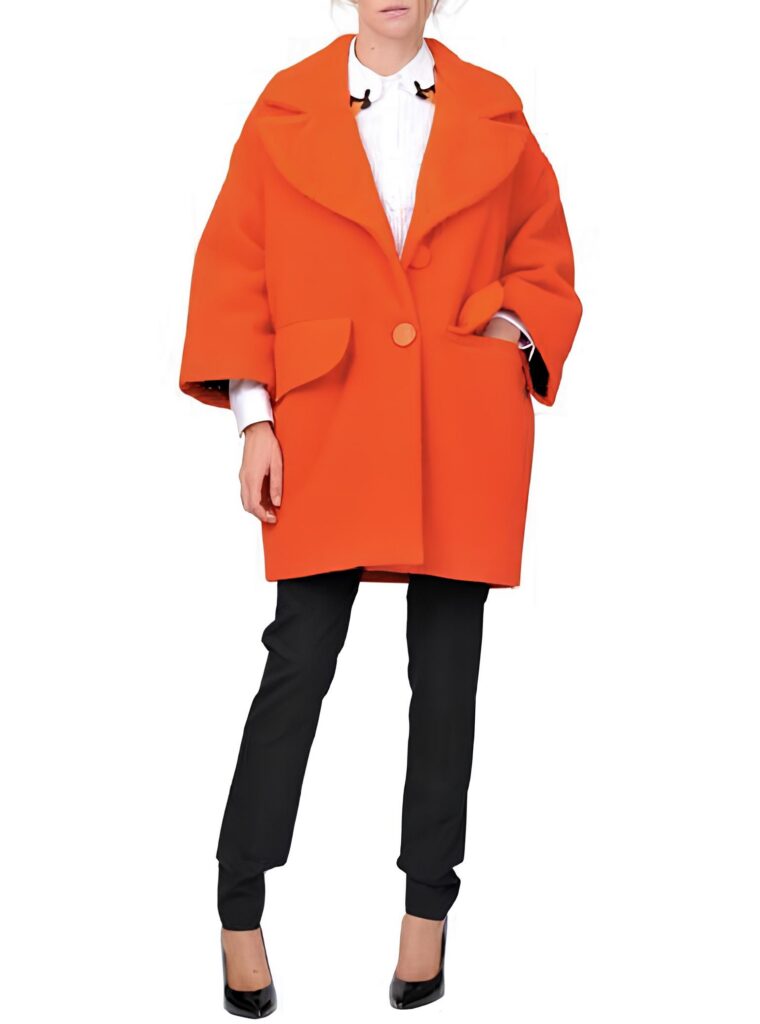
A fashion photo from suite123 archive of a model wearing an oversized, orange coat made of Panno Casentino wool. The coat is worn over a crisp white shirt and black straight-leg trousers, all against a clean white background.
Panno Casentino Coat from suite123 fashion archive

What happened: The economic and geopolitical background


The end had been looming for some time — as early as 2022 — but now it seems definitive. The final chapter has arrived for Manifattura del Casentino in Soci (Bibbiena), the last company producing this unique cloth. With the firm in liquidation and its 13 remaining workers made redundant, the factory stands silent. All that remains are the machines, including the specialised curling equipment essential to the fabric’s identity. They face a December deadline: if no one intervenes, they will be dismantled.

According to Corriere Fiorentino, the company’s latest crisis was the mirror image of its previous one. In the summer of 2022, there were orders but no production, due to bankruptcy under the former management. When production was finally restored, the orders had evaporated, swept away by the wider textile crisis.

The owners, Roberto Malossi and Andrea Fastoni, first raised the alarm a year and a half ago, reiterating it last Christmas. With no new orders coming in, closure became inevitable.
“We held firm until June,” Fastoni explained, “even as turnover collapsed to just €300,000 — a third of 2023’s figure and one-tenth of 2022’s. Then, starting 1st July, we had to place workers on furlough. We contacted the regional government immediately, but negotiations for a sale never materialised. All that remained was severance pay.”

Textile industry: The perfect storm


The situation became unsustainable, Fastoni said, citing a perfect storm of challenges: “It wasn’t just the broader textile crisis hitting industrial centres like Prato and Biella. We were also affected by sanctions against Russia — one of our key markets — and by Middle East tensions, which drove up the cost of raw materials such as dyes. The worst blow was the surge in energy costs. Our electricity and gas bills reached €40,000 a month, which led to arrears and, eventually, a power cut. We’re also behind on rent. Roberto Bellandi, the Prato entrepreneur who bought the warehouse in 2022 to enable our restart, has been patient, but we cannot indefinitely rely on his generosity.”

This culmination of factors led to the decision to liquidate — a move now threatening the entire supply chain. The two partner firms that supplied raw cloth and marketed the finished fabric will also be severely impacted.

“The deadline is imminent,” Fastoni warns. “If no one steps forward in the coming weeks, a unique piece of our textile heritage will simply disappear.”

Final thoughts


As Corriere Fiorentino’s Salvatore Mannino bleakly concluded: “While Arezzo’s CGIL (union) leaders complain about the crisis, what’s needed now is a miracle — the kind you see in romantic films starring Audrey Hepburn. But Soci is not Hollywood.”

But Panno Casentino isn’t just a fabric. It’s history, tradition, craftsmanship, and culture woven together. The closure of Manifattura del Casentino isn’t only an economic loss — it’s a cultural one.

We are watching a symbol of Italian identity vanish, thread by thread. The warm, earthy colours that once defined Tuscan winters are fading into silence. Once again, small-scale craftsmanship succumbs to market logic, bureaucracy, and political inertia.

So what is politics doing — if not protecting the legacy that defines us? When they say they want to protect Made in Italy, what do they really mean?
If we can’t preserve what makes us who we are, what exactly are we building instead?

Panno Casentino, farewell: the last manufacturer is shutting down  Read More »

The Drawstring Cotton Dress

Reading Time: 2 minutes

Embracing slow fashion #ForModernHumans


Introducing The Drawstring Cotton Dress by Aurora, from Tourin – our top pick of the week!

In a world where mass-produced fashion takes centre stage, Aurora stands out by redefining the landscape with her commitment to slow fashion. Her minimalistic design concept showcases a refreshing and thoughtful approach to style. The drawstring cotton dress is a perfect example of this philosophy, blending clean, linear shapes with elegant, casual, and sporty elements.

Aurora’s designs are versatile, seamlessly fitting into your everyday wardrobe while making a statement about ethical fashion. Embrace this modern, conceptual approach and elevate your style with pieces that reflect both beauty and conscience.

Discover The Drawstring Cotton Dress by Aurora


About the design
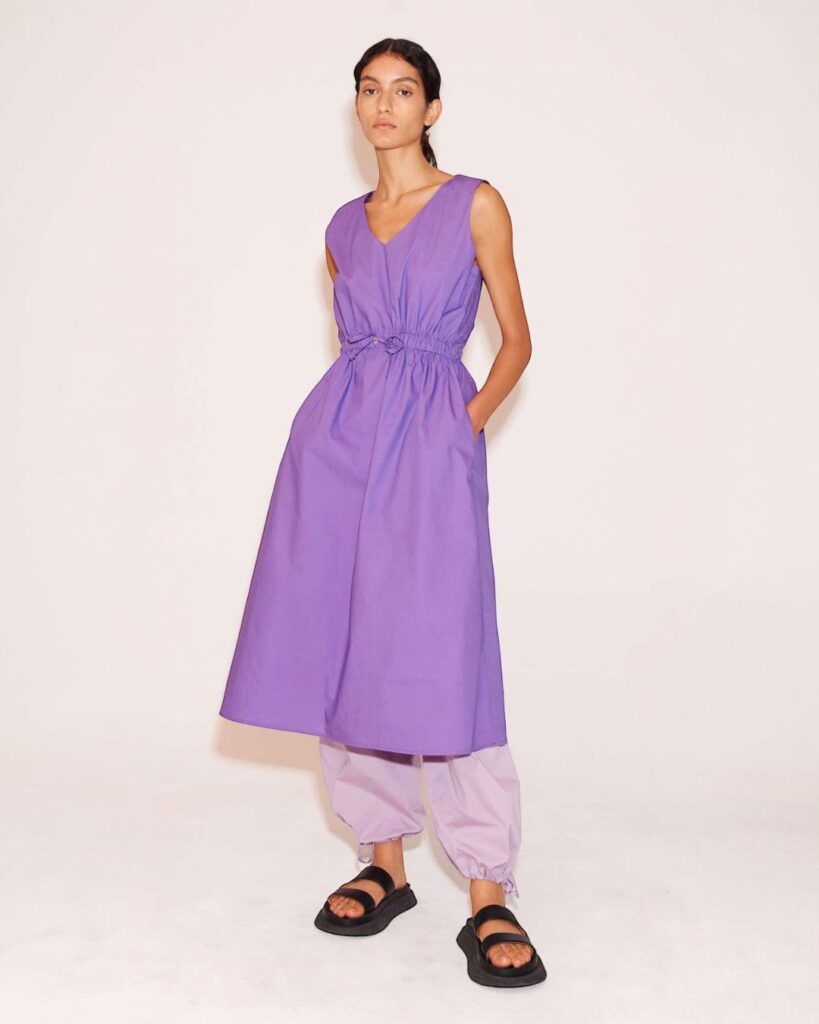
Tailored cotton dress featuring an elegant front V-neckline and elastic waistband with drawstring for adjustable comfort. The design point is a cross-over shoulder detail with a cut-out on the lower back. Two side pockets, under-knee length. Made in Italy, this piece exemplifies quality craftsmanship and timeless style.

The drawstring cotton dress by Aurora
The Drawstring Cotton Dress by Aurora


About the material
100% cotton. The hand is compact, dry, and fresh.

About the colour
Periwinkle: also called lavender blue or light blue violet. A vibrant hue that recalls the palette of modern artists.

Laundry
Wash by hand. Easy care product.

Styling tips
The Drawstring Cotton Dress is a sophisticated addition to your wardrobe. Pair it under a lightweight blazer and low heel for your office attire. Also, opt for flat sandals for a casual yet chic look. But it even pairs well with sneakers, offering versatility for various occasions. Experiment with accessories to personalize your style and make this dress uniquely yours.

How to purchase our selection:


Head over to our Instagram account to discover our shop (link in bio)!
Drop us an email or WhatsApp for orders or any further information. Also, you can book your private shopping experience in person or via video call.

International Shipping!
From Milano, our fashion selection #formodernhumans is available for international delivery.

Exclusive Fashion
🖤 Our selection intentionally offers limited pieces to ensure uniqueness and a sustainable approach 

Further details, size advice and prices via →WhatsApp

● Please, contact us for size guidance before purchasing.

🛍 Treat yourself today! Get yours directly from the suite123 shop!

The Drawstring Cotton Dress Read More »

A Conversation With Aurora

Reading Time: 5 minutes

Embracing the up-and-coming wave of fashion designers


As we embrace the up-and-coming wave of fashion designers, we are thrilled to share our conversation with Aurora. Her first name doubles as her brand name (Aurora De Matteis); a young woman walking the fashion industry with a polite demeanor and a clear sense of an ethically run business.

We first met Aurora a couple of years ago at a fashion exhibition in the heart of Milano. Her universe, small, focused, and well-crafted, conveyed emotion to us. So we kept in touch until, finally, we placed an order. Indeed, we are leaders in uncovering talented designers committed to exceptional design, premium materials, and ethical practices.

Read our conversation with Aurora to find out more about the brand!

Aurora – the conversation


• How did your passion for fashion begin? What is your background?
I always thought I wanted to do this in life because I always loved creating something with my hands. Actually, my mother passed down to me a certain passion; she taught me how to crochet when I was little. In fact, I used to make handmade crochet earrings. I’m passionate about handicrafts and artisanal work. I love the world of graphics, but after high school, I enrolled in Secoli Institute to get a technical background in fashion. I did well in pattern making, learning to make a whole garment. My passion for manual work led me to take a knitting course recently. Learning new skills stimulates me; in this sense, I never stop.

• What inspired you to start your slow fashion brand, and what values do you aim to promote through your designs?
After graduating from fashion school, I could work for big companies where I would have focused on just one specific thing, like being a pattern designer. But I like to explore, research materials, so, despite all the difficulties, I chose to launch my own brand. Mine is a brand that believes in slow fashion, which means attention to fabrics and well-made garments, things big brands often overlook. But, above all, it’s a brand that aims to convey the value of the time needed to create a handmade garment in a small workshop. Time, quality, and ethics are values I believe in.

Image of Aurora Spring-Summer 24 collection
Aurora Spring-Summer 24 collection

• What is your vision of style? Can you share insights about your design philosophy and how it aligns with the concept of slow fashion?
“Less is more” is a concept resonating deep within me. A quote from Mies van Der Rohe explains it all: “Please, do not confuse simple with easy, there is a big difference. I love simplicity because of its clarity, not because of its ease or for other reasons. To achieve clarity we must simplify practically everything. It’s hard work. You have to fight, and fight, and fight.” Indeed, this process of distilling from complexity to essentiality is what I find interesting.

Minimalism reconnects to my pattern-making studies, garment construction. Specifically, making it distinctive in terms of construction. Instead of prints or decorations, I prefer to create colour blocks because I focus on lines and shapes. However, this design concept perfectly aligns with my vision of slow fashion because it allows me to emphasize the quality and longevity of the garment through a timeless style. ‘What’s in fashion this year?’ has always puzzled me. Who decides that? Today, talking about fashion can be chilling, with unwearable clothes and exorbitant prices.

• How do you ensure sustainability and ethical practices in your production process?
Many stop at the labels, but natural doesn’t mean sustainable. For instance, see natural viscose. It may be natural, but it has a significant environmental impact. I focus more on quality materials. And I only work with suppliers who don’t impose high minimums. Moreover, I produce without waste in a small artisanal workshop, ensuring ethical and sustainable manufacturing because I make limited quantities. I myself sew in my workshop in Turin. Everything is made in Italy, in small batches. I am against overproduction. Indeed, the concept of limited quantities is crucial to limit our impact on the environment.

• How do you evaluate conversations about sustainability?
Superficial. In fact, I don’t say that my brand is sustainable, I demonstrate it through actions. Often I’m asked: ‘Is this all you have?’ Yes, exactly: a capsule collection, thoughtful and well-made.

• What challenges have you faced in establishing your brand within the competitive fashion industry?
The showrooms have asked me to do things from their point of view without considering my project. They are seeking the product, not the idea. Just to sell more. My way of working was almost belittled. It shows a certain lack of attention from industry operators because if you want a massive production, you don’t go to an emerging brand.

• Do you think enough space is given to young people in Italy?
Unfortunately, Italy is an old country, doesn’t give space to young people.

After reviewing her Spring-Summer 24 collection, we were impressed by the precise cuts and fresh take on fashion. Also, we discovered each other within a philosophy that felt familiar: a shared vision of design and meaning. So, we hope you enjoyed our conversation with Aurora. In the end, isn’t it time to give space to the new generation of creatives?

So stay tuned to discover more about Aurora designs #formodernhumans

A Conversation With Aurora Read More »