fashion industry

Notes On The Paris Fashion Week 2023

Reading Time: 3 minutes

An air of restoration, not evolution


The Paris Fashion Week 2023 showed precise, constructed tailoring and well-defined silhouettes. Perhaps brands aimed to provide a tangible sense of quality to reclaim their meaning. Or re-establishing a higher positioning in an overproduction industry that left people baffled and unable to understand the difference between luxury to low brands.

Of course, if you were not interested in the star parade, avoiding the tedious crawling before, during and after the shows seemed impossible. Now, that is the goal. Unfortunately, no chance to talk about clothes, just clothes, without necessarily talking about the faces.

Paris fashion Week 23: some highlights


All about silhouettes and dark atmosphere at Dior and Saint Laurent: I line at Dior–very vintage. The 80s-inspired triangle shape with big hyper-constructed shoulders at Saint Laurent.
Balmain: sculptural designs with bows and pearls everywhere.
Chloé: less poor nomadic, still bohemian but more refined. Such a great inspiration, the painter Artemisia Gentileschi! The medieval theme has resulted in wearable clothes – more for real life than for Instagram. Here, we want to underline what the designer, Gabriela Hearst, said: “I like it that nothing is gimmicky. They’re not clothes for Instagram: I’m tired of working for Zuckerberg all the time – like, where’s my check?”

Can you see the negative impact of social media on fashion? Now, designers make their clothes for Instagram, not for real life.

Givenchy: tailored black gowns with some touch of colours.
Balenciaga: for a brand that staked everything on marketing rather than clothes, this show seemed like an attempt to clean its image after a catastrophic communication campaign. 
Miyake: weaving rhythm, shape, slowness and movement. Beautiful!
Yohji Yamamoto: always a world apart, with a touch of colour this time!
Valentino: a 90s reminiscence for a black tie elegance with coloured maxi coats.

A lot of basics, that doesn’t mean banal. More wearable clothes, in general.
But do we still need hundreds of outfits to understand a collection? Aren’t 30 or 40 enough? 

However, rather than just referring to what we liked or not, we want to share two general thoughts about Paris Fashion Week 2023, reasoning we can extend to the whole fashion month.

Fashion journalism & fashion weeks


If you turn to fashion journalists expecting honest feedback and review about the collections, forget it. Indeed, fashion journalists do not express their viewpoints. They simply report the designers’ ideas and talk about celebrities, but they do not add any professional perspective. No pondering, which you may agree or disagree with, but still would generate a discussion, sharing some value. What they do looks like a report cut out for Instagram. So, everything seems flat.

In a hyper-consumerist and wasteful field as the fashion industry, the mission now is to do something different. Following the rules of what the fashion industry has done so far, and still commenting on the status quo, will lead to nothing valuable. In the end, status quo is what designers showcased.

Notes On The Paris Fashion Week 2023 Read More »
What Happened To Plus-Size Models?

Reading Time: 2 minutes

Inclusion and diversity or just marketing


What happened to plus-size models? We asked each other during the Milano Fashion Week 2023. But New York and London, too! They disappeared from the scene. Almost completely gone. Suggesting the recent novelty smelled so much of marketing.

Plus-size representation in fashion


However, our comment was not because we believe it made sense to represent different body shapes in a fashion show. That is for two reasons:
First, a defilè aims to show the dress, highlighting the details. Not the woman who wears it. Indeed, we believe “anonymous” models accomplish this task much better than supermodels because famous ones catch attention, while the dress becomes of secondary importance. Representation of all sizes has to be in the shops, where people must find different options suitable for their body shape. For instance, in our boutique’s selection, plus sizes never had problems finding beautiful clothes.
Second, it’s one thing to teach self-acceptance, we are unique individuals, so we should cherish our differences. But it’s another thing saying to young girls it’s good to be extremely overweight. Because it is not, but for a matter of health, not to fit in a standard, of course.

Plus-size models


So, apart from Dolce & Gabbana among the tops, there were no plus-sizes on the catwalks. Therefore, what can we argue? Was it a genuine interest in inclusion and diversity? Or was the fashion industry in a state of impasse and needed to jump on a popular trend? The smell of marketing seems clear.

Plus-size models were just a gimmick, an advertising stunt to spread the buzz and make people talk about fashion brands. In fact, in most cases, these women were dressed without any sense of style.

Just like us, many comments on the latest fashion shows wondered what happened to plus-size models. The message of inclusion and diversity, which apparently, provided a sense of liberation from cultural standards, was fake. Just marketing.

One of the most glorious fashion bullshit!

What Happened To Plus-Size Models? Read More »

Is Sustainable Fashion Elitist? BOF Asks

Reading Time: 2 minutes

Misunderstanding sustainability or a manipulated behaviour


In a recent post, Business of Fashion raised the question: is sustainable fashion elitist? Earlier, a fashion writer, Derek Guy, tweeted his thoughts about menswear, inviting his audience to “buy less, buy better”, considering quality pieces over fast fashion. Well, we agree! But this post sparked controversy: many said sustainable fashion is elitist because most people cannot afford luxury clothes.

Surely we cannot deny that sustainable materials plus production chains that give proper wages to their workers cannot provide cheap products.

But let’s go through some points:

• cheap clothes and disposable fashion are not sustainable.
They offer an easy-to-connect narrative, but they aren’t sustainable. Not only do they damage the environment, but need an underpaid workforce to thrive.
• luxury doesn’t mean sustainable. Indeed, fast fashion and most “luxury” brands are two faces of the same coin. They both share an overproduction pattern based on people and planet exploitation.
• overdistribted sustainable brands aren’t sustainable. Brands that call themselves sustainable but are distributed everywhere, so mass-produced, aren’t sustainable.

Download “The sustainability basics” here!

Education, not just money


Mindful consumption is one of the building blocks of a modern lifestyle, and it is a matter of education, which not necessarily rich people have. The conversation on sustainability is not about inducing low incomes to stop consumption but helping them develop better habits. On the contrary, high incomes must reduce their purchases drastically because their lifestyle’s impact is much higher.

Sustainability is not just about shopping. It’s a lifestyle choice in respect of nature, and people and workers’ rights. A necessity in the face of climate change.

It is tricky to say what is sustainable and what is not. So, the fashion industry can force brands to stick to specific regulations, making things clear to consumers. But, in the end, each individual must learn and become a conscious consumer. Nothing happens on one side only.

How can we explain this complex situation?


We live in a consumer society where everything revolves around consumption. People overconsume at the expense of other human beings and the planet as if it is the only reason for living. Of course, many cannot afford expensive items. But vintage represents a sustainable and circular option. Also, you can find up-cycled clothes in every price range.

So, is sustainable fashion elitist? And why people prefer to buy fast fashion? A quote by Upton Sinclair gives a perfect insight:

“It is difficult to get a man to understand something, when his salary depends upon his not understanding it.”

Upton Sinclair

Is Sustainable Fashion Elitist? BOF Asks Read More »

Milano Fashion Week 2023

Reading Time: 2 minutes

Fall/Winter 23: between reality, wearability and confusion


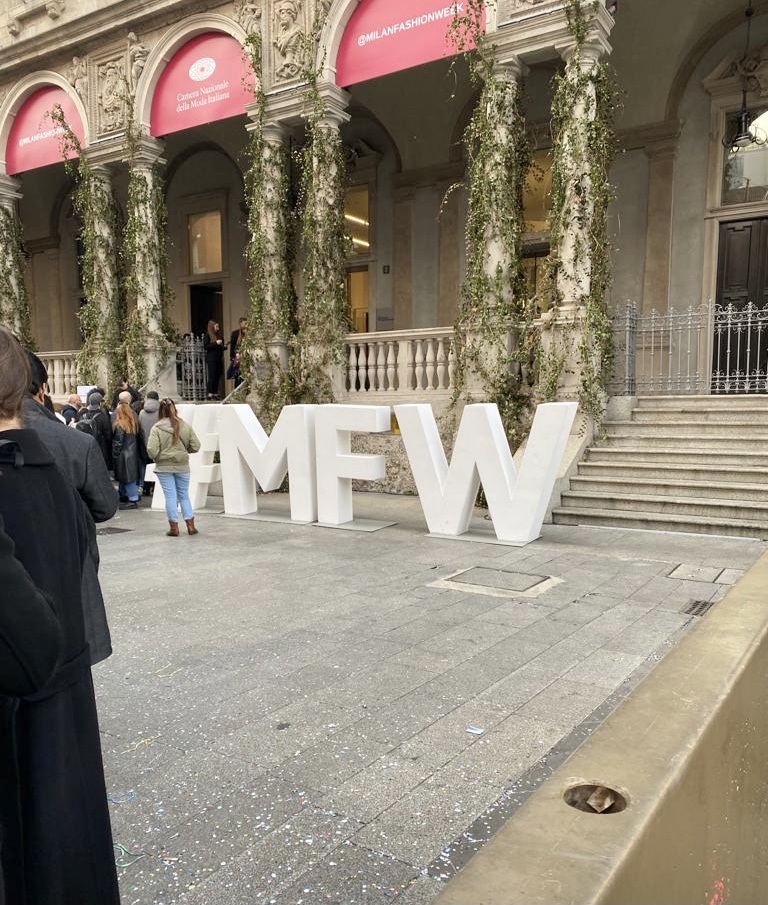
Milano Fashion Week 2023 shows a fashion recovered from Balenciagitis! The extremely contagious phenomenon that has affected almost every designer so far, seems gone! And finally, brands looked in better shape. However, the number of outfits presented in every single fashion show underlined the blindness of the fashion system towards climate emergency.

Highlights from Milano Fashion Week 23


Gucci: a lot of everything and too much confusion in da house. This show transitions from Alessandro Michele, who destroyed maison’s heritage in favour of a clownish style, to the new designer, Sabato Sarno, whose first collection will see the light in September. Though waiting for the official handover, perhaps it made sense to show 30 archive clothing pieces mixed with accessories. All that confusion from a maison like Gucci was nonsense.

Milano Fashion Week 23


Prada: the collection focused on reality, with well-balanced silhouettes and beautiful origami decorations. Indeed, wearable clothes with a purpose, like the nurse dress, had the intent to offer uniforms for daily life. But what about BOF’s title? “A plea for compassion at Prada.” Talking about compassion for a fashion show seems a stretch. Compassion for what? By the way, we still wonder if Miuccia needs Raf Simons. She can do better than stitching a logo onto a skirt.

Dolce & Gabbana: so many deshabille looks gave the impression of an underwear show. However, when the more “habillé” outfits came out, we finally could see some of the Dolce & Gabbana original designs. Indeed, this one was much better than their latest fashion shows.

Bottega Veneta: precise tailoring cuts highlighted an image of quality and clean elegance. Beautiful textured fabrics gave a sense of unexpectedness. But maybe too many themes make you lose attention.

What do all the brands have in common?


Apart from the circus of most participants at Milano Fashion Week 2023 with zero idea of style or elegance and some indigestible starlets, still everyone showed trillions of outfits. Brands persist on that. Why? Nobody is slowing down. No one hits the brake, creating and suggesting an idea of style and lifestyle in tune with the current times.
The fashion industry (as our economic system) thrives on an overproduction pattern. Even if the world is melting down, no one cares to make a change.

Milano Fashion Week 2023 Read More »

WAMI and Stella Jean’s Controversy Over Milano Fashion Week

Reading Time: 2 minutes

A lack of inclusion and diversity or a matter of money?


WAMI is the acronym for “We Are Made In Italy”, a collective of BIPOC designers. Stella Jean, an Italian designer of Haitian origin, is at the helm of this group.

Early in February, while Carlo Capasa, president of “Camera Nazionale della Moda Italiana”, introduced the Fall/ Winter schedule, Stella Jean suddenly stood up and denounced the lack of inclusion.

“No promises made by the president of Camera Moda have been kept.”

“We were at the opening of the February fashion show calendar but we had to withdraw because, how do we pay for the collections if the designers don’t have the means?”

Stella Jean

Wami, Stella Jean and Camera Moda: the controversy


So, Stella Jean said she dropped out of fashion week because Camera Moda didn’t keep their promise to support BIPOC designers. Also, on the same day, she started a hunger strike. Consequently, Camera Moda’s president replied they’ve supported the BIPOC collective of designers for two years, meaning four seasons. Furthermore, Capasa added they did what they could and couldn’t become entrepreneurs.

Fashion business: a matter of representation or money?


Having a certain knowledge of the fashion field, we wonder how it can be possible to set up a fashion brand in two years. Indeed, the situation is more complex than it seems, and we can identify three main problems:
First, money is the biggest issue. If you can invest in your project, whatever your race is, you’ll find a way to show your collection. Open doors in showrooms, exhibitions or fashion shows.
Second, everything has already been done in fashion, and it’s difficult for new designers to create something new or special which would make them stand out, pushing those in the industry to search for them.
Third, “black lives matter” – inclusion – diversity – disability – sustainability – fluidity – are just buzzwords the fashion industry uses for promotion. Nothing more.

Two-year support to launch a fashion brand: is it enough?


In the complexity determined by money, creativity, and representation, Camera Moda offered WAMI a two-year plan. Is it enough to launch underrepresented brands? It seems tough. Especially now.

In fact, in an oversaturated fashion market, the truth is that there isn’t much space. There are more brands than people who would purchase them. Time for a change!

WAMI and Stella Jean’s Controversy Over Milano Fashion Week Read More »