conscious consumer

The Island In The Desert

Reading Time: 2 minutes

Have you ever wondered where our textile waste ends up?


Talking about the cost of fast fashion and the madness of disposable items can be upsetting and frustrating. No one wants to listen.

We could define it as a hidden cost, assuming people do not see it directly. Except that there’s nothing hidden anymore. And so, we call it the true cost because it happens before our eyes. Although, people refuse to see it intentionally.

To illustrate the abnormity, perhaps a visual image helps awaken the conscience more than words.
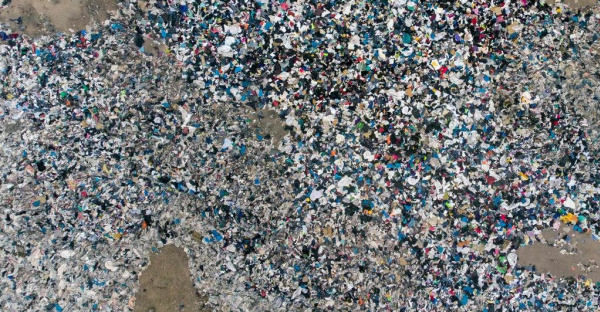
Atacama desert in Chile - fast fashion leftovers
Atacama desert in Chile – fast fashion leftovers

Here, in front of your eyes, is the Atacama desert in Chile, the driest desert in the world. And that is an island of discarded clothing, including Christmas sweaters and ski boots, piling up in the desert. Horribly revealing the cost of fast fashion.

Chile is a hub for secondhand and unsold clothing coming from all over the world. USA, Europe and Asia. Approximately 59,000 tons of garments arrive there every year. Clothing merchants buy part of it, but the majority, about 39,000 tons, end up in rubbish dumps in the desert.

That happens because those garments contain chemicals and are not biodegradable, therefore not accepted in the municipal landfill.

The cost of fast fashion


We wonder what’s going to happen over time. Do you still feel ok with fast fashion and disposable goods?

On Monday, we posted about the need to shift our consumption habits. After reading this, the sense of urgency becomes imperative. It doesn’t need any further explanation.

Educating ourselves towards thoughtful consumption habits is fundamental. If brands don’t produce items made to last, we don’t buy from them!
Stop overconsumption. Stop purchasing disposable items. That is how we bring our contribution.

We know that expecting a change from brands is an illusion, yet it’s just a way to exclude ourselves from the game. If we pretend we do not play an active role, we hide our responsibilities.

On the contrary, we have to educate ourselves in order to become conscious and make intentional choices.

Break the loop. Take action now!

The Island In The Desert Read More »
Black Friday and The Promotion Spam

Reading Time: 2 minutes

Exploring the overload of discounts and endless sales


Retailers spam promotion, and if Black Friday was not enough, now there’s early black Friday too!

The distribution model clings to this tactic as if it were the only way to capture attention. Forget evolution from brands and retailers. Educating people towards an improved and conscious consumption model is not on their agenda. Just not worth it to them.

Obsessive promotions are the result of a hyper-saturated market driven by overproduction. And the lower the product quality, the higher the markup—enabling discounts (real or fake?) of up to 70%. But the illusion of a great deal remains intact.

Heavy discounts and obsessive promotions are indicators of a sick system.
The environmental impact fostered by Black Friday and never-ending promotions is really huge. Not to mention the ethical implication, if you do not pay the full price of products, someone will pay for it. So we go back to the disturbing modern-day slavery practice.

As a matter of fact, there is too much of everything, and our blind habits contribute to feeding this vicious cycle, which has no way out.

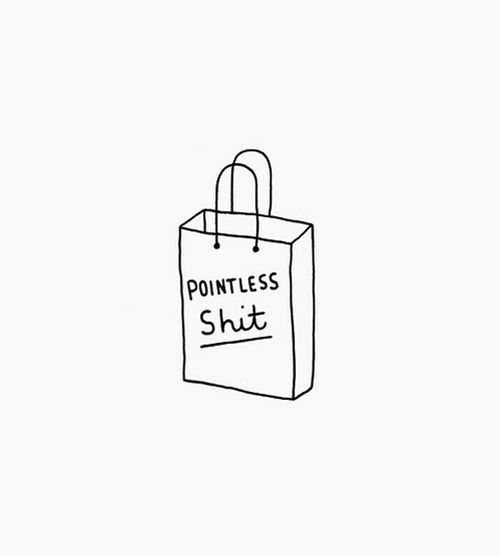
Black Friday & promotions spam - Image of a shopping bag - Pointless shit
Image via: drops of devotion – Tumblr

The solution to Black Friday & obsessive promotions


Is it possible we cannot find a better system? Can we move beyond Black Friday and the promotion spam?

In fact, the solution is a distribution model that abandons large quantities to shift towards good quality. A sustainable production system that grants proper living wages and limits its impact on the environment. Things made to last and healthier consumption habits.

In this balanced context, promotions and discounts would be necessarily limited.

In short, changing attitude is a necessity. We started from us first, adjusting our activity to an evolved lifestyle. So, we offered a thoughtful consumption model represented by a capsule selection of quality pieces.

We don’t lure consumers by offering wild discounts. But, we try to educate ourselves and our audience on meaningful consumption.

We respect people, and we understand the worth of their work. We appreciate the products we select. We value quality, and we value our customers.

Modern humans are conscious consumers. Say no to Black Friday! We don’t need all that stuff.

Black Friday and The Promotion Spam Read More »

From Quantity to Quality

Reading Time: 2 minutes

What will it take to spark the shift?


When will the paradigm shift from quantity to quality? Or, the question should be, what else do we need to see in order to make this change happen?

People don’t consider shifting towards a conscious lifestyle because they are too ingrained in their old habits. But perhaps, those who are in this position will be forced to readapt somehow quite soon.

Why?
Difficulties in finding raw materials and supply chain shortages are now a reality. Indeed, one of the side effects of the pandemic was the sharp rise in raw material prices. Consequently, final product prices are getting much higher. It is already happening in the construction field, energy, gas. And it’s impacting fashion, too.

Therefore, caring more about what and how we consume will be a necessity.

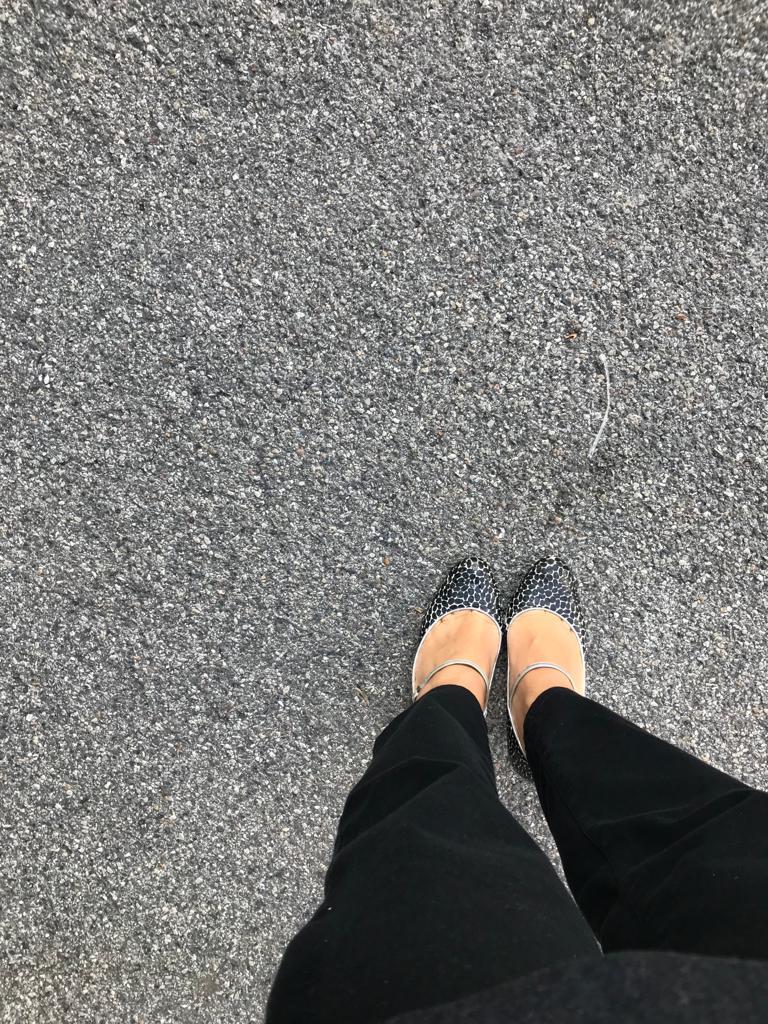
Pointing feet - inspiring from quantity to quality attitude


Low-impact lifestyle: quality, not quantity


What can we do?
Each of us has an impact on the environment. Even if corporate giants arm-in-arm with marketing have shaped the world for us, they can’t make it without our active participation. And the role we play is revealed precisely by how and what we consume.

Since we do not like to wait for change to happen, we choose with our minds what kind of world we want to live in, so we act. Also, we hold ourselves accountable for the choices we make.

Why buy less but better quality?
It is a long-term strategy. You will buy garments that last. Things you will wear for a lifetime, not items to discard after a couple of washings. Same for any other item we use in our everyday life.

This radical shift of perspective from quantity to quality is about educating ourselves to find pleasure in how things are made, not in the simple act of buying. Finally, this alternative lifestyle will reduce our impact on the planet.

So, make it a conscious choice now rather than a forced decision when it’s too late.

From Quantity to Quality Read More »

Product Placement vs Consumer Awareness

Reading Time: 2 minutes

Navigating the fine line between influence and informed choices


Among various methods corporations use to keep women hooked to their brands, product placement is on top. Yes, corporations. That’s what luxury conglomerates are. And it gives the pulse on their work.

During the 80s, Giorgio Armani was the first who started dressing Hollywood stars in order to sell to the American middle-class. In a perspective of massive overproduction and an ever-growing economy, perhaps that strategy made sense.
By the way, Armani, followed by all the other designers right away, started giving outfits for free to the stars, and women – part of the so-called middle class – promptly bought them.

Now the economy is not in good shape, and the middle class has been swiped away. Most importantly, we opened our eyes, so we are tired of being treated as fishing lures. Therefore we find some specific marketing techniques obsolete, if not meaningless.

The logic behind celebrities marketing


What’s the point of stars wearing luxury designer’s clothes on the red carpets when it’s known they don’t pay for the clothes?
Does it still make sense?

In fact, what makes it sound absurd is that celebrities can afford to pay, but they don’t. In other words, those who can afford clothes don’t buy them, while those who can’t are expected to.

There’s no logic in this anymore. What if celebrities purchase their outfits and designers donate the proceeds to charity?

However, we should also take a closer look at those captivated by ‘the rich Milanese’ flaunting her outfits on social media—women who promptly buy. Indeed, we die a little inside witnessing this lack of self-esteem. An evolution of product placement that exposes a complete absence of consumer awareness.

Since we weren’t all born with good taste, looking for guidance is the right way to avoid weird outfits. But asking for advice is different from imitating someone else’s style.

Marketing has always targeted women because, traditionally, they are considered fragile and easy to influence or manipulate. And the sad thing is that we allowed them to do so.

Let’s evolve now.

Product Placement vs Consumer Awareness Read More »

The Cultural Element

Reading Time: 2 minutes

Sustainability and the contradictions of contemporary culture


This is when you go to an event dedicated to sustainability, and one of the first things you hear is a journalist stating that we cannot consume less!

“During the pandemic, we saw what happened–everything came to a halt. It’s clear that we cannot consume less.”

We looked at each other perplexed: “Are we in the right place?” If this is the viewpoint of someone invited as a speaker to discuss sustainability, imagine the mindset of the average consumer.

We could not engage with those people over there, but we take the opportunity to explain our thoughts here. In fact, we do believe the opposite, it’s quite evident.

Consuming less is one of the most effective ways to save our planet.

Consumption and capitalism


It is necessary to find a new economic model to replace capitalism, which has been revealed to be outdated and unsuccessful. Exponential growth is absolutely inconceivable and even harmful now.

Although a new economic model is a fundamental step, we cannot wait, arms crossed, for something to happen. Sooner or later, the gods of economics and politics will come up with a brilliant idea, a valid substitute. At least, we hope they do.

But in the meantime, maintaining a sustainable level of consumption is crucial. Becoming aware of what we consume and how we consume must be at the core of our actions.

When it comes to changing the way we live, eat, travel, or shop, culture plays a central role.

Culture comes through education. In the past, we had the excuse that sources, books, and information weren’t accessible. Now we can find whatever we need.

Knowing more about environmental issues and climate change. Discovering more about ethical work and production modes. Understanding materials, craftsmanship, quality.

Educating ourselves to become conscious consumers is what we can actively do to enhance our lifestyle and change for the better.

It’s about improving our well-being rather than accumulating things and money with the outcome of waste and exploitation.

Learning more is free, and often it just takes a click!

The Cultural Element Read More »