fashion

Hype — can it really sustain fashion brands?

Reading Time: 5 minutes

How independent labels struggle when hype isn’t enough to sustain a business in a weak market


When hype fails to pay the bills, the party is over for fashion brands.

For decades, the fashion industry has been obsessed with one currency: noise. We have watched brands skyrocket to fame based on a viral logo, a celebrity sighting, or a sell-out drop that crashes websites. But recently, the music has stopped for some of the industry’s most beloved “cool” kids.

The recent news of Sunnei’s bankruptcy and Marine Serre entering judicial receivership seeking court protection has reverberated through the independent fashion scene. These weren’t obscure brands struggling for relevance. They were influential labels that appeared to be doing everything right from the outside.

Their situations are different, but both illustrate how creative success and commercial resilience are not necessarily the same thing. A brand can remain culturally relevant and still face a business crisis.

Both Sunnei and Marine Serre have been darlings of the fashion week circuit. They have built their reputations on the pillars of modern success: scarcity (or the illusion of it), buzzy collaborations, and an impressive list of celebrity supporters. They understood the algorithm. Yet, understanding the algorithm didn’t stop them from hitting a wall.

This led us to ask a critical question: what is hype, really? And more importantly, can hype alone sustain a fashion business?

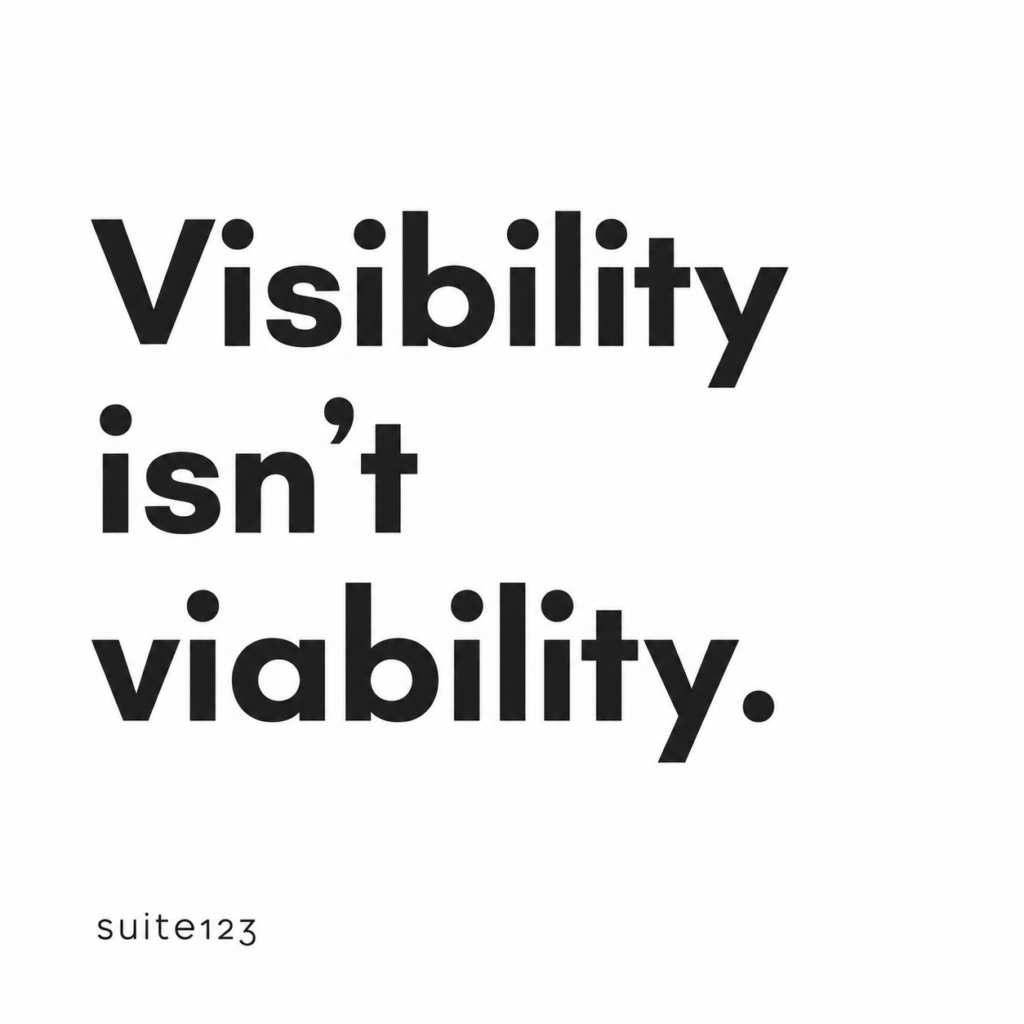
Graphic reading "Visibility isn't viability," capturing the article's key takeaway that hype in fashion doesn't equal business sustainability

The hype curve


To understand the crisis, we have to understand the mechanics of hype. Hype is a rocket, not a foundation. It propels a brand from obscurity to prominence at a speed that traditional luxury houses could only dream of.

But here is the harsh reality many independent labels eventually face.

As attention grows, brands often interpret rising visibility as permanent demand. They hire staff, expand production, increase investments, expand into new markets, or launch new projects, expecting growth to continue.

What many don’t anticipate is that hype follows a predictable curve. Once a brand reaches its peak, a natural correction is almost inevitable. But if a business has been built on the assumption that demand will continue indefinitely, even a normal decline can quickly become a serious problem. The mistake is assuming that attention automatically translates into long-term business growth.

This observation isn’t just theoretical. It comes from our experience working with emerging brands over the past two decades, combined with continuous analysis of the fashion system.

Hype may create extraordinary visibility, but visibility alone cannot sustain a business over time. The paradox is that when everyone is talking about a brand, exclusivity can start to disappear. Early adopters move on to the next underground name, while consumers who bought into the brand for its status begin looking elsewhere. The peak is followed by a hangover, and that hangover can be brutal.

Most importantly, visibility doesn’t automatically translate into sales. Media attention, celebrity endorsements and viral moments may generate awareness, but they don’t necessarily create loyal customers or sustainable revenue. Likes don’t pay suppliers, and headlines don’t guarantee repeat customers.

The conglomerate safety net vs the independent tightrope


The most dangerous aspect of this cycle is the lack of a safety net.

Unlike brands owned by major luxury conglomerates such as LVMH or Kering, independent labels are walking a tightrope without one. When a conglomerate-owned brand experiences a slowdown, the parent company can absorb losses, reinvest in marketing and wait for consumer demand to recover.

Independent labels don’t have that luxury. They operate with thinner margins and fewer financial resources, without the economies of scale or purchasing power enjoyed by the large groups. Many also depend on external investors who expect returns within a relatively short timeframe.

They are also particularly vulnerable to cash-flow pressures. Wholesale partners may reduce or delay orders, payments often arrive months after production costs have been incurred, and even a temporary drop in sales can quickly become a liquidity crisis.

In a volatile market — where geopolitical tensions, economic uncertainty or changing consumer sentiment can affect demand almost overnight — that combination can become a dangerous trap for a business built around popularity.

The danger of overexposure


There is a cruel irony in fashion: the very strategy that makes a brand successful can eventually weaken its position.

When every celebrity is wearing your crescent moon print (Marine Serre) or your playful deconstructed tailoring (Sunnei), the magic begins to fade. Consumers become desensitised. Hype is fragile because it depends on constant novelty and the energy of the crowd.

Stability, on the other hand, takes years to build. It requires consistent quality, genuine customer relationships, financial discipline and a business model that doesn’t depend on the next viral moment.

Brands can’t build trust by chasing social media trends.

Final thoughts


So, is hype enough to sustain fashion brands?

The Sunnei and Marine Serre cases suggest a clear answer: no.

Hype is a powerful accelerant, but it is a poor fuel source. It can propel a brand to the top far faster than anyone imagined, but if the underlying business hasn’t been built to withstand the inevitable slowdown, the descent can be just as rapid.

For the independent labels watching this unfold, the lesson is clear: don’t confuse virality with viability. Build a business that can survive when the attention moves elsewhere.

Because fashion increasingly mistakes visibility for value. Algorithms reward constant novelty, but businesses survive on repeat customers, healthy margins and financial resilience.

Hype comes and goes. Stability takes years to build.

Hype — can it really sustain fashion brands? Read More »

One piece, one story: The Sleeveless Top by Ujoh

Reading Time: 4 minutes

Modern minimalism, thoughtful design, precise tailoring — clean lines for bodies that move


This is The Sleeveless Top by Ujoh.
In a system that produces tonnes of disposable clothing, we curate: one piece, one story. A radical view for ethical and aesthetic resistance — meaningful garments, an expression of good design. Slow fashion — made to last, made by hand.

The Sleeveless Top arrives with quiet confidence. It drapes with ease. The design speaks in clean lines and subtle nuance: a sleeveless silhouette in profound black. Crafted from mocrody — a high-gauge knit that defies expectation. The fabric is engineered with a distinct front-and-back construction — a natural firmness that holds its shape, yet remains lightweight and breathable. Despite this density, it remains lightweight, breathable, and moisture-wicking against the skin. Side slits and a stepped hem offer a gentle sense of movement — an invitation to layer, to drape, to live without restriction.

It honours the creativity of meaningful design: the versatility of a top that stands alone or sits beneath a jacket. The comfort of cotton made for real days.

Black — of ink on rice paper, of shadow at midday, of a quiet evening in the city. A neutral that grounds, that lets the wearer shine.


A model in a three-quarter pose, wears The Sleeveless Top by Ujoh in black, partially tucked at the front into Miaoran's fluid wide-leg trousers in lavender. The model stands barefoot against a neutral grey studio backdrop, with the minimalist outfit creating a soft contrast between structure and fluidity.

Simply the top: structure and softness, precision in simplicity


The design:
Sleeveless top with a relaxed, comfortable fit. Side slits and a stepped hem for subtle architectural detail. High-gauge knit fabric with a distinct front-and-back construction. Made in mocrody — fine-count Supima cotton, breathable, moisture-wicking, and firm to the touch. Made in Japan.

The make:
Made in Japan — by Ujoh, a brand synonymous with refined textile innovation and meticulous construction. The brand has long explored the tension between precision and experimentation. Tension between opposing forces — structure and fluidity, density and breathability. Conceptual rigour stems from an almost artisanal approach to material. True to its philosophy, the house continues its deep textile research: an ongoing negotiation between discipline and disruption, precision and instinct. Every stitch — from the structural knit to the subtle stepped hem — reflects skill and purpose, ensuring a garment that stands apart.

The Sleeveless Top: minimalist garments for life


The Sleeveless Top offers something unique: the structure of a woven with the comfort of a knit. Designed for movement and for rest. From studio sessions to summer strolls, from the office to the terrace, it simply works.

How to style:

For the studio: worn loose over wide-leg trousers or a flowing skirt. The stepped hem adds interest, while the sleeveless cut keeps the silhouette clean. Add chunky sandals and a canvas tote. A uniform that breathes with the rhythm of the day.

For the city walk: paired with high-waisted, tailored trousers or cropped pants. The black hue anchors the look; the side slits offer ease of movement. Walk with purpose, arrive unruffled.

For a dinner out: a pencil skirt or slim-fit trousers; layer with an unstructured blazer for the evening, or wear it solo with a simple necklace. Effortless evening elegance.

For the coast: thrown over a swimsuit or tucked into relaxed linen shorts. The moisture-wicking fabric stays cool against the skin. The side slits catch the breeze. From beach bar to boardwalk, it adapts.

For the modern humans who curate, not consume — whose wardrobe is a library of dog-eared favourites, each piece a chapter in their story.

🌟 The Sleeveless Top – Ujoh
Limited quantities. Like a quiet companion. Designed for daily wear. For personal style. For life.

🖤 To enquire: DM @suite123 | WhatsApp Email

Available by appointment for private shopping in Milano or worldwide — from screen to doorstep.

P.S. Ask us how the distinct front and back construction changes the way a knit behaves. Or how simplicity, texture, and fabric become a philosophy, not just a process. We are here for the conversations, not just the transactions.

One piece, one story: The Sleeveless Top by Ujoh Read More »

French fast fashion law: does it actually address the problem?

Reading Time: 6 minutes

What are the real reasons behind the law: environmental protection or protectionism?


On June 29, the French Parliament passed the fast fashion law. It is a landmark bill designed to curb the rise of ultra-fast fashion, targeting major Asian e-commerce platforms such as Shein, Temu, and AliExpress. The legislation uses two criteria to classify ultra-fast fashion: the volume of clothing placed on the market and the relative cost of repairing garments. Each company’s score determines the penalties it faces.

Tabled two and a half years ago, the law introduces per-item fees that could reach up to €20 by 2030. However, the levy remains capped at 50% of a product’s pre-tax price. It also bans advertising for ultra-fast fashion brands, including promotions by social media influencers. Companies must display messages encouraging more moderate consumption. Part of the revenue will be directed towards textile collection and recycling infrastructure.

At first glance, this appears to be a significant step forward in Europe’s fight against the environmental impact of disposable clothing. The textile industry is responsible for nearly 10% of global greenhouse gas emissions. The rapid growth of platforms offering ultra-cheap garments has only intensified concerns over overproduction and waste.

But before celebrating, we should ask some uncomfortable questions. Especially when viewed alongside the EU-wide Extra-EU parcel tax approved just six months ago.


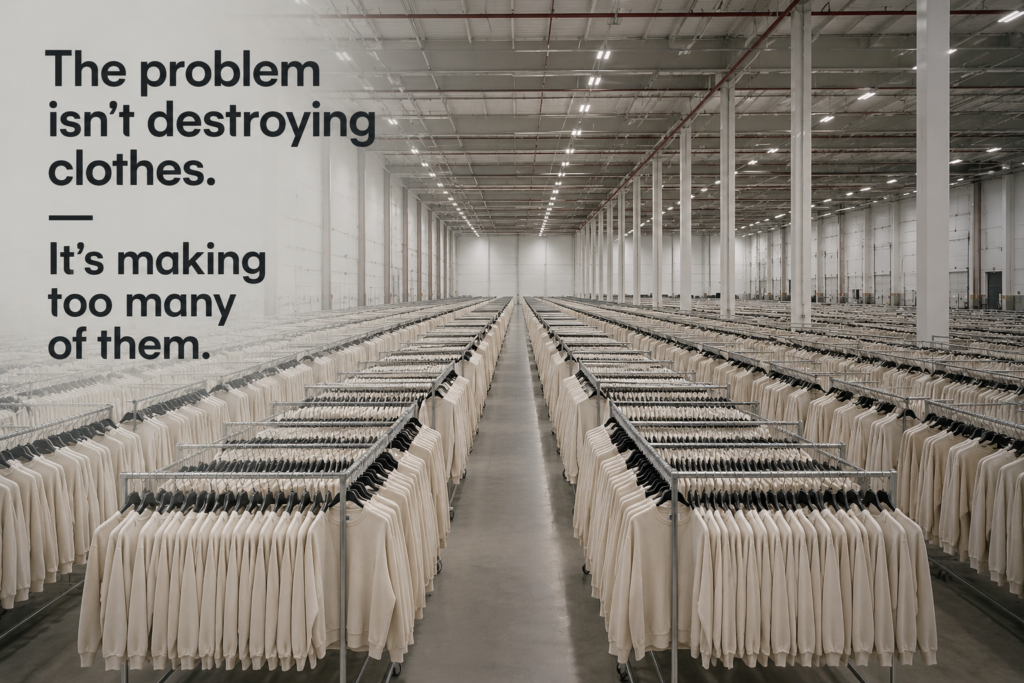
Huge landfill of textile waste questioning whether the French fast fashion law actually addresses the problem

The French fast fashion law: why are European brands exempt?


The most controversial aspect of the legislation is not what it includes, but what it leaves out.

As Green Party lawmaker Charles Fournier pointed out during the parliamentary debate, the original proposal was “considerably scaled back”. European fast fashion companies such as Zara, Kiabi and H&M are largely excluded from measures targeting ultra-fast-fashion platforms.

But is Zara’s business model fundamentally different from Shein’s? Both produce massive volumes of clothing, much of it low-quality and designed for short-term use. Both contribute to the same environmental crisis. Yet under this legislation, French and European fast-fashion giants face no penalties, no advertising bans, and no regulatory pressure.

If the environmental objective is to reduce the impact of disposable fashion, why should similar business models be treated so differently?

This is the same question we raised in December when the EU approved the Extra-EU parcel tax. If fast fashion is destructive and unsustainable, on what basis should its European version be exempt from comparable measures?

This isn’t environmental policy. It’s industrial protectionism dressed in green clothing.

A fragmented European approach


The French law also highlights a broader problem: Europe still lacks a coherent strategy.

In December 2025, the EU introduced a €3 charge on parcels valued below €150 entering the bloc from outside the EU.  Italy followed with its own €2 per-parcel levy, explicitly projecting €245 million in annual revenue. 
At the time, we noted a critical flaw: the tax applies per parcel, not per item. Three items shipped together incur the same €3 charge as a single item – which incentivises consolidation, not reduced consumption.

Now France has introduced a different system altogether: a per-item fee that specifically targets Asian platforms while leaving European competitors untouched.

The result is a patchwork of national and European measures rather than a coordinated policy addressing the environmental impact of fast fashion across the Single Market.

If Europe is serious about tackling overproduction and textile waste, shouldn’t the response be equally consistent?

The uncertainty surrounding the advertising ban


Among the law’s most significant provisions is the ban on advertising by ultra-fast fashion companies, including influencer promotions.

As explained above, the advertising ban only applies to companies classified as ultra-fast fashion under the law’s scoring system.

However, its future remains uncertain. The European Commission has questioned whether this measure is compatible with EU law. France argues that it is relying on principles similar to those used to regulate advertising for products such as alcohol and cigarettes, but if the Commission ultimately disagrees, the ban could become unenforceable.

And if the ban falls, what’s left? A per-item fee that – even at its maximum €20 by 2030 – remains capped at 50% of the product’s pre-tax price. For a €10 item, that means a maximum fee of €5. Hardly prohibitive.

This raises a troubling possibility: was the law designed to look tough while containing a built-in escape clause? 

The French government can claim victory on environmental grounds, but if the key measures are struck down or prove unenforceable, the actual impact will be minimal.

The revenue question remains unanswered


When we analysed the EU parcel tax in December, we asked whether measures presented as environmental policy might also serve another purpose: generating public revenue. 12 million parcels per day at €3 each would generate over €13 billion annually – a staggering sum that would flow into government coffers.

The French law attempts a more virtuous framing – fees will go “towards collection and recycling infrastructure.” But without transparency on how much will actually be collected, whether it will genuinely fund recycling capacity, or if the infrastructure can even handle the volume, scepticism remains warranted.

Will the fees collected from Shein purchases be used to build actual recycling facilities? Or will they disappear into general budgets while the mountains of textile waste continue to grow?

What genuine reform would look like

If Europe were truly serious about addressing fast fashion’s environmental impact, we would see measures that apply equally to all players – regardless of their country of origin. 

Genuine reform might include:

  • Minimum sustainability standards for all clothing sold in the EU
  • True cost pricing that accounts for environmental externalities
  • Product durability requirements and mandatory repair rights
  • An outright ban on destroying unsold inventory
  • Supply chain transparency to address environmental and forced labour concerns


Instead, we’re getting a fragmented, inconsistent approach that protects domestic incumbents while appearing to take action.

Final thoughts


The French fast fashion law is not without merit. It signals that European policymakers increasingly recognise the environmental challenges posed by disposable fashion and represents one of the most ambitious attempts so far to regulate the sector.

But let’s not mistake it for what it isn’t. 

This is political theatre – a gesture that appears tough on Asian platforms while carefully exempting European brands whose business models are not fundamentally different.

The question we posed in December remains unanswered: if fast fashion is destructive — as we all agree it is — why are we protecting our own version of it?

Until European policymakers confront this contradiction honestly – and apply the same environmental standards to Zara, Kiabi, and H&M that they apply to Shein and Temu – the French fast fashion law will remain what it appears to be: tariffs dressed as sustainability, with the environment serving as a convenient pretext for industrial protection rather than a genuine environmental objective.

The environmental challenges created by fast fashion are global. Any lasting solution will ultimately need to be equally consistent.

French fast fashion law: does it actually address the problem? Read More »

One piece, one story: The Utility Shorts by GoodNeighbors Shirts

Reading Time: 3 minutes

Genderless, artisanal slow fashion for modern humans — quality, comfort, timeless style


This is The Utility Shorts by GoodNeighbors Shirts.
In a system that produces tonnes of disposable clothing, we curate: one piece, one story. A radical view for ethical and aesthetic resistance — meaningful garments, an expression of good design. Slow fashion — made to last, made by hand.

The Utility Shorts arrive with quiet versatility. They sit with ease — relaxed yet refined. The design speaks in clean lines and purposeful simplicity: a straight-leg silhouette in a sophisticated grey. Lightweight TorayDotAir against the skin. The fabric is not merely woven; it is engineered — highly breathable, stretchy, and water-repellent, ready for the unpredictability of the day. The elasticated waistband and adjustable drawstring offer a personalised fit — an invitation to move without constraint. Two side slit pockets and a single buttoned pocket at the back complete the piece — an invitation to carry what matters, without the bulk.

It honours the creativity of meaningful design: the function of a short that adapts to movement. The comfort of shorts made for real days.

Grey — of morning mist over stone, of weathered driftwood, of a city skyline at dusk. A neutral that grounds, that lets the wearer shine. 


Model wearing The Utility Shorts by Goodneighbors Shirts with a white tank top and black leather sandals on a grey background.

Genderless, artisanal trousers for modern humans


The design:
Straight-leg shorts with an elasticated waistband and an adjustable drawstring. Two side slit pockets. One buttoned pocket at the back. Minimal, functional, refined. Made in TorayDotAir — lightweight, breathable, stretchy, water-repellent. Made in Japan.

The make:
Made in Japan — by GoodNeighbors Shirts, a small artisanal brand revered for its textile expertise and natural-dyeing techniques. This denotes more than origin — it signifies integrity: a genuine commitment to craftsmanship and style. Every stitch — from precise construction to sustainable production — reflects skill and purpose, ensuring a garment that stands apart. Every detail is curated with care. Each piece is produced in limited runs.

The Utility Shorts: minimalist design that moves with you


The Utility Shorts offer something unique: comfort that adapts, style that stays crisp. Designed for movement and for rest. From morning errands to evening walks, from the studio to the coast, they simply work.

How to style:

For the studio: worn with a tailored cotton shirt or a fine-gauge knit. Add a lightweight blazer and loafers. The clean grey silhouette keeps it polished without pretence. A uniform that settles into the rhythm of the day. 

For the city: paired with a simple white tee or an oversized pull and flat sandals. The technical fabric whispers performance; the drawstring waist says ease. Walk with purpose, arrive unruffled.

For the coast: thrown over a swimsuit or worn with a breezy overshirt. The lightweight fabric dries in moments and resists the salt air. Roll the hem, feel the sun. From beach bar to boardwalk, it simply works.

For the modern humans who curate, not consume — whose wardrobe is a library of dog-eared favourites, each piece a chapter in their story.

🌟 The Utility Shorts – GoodNeighbors Shirts
Limited quantities. Like the fabric itself — lightweight, responsive, quietly remarkable. Designed for daily wear. For personal style. For life.

🖤 To enquire: DM @suite123 | WhatsApp Email

Available by appointment for private shopping in Milano or worldwide — from screen to doorstep.

P.S. Ask us why the drawstring changes everything. Or how design, comfort, and fabric become a philosophy, not just a process. We are here for the conversations, not just the transactions.

One piece, one story: The Utility Shorts by GoodNeighbors Shirts Read More »

One piece, one story: The Clay Indigo Short Sleeve by GoodNeighbors Shirts

Reading Time: 4 minutes

Genderless, artisanal slow fashion for modern humans — care for the planet, style for the people


This is The Clay Indigo Short Sleeve Shirt by GoodNeighbors Shirts.
In a system that produces tonnes of disposable clothing, we curate: one piece, one story. A radical view for ethical and aesthetic resistance — meaningful garments, an expression of good design. Slow fashion — made to last, made by hand.

The Clay Indigo Short Sleeve arrives with quiet distinction. It sits with ease — relaxed yet refined, tailored yet effortless. 100% cotton denim against the skin. The design features a distinctive clay-indigo hue — a colour born from the earth itself, not from synthetic vats. The wide open collar with its small loop invites versatile styling. A single chest patch pocket holds the day’s essentials. Two side slits and a back yoke with two pleats — plus a single loop — allow the fabric to move with you, not against you. The front closes with sustainable Takase shell buttons — repurposed from the food industry — each one carrying the subtle iridescence of the sea, a small act of waste reduction.

It honours the creativity of meaningful design: a shirt coloured through traditional clay-dyeing techniques, creating a depth and character no synthetic process can replicate. A garment that holds memory — of water, of place, of craftsmanship — yet feels entirely of the moment. Honest, understated, and made to be lived in.

Clay indigo. Earth after rain, riverbeds at dusk, pottery worn by time. The iron-rich clay of Fujioka City — Aoki’s birthplace — sinks into each fibre, leaving a soft texture and a mottled gradient only nature could create. Every piece distinct. Each a landscape.

The Clay Indigo Short Sleeve — naturally dyed cotton shirt by GoodNeighbors Shirts. Suspended against a muted grey backdrop. Earth-born colour, tailored ease.

Natural dye, tailored comfort — genderless slow fashion for modern humans


The design:
Relaxed-fit short-sleeved tailored shirt. 100% cotton denim. Distinctive clay-indigo colour — naturally dyed with red clay from Gunma. Wide-open collar with a small loop for versatile styling. Single front chest patch pocket. Two side slits. Back yoke with two pleats and a single loop for ease of movement. Sustainable Takase shell buttons — repurposed from the food industry. Fine stitching details: 90/20 stitch count. Made in Japan.

The make:
Made in Japan — by GoodNeighbors Shirts, a small artisanal brand revered for its textile expertise and natural-dyeing techniques. This denotes more than origin — it signifies integrity: a genuine commitment to craftsmanship and style. Every stitch reflects skill and purpose, ensuring a garment that stands apart. 
Each piece is hand-dyed by designer Akira Aoki using traditional mud-dyeing techniques. The iron-rich clay from his homeland naturally penetrates the fibres. No chemicals are used. Both soil and water are returned to nature after use. Every detail, from the shell buttons to the final pleat, is curated with care. Produced in limited runs.

The Clay Indigo Short Sleeve Shirt: earth-born colour with a story to tell


The Clay Indigo Short Sleeve Shirt offers a rare balance of character and versatility. Open, buttoned, or with a scarf through the loop — it’s yours to shape. From morning coffee to evening aperitivo, from studio to street, it simply works.

How to style:

For the studio: worn loose over a simple tank or fine-gauge tee. The open collar traces the line of the collarbone — understated, unhurried. The clay-indigo holds the light like dried river earth. Roll the sleeves once or twice. Let the hem fall where it falls. A shirt that doesn’t rush.

For the city: paired with tailored trousers or crisp denim. Button it — or leave it open like a second skin. Loop a scarf through the collar for a whisper of colour. The clay speaks of tradition; the cut speaks of today. Walk like you know where you’re going.

For the weekend: styled open over a white tank, tucked into wide pants that sway. The side slits grant freedom. The back pleats make space for the long lunch, the lingering conversation. The pocket holds a phone, a metro card, a pressed flower. The cotton remembers the clay it came from.

For the modern humans who curate, not consume — whose wardrobe is a library of dog-eared favourites, each piece a chapter in their story.

🌟 The Clay Indigo Short Sleeve – GoodNeighbors Shirts

Limited quantities. Like a river stone — smooth, distinctive, shaped by time and tide. Designed for daily wear. For personal style. For life.

🖤 To enquire: DM @suite123 | WhatsApp | Email

Available by appointment for private shopping in Milano or worldwide — from screen to doorstep.

P.S. Ask us why the collar loop changes everything. Or how earth, water, and fabric become a philosophy, not just a process. We are here for the conversations, not just the transactions.

One piece, one story: The Clay Indigo Short Sleeve by GoodNeighbors Shirts Read More »