Fashion & lifestyle

Cloud Dancer: Pantone’s most controversial colour yet

Reading Time: 5 minutes

Why Pantone’s 2026 Colour of the Year is sparking global debate — and what we’re projecting onto it


Cloud Dancer, Pantone’s soft white chosen as the 2026 Colour of the Year, is perhaps the most controversial selection in the brand’s history. Critics have dismissed it as boring, tone-deaf, or racially insensitive — a stark contrast to Pantone’s stated message of peace and new beginnings. As the first white shade chosen in 26 years, it has sparked accusations of “rage bait” and drawn unsettling cultural parallels.

Yet for us — having opened an all-white boutique in 2006 —  this hue resonates deeply. It feels like home—a colour that never overpowered but elevated. 

So, let’s take a closer look.
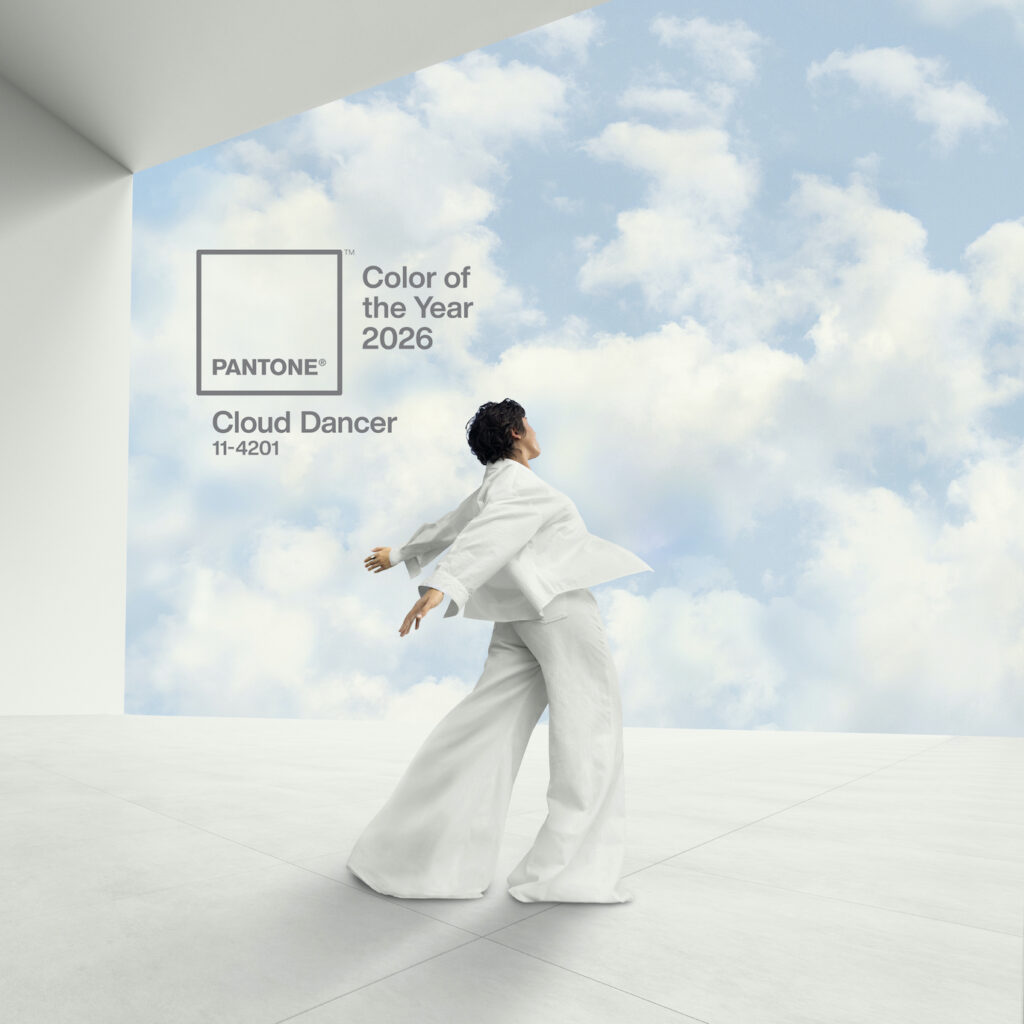
A conceptual image introducing Pantone's 2026 Color of the Year, Cloud Dancer. A woman in a flowing garments of a tranquil shade moves gracefully. She is posed as if dancing or floating effortlessly between wispy clouds and a smooth, reflective white floor. The overall scene evokes a feeling of lightness, calm, and ethereal movement.

Pantone: Cloud Dancer


Pantone has selected PANTONE 11-4201 Cloud Dancer, a serene, billowy white, as its 2026 Colour of the Year. Described as an ethereal hue, it symbolises a calming influence and a desire for a fresh start, encouraging quiet reflection and creativity.

The colour represents a conscious step away from relentless demands, promoting rest, focus, and an aspiration for peace and unity. Pantone will also spotlight artists throughout the year to create their own interpretations of the colour.

From the official release:

“At this time of transformation, when we are reimagining our future and our place in the world, PANTONE 11-4201 Cloud Dancer is a discrete white hue offering a promise of clarity,” says Leatrice Eiseman, Executive Director of the Pantone Color Institute. “The cacophony that surrounds us has become overwhelming, making it harder to hear the voices of our inner selves. A conscious statement of simplification, Cloud Dancer enhances our focus, providing release from the distraction of external influences.”

“We are living in a transitional time where people are seeking truth, possibility, and a new way of living,” added Laurie Pressman, Vice President of the Pantone Color Institute. “PANTONE 11-4201 Cloud Dancer is an airy white hue that exemplifies our search for balance between our digital future and our primal need for human connection—a liminal space that is a launchpad for creative expression—as individuals and communities are experimenting beyond traditional boundaries, opening the door to increased imagination and innovation.”

Cloud Dancer: applications of the colour of the year 2026


Far from being a “non-colour”, Pantone positions Cloud Dancer as a foundational and highly functional shade. Its key roles are to:

  • Act as a structural colour that scaffolds and harmonises the wider spectrum.
  • Provide adaptability, creating both serene monochrome looks and striking contrasts.
  • Bring an airy lightness to any product or environment.

Cloud Dancer in apparel


In fashion, Cloud Dancer serves multiple purposes:

  • A wardrobe anchor: it is the perfect, understated base for monochromatic dressing, from classic shirts and jeans to activewear and suiting.
  • A textural statement: the colour evokes billowy softness through spongy, puffy silhouettes, oversized padding, and rounded, cocooning shapes. It is realised in textures like:
    • Down- or foam-filled cloths
    • Fluffy furs and plush wools
  • An airy counterpoint: its vapour-like quality also lends itself to diaphanous chiffons and fluid jerseys, creating floaty, versatile pieces.
  • The ultimate support: it mixes effortlessly with all other colours, providing a sophisticated contrast that lets brighter hues stand out.

Cloud Dancer in fashion accessories & footwear


For accessories, Cloud Dancer introduces modernity and quiet elegance:

  • Universal compatibility: it mixes effortlessly with every colour palette, adding sophistication without overpowering an ensemble.
  • Dual textural impact:
    • In soft accessories like chunky knits and natural fibres, it offers comforting, conforming textures.
    • In structured pieces like fine jewellery, eyewear, belts, handbags, and footwear, it provides an understated, modern sophistication.

The controversy


The choice of Cloud Dancer has generated significant debate for several key reasons:

  • An unexpected letdown: after a series of bold, vibrant selections, many felt a neutral white was a surprisingly passive and uninspiring choice.
  • Perceived insensitivity: some critics viewed the promotion of a white hue as tone-deaf, given the current global discourse on racial justice.
  • A “non-colour”: public reaction was swift, with the shade widely described online as “bleak,” “dystopian,” and a signal of creative or economic recession.
  • Seen as provocation: some commentators suggested the selection was deliberate “rage bait”—a controversial move designed to generate publicity through outrage.

Pantone’s defence


In contrast, Pantone frames Cloud Dancer as a purposeful and meaningful response to the current moment. The Pantone Colour Institute describes it as a “billowy, balanced white” intended to symbolise calm, clarity, and a blank slate.

Laurie Pressman, Vice President of the Pantone Color Institute, elaborated:

“Similar to a blank canvas, Cloud Dancer signifies our desire for a fresh start. Peeling away layers of outmoded thinking, we open the door to new approaches. An airy white hue, Cloud Dancer opens space for creativity and allows bold ideas to emerge.”

A different perspective


This defence raises a compelling counterpoint to the accusations of creative bankruptcy. We would argue the opposite: how can a blank canvas represent a lack of creativity? It is, after all, the foundational starting point for every painter—the very space where bold ideas are born, and innovation begins.

Final thoughts


Ultimately, Cloud Dancer stands as one of Pantone’s most polarising choices, not just for its departure from vibrant tradition, but for its profound and perhaps unintended resonance with contemporary social currents.

A colour, after all, is a mirror. One sees in it what one brings: culture, context, and personal sensibility. While another neutral — black — might have felt more attuned to the current global climate, it lacks the essential quality of hope.

And in the end, isn’t that what we’re all looking for? Not a colour that reflects the weight of the now, but one that makes space for what comes next.

Cloud Dancer: Pantone’s most controversial colour yet Read More »
13 more brands under investigation in Milan for labour exploitation

Reading Time: 5 minutes

A crisis for the fashion industry, or a reflection of the economic system at large?


Authorities in Milan are cracking down on labour exploitation in the fashion supply chain, placing 13 more brands under investigation after a major operation revealed severe irregularities. A sweeping inquiry has uncovered new allegations of abusive conditions linked to several manufacturers, prompting prosecutors to widen the scope of the probe. The Milan Prosecutor’s Office has now demanded documentation from 13 major fashion brands to demonstrate their compliance with labour and safety laws. Garments tied to these companies were discovered in warehouses run by Chinese subcontractors, leading investigators to call for deeper scrutiny.

From D&G and Prada to Adidas, Versace, and Gucci, the Milan Prosecutor’s Office has sent documentation requests to verify compliance with safety and legal controls.

But is labour exploitation unique to fashion, and to Italy, or is it a feature of the economic system itself?

The Milan probe: fashion & illegal hiring


Once again, the fashion industry is in the spotlight. Another 13 major groups have come under the scrutiny of Milan prosecutors. Late on Tuesday, 2 December, labour protection officers of the Carabinieri, under the mandate of Prosecutor Paolo Storari, carried out raids at corporate offices, demanding documents proving that safety and legal compliance checks had been performed along the supply chain.

Within days, the companies must provide investigators with the requested materials. Based on this documentation, the prosecutor’s office will decide whether to seek judicial oversight—under Italy’s anti-mafia legislation—or bring formal charges related to illegal labour intermediation (the so-called caporalato system) under Law 231.

Milan: 13 more brands under investigation


13 more brands under investigation — who are they?
The brands required to submit documentation include Missoni, Off-White Operating, Adidas Italy, Yves Saint Laurent Manifatture, Givenchy Italy, Ferragamo, Versace, Gucci, Pinko, Prada, Coccinelle, Dolce & Gabbana, and Alexander McQueen.

Investigations have identified cases of “Chinese migrant labour being used under conditions of severe exploitation,” with work performed “on behalf of” the brands listed. Workshops visited across Lombardy, Tuscany, and Marche revealed hazardous conditions, extremely low pay, excessive hours, and workers without contracts, protective equipment, or overtime compensation—many threatened because of their irregular immigration status.

The documentation requested from the companies is extensive: registry extracts, contracts, organisational charts, role descriptions, board minutes from January 2023, internal control system reports, supplier accreditation procedures, internal audit plans and results, monitoring and traceability plans, supplier lists, and financial statements for 2023–2024, including sustainability reports.

The prosecution appears to be urging companies to regularise their operations.

Patterns of exploitation 


This investigation is part of a broader effort to dismantle subcontracting networks marked by severe labour exploitation. Previous cases involving Alviero Martini, Armani Operations, Loro Piana, Valentino Bags, and Manifatture Dior revealed similar dynamics. Tod’s was also investigated, although judicial oversight was denied due to jurisdictional and substantive considerations.

Except for the unusual Tod’s case, interventions have not begun from direct sweatshop conditions linked to major brands. Instead, they start from the observation that checks along supply chains were insufficient or ineffective, allowing illegal practices to persist.

Judicial administration—already implemented for certain companies—aims to establish transparent supplier registries. Separately, illegal labour charges may lead to managers being held personally accountable in court.

Made in “Chitaly”: Chinese workers operating in Italy


In a post dedicated to the contradictions of 1 May 2023, we discussed “Made in Chitaly” to illustrate how the abuses seen in Rana Plaza or in the forced labour of Uyghurs in China have parallels in Italy. Thus, we see a clear, global pattern.

To preserve high profit margins, brands outsource production to Chinese-run workshops, requesting the lowest possible prices. This keeps the mythology of “Made in Italy” alive. At least for those with no understanding of quality but who seek only a famous label. Minimum wage is nowhere to be found.

Yet major publications, including Business of Fashion, frame this as an Italian issue. But is it truly confined to Italy?

From subcontracting to the system: the wider mechanism


While these cases occur in Milan, the underlying pattern is not local but global. Labour exploitation involving Italian brands may describe the immediate facts, yet the mechanism extends far beyond Italy. Opaque, multilayered subcontracting chains are deliberately structured to reduce costs through distance and deniability. Each additional layer dilutes responsibility, making it easier for major groups to claim ignorance while benefiting from lower production costs.

Fashion is not unique in this respect. The same system is at work across logistics, agriculture, electronics, beauty, automotive manufacturing, and more. Wherever cost reduction becomes the primary objective, labour is the pressure point.

The real issue: capitalism as the underlying engine


The fashion industry is now deeply entrenched in global capitalism, shaped by conglomerates such as LVMH, Kering, and Richemont, as well as private equity. In fact, luxury giants and shareholder rule. Publicly traded empires prioritise profit margins, scalability, and acquisitions. Fashion is no longer about creativity—it is a financial asset.

Let’s be direct: sweatshops and fashion are connected, but fashion did not invent exploitation. It merely mirrors the logic of the economic system that governs it. What we see in these investigations is not an isolated malfunction but a structural feature of capitalism: extraction, exploitation, and the relentless pursuit of cheaper labour.

There is no fully ethical business under capitalism—only degrees of complicity.

We suggest reading this post: Behind the Seams: Fashion Industry & Forced Labour

Social washing as the final disguise


As public scrutiny increases, so do corporate campaigns emphasising social responsibility. This is social washing: the social counterpart of greenwashing. Marketing narratives multiply, while evidence remains scarce. Ethical imagery obscures extractive practices. The gap between branding and reality continues to widen.

In this context, social washing becomes the final layer of the system—an effort to reassure consumers while the underlying logic remains unchanged.

Final thoughts


The expansion of the probe, with 13 more brands under investigation in the Milan area, sends a clear signal. It’s a stark warning for the industry — but will shoppers take notice, or simply shop as usual?

Yet, this is not a uniquely Italian scandal, nor a flaw specific to the fashion industry. It reflects a global economic structure that treats labour as a cost to be minimised. Social responsibility campaigns may attempt to soften the narrative, but they cannot obscure the systemic logic that produces these outcomes. Read: capitalism.

Until that logic is questioned, cases like these will continue to surface—across fashion and every other industry built on the same foundations. And everyone will just say: we didn’t know…

13 more brands under investigation in Milan for labour exploitation Read More »

Clay dye processing: the colour of the earth

Reading Time: 3 minutes

A story of slow fashion from Japan: mud-dyeing born from the vision of Akira Aoki, founder of GoodNeighbors Shirts


Clay dye is the colour of the earth itself. This mud-dyeing process began as the vision of designer Akira Aoki, who founded a thoughtful slow-fashion brand. One that brings together fabric treatment and modern design.

We are all born from the same earth. Precisely this connection inspired the designer to capture the natural hues of the soil in a cotton shirt. Through repeated experimentation with local clay—each season lending its own character—the brand has created shirts with a uniquely natural colour and texture.

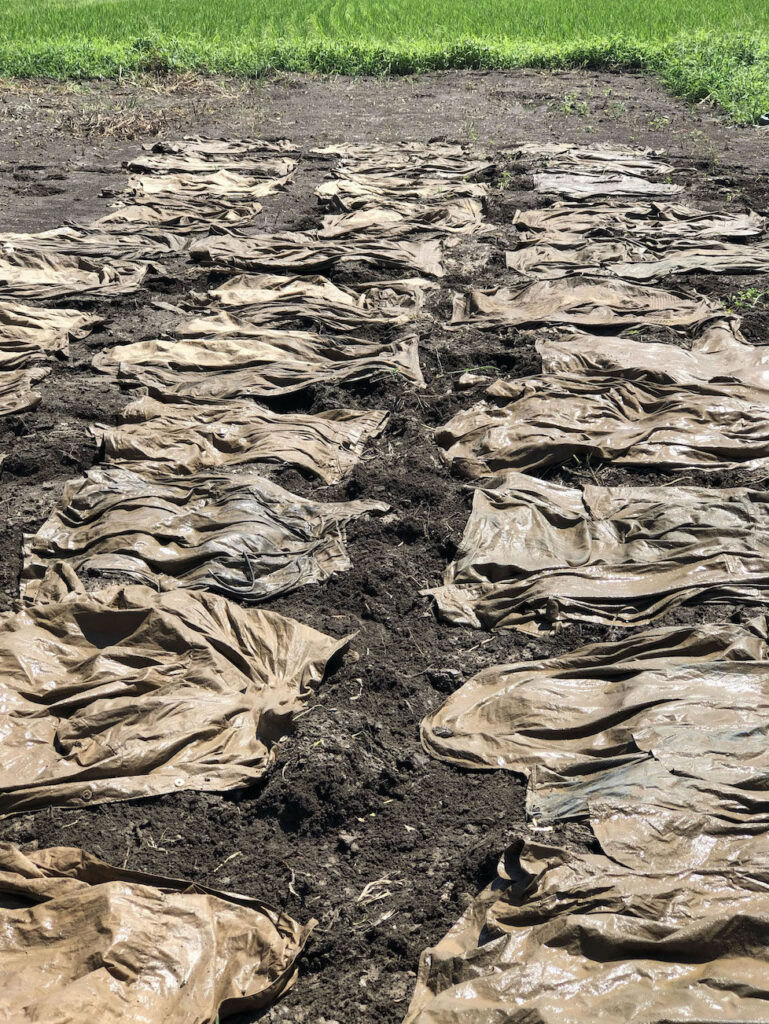
A series of GoodNeighbors Shirts laid on clay soil during the traditional Japanese mud-dyeing process, with green grass in the background.
Clay dye processing by GoodNeighbors Shirts, Japan

Clay dye: a Japanese story of earth, craft, and style


Fujioka City in Gunma Prefecture, northern Kantō, is where Akira Aoki was born and raised. Surrounded by mountains and rivers, the area is blessed with high-quality clay and pure water. For centuries, it has been a major producer of earthenware, including Haji ware, Sue ware, haniwa figurines, and roof tiles.
Fujioka roof tiles, in particular, trace their origins to the founding of Ueno Kokubunji Temple—a tradition spanning more than 1,200 years.

The region’s distinctive red clay comes from the Kantō loam layer, formed by volcanic ash from Mount Akagi and Mount Haruna. Rich in iron-bearing clay minerals, its fine particles retain moisture well and offer high permeability.

Aoki’s family moved to Fujioka during the Edo period and has farmed the land for over 400 years.
Drawing on the nutrient-rich red soil and natural groundwater from these fields, Akira—who studied dyeing and weaving at Tama Art University—hand-dyes each piece himself to create his mud-dyed products.

The special quality of mud-dyeing lies in the thick, clay-like paste mixed with groundwater. Its high iron content allows clay minerals to penetrate deep into the fibres. This process swells the yarn, smooths its edges, and enhances the fabric’s softness and texture.

The finished garment carries the beautiful, uneven colouration of the clay itself—as though gently coated in earth.

These mud-dyed products are coloured using only soil and water. No chemicals. Consequently, after dyeing, the clay returns to the earth, and the water nourishes the soil once more.

Through this deeply rooted craftsmanship, the brand aims to foster new values that connect the environment, people, and society to the future.

GoodNeighbors Shirts: shirts that breathe in Tokyo


The name GoodNeighbors means “good buddy, good neighbour.” The brand values shirts that are comfortable to wear every day, and that can be shared easily and without pretence. Its original designs draw inspiration from diverse music and art cultures, each carrying a subtle, distinctive character.

Made in Tokyo, the shirts are carefully cut with a modern silhouette; skilled artisans in the city’s older districts then complete the craft.  They are made to last, blending delicate tailoring with an effortless, relaxed feel—like a breath of fresh Tokyo air.

Final thoughts


Even in a market dominated by top brands and fast fashion, we remain committed to seeking out small, thoughtful gems. Ultimately, independent brands are where you will find considered design and more sustainable practices.

Clay dye processing avoids chemicals, and both the soil and the water return to nature after the dyeing process.

In a fashion system still ruled by speed and scale, mud-dyeing stands as a quiet act of resistance. In essence, Aoki’s work reminds us that colour can come from the earth, not chemicals; that craftsmanship can restore our connection to place; and that truly sustainable fashion begins with respect. For materials, for makers, and for the land itself.

Clay dye processing: the colour of the earth Read More »

Altagamma Observatory 2025: a study in cautious optimism

Reading Time: 4 minutes

While the luxury market is apparently stable, the report’s own data reveals a sector in profound transition


The recent Altagamma Observatory 2025 report, presented in Milan, offers a seemingly positive outlook: a stable global high-end market of €1.44 trillion and a forecasted +5% recovery in 2026. However, a closer reading reveals a more complex and less reassuring picture. 

The report adopts what we could describe as a form of cautious, institutional realism. It is a framing that often feels softened, designed to reassure the industry rather than deliver unvarnished truths.

While confidence may attract investors, change can only come from a clear-eyed assessment of the challenges. The industry’s preference for good news should not come at the expense of truth, which is the real foundation of credibility and meaningful transformation.

The core contradictions: stability versus a sector in crisis


The report’s central narrative of stability is undermined by its own data. In fact, these data paint a portrait of a market defined by polarisation, where opposing realities coexist.

1. The myth of a monolithic market

The headline figure of €1.44 trillion masks severe divergences. While the ultra-wealthy continue to spend on jewellery (+4/6%) and experiences, the aspirational consumer is retreating. This is starkly reflected in the collapse of leather goods and footwear (-7/-5%)—the heart of accessible luxury. This isn’t a slowdown. It is a clear signal that the customer who once bought bags and shoes as status symbols is now struggling or has shifted priorities.

2. A fragmented and defensive fashion sector

This polarisation is acutely felt in fashion. The moderate +4% growth in apparel hides a reality where only a few brands thrive while others suffer—a dynamic the report itself describes as “highly polarised among brands.” This fragmentation is exacerbated by:

  • The threat of ultra-fast fashion. Carlo Capasa (CNMI) explicitly identifies the “growth of ultra-fast fashion products imported from China” as a “crucial issue to address,” framing it as an existential risk.
  • A crisis in distribution. Traditional wholesale channels and department stores are confirmed to be “in crisis,” undermining the foundational sales model for many brands.
  • Defensive brand strategies. The reliance on outlets to clear unsold stock and the forecast that high-end brands will introduce “lower price proposals” in 2026 are not signs of health. They indicate an inability to sell at full price and a risk of brand value dilution.
3. Geopolitical optimism versus ground-level realities

The reported “recovery” in the Americas (+0/+2% in 2025) feels tenuous against the backdrop of a weak dollar, tariffs, and a climate of uncertainty. This growth stems not from a buoyant general economy but from the resilience of the Top Tier. High Net Worth Individuals drive this, with their domestic spending and higher average transaction values propping up the figures.

Altagamma Observatory 2025: the “sugar-coated” lens of the report


These contradictions are presented through a specific, mitigating lens, which explains the report’s softened tone.

  1. A partisan purpose. 
    As a foundation for Italian luxury, Altagamma’s primary role is to defend and promote the sector. Its objectives—to reassure investors, signal resilience to the government, and promote the Made in Italy system—naturally discourage alarmist messaging.
  2. Corporate lexicon.
    The consistent use of terms like stableresilient, and consolidate serves to normalise stagnation and decline. Yet the report presents a -7% drop in a core category as part of a broadly stable landscape.
  3. The “Yes, but…” rhetoric.
    The report consistently employs a technique of admitting a problem only to immediately counter it with hope. For instance: “Yes, China is down, BUT HNWIs are increasing”. So, this creates a glass-half-full narrative that can obscure the severity of the situation for many players.
  4. Long-term faith over short-term pain.
    The emphasised +5% growth forecast for 2026 acts as a lifeline, encouraging the industry to view current difficulties as “temporary headwinds” on the path to a “bright future.”

Final thoughts


The Altagamma Observatory 2025 provides the most realistic photograph yet of a luxury market that is no longer a monolith, but a collection of micro-markets with opposing dynamics. So, is it sugar-coating the situation? Yes, in part.

However, for the attentive reader, it also highlights undeniable structural shifts, even if wrapped in boardroom language. It makes clear that the aspirational consumer is in crisis, the old model of endless price increases is broken, and the new drivers are value, ethics, and experiences.

In conclusion, the report is convincing in its diagnosis of key trends. But remains overly optimistic and diplomatic in its tone. For a truly dispassionate analysis, one must cross-reference its findings with reports from investment banks and independent analysts who are not tasked with safeguarding an entire ecosystem. 

Ultimately, Altagamma is doing its job. It is presenting Italian luxury as resilient and forward-looking, despite the evidence of a painful and fundamental restructuring.

But one question arises: do investors truly fall for data so cleverly dressed up?

Altagamma Observatory 2025: a study in cautious optimism Read More »

Pambianco Fashion Summit: thirty years of fashion, from designers to large groups. What future for Made in Italy?

Reading Time: 4 minutes

When sustainability becomes a buzzword and growth remains the real goal


We have just followed the 30th Pambianco Fashion Summit. Once again, sustainability was the magic word everyone loved to repeat. But immediately afterwards came the true priority: growth. Always growth.

In this panel, ultra-fast fashion from China plays the villain, while Northern European fast fashion receives applause. After all, H&M is on stage to explain circularity.

And so the question returns, louder after every panel:
What haven’t these CEOs, presidents, managers, founders and the rest understood about the meaning of sustainability?
Because the more they say it, the more the word sounds like a joke.

Consumers want authenticity—so why is fashion still pretending?


Erika Andreetta (PwC Italy) highlights what already seems obvious:

  • People want reliable, transparent, consistent brands. In short, authenticity.
  • They seek alignment with cultural values.
  • Second-hand is growing three times faster than traditional fashion.
  • Outlet shopping is growing five times faster.
  • Value matters: products aligned with personal values, at the right price.
  • Brands still produce too much—and don’t sell their overproduction.
  • Multi-brand stores have become the places where people actually look for something new.

As for European fashion, the disillusionment is generational:

  • Young people don’t see originality.
  • Baby boomers have other priorities.
  • Gen Xers find prices unjustifiable.

Fashion listens, but selectively.

Pambianco Fashion Summit: Sburlati, “a system under attack”


According to Sburlati (Confindustria Moda), the fashion ecosystem is under pressure on three fronts:

  1. From the East: exports down 3%, imports up 5%, fueled by China (+18%).
    Postal packages under €150 pay no customs duties or VAT—an obvious distortion.
  2. From the West: a weak dollar, double tariffs in the US, and a push for local brands.
  3. From within: a fragile Italian market.

Sburlati came to a dramatic conclusion:

“We are on the brink of collapse and risk ending up like the automotive industry.”

Capasa (CNMI): the luxury narrative is shifting


A negative narrative surrounds luxury — one that started in China.
Proposed solutions include:

  • An anti–fast fashion law with tariffs across the board.
  • A French-style approach: taxes on packages and a ban on misleading advertising.
  • Support for new businesses at a time when more are closing than opening.

Capasa adds a point on young consumers: “Young people are all environmentalists. We must explain to them that fast fashion is not. We need to explain the value of quality and creativity.”

And then… H&M entered the room


This is where the contradictions become glaring.

The industry complains — rightly — about Chinese ultra-fast fashion. However, it then invites H&M, a symbol of Western fast fashion, to discuss circularity and therefore “sustainability.”

So yes, we ask again:
What exactly have these leaders failed to understand about sustainability?
Can a brand built on overproduction ever be sustainable?
Because every time fast fashion is framed as “sustainable,” we’re entering the realm of greenwashing.

E-commerce


Another point raised: a shift in digital strategy is necessary.

  • Over 60% of brands are not ready.
  • Yet today, 80% of sales involve a digital touchpoint.

Clothing & sustainability

  • The idea of more durable, timeless garments is gaining traction — pieces suitable for multiple seasons and less overconsumption.
  • 54% of products are sold on sale. The second month of sales is the strongest — meaning consumers wait for the sales of the sales.
  • Millennials (28–44 years old) spend more — around 36 items per year.
  • Clothing is losing value; personal care and beauty are more engaging.
  • Women continue to consume a lot, but above all, they remain tied to fast fashion.
  • Gen Z is starting to think about quality, longer-lasting pieces, and niche products.
  • Young people are the demographic most sensitive to sustainability — but garments should not cost more than their traditional counterparts.
  • Gen Z wants clarity: What is a sustainable garment?
    A simple question the industry will probably never answer. But we do — you’ll find the answer in This Is Greenwashing here.

Final thoughts


In conclusion, the 30th Pambianco Fashion Summit analysed fashion, from designers to large groups, and attempted to explore what the future holds for Made in Italy.

If sustainability continues to coexist with an obsession for infinite growth, with overproduction, with contradictory narratives, the word will lose all meaning.

Until the industry stops applauding whoever says “circularity” the loudest and starts reducing — truly reducing — its impact, these summits will remain conversations about sustainability without actual sustainability.

Pambianco Fashion Summit: thirty years of fashion, from designers to large groups. What future for Made in Italy? Read More »