Fashion & lifestyle

Shiny Objects Syndrome: Unveiling Psychology Behind Consumer Behaviour

Reading Time: 3 minutes

Exploring the paradox: why people forget reality and support exploitation in fashion


Shiny Object Syndrome is the psychological idea where a person moves from one subject or object to the next, creating a constant distraction and a constant need for something new and exciting. This syndrome is present in the fashion industry with fashion trends, technology, news, social media, etc. 

Shiny Object Syndrome: encouraging overproduction from brands


In terms of the fashion industry, the control of Shiny Object Syndrome over society is what encourages fashion corporations to overproduce and contribute towards the abundance of textile waste and exploitation of labour. But our need for something shiny and new is costing the planet purchase by purchase. 

Unbreakable reputations despite concerning news
In April 2024, the Italian police exposed Giorgio Armani operations for using Chinese workers under an unauthorized subcontractor to make handbags and accessories. These workers were subject to unsafe working conditions and exploitation. Armani can also be traced to major water pollution scandals in China. Despite these concerning allegations, Armani maintains their reputation of being the pride of Italy and a loved brand worldwide. This contradiction is evident in other brands as well. 

The result: a vicious cycle
News and trends circulate so much that we forget the significance of events. Thus, when Armani releases their new collection we are too fascinated by the new fabrics, styles, and costs to remember how exactly these novelties were made. Thus, the Shiny Object Syndrome. Ultimately, we are showing brands that they can exploit human rights and the planet and get away with it. This must stop. 

Stopping the shiny object syndrome


Shiny Object Syndrome can reflect in many aspects of our life from relationships to our purchasing habits. If we are always searching for the next exciting thing, we will never be satisfied with what we have. 

To avoid shiny object syndrome you can:

1. Set achievable short-term goals
Setting short-term goals can divert our focus towards positivity and improvement during the week and help us work towards a greater goal. Personal motivation is key.

2. Focus on experience rather than substance and find meaning in smaller things
Spend money on experiences like dinner with friends and plan these experiences for something to look forward to. Also, find meaning in smaller things by reviewing your day and asking yourself what made you smile and how you can make someone smile tomorrow. 
When you do buy, buy thoughtfully. Invest in items where you can read about the story of the designer and feel the craftsmanship. Items that are unique to you and not just a trend.

3. Practice Gratitude
Gratitude always. Gratitude can be as simple as being grateful for a sunny day or the flowers blooming. Once we see what we appreciate, we can appreciate even more and accept a beautiful life.

Gratitude turns what you have into abundance.
Gratitude is so much more than saying thank you.
Gratitude changes your perspective of your world.

What really matters


In conclusion, brands are constantly feeding off our bad habits, not only exploiting their workers but they’re also exploiting their customers. Shiny Object Syndrome increases the profit of brands while decreasing your overall well-being and satisfaction with life. It is better for your health and for our social and economic environments to disengage from Shiny Object Syndrome and focus on what really matters to you.


✍ Credit: Post written by Joelle Elliott, an American scholar pursuing studies in Fashion at Cattolica University in Milan; currently interning with suite123.

Shiny Objects Syndrome: Unveiling Psychology Behind Consumer Behaviour Read More »

Reaffirming the Cultural Narrative of Fashion

Reading Time: 2 minutes

Exploring the threads of identity, style, and societal evolution


Reaffirming the cultural narrative of fashion helps in understanding its true essence and value, which goes way beyond the social media-generated fluff. In fact, that is not the style we like.

Fashion is culture, the culture of our times.
In other words, fashion serves as a reflection of culture – contemporary culture or any given one – offering insights into societal norms, values, and behaviours. From the style people wear, we can perceive women’s freedom or to what degree patriarchy rules. 

Identity, style, and societal evolution: the cultural narrative beyond fashion


The way we dress speaks volumes about us. From the brands we buy – which, by doing so, we endorse, championing their values; to our consumption habits and preferences. It encompasses our quest for specific fabrics, our discernment of quality and materials. And even extends to the lifespan of our purchases; the amount of waste we discard;  our regard for both the labour of others and the well-being of our planet. So, through the style people wear, it is possible to read their identities and values. 

The work of a designer, creating and putting out more stuff in our contemporary context, is particularly challenging. Their task is not talking sustainability but creating an exceptional design, beautiful pieces made to last and worth buying. Good design #formodernhumans intrinsically means for brands to make garments in respect of people and the planet. Less noise, more facts. And the proof of their intentions is that they are willing to make clothes in small batches. Quality, not quantity.

Reaffirming the cultural narrative of fashion aims to highlight that fashion is not merely about clothing but also about the deeper cultural currents shaping our world. 

All these details and information can tell us who we are and where we are heading as a society.
Fashion is culture, the culture of our times.

Reaffirming the Cultural Narrative of Fashion Read More »

Workers’ Rights in the Fashion Industry

Reading Time: 3 minutes

A reflection on the International Workers’ Day


As today we commemorate International Workers’ Day once again, it prompts us to pause and reflect on the state of workers’ rights within the fashion industry. International Workers’ Day is synonymous with Labour Day, annual holidays to celebrate the achievements of workers.

Some facts about workers’ rights in the fashion industry:


1. “Luxury brands show poor efforts to reduce forced labour.” (source KnowTheChain). Specifically, KnowTheChain evaluated fashion companies’ adherence to International Labour Organization standards in their supply chain, establishment of internal responsibilities to address forced labour risks, support for worker empowerment, and implementation of programs to address forced labour allegations. So, companies received scores ranging from zero to 100, with the average fashion company scoring 21. Luxury companies rank second lowest in average score among all sub-sectors, making them particularly flagrant offenders.
In short, among the luxury companies assessed:
LVMH: 6 out of 100
Prada: 9 out of 100
Kering: 23 out of 100
Only seven out of 20 disclosed the complete first tier of their suppliers, including names and addresses.

2. Alviero Martini: under investigation for starving wages.

3. Giorgio Armani Operations: put into receivership for labour exploitation.  Workers in Chinese-run workshops paid 2-3 euros/hour, judges say. Probe finds migrant workers eating, and sleeping in factories.

4. Zara and H&M‘s cotton suppliers: involved in land grabbing, illegal deforestation and human rights violations (source Earthsight). Also, this revelation is particularly alarming as it implicates Better Cotton, a certified sustainable cotton label.

5. Low wages made Bangladesh the second largest clothing exporter after China, developing a huge industry for the country. There are about four million garment workers, mostly women, whose wages are the lowest in the world. In addition, the inflation and the devaluation of the taka against the US dollar (30% from the beginning of 2023) created unsustainable conditions for workers. Specifically, garment workers in Bangladesh make clothes for large groups such as H&M, Zara, Gap, Levi’s, Next, Asos, and New Look.

6. After the Jaba Garmindo factory bankruptcy in Indonesia, 2,000 Indonesian garment workers have fought for the $5.5 million legally owed in severance pay since 2015. The workers made clothes for Uniqlo and German fashion brand s.Oliver, among others. (source cleanclothes.org)

7. China is the biggest exporter of ready-made clothes, monopolising nearly 40% of the global garment industry. Driving China’s $187 billion garment trade are over 10 million garment workers. People who toil under oppressive and exploitative working conditions, mostly for high street brands. …While foreign brands’ business is booming, China bans the fundamental human right of workers to form and join independent trade unions. Driving a race to the bottom on wages and working conditions, brands expect low production prices and a compliant workforce and governments allow this along with factory owners out of fear of losing foreign business. Exploiting this arrangement is the Asian retail giant, UNIQLO. (source waronwant.org).

Conclusion: what about consumers’ role?


While we commemorate International Workers’ Day, we’re compelled to confront a shameful truth about workers’ rights in the fashion industry. In fact, workers are often regarded as nothing more than commodities that brands can exploit for their own profit. 

The absence of moral fabric within the industry is evident, as is the disregard shown by consumers who choose to ignore this issue despite the wealth of available information.

But why do people ignore human rights and still support these brands through their consumption choices?

Workers’ Rights in the Fashion Industry Read More »

Military Chic Inspired Jacket

Reading Time: 2 minutes

The unisex, utilitarian blouson #formodernhumans


In the quest for quality over quantity, we unearthed a gem: the epitome of contemporary luxury in the form of a military chic inspired jacket. This unisex blouson, resonating with a nostalgic charm, seamlessly bridges the seasons. So, we invite you to enter the world of Meagratia, where reverence for vintage designs reigns supreme. Calling all Japanese fashion lovers: this unisex blouson is tailored for you.

Inspired by the rugged attire of US Army armoured troops, this jacket pays homage to the iconic tanker jacket. Every detail, meticulously crafted, breathes authenticity into its design. From the front zip fastening to the button-closed stand collar, from the strategically placed zipped pocket to the generous side pockets. In this unisex military chic inspired jacket every element serves a purpose.

Military chic inspired jacket


Adjustable closures at the wrists ensure a snug fit, while the full lining adds comfort and durability. Crafted from a robust blend of cotton and nylon, the jacket boasts resilience without compromising on style. Specially treated for a vintage patina, its appearance tells a story of timeless elegance.

Ultimately, this isn’t just a garment; it’s a statement. This unisex jacket is a testament to the enduring allure of military-inspired fashion. And with its unisex design, it’s a versatile addition to any wardrobe, transcending gender boundaries with ease.

Military chic inspired jacket


How to purchase our selection:


Head over to our Instagram account to discover our shop!
Drop us an email or WhatsApp for orders or any further information. Also, you can book your private shopping experience in person or via video call.

International Shipping!
From Milano, our fashion selection #formodernhumans is available for international delivery.

Exclusive Fashion
Our selection intentionally offers limited pieces to ensure uniqueness and a sustainable approach ♥

● Further details, size advice and prices via  →WhatsApp

🛍Treat yourself today! Get yours directly from the suite123 shop!

Military Chic Inspired Jacket Read More »

Rethinking Earth Day

Reading Time: 2 minutes

Should we even celebrate today?


We got to a point where rethinking Earth Day becomes crucial. Indeed, if we continue at this pace, in a future devoid of resources, Earth Day will be remembered for the countless celebrations. But should we even celebrate?

Earth Day significance


April 22nd marks the annual recurrence of World Earth Day 2024, a global event dedicated to raising awareness and promoting environmental protection. This day is a powerful reminder of the critical need for conservation and sustainability efforts. The purpose is to inspire collective action towards a healthier planet and a more sustainable future.

Earth Day marketing


However, we received emails inviting us to purchase products to save the planet! Is this truly the extent of our commemoration? Another opportunity for product promotion? Is increasing sales an effective strategy against global warming? Is it the means to safeguard our planet? Earth Day promotions sound really weird!

For those striving for a sustainable lifestyle, which transcends the hollow slogans bombarding us incessantly, Earth Day holds no celebrations. In truth, there is little cause for celebration. What’s to commemorate? The devastation wrought by humanity? Or perhaps a brief respite? Certainly not!

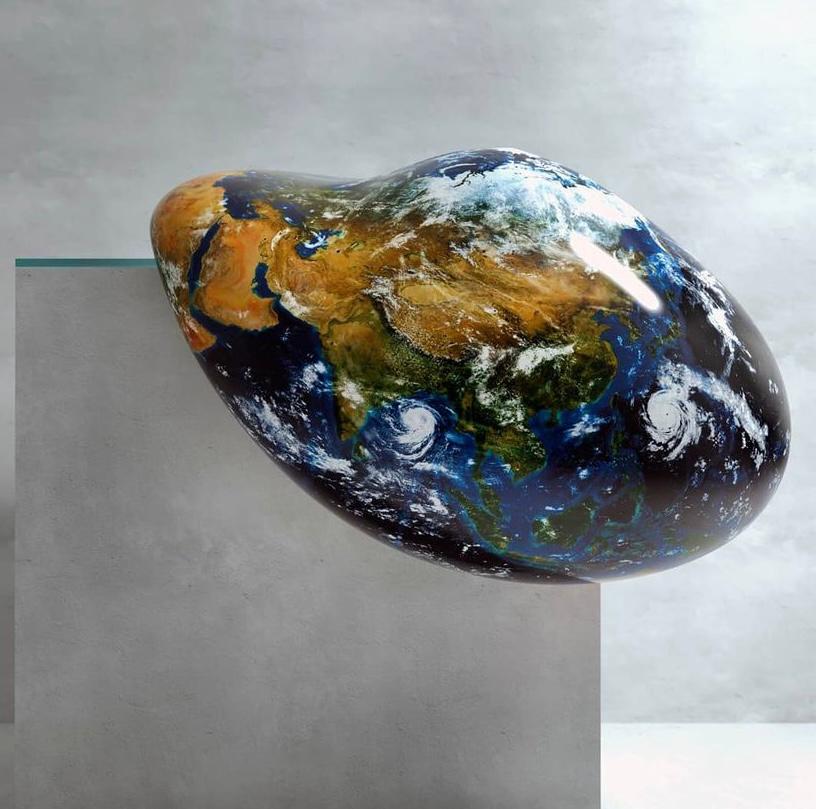
climate change -Image of a melting planet earth - Killing me softly by Gianluca Traina
Killing me softly by Gianluca Traina

The true purpose: rethinking Earth Day


The aim is to raise public consciousness, to instil the understanding that we have but one planet, and we must preserve and protect it. Mother Earth requires time to heal from the havoc we wreak daily, from the mountains of waste generated by our economic system, by our way of life! The devastation is the byproduct of progress, something we seem unwilling to relinquish. 

Let’s face it. Unfortunately, Earth Day has become the ultimate marketing strategy to drive sales. But sustainable growth is a myth. Similarly, there can be no sustainable fashion or sustainable tourism without a significant reduction in consumption.

“What is needed in the first instance are reduced levels of consumption, not just changed patterns.” – Herman E. Daly.

In conclusion, brands may push marketing gimmicks to celebrate Earth Day 2024. Tourism, fashion, or any other industry may create its own sustainable bubble. But we will neither address nor solve any issue unless we are wholeheartedly committed–every day–to saving the planet by curbing our consumption.

So, let’s be serious: rethinking Earth Day means nothing to celebrate. We must raise awareness and take action!

Rethinking Earth Day Read More »