Explorations

The Beauty of Asymmetry, Rooted in Japanese Aesthetic

Reading Time: 2 minutes

Understanding Japanese culture


Here comes spring! After long gloomy weather, spring is finally here with us in Milano.
With some cherry blossoms, Milanese are having small aperitivo at the parks. I do love it.

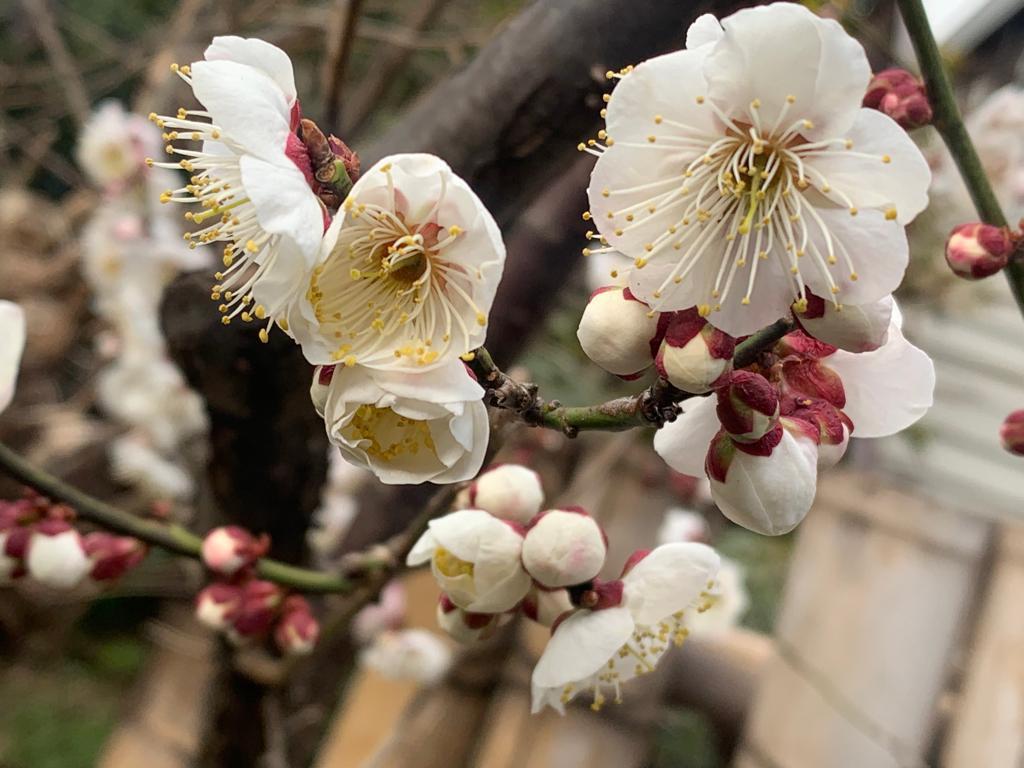
In Japan, cherry blossoms are a national symbolic flower of the spring. We enjoy A LOT of cherry blossom viewing, called “hanami”, gathering together with family, friends, and colleagues under the trees. And we believe the best time for hanami is when the petals are fallen.

We also drink, but not as much fancy as the ones in Milano.

Japanese aesthetic


Japanese aesthetic: wabi-sabi

Wabi-Sabi is a traditional Japanese aesthetic worldview centred on the acceptance of imperfect, impermanent, and incomplete. It is usually found in nature.

Japanese people find the most beauty out of the fallen cherry blossoms, not the fully-blooming flowers. Why? Because the sakura’s fleeting and its fragile nature perfectly fits our Wabi-Sabi beauty.

The cherry blossoms last only a few weeks. If it rains and breezes, they only live for a couple of days. A very short life, but this imperfection is what is significant in our aesthetic culture.

Asymmetry


Rei Kawakubo, the founder of Comme des Garçons, often expresses her Wabi-Sabi aesthetic through her sense of design.
Many of her creative garments are unfinished and asymmetrical, which is the opposite of western standard beauty. She finds emptiness in her fashion and appreciates “absent” rather than “present”.

Today, we can find many pieces of asymmetrical garments. Asymmetry is not just cool, but it is somehow deep in itself. The style is undefined and neutral. It gives freedom of expression to anyone who wears it.

If you haven’t checked the oversized denim blouson by ZUCCa, please, take a look. We are always inviting you to enjoy asymmetric beauty as we appreciate it.

Because it is very unique.


✍️ A piece written by Kotono Sakai – a Japanese girl studying history and fashion at Cattolica university in Milan and interning for suite123

The Beauty of Asymmetry, Rooted in Japanese Aesthetic Read More »

The Artisanal Way

Reading Time: 3 minutes

Possible now, more than ever


Usually, behind a collection, there are massive production chains, yet there is still fine handcrafted work, the artisanal way, which we are not used to anymore. Understanding the time and dedication involved in making it is a good exercise.

This week we received Marc Le Bihan‘s order. The delivery was late, but we quietly waited for our selection we made during the Spring/Summer selling campaign in Milano.

The process behind a collection


What is the process behind a collection?
In short, based on their inspiration, designers put together the ideas, design them and transform them into samples. Then, they show the pieces to international retailers in Milano, Paris, Tokyo, and New York. They take the orders and then launch the production, which is a real struggle nowadays. All this takes a lot of time, attention, and care. And stress too.

Specifically, in Marc Le Bihan’s case, it’s a 100% artisanal production. So take the usual time, attention, care and stress and multiply it by 100.

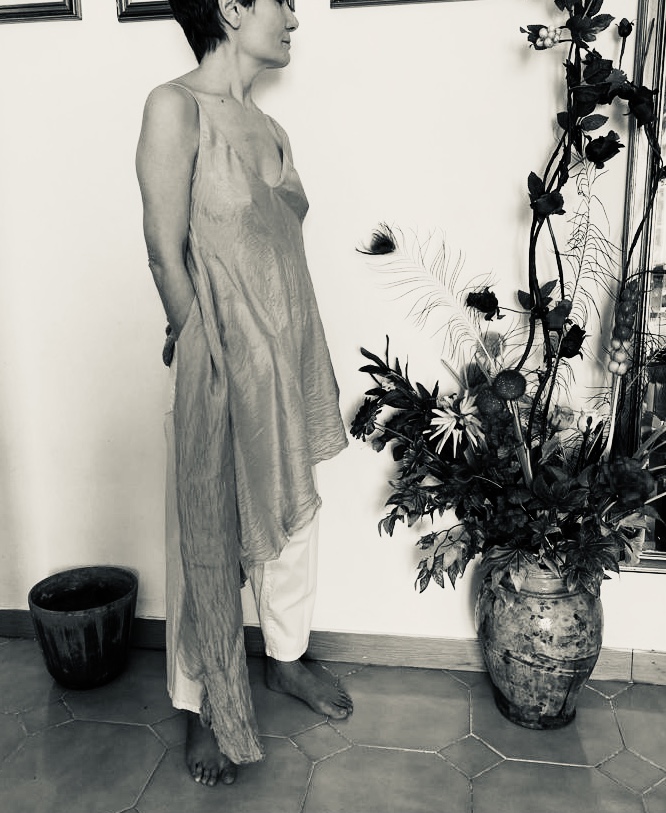
The artisanal way: Marc Le Bihan. Image showing a woman from waist down wearing a powder pink silk asymmetric top by marc Le Bihan, paired with white jeans, and barefeet.


Now, add a pandemic that made the world stop. So production chains have been disrupted, and suppliers delivered raw materials late. This chain effect will impact the following seasons.
The pandemic is not over yet, and as if it wasn’t enough, add the Russian invasion of Ukraine, a war in Europe.
So take that dose of stress that we have just multiplied by 100 and double it down.

Perhaps this is the common denominator that connects everyone who runs an independent business. Corporations are affected too, but they play with money and they’ve got their basis covered. Also, they can find some easy loopholes.
But independent companies, independent brands are the brave ones. They are at the heart of the communities, and they represent the real sustainable choice.

Artisanal rarities #formodernhumans


Among independent brands, you find an authentic rarity like Marc Le Bihan. A designer who made his consistency one of the highest values. Couture and limited productions of high-quality garments made with care, clothes made by hand in his workshop. It is artisanal work, and it takes time.

Understanding the time needed to make tailored clothes means understanding and appreciating their quality and higher value. Our expectations were high and 100% confirmed by the absolute beauty of the clothes we unpacked.

Since quality takes time, we waited for it with reverence. Soon we will describe the pieces, and you’ll discover another universe, which is still possible. Now, more than ever!

The Artisanal Way Read More »

Purchasing For The Trashcan

Reading Time: 3 minutes

Exploring the cycle of fashion trends


Purchasing for the trashcan has become a symbol of the relentless cycle of fashion trends. Items are quickly discarded in favor of the next fleeting style.

Ever since the rise of fast fashion and fashion influencers, we have stepped into a social construction where having endless access to clothing and styles is associated with glamour and the elite lifestyle.
Styles from last week are being replaced by this week’s fashion. Shelves are clearing. And ‘clothing hauls’ are posted on social media platforms by the various fashion influencers who are associated with that brand.

Examining the lie


The unfortunate result, the viewers of these videos are blinded by the heaps of clothing. And therefore, cannot see that these influencers not only were paid to show the clothing. But the clothing was gifted to them for free.
The reality of purchasing a plentiful array of clothing every single week is less of an actuality and more of a cloak of an idealistic utopian fashion fantasy. A trick that has succeeded in blinding all consumers.
Celebrities and influencers are the medium to present this idea of life that is not rationally attainable. The everyday consumer is, then, pressured to put weekend shopping sprees on their credit card bill. Old fashion in the trash, and wounds on the environment.

The fear of outfit repeating in our elitist society


The conclusive fear of the everyday fashion enthusiast is that in order to be viewed by society as enough, or relevant, they must participate in this cycle of mass fashion waste. In order to never appear in public wearing the same item they wore the week before they must fall obedient to the social norm of endless options, overconsumption, and false realities.

Styling your truth goggles


Rather than succumbing to this false fashion reality, rather than purchasing for the trashcan, try to remember the root of the fashion concept. Remember that fashion isn’t an endless array of styles cycling through it’s tailoring various attire to your own body type, skin tone, hair colour, and personal preference. Fashion is having the ability and privilege to choose a unique and quality piece from a line-up, paying the price for quality, and keeping it in your wardrobe for your lifetime. Then finally, when you’re doing your spring cleaning, you come across that one blouse that made you feel so beautiful. Then you remember, I bought this blouse before my first interview. And this was the blouse that gave me the confidence to be proud of my work for the first time.

Fashion has the ability to induce feelings that you might not have been able to create on your own. Fashion is your uniform. And it’s what makes you remember who you are and what you are presenting to the rest of the world. And fashion is not a logo on a t-shirt proclaiming to the world that you can afford to buy a lie.


✍️ A piece written by Gavriel Ewart. An American girl studying fashion and communication at Cattolica university in Milan and interning for suite123

Purchasing For The Trashcan Read More »

Violent Responses in Modern Society

Reading Time: 2 minutes

Where do we want to go next?


Violent responses have become a daily occurrence in modern society. Violence is served to us continuously. It happens in movies as well as in tv shows. But sadly, it happens in reality too. Even if we focus on our work, the current exceptional facts are inescapable. Anyway, the war is turning the fashion industry upside-down.

Violence is the response we see on a daily basis and to any act, and it is curious to see how people condemn it or accept it depending on the case.

How does a violent response happen?


Someone says something. Someone does not respect an agreement, or someone crushes your foot. The list could be longer because we can find endless occasions that would trigger a mindless reaction. However, by crushing the foot, that someone hits someone else’s nerves. And what does this someone else do? This someone else reacts with violence. A violent reaction can go from slapping someone in the face to invading a country, just to name two possibilities.

Perhaps both examples may sound familiar. Whatever may have caused the violent response – “You assault somebody, you get escorted out the building, and that’s it.” So stated the Oscar co-host, Wanda Sykes, for instance.

Following the same logic: you assault another country, you get invited to stop! Because whatever caused your reaction, borders cannot be violated. Of course, we weigh both sides considering the wider picture, but only one side is the aggressor. Therefore, to remain equidistant means being on the side of those using violence.

Violence is a human tendency, but it’s a brutal response


Violence is an inherent human tendency, which explains why violent responses have become a daily occurrence in modern society. But violence is a brutal response and must always be condemned. Because when you react violently, you’ve already lost. Even if provoked by someone, it shouldn’t be accepted.

As a matter of fact, we get accustomed to violence more easily than to respect or kindness. It’s time to understand that this attitude is not constructive.

Violence is never the answer. Let’s make it clear. Let’s make them stop.

#STANDWITHUKRAINE

Violent Responses in Modern Society Read More »

Tabi (足袋) Shoes, Cool Japan?

Reading Time: 2 minutes

Japanese culture, traditions and fashion


These days some high brands produce split-toe Japanese shoes called Tabi. Originally, Tabi are Japanese traditional socks with a separate section for the big toe and the rest. In Japanese, Tabi is written in “足袋” – literally meaning foot-pouch.

During the fashion week in Milano, I saw many Tabi boots and shoes from different brands. As a Japanese person, it was very interesting to see how Tabi shoes are becoming more and more fashion-iconic items nowadays.

Its simple, yet unique shape, is truly cool. I agree!

As you might picture, Tabi socks are usually worn with Zouri, footwear for Kimono. That is probably the most common image that people have of this item.

Yet, Tabi is not only for Zouri. It was used traditionally for various Japanese traditional footwear, such as Waraji (草鞋). Waraji is the rice straw rope sandals commonly worn during the Edo period.

In my 5th grade, I spent all my summer knitting 3 pairs of Waraji. My elementary school had a tradition that all the 5th graders hiked for 9 hours on “Kyu-kaido Ishidatami” – the old highway in Hakone, with their knitted Waraji. Of course, Tabi was a must with Waraji.

Tabi
Tabi and waraji hand-knitted sandals
Photo courtesy: Kotono Sakai

Tabi: just a mere fashion icon, or something more?


It is intriguing that some high brands, such as Margiela, are inspired by the Tabi shape. Yet, Tabi has its own value and history behind it. It is culture, and it is tradition. Tabi is not just a trendy item.

So it would be disappointing if the people would consume Tabi as a mere fashion icon with simple “Japaneseness”.
Imagine if the fast fashion brands would mass-produce Tabi shaped shoes, making them even more accessible to general consumers. The value would no longer matter.

I am very pleased to see that Japanese traditional culture is being internationally appreciated and more recognized throughout different mediums. But if I saw an overuse or overconsumption of Tabi shaped shoes, I would perhaps get mixed feelings.

I encourage you to tell what is mass and what is special!


✍️ A piece written by Kotono Sakai, a Japanese girl studying history and fashion at Cattolica university in Milan and interning for suite123

Tabi (足袋) Shoes, Cool Japan? Read More »