Portrait of contemporary madness. Milan men’s fashion week. The buzz of Prada on sustainability. Doing our work “at its best” doesn’t change reality. Doesn’t solve anything. A five-year-old child arrested in the US. What is innocence in the age of surveillance? Tear-gas shadows across playgrounds. Twelve thousand people killed in Iran — grief measured in hashtags, silence in policy halls. The world scrolls. Paris men’s fashion week. Dior: what’s the point? Identity disrupted, a punkish take designed for someone else’s customers.
A cyclone, Harry, devastates Sicily — a climate out of control is no longer news.
Runways glowing while real lives bleed outside the glass.
In Minneapolis on January 24, Alex Pretti, a 37-year-old ICU nurse and US citizen, was shot and killed by federal immigration enforcement agents during protests against a swelling ICE operation — the second fatal shooting by federal agents in the city this month. Videos and witness accounts show he was filming and attempting to help others when the confrontation escalated, raising intense public anger and prompting investigations and lawsuits over denied evidence access and use of force.
The official narrative and the evidence clash. The streets erupt in outrage. Protesters push back as cities shudder.
The runways continue: models beneath spotlights, ideal silhouettes, future trends. In the streets: crowds march in frozen cities, shouting, “We want justice.” “We want dignity.”
One world churns in couture, the next bleeds on asphalt.
But what is life without empathy? What is fashion without empathy? What is style when bodies are collateral? When governments shoot their own citizens? When children are detained? Or when faraway wars count their dead by the thousands?
And when horrors are normalised, and a global war feels closer?
This is not future fiction. This is now.
A portrait of contemporary madness.
And still — the fashion industry speaks of next season’s must-have. Feeling overwhelmed? Perhaps we all are.
FW26 Men’s Fashion Week: unpacking Miuccia Prada’s statement on sustainability
Men’s Fashion Week Fall/Winter 2026/27 has just wrapped up in Milan, bringing the luxury dilemma sharply into focus. Beyond the collections themselves, one statement in particular stood out — a widely shared comment by Miuccia Prada on sustainability.
In a season marked by uncertainty, many brands sought reassurance either in the past through nostalgia or in bold contemporary provocations, while reaffirming tailoring and colour as anchors of meaning. Following a runway show explicitly reflecting on the present moment, Miuccia Prada and co-designer Raf Simons spoke to the press. Sustainability inevitably entered the conversation.
Luxury fashion and sustainability: pragmatism versus idealism
Miuccia Prada reiterated her long-standing commitment to doing her work conscientiously and striving for excellence. She stated:
“I’m trying to get on with my work and do it properly. If we truly wanted to be sustainable, we’d have to stop everything: no cars, no clothes, no consumption at all. We must be honest and do our work to the best of our ability, bringing creativity, quality, and awareness to it.”
It is a compelling, deliberately provocative statement — one that exposes the tension between idealism and pragmatism in sustainability discourse.
A titan of the luxury fashion industry and a figure known for her intellectual and often contradictory positions, Prada draws a stark dichotomy:
The pure ideal: true, absolute sustainability would require a complete halt to modern industrial life — no cars, no new clothes, no consumption.
The pragmatic reality: since such a scenario is implicitly deemed impossible or unacceptable, the alternative is not withdrawal but “doing our work properly”.
The underlying message is clear: perfection becomes the enemy of improvement. Prada rejects a paralysing purity test in favour of an ethic of incremental responsibility.
The luxury dilemma and its internal contradictions
Yet this statement also reveals a deeper contradiction.
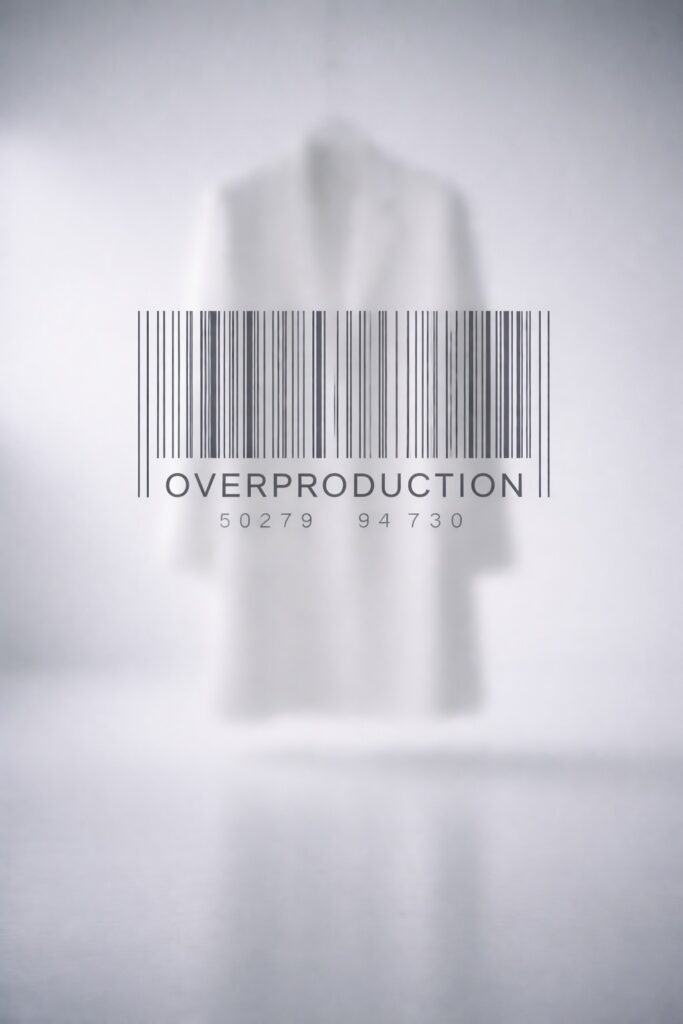
1. A defence of the luxury system At its core, the quote functions as a defence of high-end fashion’s right to exist. Prada suggests that even the creative and qualitative apex of the industry would fail a test of absolute sustainability. The implicit argument is: if fast fashion is condemned, then so must luxury be — the overproduction model is the same. And if that happens, society risks losing creativity, craftsmanship, culture.
2. Quality and creativity as a smokescreen For luxury brands, “quality” (durability, materials, craftsmanship) and “creativity” (cultural and artistic value) are repeatedly invoked as ethical justifications for continued mass production. But this framing sidesteps the central issue: the business model itself.
Whether it is a €50 polyester blouse or a €5.000 nylon bag, the luxury industry still depends on:
Seasonal cycles, driving perpetual “newness” and the obsolescence of desire
Marketing-driven consumption, creating symbolic rather than utilitarian needs
Vast, opaque supply chains, with environmental and social impacts regardless of material quality
Manufactured exclusivity and scarcity, fundamentally at odds with the anti-consumption logic Prada herself references
Within this structure, creativity and quality are not neutral values — they are often the very engines of consumption.
3. Intellectual honesty vs corporate reality There is undeniable honesty in Prada’s acknowledgement that true sustainability would mean “no clothes”. It openly names the conflict at the heart of fashion. Yet the conclusion — “do our work well” — feels like an intellectual sleight of hand.
The problem shifts from systemic change (overproduction, growth imperatives, marketing pressure) to individual ethics: my work, our work. In doing so, responsibility is displaced from the corporation and its structural drivers onto personal integrity.
By articulating the critic’s most radical argument — we should stop everything — Prada positions herself as the sober realist. The critique is acknowledged, absorbed, and then dismissed as unworkable. It is a sophisticated form of containment: recognising the radical in order to defend a softened status quo.
What the luxury dilemma leaves out
A false binary Prada presents a choice between total civilisational shutdown and business-as-usual with better intentions. This erases the vast middle ground: degrowth, sufficiency, circular systems, and radical business-model innovation.
Denial of agency As creative director of a billion-euro group, Prada possesses exceptional power to experiment with new models. Retreating to “just doing my work” understates this agency. The argument might be defensible from a junior designer — far less so from one of the most influential figures in fashion.
Final thoughts
One could read the collection itself — clothes that appear worn yet are brand new — as an implicit suggestion: use what you already have. This is a ritual we always cherish at the end of a Prada show, because there is always a message that transcends the clothes. But the more pressing question remains how to build genuinely sustainable models for the fashion business.
Terms like degrowth or smaller production volumes threaten the very structures that allow luxury brands to maintain their cathedrals — architectural, symbolic, and economic. And so they remain largely unspoken.
Miuccia Prada’s statement ultimately becomes a revealing manifesto of the luxury dilemma. It is intellectually lucid about the problem, yet philosophically conservative in its solution. It mobilises the language of ethics — honesty, awareness — to justify the preservation of a system that, by its own admission, cannot exist within true planetary limits.
Focusing on “doing the work at its best” inside a broken model, even with the best intentions of creativity and quality, amounts to a form of managed dissent: it critiques the ends, but fiercely defends the means.
Report Rai3: fashion sweatshops and the unbroken link between luxury and labour abuse
While Italy was in the midst of Men’s Fashion Week, Rai3’s Reportaired a hard-hitting investigation into the labour exploitation behind the luxury brands now seeking a legal shield. Thetopic itself was not new: recently, media outlets have reported on sweatshops hidden behind the façade of Made in Italy. What Report did differently was to go further—attempting to speak directly with manufacturers, workers and brand owners.
Among the major figures contacted, only Diego Della Valle—chairman of Tod’s Group (Tod’s, Hogan, Fay and Roger Vivier)—agreed to appear on camera. His appearance, however, raised more questions than it answered. The investigation revealed that audits had been conducted within the supply chain, yet Tod’s disregarded their findings.
Some commentators accused Report of daring to criticise an industry that represents a significant share of Italy’s GDP. We strongly disagree. When an industry operates—directly or indirectly—through sweatshop conditions, exposing it is not only legitimate, it is necessary.
Judicial administration and labour abuse
Several luxury brands have been placed under judicial administration over failures to monitor labour exploitation in their supply chains.
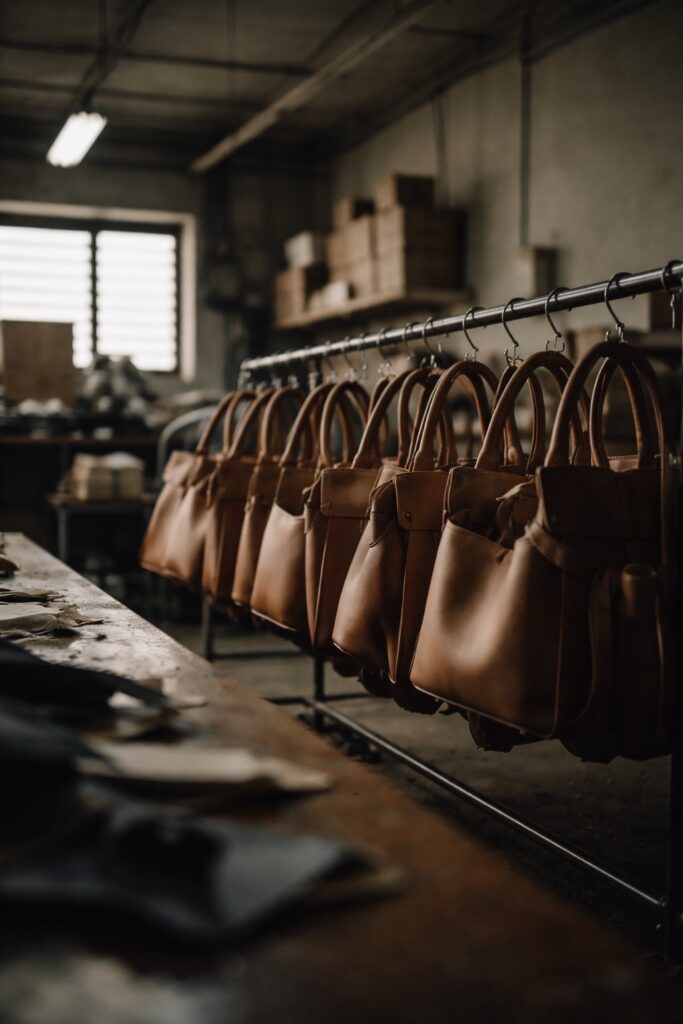
Valentino Bags—a company controlled by Valentino and responsible for producing bags for the brand—was among them, alongside Loro Piana, Armani and Dior. In one of the Chinese workshops producing Valentino bags, the Carabinieri found a child playing among fabrics and industrial machinery.
In July 2025, the Milan court ordered judicial administration for Loro Piana, the Italian high‑end clothing brand controlled by LVMH. Investigators found that production had been entrusted to companies that subcontracted work to Chinese workshops where workers were exploited.
Della Valle: “The Chinese workshops are not our concern”
In October, the Milan Prosecutor’s Office requested preventive judicial administration for Tod’s SpA. The investigation uncovered serious violations of workers’ rights across the subcontracting chain responsible for producing the brand’s goods. Prosecutors stated that the company was aware of these practices, leading to an investigation for caporalato (the gangmaster system).
Following similar measures against multiple fashion brands, Milan prosecutor Paolo Storari also requested a six‑month advertising ban for Tod’s. Through an exclusive interview with Diego Della Valle, Report reconstructed the luxury supply chain: production is outsourced to Italian firms with no manufacturing facilities, which then subcontract to Chinese workshops.
Della Valle argued that responsibility should not extend beyond the first level of the supply chain. This position is deeply problematic. If a brand entrusts production to intermediaries that do not manufacture anything themselves, what does it expect to happen? And why do brands choose this model in the first place?
In the Tod’s case, one of the most serious issues to emerge was the failure to act on clear audit findings. Problems were identified, yet deliberately overlooked.
The attempted legal shield for luxury brands
Against this backdrop, Article 30 of the Small and Medium Enterprises Bill—approved by the Senate and debated in the Chamber of Deputies—attempted to exempt major fashion brands from liability for crimes committed along their production chains.
Widely described as a legal shield for luxury brands, the amendment was eventually withdrawn following protests by trade unions, workers and the Clean Clothes Campaign. It will now return to the Senate.
During his interview with Report, Minister Adolfo Urso stated that caporalato in Italy had been “brought by the Chinese”. A staggering statement that shifts blame away from the structural drivers.
Shifting blame to the lowest—and weakest—links in the chain conveniently ignores who sets prices, who designs supply chains and who ultimately benefits from lower production costs.
Made in Chitaly: the testimony that explains everything
One of the most powerful moments in Report was the testimony of Andrea Parisi, owner of Spectre Srl, a company specialising in the finishing of heels for luxury footwear.
Until recently, Spectre employed 34–35 people and worked for all the major luxury brands. Today, only three workers remain.
Parisi explained how brands outsource work to companies that possess no machinery, which then subcontract—unofficially—to Chinese workshops capable of producing tens of thousands of units at prices that are economically impossible under legal conditions.
A heel paid €0.80 per piece (€1.60 per pair), he explained, should cost at least twice that amount. This pricing mechanism drives law-abiding Italian manufacturers out of the market, depriving them of contracts, revenue, and skilled labour.
“The most serious loss,” Parisi said, “is our workforce.” Competing, he explained, is impossible unless one is willing to break the law.
Andrea Parisi’s most touching words:
“The fashion sector in Italy no longer exists. But at this moment we don’t even have the tools to fight anymore, how are we supposed to go forward? Must our workers be reduced to ‘Vietnam conditions’? What have we come to? Behind subcontracting, lies undeclared labour, lies precarious employment, exploitation. It must be abolished, full stop, and it must be done tomorrow morning. It’s Made in Italy if the workers’ ethics are respected. Otherwise, write on the products ‘Made in Italy 50%’, at least tell the truth.”
A structural system, not an anomaly
The idea of serving luxury products to everyone has generated this system. The so-called democratic luxury.
As Della Valle said: “We survive because people recognise in us an absolute quality. How many people buy a bag or a pair of shoes from me? Many have the money to do so, then there are those who love them, who perhaps don’t have the money, they make a sacrifice, and to those people you can’t say: ‘You’re working your arse off to buy this little thing, and these people are a bunch of wankers.’”
So brands serve entry price products while, at the same time, cut their costs as much as they can to maximise profits. Let’s clearly state this: the idea of democratic luxury is as contradictory as illiberal democracy: it does not exist. It is either one thing or the other.
As Luca Bertazzoni (Report) said: “The point is that those Chinese companies which President Meloni claims to be fighting are now an integral part of the system and continue to be sought by the major fashion brands to maximise profits. Take the case of Mr Yang, whom we had met a year ago after the Carabinieri found Dior bags inside his workshop in Opera, where workers were being exploited.”
Gian Gaetano Bellavia – expert in corporate criminal law, explained further: “The Italian who wins the contract always keeps his own margin, and it’s the Chinese contractor who has to cut his margin. So then the Chinese contractor perhaps goes to a Pakistani, right? Who is even more desperate than the Chinese.”
This system is not limited to handbags or footwear, nor is it an exception. Furthermore, it is not solely an Italian issue—is Dior an Italian brand? And doesn’t LVMH owns Loro Piana? The problem is structural and global. To be clear, it also exists beyond fashion. Yet, this breadth is not a mitigating factor but an aggravating one.
As Bellavia noted, it is a “war among the poor to serve the rich”. Those at the top remain silent, protected by distance, complexity and legal ambiguity.
Final thoughts
In conclusion, this operating system is not new. As young women working in fashion in the late 1990s, we witnessed its gradual consolidation. For over twenty years, opacity has prevailed. If we saw that, how did nobody question what was happening?
Today, instead of dismantling the system, the Italian government proposes a legal shield for luxury.
But when luxury products are made through exploitation, who is responsible? The last link in the chain? Really? Or those who decide to maximise profits by compressing production costs from the top down?
If Italian manufacturing has been decimated, responsibility lies with both political choices and brand strategies. Blaming labour exploitation solely on the weakest links in the chain is not only dishonest—it is shameful.
A legal shield is not the solution. These companies have money, power and structure. They must be responsible for workers’ conditions and for the reality behind their products. Choosing ignorance forfeits accountability.
Luca Bertazzoni offered a definitive direction:
“If high fashion were to abandon the subcontracting chain that allows it to make profits by producing at rock-bottom prices, Italian artisans could go back to work, with full respect for workers’ rights.”
So, forget a legal shield for luxury. The real solution is clear: dismantle the subcontracting chains that allow luxury brands to profit from cut‑price labour. Only then can Italian artisans return to work under conditions that respect dignity and rights.
More than a designer, a keeper of beauty — an empire built on devotion, not disruption
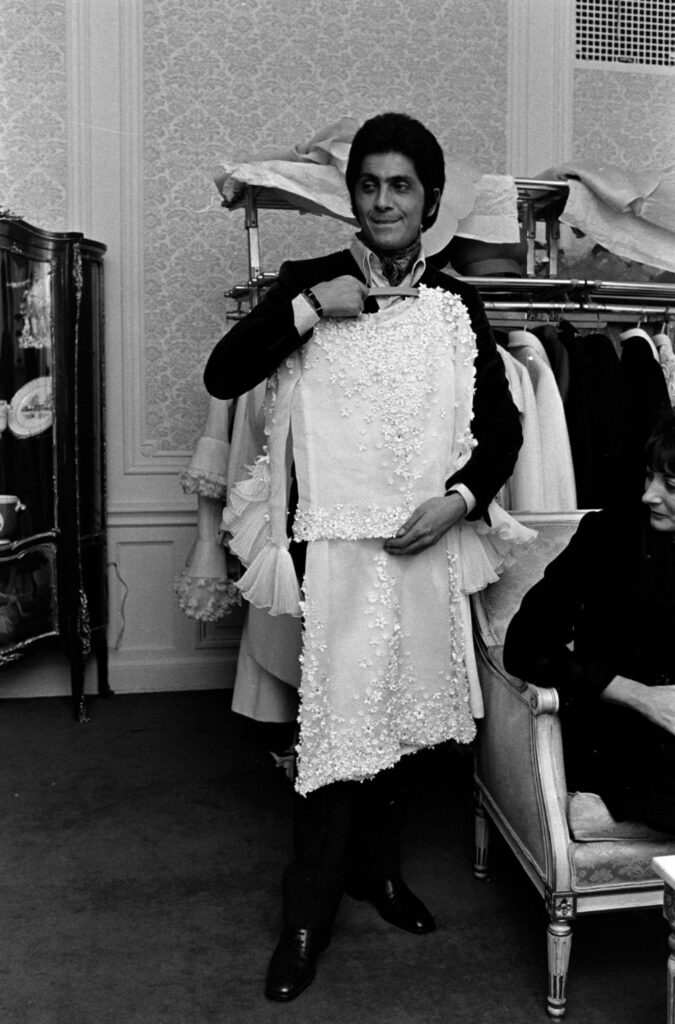
Valentino Garavani, the emperor of fashion, passed away on January 19, at the age of 93, in Rome — the city he loved and never truly left. In an era defined by constant noise, speed, and relentless reinvention, his legacy stands apart. Not because it chased trends, but because it cultivated a world of timeless elegance, patience, and enduring beauty.
This is not an attempt to retrace a career — there is already more than enough of that. Instead, this is an effort to understand what Valentino can still teach us. What remains relevant. What the fashion industry — and perhaps creative work as a whole — risks forgetting.
Born in Voghera in 1932, Valentino’s aesthetic awakening came early. He often recalled a formative moment at the opera in Barcelona, where he saw women wrapped in red. That vision — colour, drama, ceremony — sparked a lifelong devotion to clothing as celebration. From that moment on, fashion was never merely functional for him; it was cultural, emotional, and deeply respectful of beauty.
He studied in Milan and then moved to Paris, where he worked for Jean Dessès and Guy Laroche, absorbing the discipline of haute couture and the rigour of craft. In 1960, he returned to Rome, where he met Giancarlo Giammetti — his business partner and lifelong companion. Together, they built something rare: a maison founded on mutual trust, clarity of roles, and a shared vision. Valentino created; Giammetti protected the conditions that allowed creation to flourish.
From a small atelier, international recognition followed. Heads of state, actresses, and cultural icons wore his designs not to be noticed, but to feel complete. His work became a pillar of Italian fashion history, yet its appeal was always global — rooted in classical ideals, but never provincial.
In a fashion system that now rewards disruption above all else — even within his own brand — Valentino’s journey reminds us of what is being lost: the power of a singular vision patiently built over a lifetime. He shaped his path through self-improvement, perseverance, discipline, and devotion. There was no rush, no need to shout. Only the quiet confidence of couture mastery.
This was fashion as artisanal excellence — an expression of creativity anchored in craftsmanship and cultural intelligence. Valentino began in a four-person atelier, where every stitch served a vision, not a market forecast or a shareholder meeting. Today, creative directors often bend to corporate strategies; his generation built houses where creativity led, and business followed.
He announced his retirement in 2007, at the age of 75, with a final, all-red, iconic show in Paris in 2008 that felt less like a farewell and more like a celebration of coherence. Filmmaker Matt Tyrnauer later captured his legacy in the 2008 documentary Valentino: The Last Emperor — a revealing portrait of discipline, obsession, and unwavering standards.
The emperor of fashion — in his own words
Valentino was never vague about what he believed in.
“Elegance is made of intelligence, and above all of not flaunting the label.”
This sentence alone explains much of what feels absent today. His couture belonged to a world where creativity and quality spoke louder than branding. Where clothing revealed taste rather than wealth. Today, the balance has reversed: logos have replaced language, stepping in where quality no longer speaks for itself.
“Today, those who have money do not always have class or memory.”
Memory here is key — cultural memory, aesthetic memory, historical awareness. Without it, fashion becomes noise.
He spoke openly about contemporary taste:
“Today, with the influencers, bad taste is everywhere.”
And in his farewell to Pierpaolo Piccioli, he offered what may be his most revealing statement on modern fashion:
“Thank you… for your friendship, respect, and support. You’re the only designer I know who hasn’t tried to distort the codes of a major brand by imposing new ones and the megalomania of a ridiculous ego.”
In those words lies his entire credo: respect for heritage, humility before beauty, and a firm rejection of ego-driven disruption.
Final thoughts
So what can we learn from Valentino — the emperor of fashion? From someone who made creativity, couture, and beauty the work of a lifetime?
That legacy is not built by chasing what is new, but by deepening what is beautiful. That true luxury is not only what you create, but what you refuse to compromise. And that elegance — real elegance — requires time, memory, intelligence, and restraint.
In today’s fashion machine, where speed is rewarded and noise is constant, Valentino’s life asks a quieter, more demanding question:
What are we in such a hurry to create, if not something meant to last?
He was not just a designer. He was an emperor — of a slower, more deliberate kingdom. One that, in its silence, still speaks louder than ever.
The news, coming one year after the acquisition of Neiman Marcus, highlights the broken state of fashion retail
The news of Saks’ bankruptcy forces a simple question: what game is fashion playing?
Roughly a year ago, Saks acquired Neiman Marcus, along with its sister company, Bergdorf Goodman. On the surface, it appeared to be consolidation, strength, and scale. Cool, right?
Now, almost exactly one year later, Saks has filed for bankruptcy.
This isn’t bad luck, nor an unexpected turn of events. It’s the consequence of a business model that no longer works—yet one the industry keeps pretending is still viable. Fashion is carrying on with business as usual, as if nothing were fundamentally wrong. Let’s try to make sense of it.
Saks is not an anomaly. It is a textbook case of the perfect storm hitting traditional luxury retail—a masterclass in what not to do. Its apparent survival has relied more on inertia and prestige than on any real vitality.
Saks’ bankruptcy: the symptom of a broken system
A close examination of the post-acquisition collapse reveals several structural problems.
First: the customer has changed. Luxury consumption no longer revolves around temples of consumption. Millennials and Gen Z buy differently: they seek meaning, experience, authenticity, storytelling. The dusty, formal department store —rigid, hierarchical, and disconnected — struggles to resonate with generations who expect fluidity, values, and emotional engagement.
Second: the “emptiness retail” model. Luxury department stores suffer from a profound identity crisis. They are neither exclusive enough to rival monobrand boutiques nor convenient or experiential enough to compete with direct e-commerce. The result is a space full of products but empty of meaning. Constant overproduction and a culture of perpetual discounting replace identity-building, trapping retailers in a vicious cycle where volume compensates for relevance—until it doesn’t.
Third: the brand wars. Major luxury groups — Chanel, LVMH, Kering — have tightened control over distribution, investing heavily in their own direct-to-consumer channels. Owned stores and proprietary e-commerce platforms steadily erode the relevance and bargaining power of multi-brand megaretailers such as Saks. Brands are now openly competing with their own stockists. They want it all, yet fail to acknowledge a basic truth: the addressable market for luxury is not infinite.
Finally: monstrous debt. The acquisition of Neiman Marcus was financed with over $4 billion in debt, backed by private equity. This left Saks servicing an unsustainable financial burden precisely as interest rates rose and the market demanded reinvention. Debt didn’t cause the crisis—but it removed any remaining room to adapt.
However, this pattern isn’t unique to Saks. From Farfetch to LuisaViaRoma to SSENSE, whether e-commerce or brick-and-mortar, fashion retailers have recently faced similar outcomes, even without headline-grabbing acquisitions. The conclusion is hard to ignore: the era of mega-retailers reliant on endless discounts and scale alone is over.
And yet, the response remains stubbornly familiar.
Following last Tuesday’s voluntary bankruptcy filing, Saks Global swiftly secured $400 million in new financing (around €345 million). As reported by Reuters, a US bankruptcy judge granted initial approval despite opposition from Amazon, its now-separated commercial partner.
This is business as usual in its most dangerous form: strategic sleepwalking. Consolidating a dying market through acquisitions, rather than radically rethinking the purpose of the physical store and questioning the overproduction model, is not a solution—it’s a fatal error.
Ultimately, Saks acquired two legacy giants — Neiman Marcus and Bergdorf Goodman — at a premium price, loading its balance sheet with crippling debt at the exact moment the sector was pivoting toward streamlined, direct-to-consumer models.
Cool still?
More than anything, Saks’ bankruptcy has become a case study in what not to do when attempting to transform luxury retail for the 21st century. A very expensive lesson.
So, now that the bailout has arrived, the real question remains: is it plausible to emerge from collapse with a massive cash injection alone? Can survival occur without changing the business model itself?