Explorations

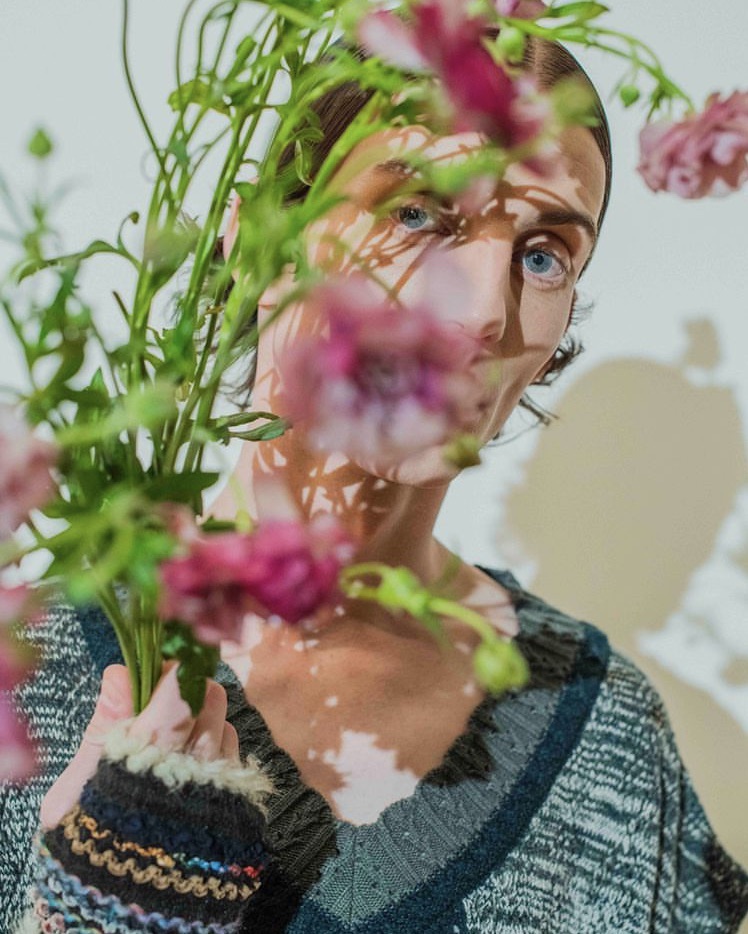
An Interview With Takafumi Sekine: The Creative Mind Behind Meagratia

Reading Time: 3 minutes

Discover the unique Japanese brand redefining modern creativity


We’re thrilled to share our interview with Takafumi Sekine, the creative mind behind Meagratia. Recently, we had the opportunity learn more about his brand.

In search of good design, which doesn’t necessarily belong to the mainstream fashion universe, we discovered Meagratia, a Japanese brand with a subtle sense of fashion and uncommon creativity.

The brand imagery is modern but somehow delicate. Indeed, it plays with a genderless and timeless aesthetic through a contemporary perspective. So, a unique take on where style flows without constraints.

Takafumi Sekine – Meagratia: the interview


Discover more about the designer universe:

• What is your background?
Takafumi Sekine: “I started Meagratia because I wanted to create for others the joy I felt when I wore my favourite clothes as a student. I design interesting things by fusing the history and birth of fashion with modern sensibilities.”

• How would you describe your brand identity?
Takafumi Sekine: “Meagratia creates clothes that the wearers can enjoy in their own way.”

An interview with Takafumi Sekine


• It seems that flowers are a recurring inspiration. Right?
Takafumi Sekine: “Flowers are precious and change, not only when they are in bloom but also as dried flowers. Meagratia creations suggest a quality that changes with time but does not wither.”

• We notice many details in your garments. How do they contribute to your sense of design?
Takafumi Sekine: “It all starts with the desire to create something interesting and new. I take inspiration from various sources and I incorporate them into my design. So, using many details and variations allows a wider range of wearing styles and unusual ways of presenting them.”

• Why do you use the Sakiori technique (rag weaving) for your collection?
Takafumi Sekine: “For our Autumn/Winter knitwear, we created an upcycled design using surplus fabrics. However, the technology and attitude of the factory we work with towards new things are also excellent and play an important role in our collaboration.”

• What do you think about the fashion industry now?
Takafumi Sekine: “On the positive side, both industry and consumers have more choices nowadays, but on the other hand, there are some difficulties. I believe that the consumerist society is gradually changing these days. But I am also concerned about the ageing of craftspeople with excellent skills and the problem of passing these important skills down.”

Meagratia, cool design #formodernhumans


We hope you enjoyed our interview with Takafumi Sekine. Meagratia’s design is cool, and the quality is excellent. The clothes communicate timelessness. Boundaries, male or female, are blurred, but the style is never jarring for whoever wears them. 

Ultimately, there is a sense of freedom in Takafumi Sekine’s vision, which allows people who wear his clothes to create their personal style. The real essence of fashion.

An Interview With Takafumi Sekine: The Creative Mind Behind Meagratia Read More »

Fashion and Politics

Reading Time: 2 minutes

How fashion outlines a political view


Fashion and politics are connected, and in fact, some people in the field release some straightforward statements.

The Italian elections, held yesterday, caused concern about the risk of undermining what our parents and grandparents have tried to achieve so far. Something that still was a work in progress but now looks more like a “work in regress.” A political and cultural setback considering it is the first far-right government since Mussolini. Yes, it sounds scary.

Politicians shouting out loud worked to exacerbate a climate of hate. And since people don’t learn from history, repeating mistakes looks like the outcome. So, in this panorama, we found it interesting reading the thought of Pierpaolo Piccioli. One of the most prominent figures in the fashion industry took a clear stance on politics and Italian elections.

Can fashion be political?


Let’s start with a premise. When fashion underscores words such as inclusion, diversity or genderless, it envisions a specific worldview. And that vision of the world has a lot to do with politics, indeed.

So, in a time when some acquired rights are at risk, and that worldview based on ideas that bring people together, accepting all the differences may be swept away. And individual freedom and choices can vanish, it’s good to see people in the fashion industry who aren’t afraid to speak up.

Fashion politics


Pierpaolo Piccioli (Valentino’s designer), from his Instagram account, released a very on-point and heartfelt statement. He spoke in support of freedom, women’s choices on independent decisions about themselves and their bodies, and gender that doesn’t have to be only male or female. Indeed, he released a political statement calling himself “a man of the left.”

Perhaps using words lightly when the world is falling apart isn’t enough. We must speak up to support the world we want to see and take a stand for it.

Whatever happens, we share what Piccioli wrote. We promote a world that values different cultures. And inclusion, diversity, human rights, women’s rights, and LGBTQ rights. Indeed we must respect everyone’s rights. It’s the worldview for modern humans.

But, in the end, we wake up today with a lesson to learn: never take our rights for granted!

Fashion and Politics Read More »

Fashion Weeks and Research

Reading Time: 2 minutes

Critical thinking in the real of fashion #formodernhumans


Fashion weeks used to offer ideas for doing research, highlighting details worth considering to put together and defining a specific selection. So it was in the past.

And so, these days, we keep an eye on the international events, from New York to London and now Milano. Of course, Paris and Tokyo too. But so far, we are perplexed about what we see.

Fashion weeks vs change


Indeed, the discussion on changing the industry, which was so popular during the pandemic, has disappeared from the scene.
It seems that the fashion industry is an enormous system that doesn’t know how to renovate itself. And so, brands keep up with the same thing they used to do.

Even the language feels boring, like an out-of-tune mantra. So you realise that words like sustainability, timeless or genderless are on everyone’s lips. Just empty claims for people who don’t think.

And they all talk about the same things, but nothing ever changes. Furthermore, the world is falling apart, but it looks like brands are only interested in dressing music or movie stars. That’s what you can offer? Really? Celebrities! They have the money to buy whatever they want, but they don’t pay for their clothes.

When it comes to design and style, you may be even more perplexed. Clearly, designers cannot deliver brand-new concepts. But lately, what the industry calls freedom or inclusion seems just bad taste combined with a lack of vision.

Fashion weeks vs research


So, when we need to research unique garments for people like us, the widest part of the work happens through lookbooks we receive via email. And through some specific research that we do online. Then, possibly, showrooms too.

In the end, you’ll get more value from brands that have something to say, and you can see it through their meaningful design rather than those who want to attract herds of replicants who look all the same.

Above all, fashion weeks as a pure waste of money having an impact on the environment, are pointless.

Fashion Weeks and Research Read More »

Niche Fashion: What Does It Mean?

Reading Time: 2 minutes

And can it stand on its own?


Niche fashion is a matter of having a personal identity, refusing mass products and somehow having a certain repulsion for what is extremely popular.

The question is: do you want to look like everyone else? Dress like everyone else? And think like everyone else? If yes, maybe reading this post is a waste of your time. Indeed many people like to be the copy of others. But if your response is no, it’s worth a few minutes of reading. Exploring the concept of niche fashion will help you understand that small universe outside mass trends.

It’s an imagery that finds very little space in our homologated culture. Social media flattened everything privileging a single line of thought.

Created by visionary designers, it finds support from a limited number of selected international retailers who still have a passion for research. And by people like you, who love searching for authentic gems.

Niche fashion
Marc Le Bihan tulle skirt


However, niche has a meaning in marketing but has a slightly different connotation in fashion. In marketing, it refers to a group you identify as your target audience.

Niche fashion meaning


In the fashion field, professionals call niche brands or collections those designs out of the mainstream. Cult pieces of clothing or accessories not for all because of their design, quality and craftsmanship. Which image is so unique that only people with a specific taste will understand them.

In essence, niche fashion is about having a different sensibility towards design and quality. It is for connoisseurs, insiders or everyone having an eye to recognise it, people who escape from mass thinking and find pleasure in the unconventional.

Now, can niche brands stand on their own? The news that Calzedonia group just acquired Antonio Marras, taking a majority stake in the brand, opens the discussion.

Niche fashion will never be trending, never too popular. It wouldn’t be niche. And it has nothing to do with algorithms.
Preserving a culture of diversity is vital for niche brands to survive.

Niche Fashion: What Does It Mean? Read More »

Dear Sustainable Brands: Are You Consistent?

Reading Time: 2 minutes

Sustainable brands VS consistency


Dear sustainable brands, let’s make a point on consistency.

Consistency is fundamental for building trust, so it should be for sustainable brands. Also because they cover themselves with an ethical patina that makes them appear better than the others. But, on the contrary, it seems that these new ethical brands have a problem with it.

Their purpose is to make a change. But if so, it’s not clear why they still follow outdated systems. Or they try to reach success by partnering with channels that have nothing to do with sustainability.

The point on consistency

Sustainable brands must be consistent with their message.
Do you agree? So, the question is: do they want to make a change for real?
If that is their goal, why do they sell their low-impact ethically-made garments through retailers that collect almost every designer on planet earth?

Isn’t it a matter of consistency?
These retailers sell huge quantities of clothing and accessories. Therefore, their business isn’t sustainable. Even if they proudly show a sustainable section, as most of them do. Which makes you understand the power of marketing and the trick behind sustainability.

If consistency was a fundamental value for them, they would find other ways to sell their products. But they all dream of being sold by the same old big groups. And so, they want to change, but not really.

Sustainability is a promise no one can keep, but still, everyone wants to sell. Ethical marketing, if not supported by proper choices and actions, is just smoke in the eyes. In other words, it is greenwashing.

Dear sustainable brands, you cannot change the world by playing the old game. Forget the status quo if you want to change for real. If you are seriously committed, you need to craft a new strategy. You’ll change the world with new patterns, new rules, and a new language.

So, if you want to be trusted, change the system, not only your marketing!

Dear Sustainable Brands: Are You Consistent? Read More »