stefano pilati

Stefano Pilati and The Fashion Compromise

Reading Time: 3 minutes

Integrity or selling out to make a living in the fashion industry?


Stefano Pilati and his recent fashion compromise with Zara has generated significant buzz. However, this collaboration raises questions about selling out in the pursuit of profit. Let’s delve into the rationale behind this move and explore the broader dynamics of the fashion industry that often drive such decisions.

Niche fashion vs mass fashion


It’s important to distinguish between designing clothes for a limited niche and creating for the masses. In the first scenario, the designer gains prestige and glamour, ascending to the status of fashion’s elite. In the latter, the focus shifts to generating significantly more profit. There’s little reason for a renowned designer to collaborate with large fast fashion conglomerates. Except for the money. Especially when it involves a giant that, as the NGO Earthsight has revealed, contributes to the devastation of the Amazon.

Historically, designing for a niche market brought status but limited financial success. But in times of permacrisis, this becomes even more challenging as the niche shrinks, making the work less financially rewarding. It’s through this lens that we can interpret Stefano Pilati’s decision.

According to the launch statement from the Spanish giant, this capsule collection aims to embody a modern vision of dressing, promoting freedom of expression at its peak.

Of course for Zara, this is likely a winning formula: pair a renowned designer with a top model like Gisele Bündchen, styled in a chic Monica Vitti look, and bring in an iconic photographer like Steven Meisel to capture it all in a striking black-and-white campaign. And voilà! The result is a powerful image.

However, the conversation on social media revolves around a simple ‘do you like it or not’ debate, missing the deeper issues entirely. That’s not the point. What about the designer’s integrity? His consistency? Staying true to his vision? What about the respect for his audience and the trust built over time?

On a larger scale, how can people continue to trust an industry that sends such contradictory messages? A fashion industry that, in the pursuit of profit, is even willing to contribute to the devastation of the Amazon?

Integrity or compromise?


Yes, we get it. Making a living in today’s world is harder than ever. Even the TV news reminds us that having a job no longer guarantees a decent life. It’s unsettling, isn’t it? So, we can understand Mr. Stefano Pilati and his compromise with fast fashion.

But, the freedom of expression – as the partnership promotes – only holds meaning when it aligns with the reality around us, such as respecting workers’ rights and safeguarding natural resources.

And so, in response to the question of integrity or selling out to make a living: Can you think of any valid argument that justifies the morality of exploiting labour and destroying the Amazon rainforest?


🖤 Dive into our latest post, and don’t hesitate to reach out. You can comment here below (just register first), or drop us an email or WhatsApp. We’d love to hear from you! Whether you have questions, feedback, or just want to say hello, we’re all ears. 

Let’s start a conversation!  

#formodernhumans

Stefano Pilati and The Fashion Compromise Read More »
The Diffusion Of Bad Taste

Reading Time: 3 minutes

Why elegance is dead


The diffusion of bad taste has never been more dominant. You see it in fashion magazines, street style outfits, events, workplaces, everywhere. People cannot dress properly. And dressing up depending on the occasion does not seem to be a rule, so the dress code is dead along with elegance. Without a doubt, we can say that bad taste has become widespread. Yet, they call it fashion!

However, good taste is not limited to luxury clothes. Indeed, we see many rich people wearing expensive clothes, but without a trace of elegance. Just scroll through your social media, and the show is served with disarmingly gross images. But the same tacky style dominates television too. There are no icons of elegance anymore.

About elegance


We came across this interview Stefano Pilati released to Vice in 2012. Still very current and worth reading. We quote him:

“My idea of elegance—and this refers to women as well as men—is that someone is elegant when he or she shows a good knowledge of what fits them, where you can find naturalness and self-esteem. Not showing off. Elegance is the idea of showing an optimistic depiction of oneself and to lose oneself in the frivolity of style and fashion. Nowadays nobody gives a shit about being elegant, or chic. If you’re doing it, you’re doing it for yourself, because it’s your way of being. When you’re not thinking, “This is fashion,” and you’re not buying clothes to create statements, you’re on the right path. If fashion goes low waisted and you’re fat bottomed, well, forget it; don’t put slim-fitting jeans on. They’re going to look awful on you. You should dress in black; it would be better.

But seriously, it’s not easy to find elegant women. There are a few, the majority of whom are old—and there are one or maybe two in the world who created a new style when they were young. Today when I go to New York and survey art and fashion, I see smart women and the level is high. But there’s a difference between this and saying a woman is elegant.”

Clearly, the downfall started a while ago… it’s just more evident now.

The bad taste era: what went wrong?


Elegance, for both men and women, is about understanding what suits you and embracing it with confidence and authenticity, rather than chasing trends or making bold statements. It’s a natural, understated expression of self-esteem and optimism, free from the pressures of fashion. True elegance is rare today—most who embody it are older, with only a handful having redefined style in their youth. While many women today are smart and stylish, there’s a distinct difference between being fashionable and being truly elegant. Elegance is timeless, personal, and unforced.

The diffusion of bad taste is a consequence of the relentless pursuit of trends over individuality, where the noise of fast fashion and social media overshadows the quiet confidence of true style. It thrives in a culture that prioritizes instant gratification and visibility over authenticity and refinement, leaving little room for the timeless elegance that comes from knowing and embracing oneself.

The diffusion of bad taste is a phenomenon strictly connected to the decadence of our society. To put it another way, it is a cultural issue. In fact, in a context of growing uncertainty, we lost the points of reference. Many rules and roles collapsed. We seemed to have acquired certain freedom, which unfortunately reveals more about rudeness and lack of manners than freedom of expression.

If elegance is a dying breed, the problem is rooted in our society.
Culture is at the heart of the issue, but if elegance is dead and bad taste takes its place, it signifies that our culture is in a poor state.

We should rediscover a sense of limit and dignity.

The Diffusion Of Bad Taste Read More »

Milano Fashion Week 2022

Reading Time: 3 minutes

The return of physical events and a strange virus affecting the industry


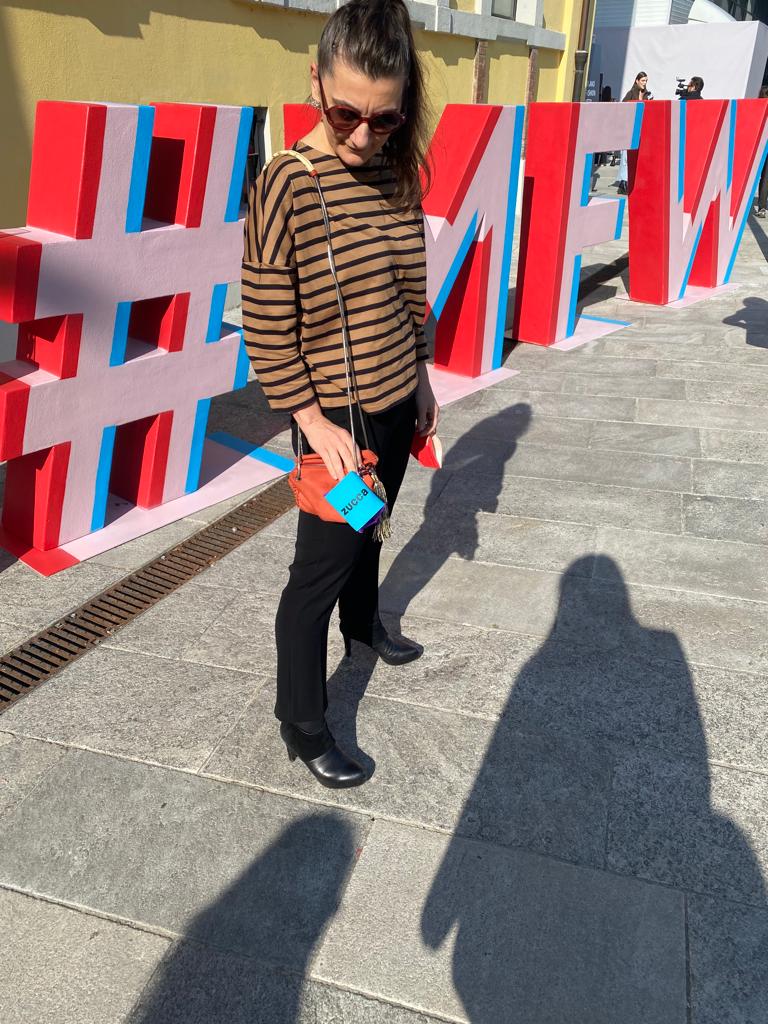
Milano Fashion Week 2022, marking the return of physical events, was anticipated to symbolise the relaunch of both the economy and creativity. But did it live up to expectations? And what were the key themes that emerged?

Fall/Winter 2022 trends

90’s
The nineties were the common thread seen almost everywhere. Indeed, as a reflection of society, fashion—like history—tends to repeat itself.

“Balenciagitis”
While the pandemic seems under control, another highly infectious virus spread among designers. This virus is called “Balenciagitis.” When designers are affected, they create tons of exaggerated shoulders and extremized silhouettes–of which you do not understand the point.

Raf Simons has been strongly infected, indeed you could see it in the Prada fashion show. Since the co-designing collaboration has started, Prada stopped dictating trends, as always did, and now follows the others.
However, even Dolce and Gabbana were infected, we hope someone will soon find a cure for it.

Co-branding
Collab with sports brands, or flea market outfits with the plus of co-branding. That’s what Gucci did with Adidas. Right, nothing new in the end. Just branding.

Milano Fashion Week 22


Genderless
In January 2020, Stefano Pilati presented at Pitti his independent brand, Random Identities. The collection showed a few tailored pieces in a genderless key. About two years later, the creatives who create when something is already created, discovered the trend. Hey, all brands went genderless!

Sustainability
Round tables, talks, shows. Every single brand is sustainable! And the more they talk about it, the less they offer value. Moreover, “sustainable designers” and those who have hands in that industry offer something unattainable. Just smoke in the eye, generating a big misleading business.

Inclusion
What is the line between inclusivity and bad taste? This point is not clear to us. In fact, in many shows which focused on this topic, bad taste stood out.

Milano Fashion Week 2022 favourites


Our favourites
Jil Sander was one of the few fashion shows we enjoyed. We didn’t see much of Jil Sander in that, but, at least, we saw beautiful, well-made clothes developed in a coherent collection.

Bottega Veneta: iconic accessories, clean lines clothing with a high-end impact. Beautiful design, but no logo shown, no sensationalism. The essence of modern elegance and luxury. Bravo, Matthieu Blazy!

Milano Fashion Week 2022 revelaed that it is not a favorable time for creativity or the economy. And so, a cultured audience has to dig a lot to find value. Because worthwhile designers, rather than being part of that inconsistent game, avoid communicating at all.

Milano Fashion Week 2022 Read More »