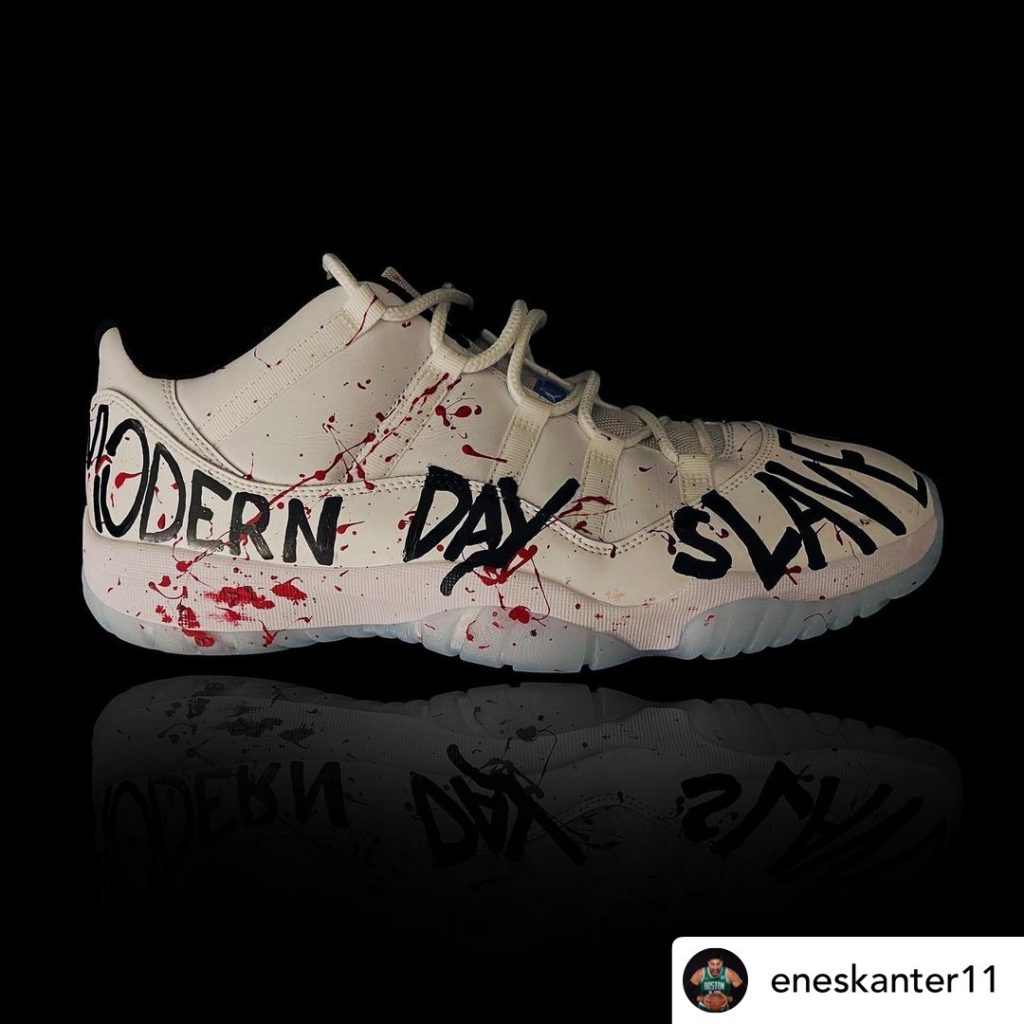
No business fit for the future can ignore modern slavery
A new global ISO standard seeks to stop businesses from using complexity as an excuse for inaction
The ISO 37200 standard enters the conversation at a critical moment. For all the talk of ethical sourcing in annual reports, the brutal reality is that modern slavery is not shrinking. It is exploding. Reading Susan Taylor Martin’s report for Reuters, we felt a sense of bitter recognition.
Every now and then, we highlight modern slavery, which often appears in the context of fashion but extends far beyond it, as one of today’s most pressing issues.
When leaders speak about preparing their organisations for the future, the conversation often revolves around artificial intelligence, quantum computing, or the race to net zero. Boards scrutinise geopolitical tensions and trade realignments, while businesses re-engineer supply chains for resilience and speed.
Yet, amid this strategic recalibration, one issue demands equal — if not greater — attention: how to ensure that growth does not come at the expense of human dignity.
Modern slavery: a rising issue
Today, an estimated 50 million people worldwide are trapped in forced labour or human trafficking. These abuses are frequently concealed within the intricate webs of global supply chains that underpin everyday commerce. (Source: Reuters).
Even more alarming is the trend. In fact, the number of people living in conditions of modern slavery has risen by 25% over the past decade.
“Shockingly, the number of modern slaves has increased 25% over the last decade.”
— Susan Taylor Martin
This risk extends far beyond distant markets. It is a systemic challenge that affects organisations of every size and sector. As supply chains become increasingly fragmented and opaque, the likelihood of exploitation rises.
Modern slavery remains one of the most disturbing and complex issues facing global business. This statistic is not just a number. It represents a systemic failure of voluntary corporate oversight — a failure the new global standard hopes to address.
ISO 37200 standard: a new benchmark to stop modern slavery
It is against this backdrop that a new international benchmark — ISO 37200 — has been developed. Dedicated specifically to the prevention, identification and response to human trafficking and forced labour, it represents the first global standard of its kind.
Following public consultation, the standard will be published later this year. Its purpose is clear: to help organisations “prevent, identify, mitigate, remediate and report” modern slavery risks across their operations and supply chains. Crucially, it is designed to complement existing legal and regulatory frameworks rather than add layers of bureaucracy. The aim is not to create additional reporting burdens, but to enable companies to move beyond compliance exercises and “box-ticking” towards meaningful action.
Ahead of its release, leaders would do well to examine their own governance structures. Do clear lines of accountability exist? How deep is their understanding of supply chains — particularly beyond first-tier suppliers? Do robust procedures, staff training, and effective escalation mechanisms support those policies? And most importantly, can organisations respond responsibly and decisively if they uncover exploitation?
It may be tempting to assume that certain industries are more exposed than others. While risks do vary by geography and sector, exploitation can occur anywhere. The underlying principles — sound governance, transparency and ethical conduct — are universal.
The new ISO framework builds upon a British Standard introduced in 2022, reflecting the United Kingdom’s long-standing leadership in responsible business practice. Early adopters of that standard have already demonstrated how embedding worker protection at the heart of operations strengthens credibility and resilience.
By establishing a common language and shared framework, ISO 37200 standard aims to bring global consistency to the fight against modern slavery. No single company or country can address a challenge of this scale alone. Collective action is essential.
Final reflections
We frequently expose modern slavery within the fashion industry. But our attention to the issue began long ago — including the persecution and forced labour of the Uyghur minority in China, linked to supply chains across fashion, technology, automotive, and other sectors.
Our previous investigations into supply chain abuses have shown us that regulation alone is insufficient. This is why the publication of ISO 37200 is not just a policy update. It is a potential lifeline for auditors and compliance officers striving to effect change from within.
As one industry leader observed, consensus-based international standards have the power to accelerate “real, practical change — at scale.” Modern slavery cannot be dismissed as “the price of doing business”, nor can it be considered too complex to tackle. It demands deliberate, coordinated effort.
With the imminent publication of the ISO 37200 standard, the question for leaders is no longer “Do we have a policy?” but “Do we have the courage to look deeper?”
As we continue to investigate these issues, we will be watching to see which companies adopt this standard — and which continue to look the other way.
Because any organisation that claims to be future-ready must be prepared to say — unequivocally — that it will not tolerate modern slavery.
No business fit for the future can ignore modern slavery Read More »