ethical fashion

Dear Sustainable Brands: Are You Consistent?

Reading Time: 2 minutes

Sustainable brands VS consistency


Dear sustainable brands, let’s make a point on consistency.

Consistency is fundamental for building trust, so it should be for sustainable brands. Also because they cover themselves with an ethical patina that makes them appear better than the others. But, on the contrary, it seems that these new ethical brands have a problem with it.

Their purpose is to make a change. But if so, it’s not clear why they still follow outdated systems. Or they try to reach success by partnering with channels that have nothing to do with sustainability.

The point on consistency

Sustainable brands must be consistent with their message.
Do you agree? So, the question is: do they want to make a change for real?
If that is their goal, why do they sell their low-impact ethically-made garments through retailers that collect almost every designer on planet earth?

Isn’t it a matter of consistency?
These retailers sell huge quantities of clothing and accessories. Therefore, their business isn’t sustainable. Even if they proudly show a sustainable section, as most of them do. Which makes you understand the power of marketing and the trick behind sustainability.

If consistency was a fundamental value for them, they would find other ways to sell their products. But they all dream of being sold by the same old big groups. And so, they want to change, but not really.

Sustainability is a promise no one can keep, but still, everyone wants to sell. Ethical marketing, if not supported by proper choices and actions, is just smoke in the eyes. In other words, it is greenwashing.

Dear sustainable brands, you cannot change the world by playing the old game. Forget the status quo if you want to change for real. If you are seriously committed, you need to craft a new strategy. You’ll change the world with new patterns, new rules, and a new language.

So, if you want to be trusted, change the system, not only your marketing!

Dear Sustainable Brands: Are You Consistent? Read More »
The Curve Of Understanding

Reading Time: 2 minutes

How long does it take to open our eyes?


The case of plastic illustrates the tension between convenience and value, tracing our curve of understanding.
Plastic was invented in 1920. Around 1960 humans started using disposable plastic profusely. One of the greatest inventions ever. You could use cutlery, plates and cups and throw them away! Likewise, we could use plastic bags and toss them. Well, that’s what disposable means. It just got out of hand, or we didn’t realise that there’s a certain number of people inhabiting planet earth, and we aren’t so good with multiplication.

‘Buy – consume – toss’
The perfect innovation for everyday life, and no one considered any side effects. For about 50 years, at least. Till one day, we realised the oceans are full of disposable plastic. And that by 2050, there will be more plastic than fish in the oceans!

So, it took about 60 years to notice that single-use plastic was polluting oceans. Finally, the EU banned plastic in 2021, but the damage is done. Sixty years to open our eyes. And even now that is known, people do not worry much about that.

Learning the lesson
Will it take us that long for technology too? Since we are kindly invited to change a device every year. Or for furniture? Which, of course, is cheap but made to self-destruct within the shortest time possible. Or for clothing, because ‘the industry of cheap’ is flourishing! People want more. ‘And who cares if I wear it for less than a season? I’ll throw it away!’

How can a different approach resonate in a world made of beautiful facades or people who don’t care?

Perhaps, it will resonate with a tiny niche of active thinkers who want to make the change. Because they care, they can make a difference.

#formodernhumans

The Curve Of Understanding Read More »

NO SALES

Reading Time: 2 minutes

The ultimate sustainable strategy


It’s the second year of our NO SALES resolution. If you come across our activity by chance, you may discover now that we do not participate in sales or promotions anymore.

What is the reason?


The market is hyper-saturated. Full to the brim of disposable clothing. Heavy discounts and obsessive promotions are indicators of a sick system. In fact, they reflect an economy whose basic assumption is overproduction. And compel the unceasing construction of fake needs for blind consumers. In other words, people are manipulated and induced to buy any discounted item.

Therefore, sales are not a sustainable strategy. The selling price should take into account creativity, quality and labour. Which also means fair wages for the production chain. We already discussed the trick of modern-day slavery in our previous posts.

Once we have realised the whole economic system is corrupted, as a consequence, we have reduced the quantity we order. And by refining our selection, we opted for a capsule wardrobe focused only on meaningful items.

This is what:


1 – we no longer need quantity
2 – we choose quality and good design
3 – we select items made to last

NO SALES

Quantity is not the answer, so we invite you to buy less.
Indeed, we suggest you buy intentionally and choose only thoughtful products.

We are here to make something different. To change for the better. And educate ourselves for slower consumption.
If the status quo is what you still want to promote, just look around. It surrounds you everywhere. You don’t need us.
But if you have lost that frenzy and search for value instead, we are here for you.

NO SALES


It’s the ultimate sustainable economic model for a long-term approach. That supports creativity, quality, and fair wages.

No sales mean less stuff, more meaning. It’s a radical and conscious lifestyle choice #formodernhumans

NO SALES Read More »

The End Of Fur Farming in Italy

Reading Time: 2 minutes

A step towards banning animal abuse


Good news: it’s the end of fur farming in Italy. Yes, we’ll say it again: Italy has shut down fur farming.


Animal killing for fur production has been banned in Italy. Despite profit and vanity, every now and then, an ethical choice prevails.

It is a fact we do not need fur to warm our bodies anymore. And we have known it for a long time. Killing animals for the sole purpose of garnishing our clothing and accessories has completely lost its sense in our modern society. We are not primitives, and the era of the ’50s divas is gone. Furthermore, there are countless alternatives to keep the body warm when it’s cold or embellish our garments, all while avoiding that senseless cruelty.

So finally, in Italy too, the Government has passed a law to ban this horrendous practice. As of January 2022, the ban on fur farming, including the breeding and killing of minks, foxes, raccoons, chinchillas, and other animals for their fur, is officially in place in Italy. As a result, mink farms will be closed within six months.

Not all evil leads to harm


When the pandemic struck, many fur farms in the Netherlands reported numerous cases of Covid-19. It was soon revealed that minks were spreading the virus due to their heightened sensitivity to it. They could be infected and then transmit the virus in a mutated form, posing a significant risk to public health. Naturally, this discovery played a key role in the decision to close fur farming.

Many countries in Europe have already moved or are moving in that direction. But, even if they all banned fur production, it’s still possible to commercialise fur items everywhere. What’s the point? It is obvious that someone will benefit from this situation. And that “someone” is China.

The end of fur farming in Italy marks significant progress. This law is one step forward. However, banning fur farming is not enough. To solve this issue, a ban on commercialising fur items must follow.

Perpetrating animal abuse is a cruel practice – definitely NOT a choice #formodernhumans

The End Of Fur Farming in Italy Read More »

Modern Slavery: The Hypocrites

Reading Time: 2 minutes

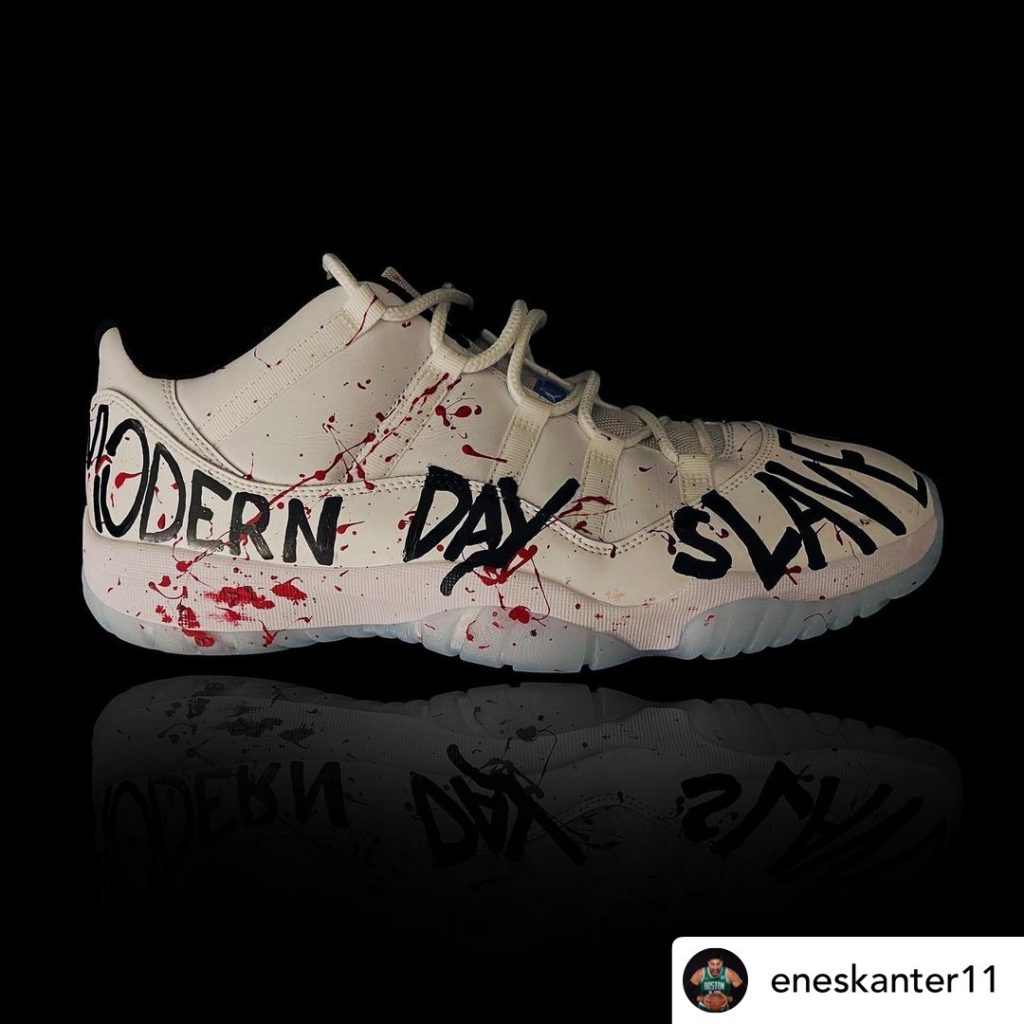
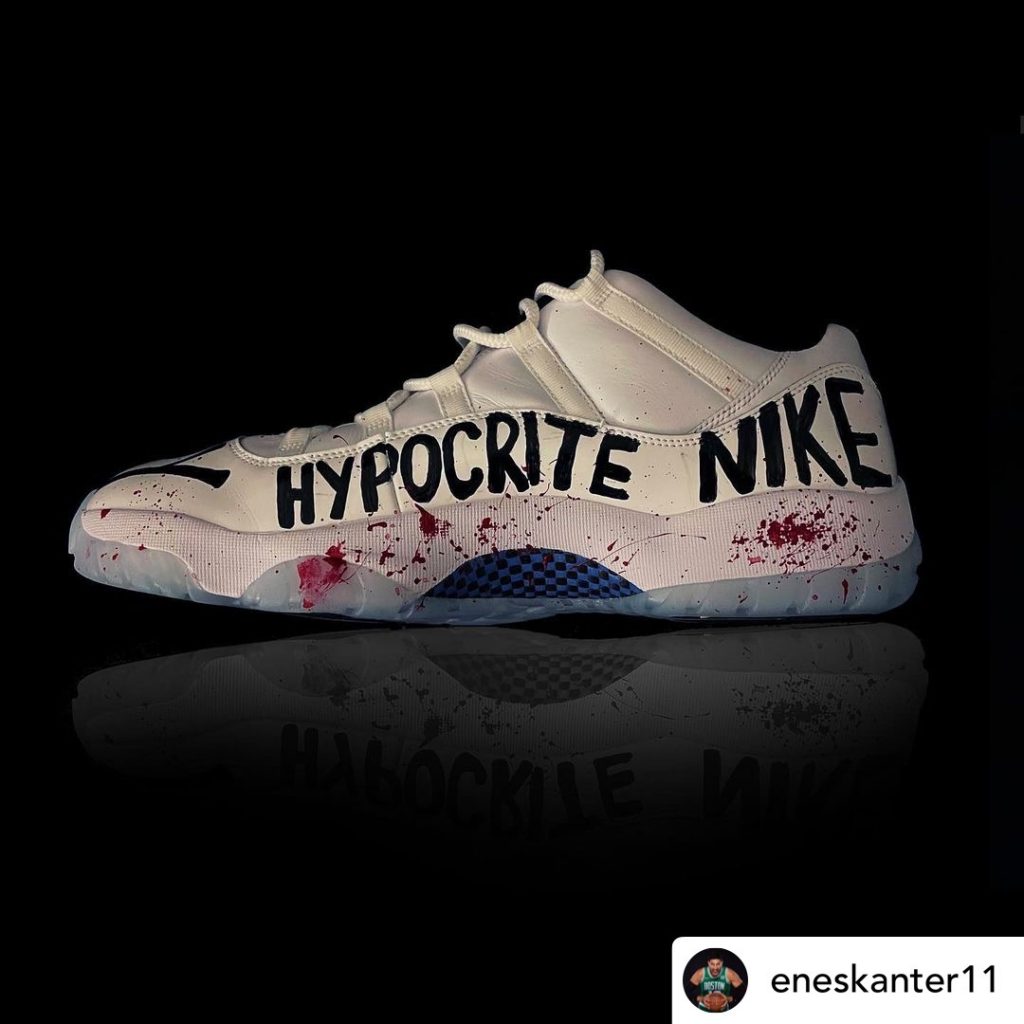
Enes Kanter exposes Nike’s hypocrisy on forced labour and Uyghur Minority


Modern slavery is a topic we frequently discuss because it is horrific and unacceptable. What concerns us even more is the hypocrisy surrounding it.

Brands are the new gods. Sell people a famous name, and in return, you’ll get silence and blindness.

However, as members of an evolved society, we cannot turn our heads to the other side pretending nothing happens.

The system of exploitation, built on forced labor and minority oppression, is directly linked to superbrands. Not only fashion brands, to make it clear. Indeed, every field finds benefit and – profit – in this rotten practice. In fact, there’s no better way to maximise profit.

Though we are just a drop in the ocean, we believe it’s crucial to voice our thoughts and help raise awareness about this issue.
While popular magazines have highlighted it, many people simply don’t engage with written content. People don’t like reading. Or they don’t care enough about things that do not affect them personally. Which, by the way, is a scary attitude.

So, how can we make the message resonate with a large audience?

modern slavery - via Enes Kanter
Modern Slavery – via Enes Kanter


Here comes Enes Kanter, an NBA player. We admit we know nothing about the sport he plays. Zero. But that’s not the point. In fact, we admire him for his bravery in showing up consistently in support of human rights. For many that tend to hide, there are a few who talk out loud.

And so, it was with immense pleasure that we saw his recent posts about the Uyghur minority, forced labour camps and brands hypocrisy, asking Nike’s accountability.

We need more brave humans like Enes Kanter to speak the truth to reach the masses. Just like we need more people that open their eyes and feel touched. Fundamentally, we must find a way to put an end to labour exploitation.

Hypocrite Nike - via Enes Kanter
via Enes Kanter


In conclusion, if as humans, all we have done is invent new forms of slavery to satisfy our fake needs, then we have failed.

Modern Slavery: The Hypocrites Read More »