More than a designer, a keeper of beauty — an empire built on devotion, not disruption
Valentino Garavani, the emperor of fashion, passed away on January 19, at the age of 93, in Rome — the city he loved and never truly left. In an era defined by constant noise, speed, and relentless reinvention, his legacy stands apart. Not because it chased trends, but because it cultivated a world of timeless elegance, patience, and enduring beauty.
This is not an attempt to retrace a career — there is already more than enough of that. Instead, this is an effort to understand what Valentino can still teach us. What remains relevant. What the fashion industry — and perhaps creative work as a whole — risks forgetting.
Born in Voghera in 1932, Valentino’s aesthetic awakening came early. He often recalled a formative moment at the opera in Barcelona, where he saw women wrapped in red. That vision — colour, drama, ceremony — sparked a lifelong devotion to clothing as celebration. From that moment on, fashion was never merely functional for him; it was cultural, emotional, and deeply respectful of beauty.
He studied in Milan and then moved to Paris, where he worked for Jean Dessès and Guy Laroche, absorbing the discipline of haute couture and the rigour of craft. In 1960, he returned to Rome, where he met Giancarlo Giammetti — his business partner and lifelong companion. Together, they built something rare: a maison founded on mutual trust, clarity of roles, and a shared vision. Valentino created; Giammetti protected the conditions that allowed creation to flourish.
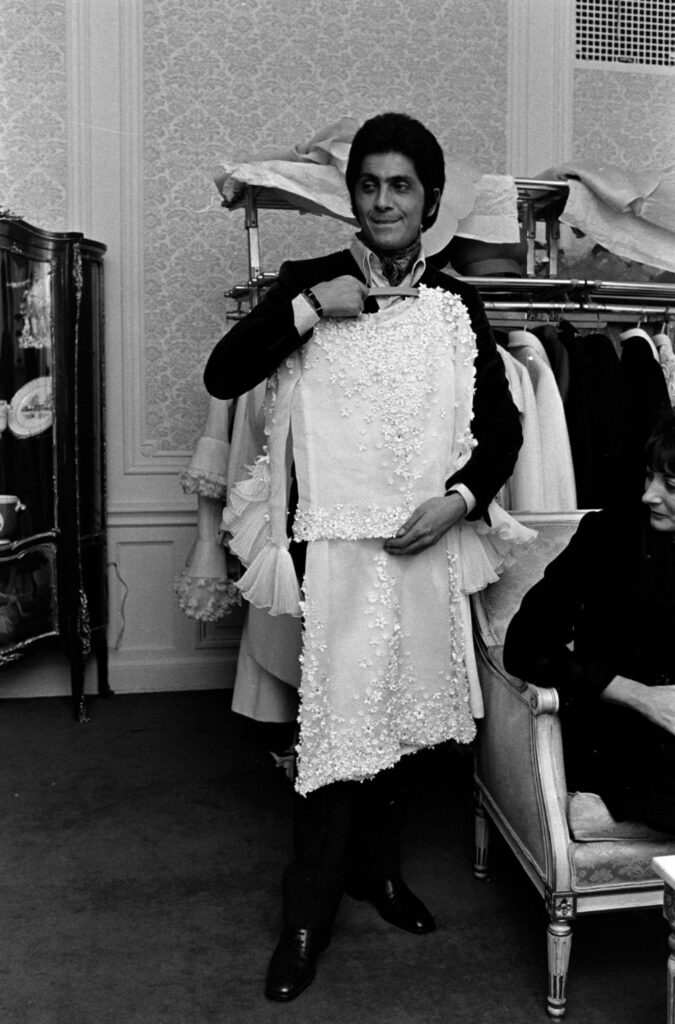
From a small atelier, international recognition followed. Heads of state, actresses, and cultural icons wore his designs not to be noticed, but to feel complete. His work became a pillar of Italian fashion history, yet its appeal was always global — rooted in classical ideals, but never provincial.
In a fashion system that now rewards disruption above all else — even within his own brand — Valentino’s journey reminds us of what is being lost: the power of a singular vision patiently built over a lifetime. He shaped his path through self-improvement, perseverance, discipline, and devotion. There was no rush, no need to shout. Only the quiet confidence of couture mastery.
This was fashion as artisanal excellence — an expression of creativity anchored in craftsmanship and cultural intelligence. Valentino began in a four-person atelier, where every stitch served a vision, not a market forecast or a shareholder meeting. Today, creative directors often bend to corporate strategies; his generation built houses where creativity led, and business followed.
He announced his retirement in 2007, at the age of 75, with a final, all-red, iconic show in Paris in 2008 that felt less like a farewell and more like a celebration of coherence. Filmmaker Matt Tyrnauer later captured his legacy in the 2008 documentary Valentino: The Last Emperor — a revealing portrait of discipline, obsession, and unwavering standards.
The emperor of fashion — in his own words
Valentino was never vague about what he believed in.
“Elegance is made of intelligence, and above all of not flaunting the label.”
This sentence alone explains much of what feels absent today. His couture belonged to a world where creativity and quality spoke louder than branding. Where clothing revealed taste rather than wealth. Today, the balance has reversed: logos have replaced language, stepping in where quality no longer speaks for itself.
“Today, those who have money do not always have class or memory.”
Memory here is key — cultural memory, aesthetic memory, historical awareness. Without it, fashion becomes noise.
He spoke openly about contemporary taste:
“Today, with the influencers, bad taste is everywhere.”
And in his farewell to Pierpaolo Piccioli, he offered what may be his most revealing statement on modern fashion:
“Thank you… for your friendship, respect, and support. You’re the only designer I know who hasn’t tried to distort the codes of a major brand by imposing new ones and the megalomania of a ridiculous ego.”
In those words lies his entire credo: respect for heritage, humility before beauty, and a firm rejection of ego-driven disruption.
Final thoughts
So what can we learn from Valentino — the emperor of fashion? From someone who made creativity, couture, and beauty the work of a lifetime?
That legacy is not built by chasing what is new, but by deepening what is beautiful. That true luxury is not only what you create, but what you refuse to compromise. And that elegance — real elegance — requires time, memory, intelligence, and restraint.
In today’s fashion machine, where speed is rewarded and noise is constant, Valentino’s life asks a quieter, more demanding question:
What are we in such a hurry to create, if not something meant to last?
He was not just a designer. He was an emperor — of a slower, more deliberate kingdom. One that, in its silence, still speaks louder than ever.